
Awareness and perceptions on riverine plastic pollution and waste disposal practices among the local communities along Pulot River and its tributary in Sofronio Española, Palawan Island, Philippines: Implications on sustainable waste management
 10.21463/jmic.2025.14.3.10
Abstract
Riverine plastic pollution is a critical global concern, serving as the primary conduit for land-based plastic into marine environments and posing severe threats to ecosystems and human health. Effective mitigation strategies necessitate a deep understanding of local community awareness, perceptions, and waste management practices related to this pervasive, anthropogenically driven issue. This study assessed community awareness, perceptions, and waste-disposal behaviors regarding plastic pollution along the Pulot River and its tributaries in Palawan Island, Philippines. The findings reveal that while participants demonstrated a general awareness of pollution and perceived a moderate level of existing plastic pollution in the river, they concurrently anticipated significant increases in plastic litter on riverbanks and in water bodies over the next decade, following a notable rise in the past five years. Interestingly, despite identifying local residents as the primary source of pollution, respondents also reported high frequencies of environmentally friendly behaviors, such as recycling and waste segregation. This study highlights a significant disparity between community awareness, self-reported pro-environmental behaviors, and the perceived trend toward environmental improvement. The results highlight critical information gaps and behavioral nuances that policymakers and Local Government Units (LGUs) must address to develop targeted, effective mitigation strategies to reduce plastic pollution in the Pulot River.
Keywords
plastic pollution, riverine systems, community awareness, waste disposal practices, environmental management, sustainability
1. Introduction
Plastic materials, initially celebrated for their strength, durability, lightness, and low cost, have become ubiquitous in modern life, yet their indispensability masks a looming global environmental crisis (Van Eygen et al., 2017; Filho et al., 2021). Over the past five decades, their versatility has driven an ever-growing demand across industries and households worldwide (Filho et al., 2021). Evidence of this crisis is stark: an estimated 40% of the ocean surface is now covered by plastic waste, with plastics reportedly outweighing plankton by a ratio of six to one (Center for Biological Biodiversity, 2018; Moore et al., 2001). While marine pollution rightly receives significant attention, riverine systems play an equally crucial role as primary conduits for land-based plastic waste, transporting large volumes of debris to coastal and marine ecosystems (Chae and An, 2018; Henderson and Green, 2020). The inherent persistence of plastic materials in these environments, a direct result of their long degradation time, makes them particularly hazardous. Despite growing global concern, the severity of riverine plastic pollution often remains functionally invisible to many communities, and public awareness and behavioral responses to it vary widely. Understanding local perceptions, awareness, and existing waste disposal practices is therefore essential for designing effective, context-specific interventions to reduce plastic leakage into aquatic systems (Dilkes-Hoffman et al., 2019). The durability of plastics, while advantageous, has contributed to a pollution problem whose profound implications often remain practically invisible to everyday consumers, overshadowed by their convenience.
Globally, the production of plastics has skyrocketed from 1.5 million metric tons in the early 1900s to over 359 million metric tons in 2018 (Statista 2020). This exponential growth has resulted in widespread environmental degradation, particularly in aquatic ecosystems. Plastics entangle marine life and break down into microplastics, which are ingested by aquatic organisms, threatening biodiversity and human health (Thompson et al. 2004; Lasut et al. 2018). The Philippines has been identified as one of the leading contributors to marine plastic waste, estimated to release approximately 356,371 metric tons of plastic into the ocean annually, primarily through its river systems (Meijer et al. 2021).
Plastic pollution in rivers is a growing concern, as waterways are considered one of the main transport routes for plastic litter from land-based sources to the oceans (Schmidt et al. 2017; Requiron et al. 2023; Gabriel et al. 2023; Gabriel and Bacosa 2024). This issue extends beyond environmental degradation and impacts public health and social dynamics. The sources of plastic pollution in rivers are diverse and complex, making it challenging for policymakers and scientists to develop effective mitigation strategies.
The island province of Palawan is recognized as a biosphere reserve and home to diverse ecosystems and a rich cultural heritage. However, plastic pollution has become more evident in its marine (Sajorne et al. 2021; Sajorne et al. 2022a;2022b) and aquatic environments (Escañan and Bacosa. 2022; Escañan et al. 2024). Sajorne et al. (2021) reported that the west and east coasts of Palawan were severely polluted, with a total of 1,464 plastic items collected during a four-day sampling in December 2020 on sandy beaches spanning 12 barangays. The barangay is the smallest political unit in the Philippines. This indicates that plastic pollution is a pressing issue affecting Palawan's coastal areas. Sajorne et al. (2021) also suggest that rivers, including the Pulot River, could be primary sources of plastic pollution in these coastal regions. If no measures are taken to mitigate plastic pollution inputs into the ocean, the province and its economy could experience significant negative repercussions. While the province is renowned for its stunning coastal beaches and vibrant marine life, which are vital to the local economy, particularly through tourism and fisheries, the increasing plastic pollution may pose a significant threat to both the environment and the socio-economic systems of island communities that rely on natural resources for their livelihoods. The intersection of culture, sustainability, and environmental management is crucial for addressing plastic pollution in this region.
The Pulot River, located in Sofronio Española, Palawan, serves as a vital waterway for local communities, providing essential resources for daily activities such as irrigation, bathing, and laundry. However, it is also a significant pathway for plastic debris entering marine environments. Recent studies conducted in the Pulot River have revealed that the predominant types of plastic found along its riverbanks are primarily sachets, which are often considered household litter (Escañan & Bacosa, 2022). This finding underscores the impact of the "sachet culture" prevalent in the Philippines, where the widespread use of single-use plastic packaging for convenience exacerbates the plastic pollution crisis. This cultural phenomenon reflects a societal preference for convenience over sustainability, leading to increased plastic waste generation, particularly in island communities with limited access to resources and waste management infrastructure.
The perceived seriousness of the environmental risks caused by plastic pollution has increased in society over the past two decades (Syberg et al., 2018). However, existing social practices continue to favor the use and production of plastics. Despite growing recognition of plastic pollution’s severity, a critical gap remains in understanding how local communities perceive and interact with this issue. Several recent studies offer valuable insights into community perceptions in the Philippines. For instance, Inocente et al. (2023) found that residents in coastal tourism areas recognize marine plastic pollution as a significant threat to both environment and livelihoods, though awareness varies across demographics. Similarly, Requiron et al. (2023) reported that aquaculture farmers in Dapitan City demonstrate moderate awareness of plastic litter’s impact on their industry but face challenges in managing plastic waste effectively. Sumeldan et al. (2021) revealed that coastal communities in Palawan perceive a decline in marine environmental quality directly linked to plastic pollution, emphasizing changes in local ecosystem services over time. Additionally, Romarate et al. (2024) highlighted that urban residents in Metro Manila are increasingly aware of environmental issues, including plastic pollution, but attitudes and behaviors towards mitigating these problems differ significantly among socioeconomic groups. Nonetheless, a critical gap remains in understanding perceptions and plastic waste disposal practices at the community level along inland river systems like Pulot River. Addressing this gap is paramount, as effective mitigation strategies rely on community engagement and behavior change (Dilkes-Hoffman et al., 2019; Heidbreder et al., 2019). Specifically, this study aims to (a) assess the level of awareness and perception of riverine plastic pollution among the residents; (b) evaluate the waste disposal practices of the community and their implications for plastic pollution; and, (c) identify information gaps or behavioral barriers that policymakers and Local Government Units (LGUs) should address to enhance community engagement in sustainability efforts.
The results of this study will offer actionable insights for policymakers and LGUs, guiding the development of community-centric strategies to combat plastic pollution effectively at local and provincial scales. Mitigating plastic pollution along Pulot River will serve as a vital case study for larger-scale river-to-ocean plastic reduction strategies, directly contributing to fostering a more sustainable and resilient future for Palawan's globally significant ecological and cultural landscape.
2. Materials and Method
2.1 Study area
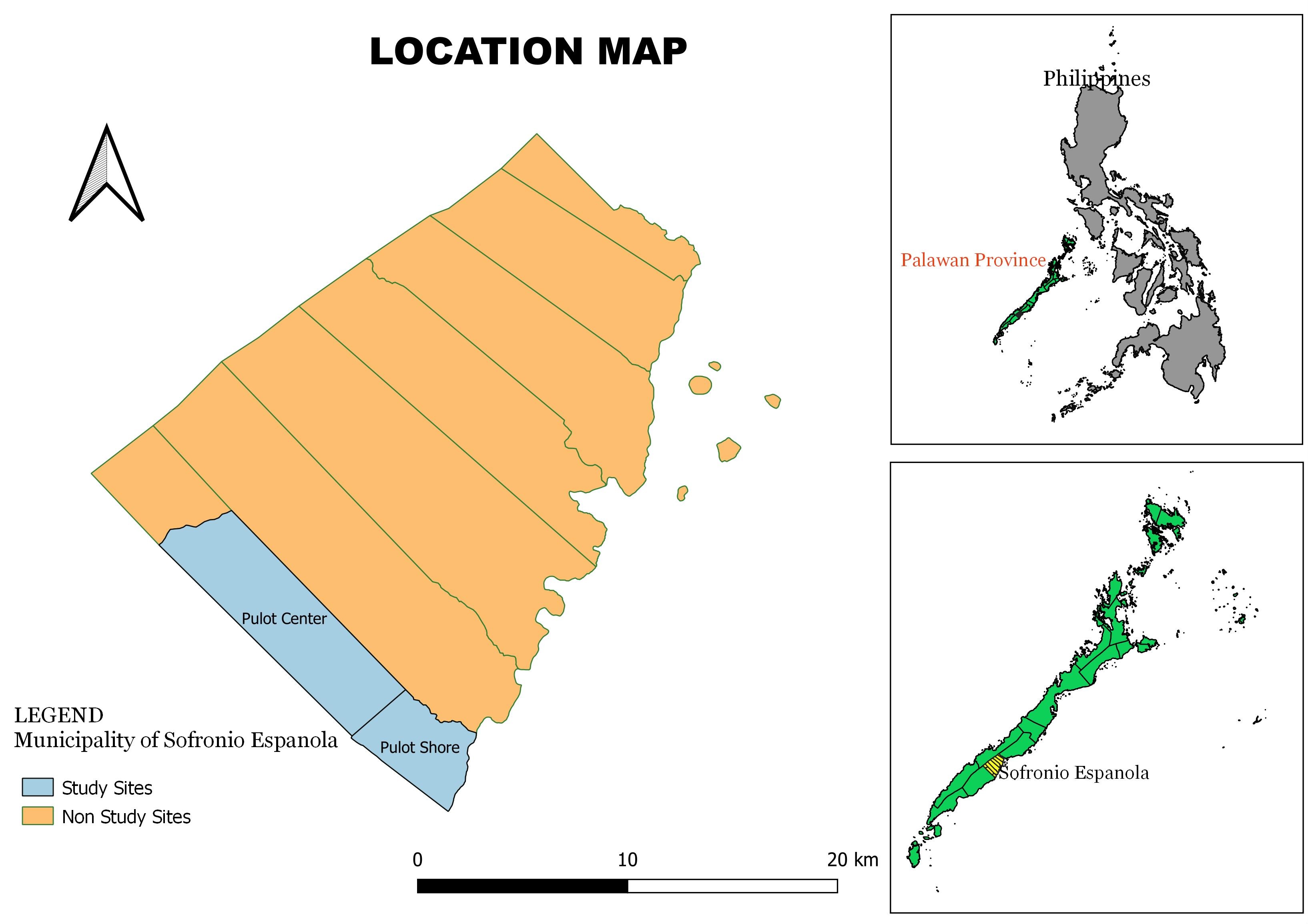
The study area was Pulot River, in Sofronio Española, Palawan, which is located between 8 53’3.58” to 9 11’26.26” North and 117 51’24.42” to 118 7’35.58” East, situated in the southern part of the province of Palawan, Philippines (Figure 1). The river flows through three catchment barangays: Pulot Interior, Pulot Center, and Pulot Shore. The population of Sofronio Española steadily increased from 32,876 in 2015 to 37,416 in 2020. The Pulot watershed is the sole delineated catchment area in the municipality, covering a total of 18,158 hectares, of which 17,186 hectares lie within Española’s territory. Pulot River spans approximately 15 km as a winding natural water channel originating from the Pulot watershed and is one of the major rivers running through the town center of Sofronio Española. It maintains a continuous flow year-round, sustained by its watershed source. Sampling sites along the river were characterized by abundant vegetation and evident small-scale farming activities. The river’s physical configuration is shaped by the mixed topography of Southern Palawan, encompassing upland forested areas, moderate to steep slopes, and lowland riparian zones. Variations in river gradient, channel sinuosity, and riverbank vegetation influence water flow velocity and sediment transport patterns, which in turn affect the movement and deposition of plastic litter along the river. The watershed’s heterogeneous landscape drives complex hydrological dynamics, where increased flow during rainy seasons mobilizes waste downstream toward coastal areas. The absence of substantial urban infrastructure along much of the riverbank suggests a predominantly natural river morphology, yet localized human activities, such as small-scale farming and settlement clusters, create focal points for waste input.
2.2 Overview of the community survey
A pen and paper survey, combining demographic, multiple-choice, and matrix questions-was conducted at two catchment barangays (Barangay Pulot Center and Barangay Pulot Shore), through Pulot River flows. The questionnaire comprised 36 questions divided into four parts. The first part focused on determining the local participants’ socio-demographic profiles. The second part assessed their awareness of riverine plastic litter and pollution. The third part evaluated the locals’ perceptions regarding riverine plastic litter and pollution. The fourth part documented community and personal household waste disposal practices. Personal Interviews (PIs) were conducted, primarily as an interviewer-administered approach, to ensure clarity of questions and to facilitate comprehensive responses from the locals
2.3 Survey respondents
This study employed convenience sampling to select participants from households located within close proximity to the Pulot River in the two designated barangays. All individuals aged 18 or older in these selected households were eligible to participate. A total of 50 participants were included in the study, with an uneven distribution across the two locations due to practical considerations. When approached initially by the researcher, prospective participants were invited to participate in an anonymous study on riverine plastic pollution. If an individual declined, their privacy was respected, and no further questions were posed. For those who agreed, the researcher clearly communicated that participation was entirely voluntary, that no identifiable information would be collected, that all data would remain confidential, and that participants retained the right to terminate the survey at any time. Data collection was conducted daily from 8:00 am to 5:00 pm between August 3 and 7, 2021. The full survey questionnaire is provided in Supplementary Data (A).
Table 1 presents the socio-demographic data of the study respondents. The majority of participants were women (n=36, 72%), while men constituted 28% (n=14). Regarding age groups, participants aged 56 years and above formed the largest proportion (n=13, 26%), followed by those aged 26-35 years (n=11, 22%), 46-55 years (n=10, 20%), 36 -45 years (n=9, 18%), and 18 - 25 years (n=7, 14%). Most respondents were married (n=39, 78%), while separated individuals making up the smallest group (n=2, 4%). Ethnically, most respondents were Ilonggo (n=28, 56%), and were Catholic (n=32, 64%). The majority reported monthly earning between Php 5,000 and Php 10, 000 (n=20, 40%). Most respondents had a high school level of education (n=12, 24%), identified as housewives (n=27, 54%) and lived in the area for 20 years or more (n=28, 56%).
| Demographic variables | No. of respondents (n) | Percentage | Demographic variables | No. of respondents (n) | Percentage |
|---|---|---|---|---|---|
| Gender | Religion | ||||
| Male | 14 | 28% | Roman Catholic | 32 | 64% |
| Female | 36 | 72% | Islam | 14 | 28% |
| Total | 50 | 100% | Protestant | 0 | 0% |
| Age (Years) | Others | 4 | 8% | ||
| 18–25 | 7 | 14% | Total | 50 | 100% |
| 26–35 | 11 | 22% | Monthly Income | ||
| 36–45 | 9 | 18% | Below PHP 5,000 | 16 | 32% |
| 46–55 | 10 | 20% | PHP 5,000–10,000 | 20 | 40% |
| 56 years and above | 13 | 26% | PHP 10,000–15,000 | 9 | 18% |
| Total | 50 | 100% | PHP 15,000 and above | 5 | 10% |
| Civil Status | Total | 50 | 100% | ||
| Single | 3 | 6% | Educational Attainment | ||
| Married | 39 | 78% | Elementary Level | 5 | 10% |
| Separated | 2 | 4% | Elementary Graduate | 9 | 18% |
| Live-in | 0 | 0% | High School Level | 12 | 24% |
| Widower | 7 | 14% | High School Graduate | 11 | 22% |
| Total | 50 | 100% | College Level | 6 | 12% |
| Ethnicity | College Graduate | 3 | 6% | ||
| Tagalog | 9 | 18% | Others | 4 | 8% |
| Bisaya | 0 | 0% | Total | 50 | 100% |
| Ilonggo | 28 | 56% | Occupation | ||
| Pangutaran | 1 | 2% | Fisherman | 0 | 0% |
| Mapun | 4 | 8% | Housewife | 27 | 54% |
| Cuyonon | 0 | 0% | Farmer | 5 | 10% |
| Others | 8 | 16% | Others: | 18 | 36% |
| Total | 50 | 100% | Total | 50 | 100% |
| Number of Years Living in the Area | |||||
| Less than 5 years | 3 | 6% | |||
| 5–10 years | 8 | 16% | |||
| 11–20 years | 11 | 22% | |||
| 20 years above | 28 | 56% | |||
| Total | 50 | 100% | |||
2.4 Data analysis
The collected data was organized, compiled, and encoded in Microsoft Excel. The responses were coded with numbers ranging from 1 to 8 based on the order and quantity of the response options. In other words, the first response was coded 1, the second response was coded 2, etc. However, not all numbers from 1 to 8 were used as codes for every question response since not all questions had 8 responses. For instance, if there were only 4 responses to a question, only numbers 1 to 4 were used. These codes were initially used to run frequency and descriptive statistics on each question, and they are especially appropriate with questions with Likert scale response options. The data was analyzed using Microsoft Excel. The data gathered in this survey was tabulated, and interpreted using descriptive statistics, with frequency tables to describe the responses of the locals on their awareness and perception towards riverine plastic litters, and the community and personal practices on waste disposal.
3. Results
3.1 Locals’ general awareness of riverine plastic litter
The understanding on the occurrence of plastic pollution on the riverbank of Pulot River and its tributary was evaluated (Table 2) using the Likert Scale. The result shows that the bulk of respondents along Pulot River and its tributary consider themselves as ‘Moderately Aware’ on the issues and statements such that ‘organic waste (e.g., food waste, plant litter) thrown on the ground will quickly breakdown or decompose (become part of the soil)’ (n=43, 86%); ‘Snack food wrappers and other food packaging thrown on the ground DO NOT quickly breakdown or disappear’ (n=41, 82%); ‘Fish and other aquatic animals eat plastic waste’ (n=29, 58%); ‘Plastic waste hurts the environment’ (n=38,76%); Burning rubbish, including plastic affects human health’ (n=38, 76%); ‘Rubbish left on the ground will eventually find its way into the river’ (n=31, 62%); ‘Solid waste management act or RA 9003 prohibits throwing of plastic into the environment’ (n=23, 46%). 78% of the respondents were ‘Fully Aware’ that ‘There is an existing ordinance about banning single-use plastic in Palawan’ (n=39). 54% of the respondents were slightly aware that ‘Plastic litter can disintegrate in a harmful substance called “microplastic’ (n=27). There are also issues where mostly of the respondents consider themselves as ‘Slightly Aware’ such that; ‘In river water bodies, a plastic bag can decompose up to 20 years’ (n=20, 40%); ‘In river water bodies, a plastic bottle can decompose up to 450 years’ (n=24, 48%). On the other hand, most of the respondents consider themselves “Not aware” of the issue, such that ‘In river water bodies, plastics such as toothbrushes, disposable diapers, and styrofoam can decompose up to 500 years’ (n=25, 50%).
| STATEMENTS | 5 | 4 | 3 | 2 | 1 | Range Scale | Remarks |
|---|---|---|---|---|---|---|---|
| General awareness of riverine plastic litter | MODERATELY AWARE | ||||||
| Organic waste (e.g., food waste, plant litter) thrown on the ground will quickly breakdown or decompose (become part of the soil) | 6 | 43 | 0 | 1 | 0 | 4.1 | Aware |
| Snack food wrappers and other plastic packaging thrown on the ground DO NOT quickly breakdown or disappear. | 7 | 41 | 1 | 1 | 0 | 4.1 | Aware |
| Fish and other aquatic animals eat plastic waste. | 3 | 29 | 3 | 7 | 8 | 3.2 | Moderately Aware |
| Plastic waste has a negative effect on the environment | 10 | 38 | 1 | 1 | 0 | 4.1 | Aware |
| Burning rubbish, including plastic affects human health | 8 | 40 | 1 | 1 | 0 | 4.1 | Aware |
| Rubbish left on the ground will eventually find its way into the river | 6 | 31 | 4 | 7 | 2 | 3.6 | Aware |
| In river water bodies, a plastic bag can decompose up to 20 years | 3 | 7 | 1 | 19 | 20 | 2.1 | Slightly Aware |
| In river water bodies, a plastic bottle can decompose up to 450 years | 2 | 7 | 1 | 16 | 24 | 1.9 | Slightly Aware |
| In river water bodies plastics such as toothbrushes, disposable diapers and Styrofoam can decompose up to 500 years | 2 | 7 | 1 | 5 | 25 | 1.5 | Not Aware |
| Plastic litter can disintegrate in a harmful substance called “microplastic” | 2 | 4 | 2 | 27 | 15 | 2 | Slightly Aware |
| There is an existing ordinance about banning single use plastic in Palawan | 39 | 1 | 0 | 1 | 0 | 4 | Aware |
| Solid waste management act or RA 9003 prohibits throwing of plastic into the environment | 10 | 23 | 2 | 14 | 1 | 3.5 | Aware |
3.2 Locals’ perception on riverine plastic litter
Responses to each question were summarized using frequencies and percentages. Majority of the respondents perceived that there is a moderate amount of plastic pollution in Pulot River and its tributaries (n=31, 62%). More than half (58%) of the respondents pointed out plastic bottles as the most abundant plastic litter on the riverbanks (n=29), while in the river water bodies, both food packaging (n=18, 36%) and plastic bottles (n=18, 38%) share an equal number of responses as the most abundant plastic litter. Residents living in the area (n=41, 82%) were identified as the most common origin of plastic litter in Pulot River and its tributaries. Most of the respondents (56%) did not perceive tourists as generators of plastic waste (n=28) in the river. Moreover, the majority of the respondents perceived plastic management as a problem in the community (n=41, 82%) (Table 3).
| Questions | Answers | Total | Percentage |
|---|---|---|---|
| How much plastic pollution is there in the river in your area? | A great deal | 5 | 10% |
| Moderate amount | 31 | 62% | |
| A little amount | 13 | 26% | |
| No amount | 0 | 0% | |
| No idea | 1 | 2% | |
| Which do you think is the most abundant plastic litter type in the riverbanks in your area? | Food packaging | 29 | 58% |
| Plastic bottles | 17 | 34% | |
| Disposable diapers | 4 | 8% | |
| Industrial scraps | 0 | 0% | |
| Medical wastes | 0 | 0% | |
| Others | 0 | 0% | |
| Which do you think is the most abundant plastic litter type in the river water body in your area? | Food packaging | 18 | 36% |
| Plastic bottles | 18 | 36% | |
| Disposable diapers | 12 | 24% | |
| Industrial scraps | 0 | 0% | |
| Medical wastes | 0 | 0% | |
| Others | 2 | 4% | |
| What do you think is the most common origin of plastic litter in rivers? | Tourists/visitors | 9 | 18% |
| Residents along the area | 41 | 82% | |
| Nearby industries | 0 | 0% | |
| Commercial establishments | 0 | 0% | |
| Others | 0 | 0% | |
| Do you think tourists/visitors generate plastic waste in the river in your area? | Yes | 21 | 42% |
| No | 28 | 56% | |
| No idea | 1 | 2% | |
| Do you think plastic management is the problem in this community? | Yes | 41 | 82% |
| No | 9 | 18% | |
| No idea | 0 | 0% |
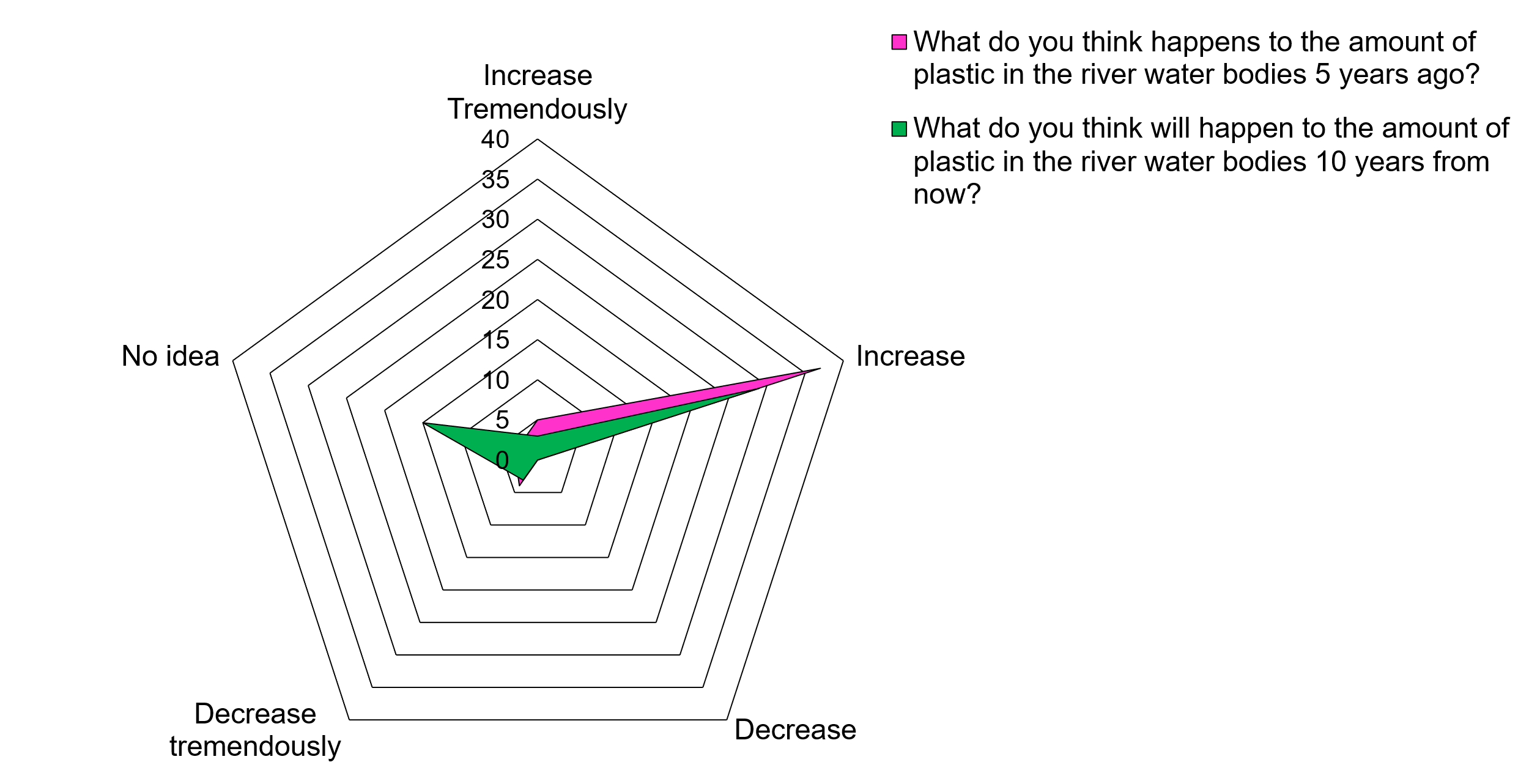
As shown in Figure 2, most respondents perceived that the amount of plastic litter in the river water bodies has increased from the past 5 years (n=37, 74%). Similarly, results show that 58% of the respondents also perceived that there will be an increase in the amount of plastic litter in the river water bodies 10 years from now (n=29). Overall, participants perceived that there has been a tremendous increase in the number of plastics over the past 5 years; likewise, plastics in the river water bodies will increase in amount over the next 10 years.
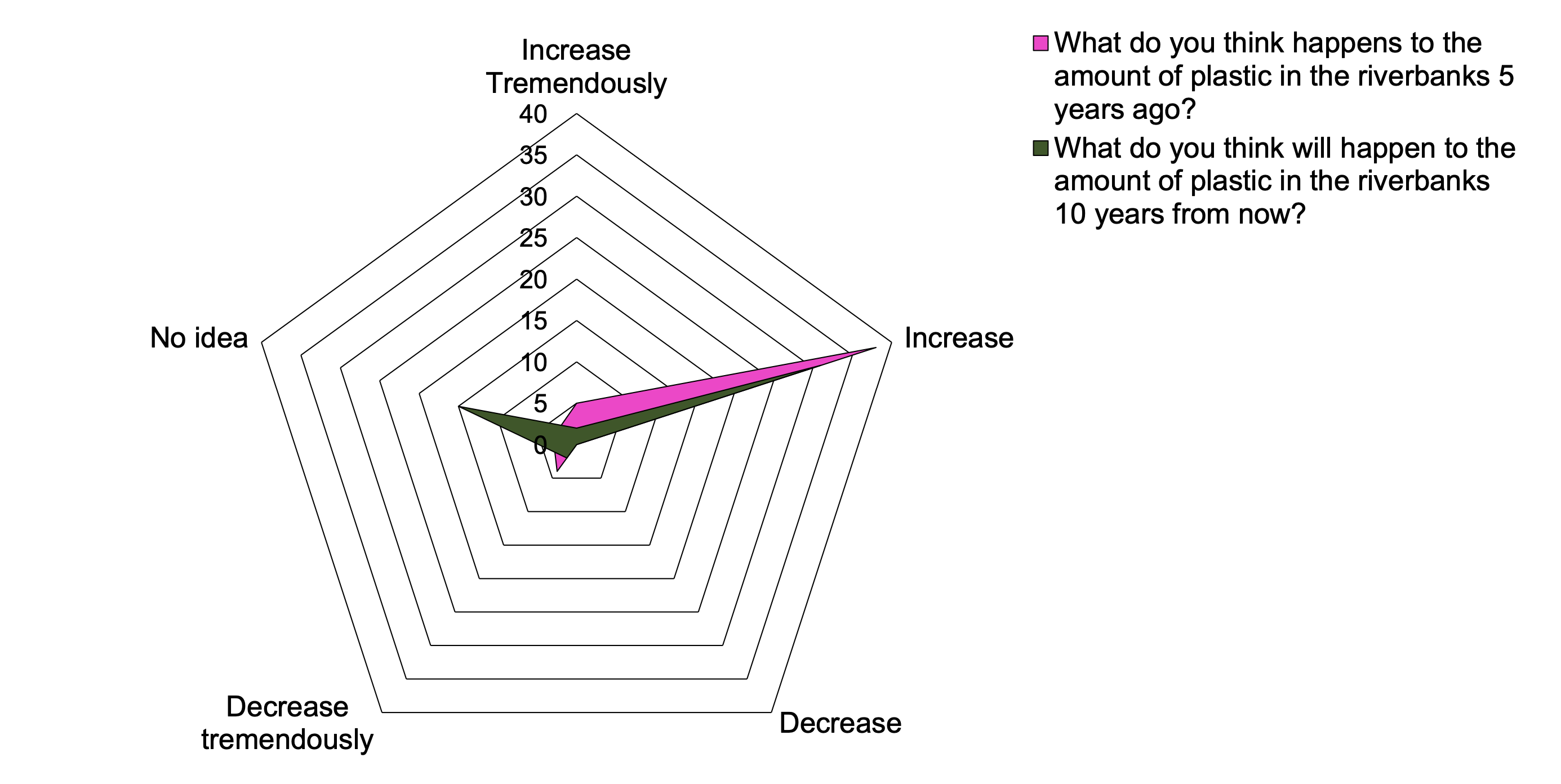
Referring to Figure 3, 76% of the respondents perceived an increase in the amounts of plastic litter on the riverbanks for the past 5 years (n=38). More than half of the respondents (62%) perceived that 10 years from now, plastic litter on the riverbanks of Pulot River and its tributaries will continue to increase (n=31). Overall, participants perceived that there has been a tremendous increase in the number of plastics over the past 5 years, likewise, plastics on the river water banks will have an increase in the amount for the next 10 years.
3.3 Community and personal waste disposal behavior
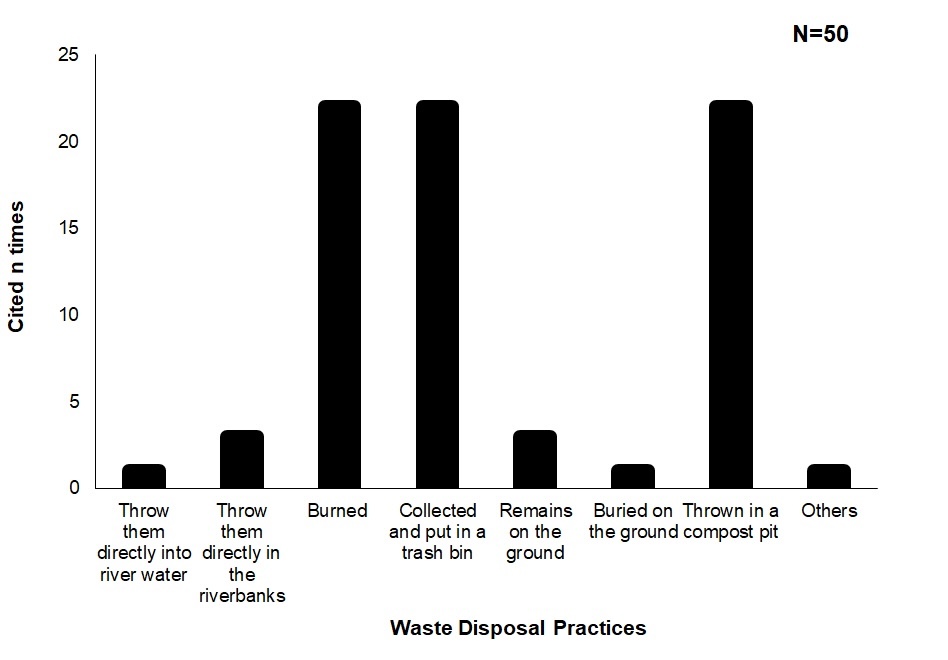
Figure 4 shows the waste disposal practices’ response of the locals along the Pulot River and its tributaries. The question consists of multiple-choice answers; therefore, the participants were allowed to select more than one option. The majority of the respondents throw their garbage in a compost pit (n=22, 44%), collect their garbage and put it in a trash bin (n=22, 44%), and burn their garbage (n=22, 4%). Other waste disposal practices of the respondents also include; throwing them directly into the riverbank (n=3, 6%), remained them on the ground (n=3, 6%), buried them on the ground (n=1, 2%), throws them directly in the surface water (n=1, 2%) and others (n=1, 2%).
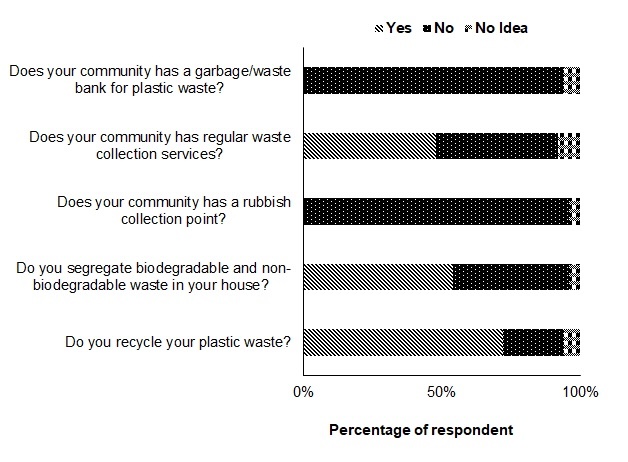
When asked if the community has a garbage waste bank for plastic waste, 94% of the respondents answered there is ‘no’ (n=47) waste bank for plastic waste in the community, while 6% have no idea (n=3) (Figure 5). 48% of the respondents said that the community has regular waste collection services (n=24), 44% said that there are no regular waste collection services (n=22), while 8% have no idea (n=4). Majority of the respondents said there is no rubbish collection point in the area (n=48, 96%), while 4% have no idea (n=2). 72% of the respondents were recycling plastic waste (n=36), while 22% do not perform recycling, and 6% of the respondents have no idea about recycling. 54% of the respondents practice segregation of biodegradable and non-biodegradable materials, while 42% do not practice it (n=21), only 4% have no idea about segregation (n=2).
4. Discussion
Riverine litter and plastic debris have emerged as significant global environmental challenges, particularly in regions like Palawan, where the intersection of culture, sustainability, and environmental management is crucial for addressing plastic pollution. This survey aimed to evaluate the local community's awareness, perception, and practices regarding riverine plastic litter along Pulot River and its tributary, to potentially minimize the presence of plastic litter in this environment.
Overall, this study demonstrated that participants have a moderate awareness of riverine plastic litter and pollution, including its sources, impacts, and relevant government policies. This finding aligns with the results of Henderson and Green (2020), who reported that a significant majority of their participants (27 out of 42 expressed concerns about the threats and impacts of plastic pollution on wildlife and marine security. Similarly, our study revealed that participants recognized the detrimental effects of plastic pollution on the aquatic environment, acknowledging that fish and other aquatic animals can ingest these materials. This growing awareness among respondents indicates a positive trend towards recognizing the environmental risks associated with plastic pollution.
The present study found that 62% of respondents perceived the amount of plastic litter in Pulot River and its tributaries to be moderate, suggesting a public acknowledgment of plastic pollution's presence in the area. This perception, however, aligns with findings from previous research (Dilkes-Hoffman et al. 2019) indicating that local communities can often underestimate the true severity of plastic pollution due to its gradual accumulation and less visible, long-term impacts. The predominant types of plastic identified by respondents as abundant were plastic packaging and bottles, which is directly attributable to the pervasive "sachet culture" in the Philippines. This cultural phenomenon reflects a strong societal preference for convenience, a key factor leading to increased plastic waste generation, particularly in island communities that often face limited access to comprehensive waste management infrastructure.
These findings align with the results of the study of Inocente et al. (2023), who reported that residents in coastal tourism areas show awareness of marine plastic pollution’s impacts but with varied levels across demographics. Requiron et al. (2023), worked with aquaculture farmers in Dapitan City, found a comparable moderate level of awareness regarding plastic litter and its impacts on livelihoods, alongside challenges in effective waste management—reflecting the mixed disposal practices seen in this study. Moreover, Sumeldan et al. (2021), documented that coastal communities in Palawan perceived an increase in marine pollution over time, reinforcing this study’s finding that participants believe plastic litter along riverbanks has grown significantly over the past five years and will likely continue to increase.
Interestingly, while most respondents (82%) identified residents living along the river as the primary source of plastic pollution, a significant portion of participants (56%) did not believe that tourists contribute to plastic waste in Pulot River. This finding contrasts with Sajorne et al. (2021), who suggested that tourism activities significantly contribute to plastic pollution in coastal areas. The discrepancy may stem from the perception that residents are more directly responsible for littering, while the impact of tourism is less visible or acknowledged. This highlights the need for further research to explore the role of tourism in plastic pollution and to develop targeted interventions that address both local and visitor behaviors.
Participants in this study perceived that plastic litter along riverbanks and within water bodies has increased significantly over the past five years, with many anticipating this upward trend will persist over the coming decade. This community perception reflects a broader understanding that pollution levels tend to escalate in the absence of effective interventions. Such views align with Schmidt et al. (2017), who emphasized that plastic pollution in riverine environments is likely to worsen without robust waste management strategies.
Similar trends have been documented in the Philippine context. Sumeldan et al. (2021) found that coastal communities in Palawan observed a noticeable deterioration in marine environmental quality over time, particularly linked to plastic debris accumulation. Likewise, Requiron et al. (2023) reported moderate awareness among aquaculture farmers in Dapitan City regarding increasing plastic litter’s impacts on their livelihoods, echoing concerns about the persistent rise of plastic pollution in local waters. Inocente et al. (2023) similarly noted that residents in coastal tourism sites express growing awareness of marine plastic pollution’s environmental and socioeconomic consequences, further affirming that Filipino communities recognize worsening plastic contamination trends in both riverine and coastal ecosystems.
Regarding personal waste disposal practices, most respondents in this study reported environmentally responsible actions such as burying, burning, or placing household waste in designated trash bins, with only a minority admitting to directly discarding waste into riverbanks or water bodies. Nevertheless, the predominance of food packaging—especially sachets—found as litter in Pulot River suggests a disconnect between reported behaviors and the actual sources of pollution. This inconsistency parallels findings by Requiron et al. (2023), who observed that despite moderate awareness, challenges such as inadequate waste disposal infrastructure and limited resources contribute to improper waste handling in riverine communities. Similarly, Larsen et al. (2020) pointed out that insufficient waste management facilities commonly lead to increased littering and illegal dumping in low-income areas, an issue reflected in the current study’s context.
Despite these infrastructural and behavioral challenges, participants demonstrated notable environmentally friendly behaviors, reporting frequent engagement in recycling and waste segregation. This indicates a strong pro-environmental intent at the individual level, which echoes patterns observed by Larsen et al. (2020) and aligns with Inocente et al. (2023), who found that motivated individuals often adopt recycling practices even if broader collective community initiatives remain limited. To capitalize on this individual motivation and foster wider participation in sustainable waste management, targeted policy interventions are needed. These should not only focus on raising awareness about the environmental impacts and infrastructure availability but also on enforcing regulations and improving waste management systems.
The participants’ self-reported intent to reduce plastic consumption reflects a positive shift from passive acceptance toward proactive engagement with sustainability efforts, consistent with the findings of Cecere et al. (2014) and supported by similar trends identified in Philippine studies by Requiron et al. (2023) and Sumeldan et al. (2021). Strengthening community-wide initiatives that build upon this individual motivation can enhance the effectiveness of plastic pollution mitigation strategies in riverine and coastal settings across the Philippines.
5. Limitations of the Study
It is important to acknowledge the limitations of the present study. First, given the voluntary nature of participants' involvement, selection bias cannot be ruled out. Such a sampling method may have inadvertently led to greater participation among individuals who were already more knowledgeable and aware of riverine plastic pollution, compared to non-participants. Second, the generalizability of the study's findings should be approached with caution, given the sample's specific characteristics. Specifically, a disproportionately large number of participants were female, predominantly comprised of individuals with secondary education, and belonged to older generations. Therefore, this sample is not necessarily representative of the broader demographic diversity of the local population residing along the Pulot River and its tributaries, and thus, extrapolating these findings to the entire population should be done with prudence.
Despite these limitations, the present study provides valuable insight into the public awareness, perception and practices of the local community along Pulot River and its tributary towards riverine plastic litter and pollution. This work additionally underscores the critical need to tailor interventions to specific audiences to address the issues. It is also important to conduct future studies employing diverse populations and research methodologies. For example, to further comprehensively analyze the effect of socio-demographic variables in the public awareness and views on riverine plastic pollution, future research should invest more in representative samples, looking for a greater diversity in participants’ age and gender. In addition, it remains important to explore the role of other contextual factors (e.g. distance to the riverbanks and having personal experience with riverine plastic pollution), as well as to investigate the complex social and behavioral processes contributing to awareness, perception and behavioral practices which have been globally high lightened as hotspots of riverine plastic pollution (e.g. Asia; Jambeck et al. (2015)).
6. Conclusions and Recommendations
Plastic debris in the environment, particularly in river systems, is globally recognized as a significant environmental threat that demands societal attention and awareness. This study confirms the relevance of evaluating public awareness, perceptions, and behavioral practices regarding riverine plastic pollution. Our findings indicate that while society generally possesses a moderate awareness of plastic pollution's impacts, sources, and existing policies, critical knowledge gaps persist regarding its specific long-term consequences, such as microplastic formation. Furthermore, despite prevalent self-reported environmentally friendly behaviors like recycling and waste segregation in daily routines, a concerning disconnect exists between reported disposal practices and the types and perceived increase of plastic litter observed in the river.
This research contributes to a deeper understanding of riverine plastic pollution by highlighting the local community's unique awareness and perceptions along the Pulot River in Palawan Island. It particularly illuminates how cultural factors, such as "sachet culture," influence environmental outcomes and the complex interplay between individual actions and broader waste-management challenges. The paradox of awareness coupled with perceived escalating pollution underscores the urgent need for targeted interventions.
Given the presence of plastic pollution along the Pulot River and its tributaries, it is important that local government units prioritize the strict implementation and enforcement of existing waste management policies and strategies, including ordinances banning single-use plastics. To effectively mitigate plastic pollution, regular and comprehensive waste collection services should be expanded beyond the town proper to include remote areas outside the town center, ensuring no community is left underserved. Furthermore, investing in targeted environmental education programs is essential. Such initiatives should be developed specifically for local communities along the Pulot River, addressing knowledge gaps on plastic decomposition times, the impacts of microplastics, and the consequences of littering. By focusing on reducing plastic consumption, particularly of prevalent items like sachets, and promoting responsible waste disposal, these education programs can serve as a valuable resource for fostering behavioral changes necessary to reduce plastic pollution in riverine ecosystems. These integrated approaches of policy enforcement, infrastructure improvement, and community education will provide a robust framework to address plastic pollution in the Pulot River and protect its tributaries for future generations.
While the sample size of 50 respondents provides valuable insights into local awareness and perceptions, it was selected via convenience sampling and is not statistically representative of the entire population residing along Pulot River. The demographic distribution, notably the predominance of females (72%) and older age groups, suggests potential selection bias. Therefore, caution should be exercised when extrapolating these findings broadly. Future research should employ larger, randomized, and more diverse samples to improve statistical representativeness and validity.
7. Acknowledgments
The researcher would like to extend her genuine appreciation and acknowledge the different personalities and organizations that helped make this research a success. To the Department of Science and Technology – Science Education Institute (DOST-SEI) through the Accelerated Science and Technology Human Resource Development Program (ASTHRDP) for the scholarship program and for funding this research that made this study possible. The author would also like to thank her colleagues for their support throughout the study analysis and sampling period.
References
- Cecere, G., Mancinelli, S., Mazzanti, M., 2014. Waste prevention and social preferences: the role of intrinsic and extrinsic motivations. Ecological Economics, 107: 163–176. https://doi.org/10.1016/j.ecolecon.2014.07.007
- Center for Biological Diversity. https://www.biologicaldiversity.org/campaigns/ocean. Access on November 19, 2021
- Chae, Y., An, Y.J., 2018. Current research trends on plastic pollution and ecological impacts on the soil ecosystem: a review. Environmental Pollution, 240: 387–395. https://doi.org/10.1016/j.envpol.2018.05.008
- Dilkes-Hoffman, L., Ashworth, P., Laycock, B., Pratt, S., Lant, P., 2019. Public attitudes towards bioplastics – knowledge, perception and end-of-life management. Resources, Conservation and Recycling, 151: 104479. https://doi.org/10.1016/j.resconrec.2019.104479
- Escañan, A.S., Bacosa, H.P., 2022. Assessment of riverine plastic flux in Pulot River and its tributary in Sofronio Española, Palawan, Philippines. Journal of Marine and Island Cultures, 11(2), 1-17. https://doi.org/10.21463/jmic.2022.11.2.01
- Escañan, A.S., Gutierrez, C.S., Lubguban, A.A., Amparado, R.F., Guihawan, J.Q., Bacosa, H.P., 2024. Plastic litter assessment of the riverbanks of Pulot River and its tributary in Sofronio Española, Palawan Island, Philippines. Journal of Marine and Island Cultures, v13n1, 76-91. https://jmic.online/issues/v13n1/5/
- Filho, W.L., Salvia, L., Bonoli, A., Saari, U.A., Voronova, V., Klõga, M., Kumbhar, S.S., Olszewski, K., De Quevedo, D.M., Barbir, J., 2021. An assessment of attitudes towards plastics and bioplastics in Europe. Science of Total Environment, 10;755(Pt 1):142732. MID: 33092843. DOI: 10.1016/j.scitotenv.2020.142732
- Gabriel, A.Z., Bacosa, H.P., 2024. Microplastic abundance and distribution in the sediment of Cagayan de Oro River, Philippines. Soil and Sediment Contamination: An International Journal, 33: 1252-1268 https://doi.org/10.1080/15320383.2023.2301495
- Gabriel, A.D., Amparado, R.F. Jr., Lubguban, A.A., Bacosa, H.P., 2023. Riverine Microplastic Pollution: Insights from Cagayan de Oro River, Philippines. International Journal of Environmental Research and Public Health, 20(12): 6132. https://doi.org/10.3390/ijerph20126132
- Heidbreder, L.M., Bablok, I., Drews, S., Menzel, C., 2019. Tackling the plastic problem: a review on perceptions, behaviors, and interventions. Science of Total Environment, 668: 1077–1093. https://doi.org/10.1016/j.scitotenv.2019.02.437
- Henderson, L., Green. C., 2020. Making sense of microplastics? Public understandings of plastic pollution. Marine Pollution Bulletin, 152: 110908. https://doi.org/10.1016/j.marpolbul.2020.110908
- Inocente, S.T., Gutierrez, C.S., Sison, M.M., Madarcos, J.V., Requiron, J.M., Pacilan, C.M., Gaboy, S.M., Segovia, J.M., Bacosa, H.P., 2023. Perception and awareness of marine plastic pollution in selected tourism beaches of Barobo, Surigao del Sur, Philippines, Journal of Environmental Management and Tourism, 14 (5): 2367 – 2378 https://journals.aserspublishing.eu/jemt/article/view/8021
- Jambeck, J.R., Geyer, R., Wilcox, C., Siegler, T.R., Perryman, M., Andrady, A., Narayan, R., Law, K.L., 2015. Plastic waste inputs from land into the ocean. Science, 347 (6223): 768–771. https://doi.org/10.1126/science.1260352.
- Larsen, M., Pantalos, M., Kleffelgard, M., Gressetvold, M., 2020. Citizen science data indicate a reduction in beach litter in the Lofoten archipelago in the Norwegian Sea. Marine Pollution Bulletin, 153: 111000 https://doi.org/10.1016/j.marpolbul.2020.111000
- Lasut, M.T., Weber, M., Pangalila, F., Rumampuk, N.D., Rimper, J.R., Warouw, V., Kaunang, S., Lott, C., 2018. From Coral Triangle to Trash Triangle–How the Hot Spot of Global Marine Biodiversity is Threatened by Plastic Waste. In: Cocca, M., Di Pace, E., Errico, M., Gentile, G., Montarsolo, A., Mossotti, R. (eds) Proceedings of the International Conference on Microplastic Pollution in the Mediterranean Sea. Springer Water, 107-113. https://doi.org/10.1007/978-3-319-71279-6_15
- Meijer, L.J.J., van Emmerick, T., van Der Ent, R., Schmidt, C., Lebreton, L., 2021. More than 1000% rivers accounts for 80% of global riverine plastic emission into the ocean. Science Advances, 7(18): 1-13. https://doi.org/10.1126/sciadv.aaz5803
- Moore, C., Moore, S., Leecaster, M., Weisberg, S., 2001. A Comparison of Plastic and Plankton in the North Pacific Central Gyre. Marine Pollution Bulletin, 42(12): 1297-1300. https://doi.org/10.1016/s0025-326x(01)00114-x
- Requiron, J.M., Gutierrez, C.S., Inocente, S., Pacilan, C.M., Gaboy, S.M., Sison, M.M., Amparado, R.F., Bacosa, H.P., 2023. Aquaculture farmers’ perception and level of awareness of plastic litter in San Pedro, Dapitan City, Mindanao, Philippines. Journal of Sustainability Science and Management, 18 (3): 77-91 https://jssm.umt.edu.my/wp-content/uploads/sites/51/2023/03/ARTICLE-6.pdf
- Romarate, R.A., Madarcos, J.V., Pacilan, C.M., Bacosa, H.P., Torres, A.G., 2024. When air quality matters: awareness, perception, and attitude of the residents in Metro Manila, Philippines. Environment, Development and Sustainability, 1-18 https://link.springer.com/article/10.1007/s10668-024-05215-y
- Sajorne, R.E., Bacosa, H.P., Cayabo, G.D.B., Ardines, L.B. Jr., Sumeldan, J.D.C., Omar, J.M., Creencia, L.A., 2021. Plastic litter along sandy beaches in Puerto Princesa, Palawan Island, Philippines. Marine Pollution Bulletin, 169:112-520. https://doi.org/10.1016/j.marpolbul.2021.112520
- Sajorne, R.E., Cayabo, G.D.B., Madarcos, J.R.V., Madarcos, K.G., Omar, D.M. Jr., Ardines, L.B., Sabtal, S.A., Mabuhay-Omar, J.A., Cheung, V., Creencia, L.A., Bacosa, H.P., 2022a. Occurrence of COVID-19 personal protective equipment (PPE) litters along the eastern coast of Palawan Island, Philippines. Marine Pollution Bulletin, 182:113934. https://doi.org/10.1016/j.marpolbul.2022.113934.
- Sajorne, R.E., Cayabo, G.D.B., Gajardo, L.J., Mabuhay‐Omar, J.A., Creencia, L.A., Bacosa, H.P., 2022b. Disentangling microplastic pollution on beach sand of Puerto Princesa, Palawan Island, Philippines: Abundance and Characteristics. Sustainability, 14: 15303. https://www.mdpi.com/2071-1050/14/22/15303
- Schmidt, C., Krauth, T., Wagner, S., 2017. Export of plastic debris by rivers into the sea. Environmental Science and Technology, 51: 12246–12253. https://doi.org/10.1021/acs.est.7b02368.
- Statista, 2020. Plastic waste worldwide-statistics and facts. https://www.statista.com. Accessed on 17 August 2021.
- Sumeldan, D.C., Richter, I., Avillanosa, A.L., Bacosa, H.P., Creencia, L.A., Pahl, S., 2021. Ask the locals: A community-informed analysis of the perception on marine environment quality over time in Palawan, Philippines. Frontiers in Psychology, 12: 661810.
- Syberg, K., Hansen, S.F., Christensen, T.B., Khan, F.R., 2018. Risk perception of plastic pollution: importance of stakeholder involvement and citizen science. In: Wagner, M., Lambert, S. (Eds.), Handbook of Environmental Chemistry, 58.
- Thompson, R.C., Olsen, Y., Mitchell, R.P., Davis, A., Rowland, S.J., John, A.W., Russell, A.E., 2004. Lost at sea: Where is all the plastic? Science, 304(5672): 838–838. https://doi.org/10.1126/science.1094559
- Van Eygen, E., Feketitsch, J., Laner, D., Rechberger, H., Fellner, J., 2017. Comprehensive analysis and quantification of national plastic flows: the case of Austria. Resource Conservation and Recycling, 117: 183–194. https://doi.org/10.1016/j.resconrec.2016.10.017.