
Abundance, Characterization, and Distribution of Marine Litter in Samar, Philippines: A Comparison Between Mainland and Island Beaches
 10.21463/jmic.2025.14.3.11
Abstract
Marine litter is a growing global environmental issue that poses a significant threat to ecosystems, marine life, and human health. Although awareness of marine pollution has grown in the Philippines in recent years, knowledge of its impacts remains limited in some parts of the country. This study assesses the composition, sources, and clean-coast index (CCI) of marine litter on both mainland and island beaches in Samar. Marine litter was assessed by delineating a 100-meter transect and randomly selecting ten 2 m x 2 m quadrats for analysis. Results revealed higher litter densities on mainland beaches (1.14 items/m²) than on island beaches (1.00 items/m²), with plastics comprising 86% of the litter on mainland beaches and 60% on island beaches. Cleanliness ratings showed a wide range for mainland beaches, from clean to extremely dirty, while island beaches were rated as dirty to extremely dirty. The primary sources of litter were shoreline and recreational activities, contributing 75% of the total waste. These findings highlight differences in litter composition and density, underscoring the need for improved waste management, public education, and continuous monitoring. To effectively mitigate marine litter, coordinated efforts between communities and government agencies are crucial, with a focus on sustainable waste reduction.
Keywords
beach litter, clean-coast index, island beaches, litter management, plastic pollution
Introduction
Marine litter is any anthropogenic or processed material discarded, disposed of, or abandoned in the marine environment, intentionally or accidentally (UNEP, 2009). It enters the ocean through various pathways, including rivers, drainage systems, sewage outlets, and wind (Cheshire et al., 2009). This form of pollution encompasses a wide range of materials, with plastics being the most prevalent. However, it also includes glass, metal, rubber, wood, and discarded fishing gear (Lyons et al., 2020). Among these items, plastic waste, particularly synthetic polymers, poses a serious threat due to its persistence and harmful effects on marine life (Derraik, 2002).
The impacts of marine litter are well-documented. Marine species frequently ingest debris, leading to injury, starvation, or death as plastics block their digestive systems (Costa et al., 2020). Floating debris also serves as a vector for invasive species, which can disrupt native ecosystems (Mantelatto et al., 2020). Furthermore, litter that settles on the ocean floor can smother vital marine habitats, such as coral reefs and seagrass beds, reducing biodiversity and compromising ecosystem health (Navarrete-Fernández et al., 2022).
Marine litter has become a pressing environmental issue in the Philippines, exacerbated by a growing coastal population, rapid economic development, and intensive maritime activities. According to Castillo & Otoma (2013), the country generates approximately 35,580 tons of waste daily, with per capita waste production averaging 0.5 kg in urban areas and 0.3 kg in rural areas. Alarmingly, the Philippines ranks as the third-largest contributor to global ocean plastic pollution, following China and Indonesia (Jambeck et al., 2015). While existing research emphasizes the urgency of implementing sustainable waste management strategies, reliable and comprehensive data are essential for designing effective, long-term solutions to waste problems.
Understanding the types, quantities, and sources of marine litter is crucial for addressing ocean pollution. Although accurately quantifying the total volume of ocean debris remains difficult, beach surveys have proven to be a practical and effective method for monitoring shoreline litter (Dixon & Dixon, 1981). These surveys offer valuable insights into the extent of marine pollution and serve as a tool for assessing the effectiveness of policies aimed at reducing waste.
In recent years, research on marine litter in the Philippines has expanded, with numerous studies focusing on beaches along the mainland (Bacosa, 2022; Esquinas et al., 2020; Inocente & Paler et al., 2019; Jarabe et al., 2023; Sajorne et al., 2021). However, much of this research remains geographically limited, with a notable lack of studies on island beaches. These areas are particularly vulnerable to litter accumulation due to their exposure to ocean currents and remoteness from the mainland (Barnes et al., 2018).
Comparing mainland and island beaches is crucial because these environments differ in their exposure to anthropogenic activities, waste sources, and oceanographic conditions, which can influence the quantity and types of litter present. Islands often serve as sinks for marine debris transported by currents, while local human populations and land-based pollution more directly impact mainland beaches.
This study aims to address these gaps by examining the quantity, composition, and potential sources of marine litter on the beaches of Samar. By analyzing the collected data, the study seeks to develop targeted management strategies and evidence-based policy recommendations to mitigate the accumulation of litter in the marine environment.
Materials and Methods
Site Description
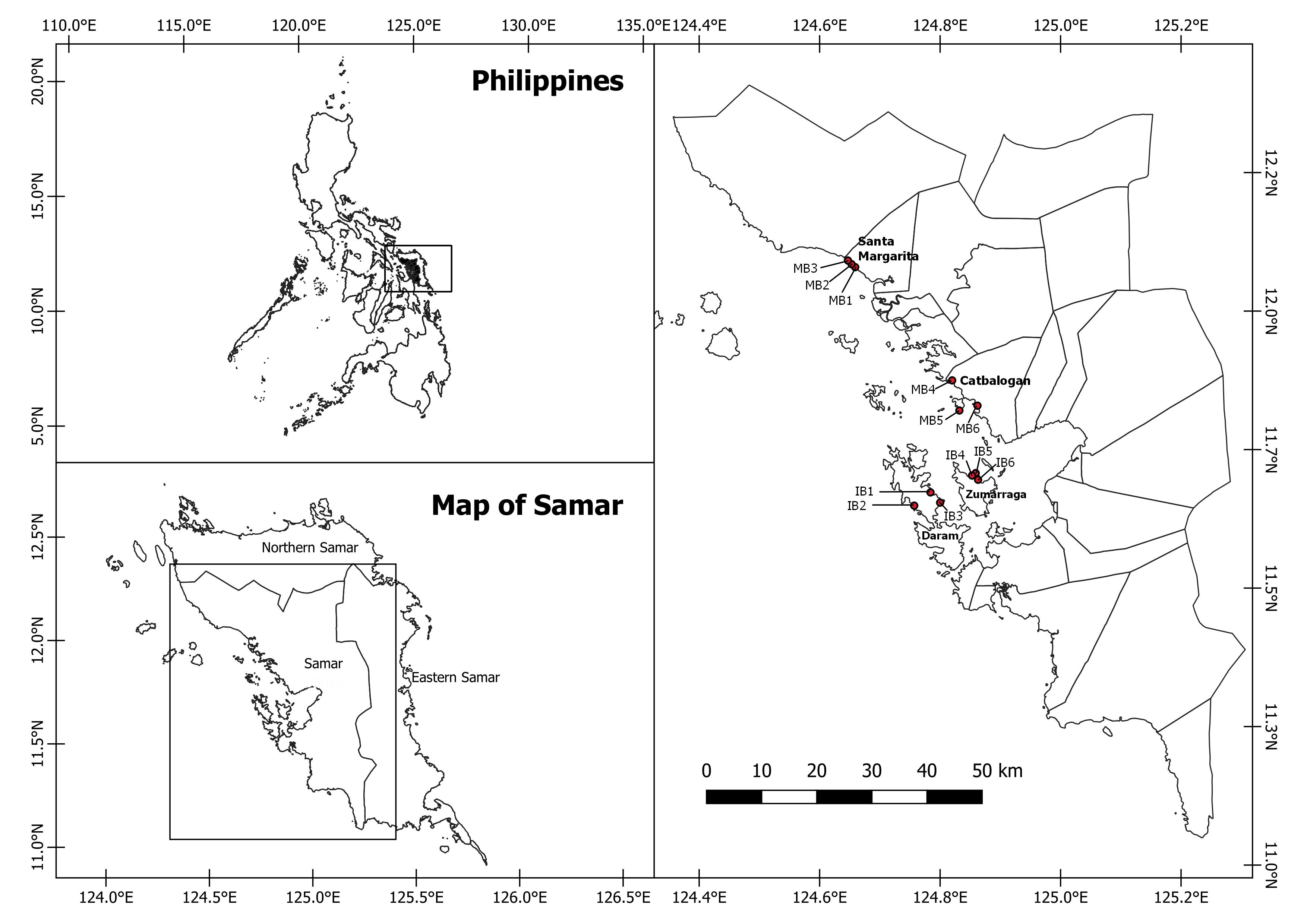
The study was carried out in four coastal towns of Samar: Sta. Margarita and Catbalogan City are on the mainland, and Daram and Zumarraga are on the islands (Figure 1). Catbalogan City, situated in the western part of Samar, serves as the province's political, economic, and cultural hub. Sta. Margarita, a smaller rural town located north of Catbalogan City, offers easy coastal access but is less urbanized than Catbalogan City.
Daram, an island town southwest of Catbalogan City, consists of a large main island and several smaller islands within Maqueda Bay, accessible only by boat. Meanwhile, Zumarraga, which is located northeast of Daram, is a smaller island town closer to the Samar mainland.
For this study, marine litter was collected from 12 sandy beaches across both mainland (MB) (n=6) and island (IB) (n=6) barangays in Samar. A barangay, the smallest administrative unit in the country, served as the basis for site selection. The chosen beaches met specific criteria: they were at least 100 meters long, had a gentle slope (1.5–4.5°), and provided year-round access to the sea (Vlachogianni et al., 2018). These factors ensured the study captured a representative snapshot of marine litter accumulation in mainland and island settings.
Data Collection
Marine litter was sampled from July to September 2024 during low tides, following the methods described by Bingham et al. (2019) and Burgess et al. (2021). A 100m transect was laid parallel to the shoreline in the strandline, where most marine litter was deposited. The transect was divided into 50 segments, each 2m wide, creating a 4m² quadrat. Ten segments were randomly selected for the survey, covering 20% of the total transect area.
All marine litter within the 4m² quadrat was identified, counted, and classified, focusing on macro-debris (>2cm) and items protruding from the surface. The litter was classified into nine types using the UNEP/IOC Guidelines (Cheshire et al., 2009): plastics, foamed plastics, cloth, glass and ceramics, metals, paper/cardboard, rubber, wood, and others. Plastic items were further categorized according to the methodology of Sajorne et al. (2021) with slight modifications. The classification includes food packaging, disposable utensils, plastic caps, napkins and diapers, ropes, nylon, and fishing nets, cigarette butts and lighters, plastic fragments, polyethylene bags (sando bags), styrofoam, medicinal packaging, sacks, plastic bottles, cellophane, toiletries, and other plastics.
Marine litter sources were classified into five categories: (1) shoreline and recreational activities (e.g., bottles, toys), (2) smoking-related items (e.g., lighters, cigarette butts), (3) boat/fishing/farming activities (e.g., nets, fishing lines), (4) dumping (e.g., building materials, tires), and (5) medical/personal hygiene (e.g., syringes, tampons) (Ocean Conservancy, 2010). This classification links the litter to the activities or sectors that are likely to have caused it.
Data Analysis
After recording and categorizing the marine litter, its density was calculated using the formula from Lippiatt et al. (2013): CM = n / (w * l), where CM is the litter density (items per m²), n is the number of items, w is the width of the area, and l is the transect length.
The clean-coast index (CCI) was also calculated to assess the coast's cleanliness (Alkalay et al., 2007). CCI = CM * K, where K is 20. The CCI values and their corresponding cleanliness grades are: 0-2 (very clean, no litter), 2-5 (clean, no litter over a large area), 5-10 (moderate, a few pieces of litter), 10-20 (dirty, many litters), and 20+ (extremely dirty, most of the beach covered with litter).
Statistical Analysis
An independent two-sample t-test was used to compare the litter density between mainland and island beaches. Data was simplified using graphs and charts. Statistical analysis was done with SPSS version 27, and graphs were created in Microsoft Excel 2010.
Results
Abundance and Spatial Distribution of Marine Litter
A total of 2,569 litter items were collected from 12 beaches, all of which showed evidence of marine litter accumulation. The highest litter densities were recorded at MB1 (2.24 items/m²), IB2 (1.90 items/m²), and MB4 (1.38 items/m²), while the lowest density was observed at MB6 (0.12 items/m²) (Table 1). On average, mainland beaches had a slightly higher litter density of 1.14 items/m² compared to 1.0 items/m² on island beaches. However, statistical analysis revealed no significant difference in litter densities between mainland and island beaches (p > 0.05), suggesting that marine litter is a prevalent issue across both coastal environments.
| Sampling Sites | Station Code | No. of Items / Site | Density (m²) | CCI | CCI Category |
|---|---|---|---|---|---|
| Sta. Margarita | MB1 | 448 | 2.24 | 44.8 | Extremely Dirty |
| MB2 | 261 | 1.31 | 26.1 | Extremely Dirty | |
| MB3 | 259 | 1.30 | 25.9 | Extremely Dirty | |
| Catbalogan City | MB4 | 275 | 1.38 | 27.5 | Extremely Dirty |
| MB5 | 100 | 0.50 | 10.0 | Moderately Clean | |
| MB6 | 24 | 0.12 | 2.4 | Clean | |
| Daram | IB1 | 162 | 0.81 | 16.2 | Dirty |
| IB2 | 379 | 1.90 | 37.9 | Extremely Dirty | |
| IB3 | 214 | 1.07 | 21.4 | Extremely Dirty | |
| Zumarraga | IB4 | 139 | 0.70 | 13.9 | Dirty |
| IB5 | 99 | 0.50 | 9.9 | Moderately Clean | |
| IB6 | 209 | 1.05 | 20.9 | Extremely Dirty | |
| CCI Values | 0–2 | 2–5 | 5–10 | 10–20 | >20 |
| Beach Cleanliness | Extremely Clean | Clean | Moderately Clean | Dirty | Extremely Dirty |
Clean-coast index of Beaches
The clean-coast index (CCI) revealed that 59% of the sampled beaches were classified as "Extremely Dirty," 33% as "Moderately Clean" to "Dirty," and only 8% as "Clean." Mainland beaches generally exhibited higher CCI values, indicating poorer conditions than island beaches. For instance, MB1, MB2, MB3, and MB4 were all rated as "Extremely Dirty," with CCI values ranging from 25.90 to 44.80. In contrast, MB5 was classified as "Moderately Clean" (CCI of 10.00), and MB6 was classified as "Clean" (CCI of 2.40).
Island beaches fared slightly better than mainland beaches but faced significant waste problems. IB1 and IB4 were categorized as "Dirty," with CCI values of 16.20 and 13.90, respectively, while IB2, IB3, and IB6 were rated as "Extremely Dirty," with CCI values ranging from 20.90 to 37.90. IB5 was classified as "Moderately Clean," with a CCI of 9.90. Overall, most island beaches were deemed "Extremely Dirty," with an average CCI of 42.82, highlighting the widespread nature of marine litter in the studied areas.
Composition of Marine Litter
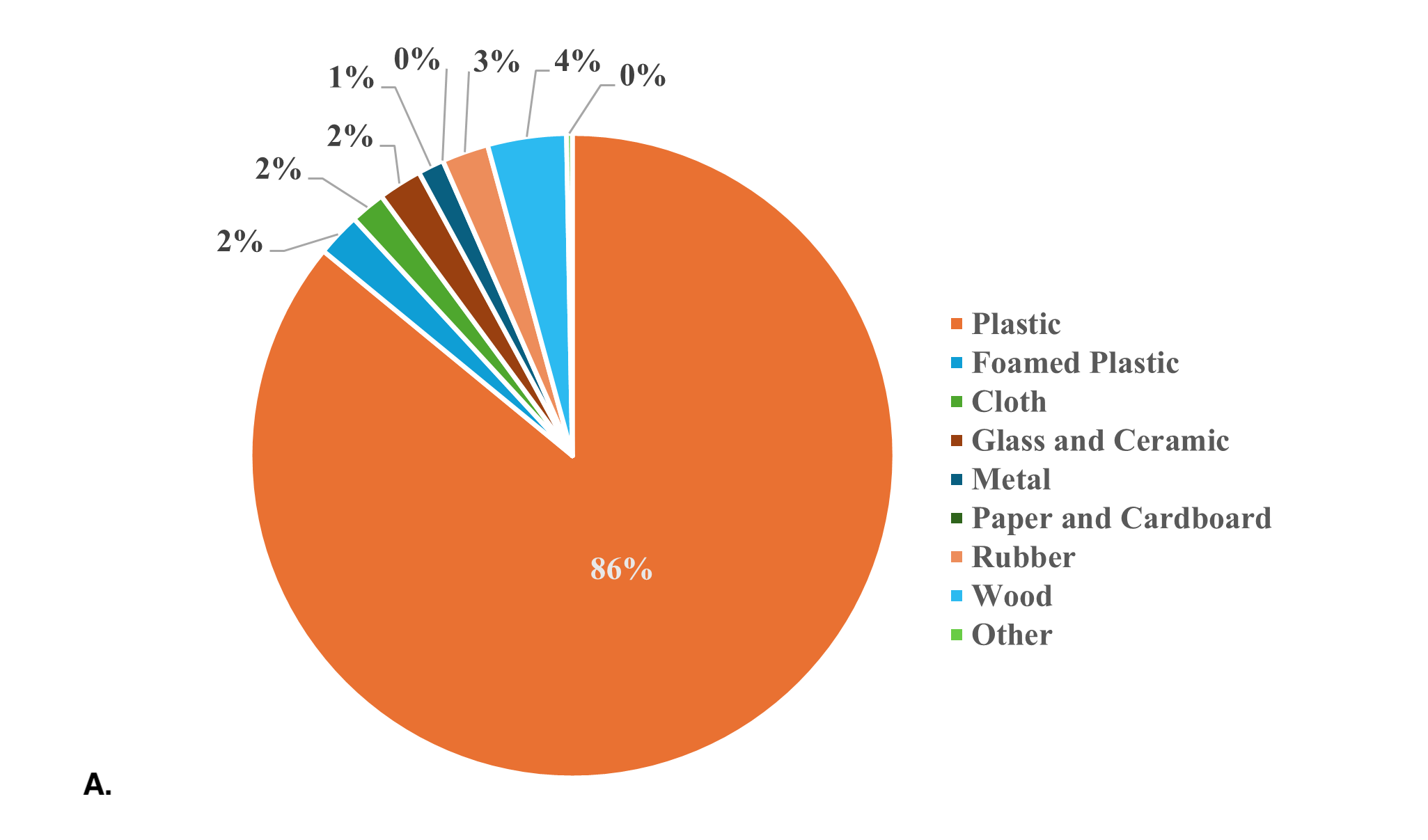
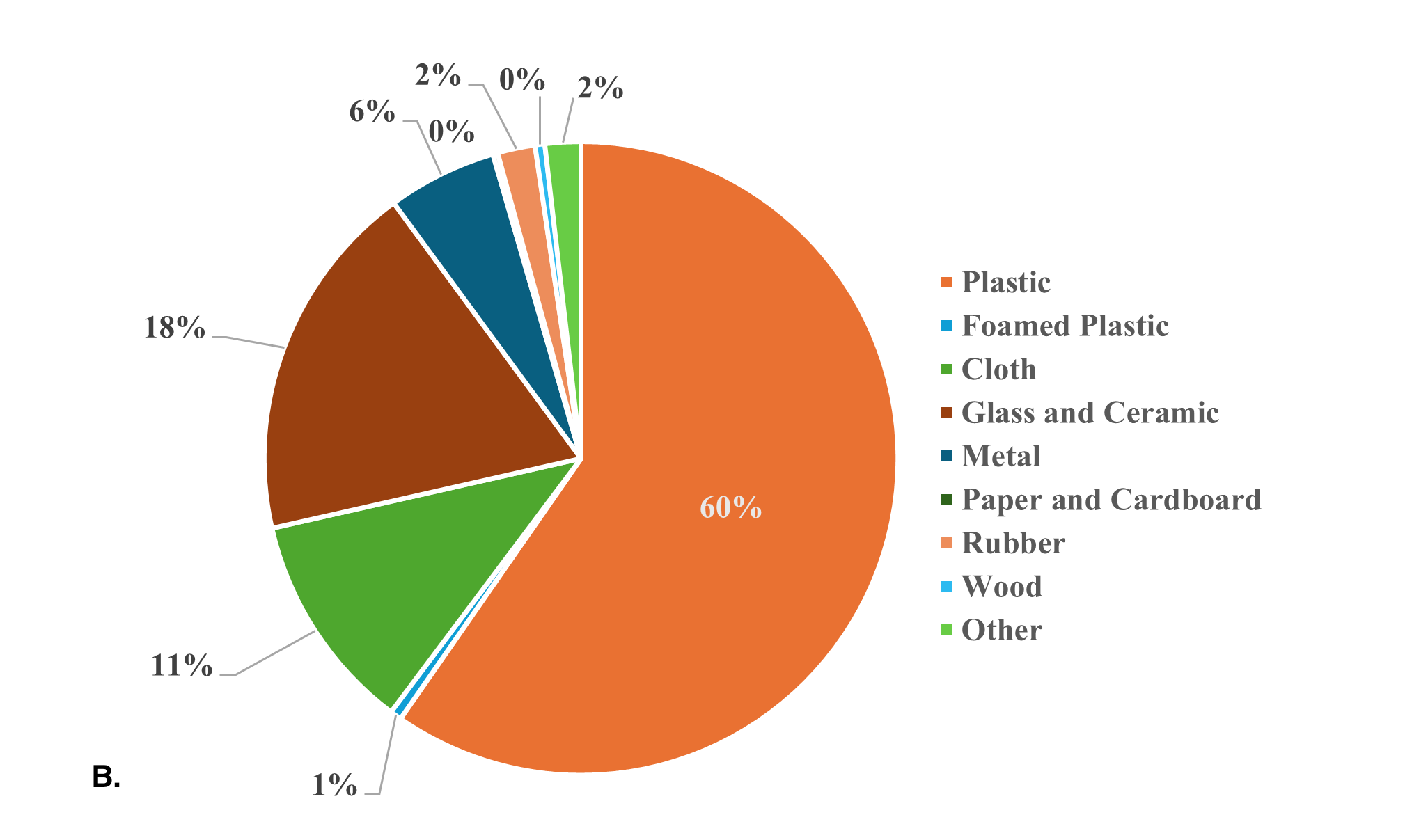
Marine litter items were categorized into eight groups according to the UNEP/IOC Guidelines. On mainland beaches, plastics comprised the majority of the litter at 86%, followed by wood at 4% (Figure 2). Rubber, glass and ceramic, foamed plastic, and cloth accounted for 2% of the debris, and metal with only 1%. On island beaches, plastics were also the most prevalent, although at a lower proportion of 60%. Glass and ceramic followed at 18%, cloth made up 11%, metal at 6%, rubber at 2%, and others at 2%, with foamed plastic accounting for 1%.
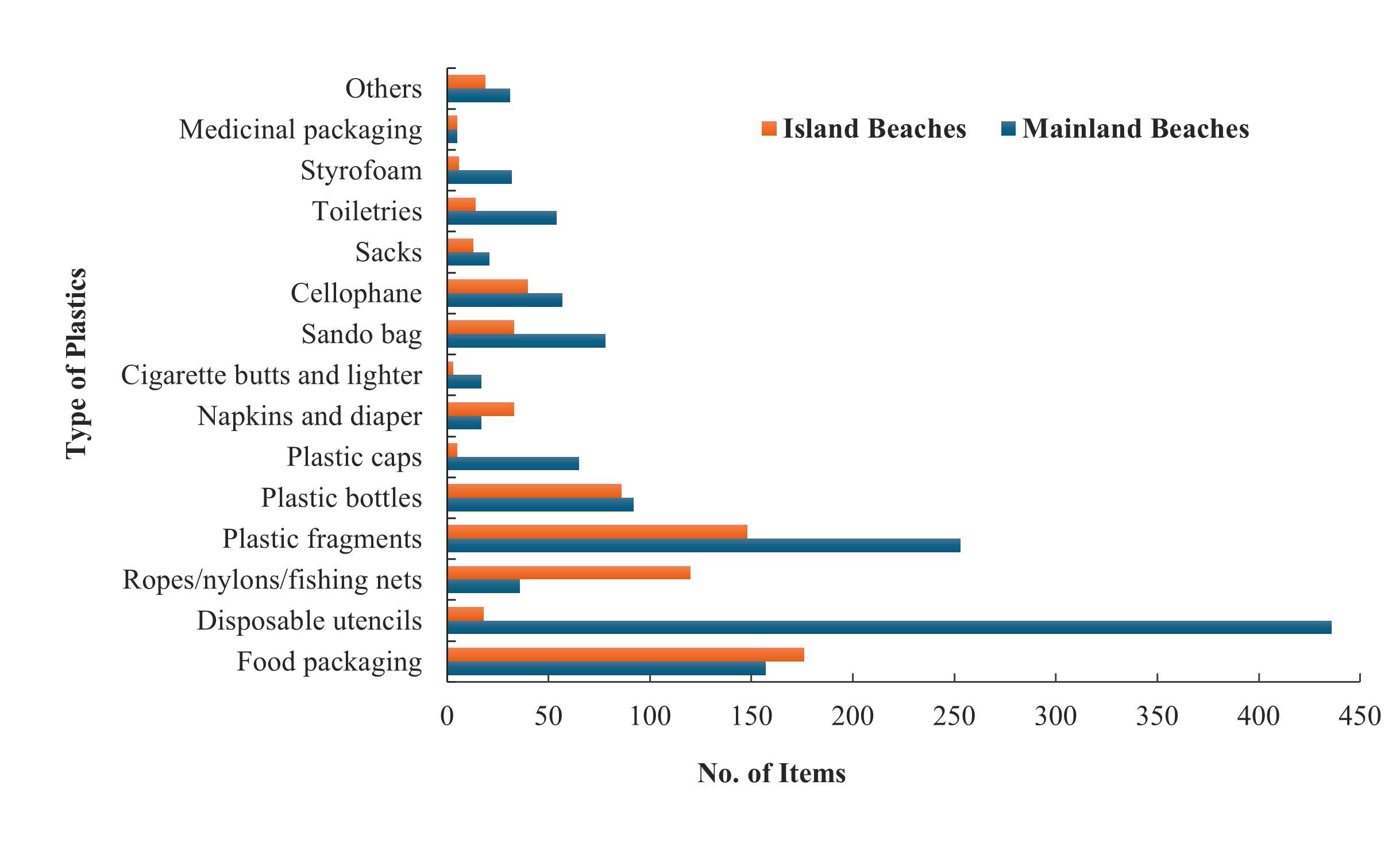
Among the 15 categories of plastic litter, disposable utensils were the most prevalent, accounting for 22% of the total waste, followed by plastic fragments (19%), food packaging (16%), and plastic bottles (9%). On mainland beaches, the most frequently found items were disposable utensils (436 items), plastic fragments (253 items), plastic bottles (92 items), and polyethylene bags (78 items) (Figure 3). On island beaches, the dominant items included food packaging (176 items), plastic fragments (148 items), ropes/nylons/fishing nets (120 items), and plastic bottles (86 items).
Sources of Marine Litter
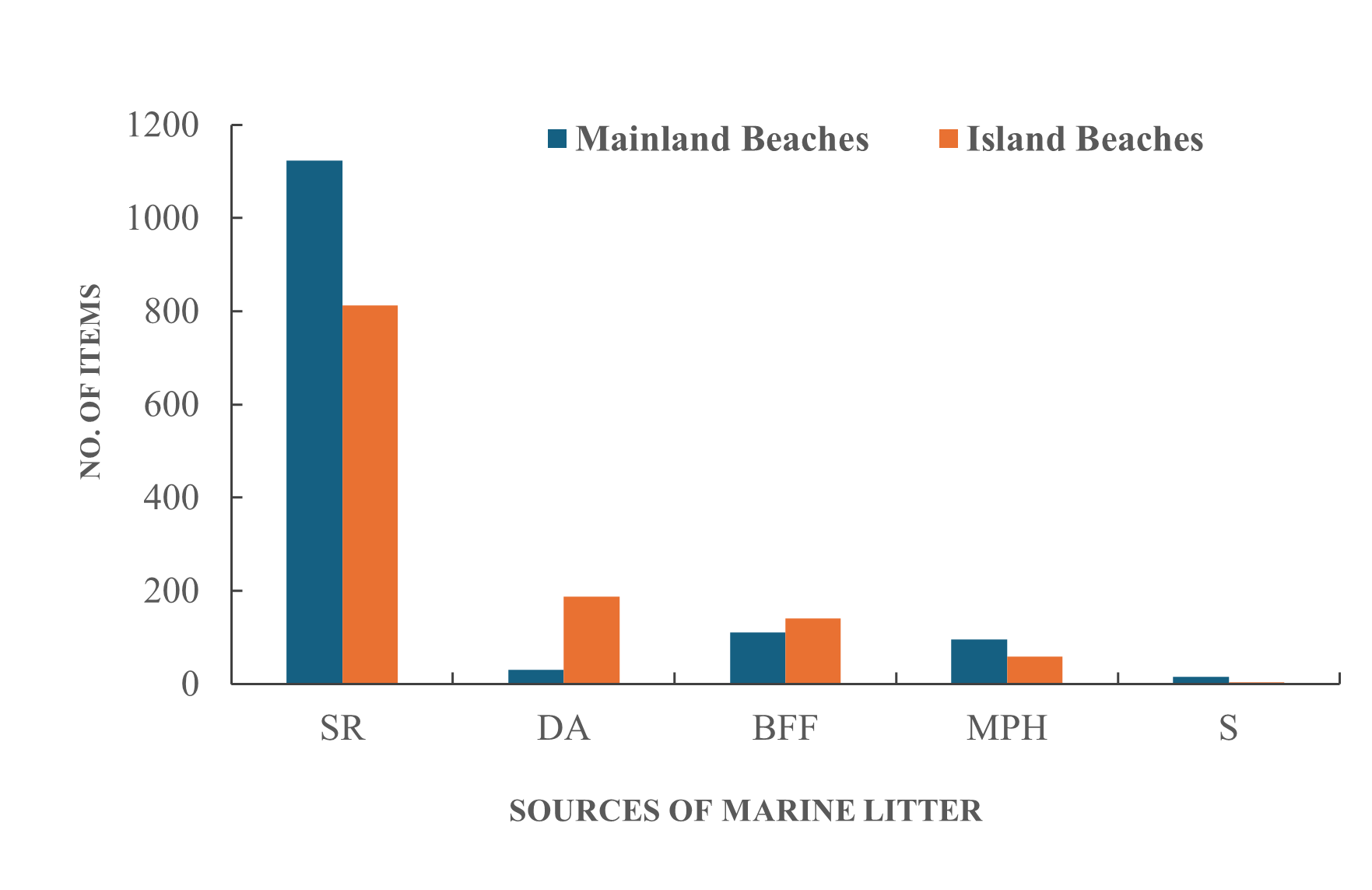
Most litter on mainland beaches originated from shorelines and recreational activities, contributing to 1,123 items (82%). This was followed by boat/fishing/farming activities, which accounted for 111 items (8%), and medical/personal hygiene waste, which comprised 96 items (7%) (Figure 4). Smoking-related litter was minimal, with only 15 items (1%) recorded. Similarly, on island beaches, shorelines, and recreational activities were the primary source of litter, contributing 812 items (68%). Dumping was the second-largest source, with 188 items (16%), followed by boating/fishing/farming activities at 140 items (12%) and medical/personal hygiene waste at 58 items (5%). Smoking-related litter was negligible, with just four items (0.33%) found.
| Characteristic | Mainland Beaches | Island Beaches | Comparison Highlights |
|---|---|---|---|
| Number of Sites Sampled | 6 | 6 | Equal sampling effort |
| Average Litter Density | 1.14 items/m2 | 1.00 items/m2 | Slightly higher on the mainland, but not statistically significant (p=0.36) |
| Clean-coast Index (CCI) | Many sites are 'Extremely Dirty' (CCI up to 44.8) | Generally lower CCI but still includes 'Extremely Dirty' sites (up to 37.9) | Mainland beaches are generally dirty, but pollution is widespread across all types of beaches |
| Dominant Litter Type | Plastics (86%) | Plastics (60%) + glass and ceramics (18%) | Plastics dominate both, but island beaches have a higher proportion of glass and ceramics |
| Top Plastic Items | Disposable utensils (22%) | Food packaging (16%) | Different usage is likely due to lifestyle differences |
| Main Sources of Marine Litter | Shoreline and recreational (82%) | Shoreline and recreational (68%) + dumping (16%) | Dumping is more pronounced on islands, and shoreline and recreational activities dominate both types of beaches |
Discussion
This study offers valuable insights into the distribution of marine litter along the beaches of Samar (Table 2). While mainland sampling sites showed a slightly higher litter density (1.14 items/m²) compared to the island (1.00 items/m²), statistical analysis revealed no significant difference (p>0.05). This suggests that factors other than urbanization and population density, such as shared human activities like recreational use, may contribute to litter accumulation. This is further supported by similar litter on mainland and island beaches, including food wrappers, polyethylene bags, cellophane, toiletries, and plastic bottles.
The highest litter densities were recorded at MB1, MB2, and MB3, with values of 2.24 items/m², 1.31 items/m², and 1.30 items/m², respectively. These sites, located in a rural coastal town, are likely influenced by their proximity to Calbayog City, a nearby urbanized area 10 kilometers away from the sampling sites. During the study period, the southwest monsoon may have significantly transported marine litter. Research by Gomez et al. (2023) highlights how monsoon winds and ocean currents can carry buoyant plastic waste over long distances, potentially explaining the higher litter densities observed in these sampling sites. Notably, much of the litter showed abrasion, brittleness, and discoloration, indicating prolonged exposure to the marine environment. A study by Orale and Fabillar (2011) further supports this claim, showing that waste often moves beyond local boundaries, is driven by wind patterns and topography, and can even reach neighboring provinces.
Compared to other studies in the Philippines (Acot et al., 2022; Inocente & Bacosa, 2022; Jarabe et al., 2023), the mainland beaches in this study exhibited higher litter densities, though still lower than those reported in the eastern Mediterranean (Portman & Brennan, 2017), Qatar (Veerasingam et al., 2020), and India (Perumal et al., 2021).
The relatively high litter densities on island beaches may be linked to the challenges remote communities face. As Mohee et al. (2015) explain, limited land for landfills, high transportation costs, and inadequate waste disposal services often lead to improper waste management on an island. These issues, compounded by poor disposal practices and a lack of awareness or enforcement of regulations, likely contribute to the accumulation of litter in these areas.
In this study, most beaches were classified as "Extremely Dirty" or "Dirty," with mainland beaches showing high vulnerability to pollution. The high CCI values at these sites are likely due to their proximity to residential areas, where increased human activity, such as direct littering and inadequate waste disposal systems, leads to a greater amount of waste entering the marine environment. MB6, however, was classified as "Clean" due to the cleaning efforts made during the sampling period.
While island beaches were in slightly better condition than the mainland, they still faced litter issues. This suggests islands are still vulnerable to pollution despite being farther from urban areas. A key factor is the lack of sufficient waste infrastructure, a common challenge in island communities (Bingham, 2019). Without proper disposal systems or recycling programs, residents and businesses dump waste directly into the ocean (Cozar et al., 2014). Environmental factors, such as weather, ocean currents, waves, and coastal features, may also contribute to litter accumulation on island beaches. However, further research is necessary to fully understand these dynamics.
The findings of this study highlight the prevalence of plastic materials in marine litter, reflecting a global trend in marine pollution (McGlade et al., 2021). Plastics accounted for 86% of litter on mainland beaches and 60% on island sites. According to Braganza (2017), the Philippines generates approximately 2.7 million metric tons of plastic waste annually, with an estimated 20% of this waste ending up in the ocean. Poor waste management practices, such as waste leaking from open landfills, exacerbate the problem, as factors like wind and water currents transport plastics to coastal areas.
A significant portion of the plastic litter identified in this study originated from everyday household items, including food packaging (plastic bottles, wrappers, and containers), personal care products (toothbrushes and toothpaste, shampoo bottles and sachets), and household cleaning supplies (detergent bottles, bathroom cleaner, and dish and laundry soap) most of which are single-use and discarded after use. Once in the ocean, plastics persist for decades due to their durability and resistance to decomposition (Derraik, 2002). Over time, they break down into microplastics, posing threats to marine life, ecosystems, and human health (Galloway et al., 2017). The prevalence of domestic plastic debris in aquatic environments highlights the global dependence on plastic materials. Similar trends have been observed in other regions, with plastics constituting over 80% of beach litter on the Adriatic coast (Munari et al., 2016), in the Arctic (Bergmann et al., 2017), and in the eastern Black Sea (Terzi et al., 2020).
While plastic pollution is a major concern across all sampling sites, island beaches showed a higher proportion of glass and ceramic materials, accounting for 18% of the litter, compared to just 2% on the mainland. This discrepancy may originate from limited access to glass recycling facilities, where inadequate infrastructure complicates proper waste disposal. Durable items, such as glass and ceramics, which can take centuries to degrade, accumulate over time, posing long-term risks to wildlife (Kumari et al., 2022). Reducing the use of such materials is essential to address this issue.
On mainland beaches, disposable utensils such as plastic forks, spoons, and cups were commonly used, primarily due to their prevalence during recreational activities. This pattern aligns with findings in tourist-heavy areas, such as Vanuatu, the Solomon Islands, and Colombia (Binetti et al., 2020; Portz et al., 2022). Coe and Rogers (1997) emphasize that a lack of awareness among beachgoers significantly contributes to the problem, underscoring the need for public education to reduce littering.
On the other hand, island beaches were dominated by food packaging, particularly small sachets for coffee, snacks, candies, and instant noodles. These single-use products are widely used in the Philippines due to their affordability and the sachet culture of purchasing items in small quantities (Braaten et al., 2021). Despite their convenience, sachets are often improperly discarded (Posadas, 2014). A 2019 GAIA report revealed that the Philippines produces 163 million plastic sachets daily, many of which harm marine life as animals mistake them for food (Ryan, 2018).
As of 2021, the Philippines lacks a comprehensive national policy to address plastic pollution; however, some cities and provinces have implemented local ordinances targeting specific items, such as plastic bags. These efforts primarily focus on urban areas and fail to address the full lifecycle of plastics (Serrona et al., 2022). In 2022, the Extended Producer Responsibility Act was enacted, requiring manufacturers to collect and recycle their products—a step forward in combating plastic pollution (FAO, 2024). However, enforcement remains challenging, particularly in areas with limited waste management infrastructure (Bingham, 2019).
This study reveals that shoreline and recreational activities are the primary sources of waste on Samar's beaches. Coastal areas in the Philippines are popular destinations for swimming, picnicking, and other leisure activities, which generate significant amounts of waste, particularly plastics and single-use items (Binetti et al., 2020). This aligns with findings from other marine litter studies, which consistently identify shoreline activities as a major contributor to beach debris (Munari et al., 2016; Pradit et al., 2020; Yona et al., 2023). In high-traffic coastal areas, disposable products used by beachgoers, such as food wrappers, plastic bottles, and utensils, are often left behind, exacerbating the waste problem (Serrona et al., 2022).
The high incidence of marine litter on island and mainland beaches demonstrates serious loopholes in the enforcement of the nation's Solid Waste Management Act. Despite the provisions of Republic Act 9003 (Ecological Solid Waste Management Act of 2000), which call for barangay-level segregation, Materials Recovery Facility (MRF), and a prohibition on open dumping, enforcement remains lax, particularly in rural and coastal towns. The underdeveloped infrastructure, limited budgetary appropriation, and minimal public compliance compound the problem. The prevalence of plastic waste reflects the weak enforcement of the Extended Producer Responsibility Act of 2022 (RA 11898), which assigns producers the responsibility to recover and recycle end-of-consumer plastic. Other legislation, including the 2004 Clean Water Act (RA 9275), Pollution Control Law (PD 984), and amendments to the Fisheries Code (RA 10654), forbidding marine pollution, are similarly weakened by poor local enforcement and insufficient monitoring (Braganza, 2017; DENR, 2021; Serrona et al., 2022).
These are ecologically and socio-economically significant conditions: degradation of coastal habitats, threats to fisheries and tourism, and increasing public health risks due to microplastics (Galloway et al., 2017). As plastics make up more than 86% of waste on mainland beaches and 60% on island beaches, Samar's coastlines reflect national and global patterns in plastic pollution (GAIA, 2019). Island nations without landfill capacity and recycling facilities are especially at risk (Cozar et al., 2014). Local governments need to fully implement their 10-year solid waste plans, operationalize MRF, and coordinate efforts with national plans, such as the National Plan of Action for Marine Litter (NPOA-ML) and RA 11038 (E-NIPAS Act of 2018). Multi-stakeholder engagement and more robust local regulations are needed to turn this around. Without sustained intervention, Samar's marine and coastal ecosystems will remain at high risk of continued degradation.
Conclusion
This study sheds light on the prevalence of marine litter along the beaches of Samar, revealing significant pollution levels on both mainland and island beaches. While mainland beaches exhibited slightly higher litter densities, the research highlights that human activities, recreational use, and ocean currents have a significant influence on pollution across all sites. Plastic waste, particularly from household items, remains the dominant form of pollution, highlighting a broader global issue of plastic entering the marine environment.
The CCI analysis further revealed the severity of the issue, with most beaches classified as "Extremely Dirty." Although island beaches fared better, they faced substantial challenges due to inadequate waste management infrastructure and improper disposal practices. The plastic waste from single-use plastics at the study sites highlights the escalating environmental threat these materials pose, which endangers marine life and coastal ecosystems.
These findings emphasize the urgent need for comprehensive waste management policies, particularly in rural and island communities, alongside targeted public education campaigns to promote proper waste disposal and reduce plastic consumption. Given the influence of weather patterns and ocean currents on litter accumulation, future research should investigate seasonal variations in the types and quantities of marine litter. Evaluating the effectiveness of existing and proposed waste management strategies will also be critical for developing evidence-based solutions to mitigate marine litter.
Acknowledgments
The authors would like to extend their sincerest thanks to the Local Government Units of Sta. Margarita, Catbalogan City, Daram, and Zumarraga, Samar, for allowing the conduct of this research. The study was supported by the research fund from the Office of Research and Extension Service (ORDES) of Samar State University, with CFARRD RD Project No. 24-01.
References
- Acot Jr., F.T., Sajorne, R.E., Omar, N.A.K., Suson, P.D., Rallos, L.E.E., Bacosa, H.P., 2022.Unraveling macroplastic pollution in rural and urban beaches in Sarangani Bay Protected Seascape, Mindanao, Philippines. J. Mar. Sci. Eng., 10 (10): 1532. https://doi.org/10.3390/jmse10101532
- Alkalay, R., Pasternak, G., Zask, A., 2007. Clean-coast index—A new approach for beach cleanliness assessment. Ocean & Coastal Management, 50(5-6): 352-362. https://doi.org/10.1016/j.ocecoaman.2006.10.002
- Barnes, D.K., Morley, S.A., Bell, J., Brewin, P., Brigden, K., Collins, M., Glass, T., Goodall-Copestake, W.P., Henry, L., Laptikhovsky, V., Piechaud, N., Richardson, A., Rose, P., Sands, C.J., Schofield, A., Shreeve, R., Small, A., Stamford, T., Taylor, B., 2018. Marine plastics threaten giant Atlantic marine protected areas. Curr. Biol., 28(19): 1137-1138. https://doi.org/10.1016/j.cub.2018.08.064
- Bergmann, M., Lutz, B., Tekman, M.B., Gutow, L., 2017. Citizen scientists reveal: Marine litter pollutes Arctic beaches and affects wildlife. Mar. Pollut. Bull., 125(1-2): 535-540. https://doi.org/10.1016/j.marpolbul.2017.09.055
- Binetti, U., Silburn, B., Russell, J., Van Hoytema, N., Meakins, B., Kohler, P., Desender, M., Preston-Whyte, F., Fa'abasu, E., Maniel, M., Maes, T., 2020. First marine litter survey on beaches in Solomon Islands and Vanuatu, South Pacific: Using OSPAR protocol to inform the development of national action plans to tackle land-based solid waste pollution. Mar. Pollut. Bull., 161: 111827. https://doi.org/10.1016/j.marpolbul.2020.111827
- Bingham, P.R., Thomas, M., Jones, E., 2019. The abundance and composition of shoreline litter on Malapascua Island, the Philippines: Approaches to the solid waste management problem.
- Braaten, H.F.V., Karlsson, M., Nordbø, A.J., Hurley, R., O'Neill, C., Jaya, R.K., Bell, T.E., Gonzales, A., Fürst, K., Olsen, M., 2021. Plastic pollution in Indonesia and the Philippines: current status and upcoming knowledge needs. NIVA-rapport. Report number: 7662-2021.
- Braganza, P.A.T., 2017. Assessment of the implementation of the plastic bag reduction ordinance in Quezon City (2012-2016). Philipp. J. Public Adm., 61(1-2): 20-42.
- Burgess, H., Herring, C., Lippiatt, S., Lowe, S., Uhrin, A.V., 2021. NOAA Marine debris monitoring and assessment project shoreline survey guide.
- Castillo, A.L., Otoma, S., 2013. Status of solid waste management in the Philippines. Jpn. Soc. Mater. Cycles Waste Manag., 75: 677-678.
- Cheshire, A.C., Adler, E., Barbiere, J., Cohen, Y., Evans, S., Jarayabhand, S., Jeftic, L., Jung, R.T., Kinsey, S., Kusui, E.T., Lavine, I., Manyara, P., Oosterbaan, L., Pereira, M.A., Sheavly, S., Tkalin, A., Varadarajan, S., Wenneker, B., Westphalen, G., 2009. UNEP/IOC Guidelines on survey and monitoring of marine litter. UNEP Regional Seas Reports and Studies, No. 186; IOC Technical Series No. 83.
- Coe, J.M., Rogers, D.B., 1997. Marine Debris: Sources, Impacts, and Solutions. Springer-Verlag, New York.
- Costa, R.A., Sá, S., Pereira, A.T., Ângelo, A.R., Vaqueiro, J., Ferreira, M., Eira, C., 2020. Prevalence of entanglements of seabirds in marine debris in the central Portuguese coast. Mar. Pollut. Bull., 161: 111746. https://doi.org/10.1016/j.marpolbul.2020.111746
- Cózar, A., Echevarría, F., González-Gordillo, J.I., Irigoien, X., Úbeda, B., Hernández-León, S., Palma, Á.T., Navarro, S., García-de-Lomas, J., Ruiz, A., Fernández-de-Puelles, M.L., 2014. Plastic debris in the open ocean. Proceedings of the National Academy of Sciences, 111(28): 10239-10244. https://doi.org/10.1073/pnas.1314705111
- DENR, Department of Environment and Natural Resources, 2021. National Plan of Action for the Prevention, Reduction, and Management of Marine Litter (NPOA-ML), https://nswmc.emb.gov.ph/ (accessed on 16th May 2025)
- Derraik, J.G., 2002. The pollution of the marine environment by plastic debris: a review. Mar. Pollut. Bull., 44(9): 842-852. https://doi.org/10.1016/s0025-326x(02)00220-5
- Dixon, T.R., Dixon, T.J., 1981. Marine litter surveillance. Mar. Pollut. Bull., 12(9): 289-295. https://doi.org/10.1016/0025-326x(81)90078-3
- Esquinas, G.G.M.S., Mantala, A.P., Atilano, M.G., Apugan, R.P., Van Ryan Kristopher, R.G., 2020. Physical characterization of litter and microplastics along the urban coast of Cagayan de Oro in Macajalar Bay, Philippines. Mar. Pollut. Bull., 154: 111083. https://doi.org/10.1016/j.marpolbul.2020.111083
- FAO, Food and Agriculture Organization of the United Nations, 2024. Republic Act No. 11898: Extended Producer Responsibility Act of 2022, https://www.fao.org/faolex/results/details/en/c/LEX-FAOC228024 (accessed on 10th November 2024)
- GAIA, 2019. Plastics exposed: How waste assessments and brand audits are helping Philippine cities fight plastic pollution, https://www.no-burn.org/gaia-report-plastics-exposed-how-waste-assessments-and-brand-audits-are-helping-philippine-cities-fight-plastic-pollution/ (accessed on 5th May 2025)
- Galloway, T.S., Cole, M., Lewis, C., 2017. Interactions of microplastic debris throughout the marine ecosystem. Nat. Ecol. Evol., 1(5): 0116. https://doi.org/10.1038/s41559-017-0116
- Gomez, N.C.F., Cragg, S.M., Ghiglione, J.F., Onda, D.F.L., 2023. Accumulation and exposure classifications of plastics in the different coastal habitats in the western Philippine archipelago. Environ. Pollut., 337: 122602. https://doi.org/10.1016/j.envpol.2023.122602
- Inocente, S.A.T., Bacosa, H.P., 2022. Assessment of macroplastic pollution on selected tourism beaches of Barobo, Surigao Del Sur, Philippines. J. Mar. Isl. Cult., 11: 203-214. https://doi.org/10.21463/jmic.2022.11.1.14
- Jambeck, J.R., Geyer, R., Wilcox, C., Siegler, T.R., Perryman, M., Andrady, A., Narayan, R., Law, K.L., 2015. Plastic waste input from land into the ocean. Science. 347(6223): 768-771. https://doi.org/10.1126/science.1260352
- Jarabe, J.G.P., Torres, A.G., Guihawan, J.Q., Bacosa, H.P., 2023. Occurrence of Covid-19-related personal protective equipment (PPE) litter in mangroves and beaches in Davao City, Philippines. Water, Air, & Soil Poll., 234(6): 395. https://doi.org/10.1007/s11270-023-06408-3
- Kumari, M., Chaudhary, G.R., Chaudhary, S., Umar, A., 2022. Transformation of solid plastic waste to activated carbon fibers for wastewater treatment. Chemosphere, 294: 133692. doi.org/10.1016/j.chemosphere.2022.133692
- Lippiatt, S., Opfer, S., Arthur, C., 2013. Marine debris monitoring and assessment: recommendations for monitoring debris trends in the marine environment.
- Lyons, B.P., Cowie, W.J., Maes, T., Le Quesne, W.J.F., 2020. Marine plastic litter in the ROPME Sea Area: Current knowledge and recommendations. Ecotoxicol. Environ. Saf., 187: 109839. https://doi.org/10.1016/j.ecoenv.2019.109839
- Mantelatto, M.C., Póvoa, A.A., Skinner, L.F., de Araujo, F.V., Creed, J.C., 2020. Marine litter and wood debris as habitat and vector for the range expansion of invasive corals (Tubastraea spp.). Mar. Pollut. Bull., 160: 111659. https://doi.org/10.1016/j.marpolbul.2020.111659
- McGlade, J., Samy Fahim, I., Green, D., Landrigan, P., Andrady, A., Costa, M., Geyer, R., Gomes, R., Tan Shau Hwai, A., Jambeck, J., Li, D., Rochman, C., Ryan, P., Thiel, M., Thompson, R., Townsend, K., Turra, A., 2021. From pollution to solution: A global assessment of marine litter and plastic pollution, https://www.unep.org/resources/pollution-solution-global-assessment-marine-litter-and-plastic-pollution (accessed on 22nd April 2025)
- Mohee, R., Mauthoor, S., Bundhoo, Z.M., Somaroo, G., Soobhany, N., Gunasee, S., 2015. Current status of solid waste management in small island developing states: A review. Waste Manage., 43: 539-549. https://doi.org/10.1016/j.wasman.2015.06.012
- Munari, C., Corbau, C., Simeoni, U., Mistri, M., 2016. Marine litter on Mediterranean shores: analysis of composition, spatial distribution and sources in north-western Adriatic beaches. Waste Manage., 49: 483-490. https://doi.org/10.1016/j.wasman.2015.12.010
- Navarrete-Fernández, T., Bermejo, R., Hernández, I., Deidun, A., Andreu-Cazenave, M., Cózar, A., 2022. The role of seagrass meadows in the coastal trapping of litter. Mar. Pollut. Bull., 174: 113299. https://doi.org/10.1016/j.marpolbul.2021.113299
- Ocean Conservancy, 2010. Trash travels from our hands to the sea, around the globe, and through time, https://oceanconservancy.org/wp-content/uploads/2017/04/2010-Ocean-Conservancy-ICC-Report.pdf (accessed on 14th August 2024)
- Orale, R., Fabillar, A.L., 2011. Coastal waste transport in Catbalogan City, Philippines, and nearby towns. Iran J. Energy Environ., 2: 92–103.
- Paler, M.K.O., Malenab, M.C.T., Maralit, J.R., Nacorda, H.M., 2019. Plastic waste occurrence on a beach off southwestern Luzon, Philippines. Mar. Pollut. Bull., 141: 416-419. https://doi.org/10.1016/j.marpolbul.2019.02.006
- Perumal, K., Boopathi, V., Chellaiyan, S., Muthuramalingam, S., Raja, P., 2021. Sources, spatial distribution, and abundance of marine debris on Thondi coast, Palk Bay, Southeast coast of India. Environ. Sci. Eur., 33: 1-12. https://doi.org/10.1186/s12302-021-00576-x
- Portman, M.E., Brennan, R.E., 2017. Marine litter from beach-based sources: Case study of an Eastern Mediterranean coastal town. Waste Management, 69: 535-544. https://doi.org/10.1016/j.wasman.2017.07.040
- Portz, L., Manzolli, R. P., Villate-Daza, D.A., Fontán-Bouzas, Á., 2022. Where does marine litter hide? The Providencia and Santa Catalina island problem, Seaflower Reserve (Colombia). Sci. Total Environ., 813: 151878. https://doi.org/10.1016/j.scitotenv.2021.151878
- Posadas, D., 2014. Sachets help low-income communities but are a waste nightmare. The Guardian, https://www.theguardian.com/sustainable-business/sachet-packaging-low-income-communities-waste-nightmare (accessed on 15th October 2024)
- Pradit, S., Nitiratsuwan, T., Towatana, P., Jualaong, S., Sornplang, K., Noppradit, P., Jirajarus, M., Darakai, Y., Weerawong, C., 2020. Marine debris accumulation on the beach in Libong, a small island in Andaman Sea, Thailand. Appl. Ecol. Environ. Res., 18(4). https://doi.org/10.15666/aeer/1804_54615474
- Ryan, P.G., 2018. Entanglement of birds in plastics and other synthetic materials. Mar. Pollut. Bull., 135: 159-164. https://doi.org/10.1016/j.marpolbul.2018.06.057
- Sajorne, R.E., Bacosa, H.P., Cayabo, G.D.B., Ardines Jr., L.B., Sumeldan, J.D., Omar, J.M., Creencia, L.A., 2021. Plastic litter pollution along sandy beaches in Puerto Princesa, Palawan Island, Philippines. Mar. Pollut. Bull., 169: 112520. https://doi.org/10.1016/j.marpolbul.2021.112520
- Serrona, K., Yu, J., Camarin, M., 2022. Addressing marine litter through sustainable tourism: The case of the Siargao Islands in the Southern Philippines. https://doi.org/10.2139/ssrn.4204147
- Terzi, Y., Erüz, C., Özşeker, K., 2020. Marine litter composition and sources on coasts of south-eastern Black Sea: A long-term case study. Waste Management, 105: 139-147. https://doi.org/10.1016/j.wasman.2020.01.032
- Veerasingam, S., Al-Khayat, J.A., Aboobacker, V.M., Hamza, S., Vethamony, P., 2020. Sources, spatial distribution, and characteristics of marine litter along the west coast of Qatar. Mar. Pollut. Bull., 159: 111478. https://doi.org/10.1016/j.marpolbul.2020.111478
- UNEP, United Nations Environment Programme, 2009. Marine litter: A global challenge. Nairobi.
- Vlachogianni, T., Fortibuoni, T., Ronchi, F., Zeri, C., Mazziotti, C., Tutman, P., Varezić, D.B., Palatinus, A., Trdan, Š., Peterlin, M., Mandić, M., 2018. Marine litter on the beaches of the Adriatic and Ionian Seas: An assessment of their abundance, composition and sources. Mar. Pollut. Bull., 131: 45-756. https://doi.org/10.1016/j.marpolbul.2018.05.006
- Yona, D., Nooraini, P., Putri, S.E.N., Sari, S.H.J., Lestariadi, R.A., Amirudin, A., 2023. Spatial distribution and composition of marine litter on sandy beaches along the Indian Ocean coastline in the south Java region, Indonesia. Front. Mar. Sci., 10: 1220650. https://doi.org/10.3389/fmars.2023.1220650