
Tradition of Utilizing Dahon Plants in Supporting the Strengthening of Maritime Culture in Pangandaran, West Java, Indonesia
 10.21463/jmic.2025.14.3.14
Abstract
The dahon or nipah plant, known as Nypa fruticans wurmb[i], which grows predominantly along riverbanks in Pangandaran, West Java, is an element of Indonesia's coastal biodiversity that provides numerous ecological and economic benefits to the community. However, many Pangandaran residents are unaware of these benefits, and the influx of newcomers has resulted in a shift from maritime to non-maritime cultural practices. This study focuses on how the people of Pangandaran have traditionally utilized the dahon plant. This study aims to strengthen maritime culture in Pangandaran. This research is also aligned with Sustainable Development Goals (SDGs) 15. A qualitative ethnographic research method was used, involving the collection, analysis, and mapping of various cultural elements related to the coastal community's traditional treatment of the dahon plant. Observations, recordings, and data sampling were conducted from June to September 2024 with 23 informants interviewed (14 men and 9 women). To sharpen the analysis, data collection was also carried out through Focus Group Discussions (FGD). The findings indicate that most of Pangandaran’s coastal residents of all ages (old, adult, and young) possess enough local knowledge to identify dahon plants serving as an alternative source of livelihood for the local community.
Keywords
dahon, ecological function, economic function, maritime, tradition
Introduction
Indonesia has incredible potential, especially when it comes to its natural resources. Strategically positioned between two continents and with 70% of its area dominated by seas, Indonesia is inherently a maritime nation (Kepel et al., 2024). For centuries, the archipelago with over 16,000 islands has maintained a close relationship with the sea (Nur et al., 2023). In this sense, the nation is essentially an ocean, necessitating serious attention to maritime issues (Octavianus & Bayu, 2014, in Hariyanto et al., 2019). Geographically, Indonesia boasts 81,000 km of coastline and 5.8 million km² of water territory. Its evolving maritime culture is inseparable from cultural developments and regional political changes that continue to transform with the times.
History has proven Indonesia's status as a maritime nation. In the past, Indonesia was known for its significant maritime prowess. Moreover, the physical condition of its territory—comprising tens of thousands of islands—naturally supports Indonesia's strength as a powerful and organically maritime country. What is more, Indonesia was renowned worldwide for its formidable naval fleet during the heyday of the Sriwijaya Kingdom (Octavianus & Bayu, 2014 in Hariyanto et al., 2019).
As an archipelagic country, Indonesia offers an intriguing case study of coastal communities and their cultures. Indonesia comprises 16,771 islands, 1,331 ethnic groups, and 81,000 km of coastline (Badan Informasi Geospasial [BIG], 2023). Moreover, it has 4,735 coastal villages rich in maritime culture (BIG, 2022). These cultures are expressed through various rituals (Kepel et al., 2024), and in West Java, one of the provinces on the island of Java, typical coastal rituals are still observed. West Java also features diverse topography ranging from inland areas and mountains to coastal zones. The coastal stretch of West Java spans 10 regencies, while the remaining 17 regencies/cities are landlocked.
Among these coastal regencies is Pangandaran, a relatively young region yet widely recognized as a tourist destination due to its numerous attractions. Pangandaran is designated a “super destination” tourism area by both the national and provincial governments (Rahayu et al., 2024; Taofiqurohman et al., 2023). Additionally, it has been declared a National Strategic Tourism Area, a title reserved for regions with a primary tourism function or the potential to develop national tourism. Thus, Pangandaran is recognized as a "Coastal Tourism City" (Rizal et al., 2021).
As a newly established regency, Pangandaran strives to accelerate its development across political, economic, defense, social, and cultural spheres to become globally renowned by 2025. The region's potential encompasses tourism, agriculture, plantation, livestock, fisheries and marine, forestry, industry, and trade. Regarding tourism, Pangandaran features three attractions: natural, cultural, and artificial. Cultural tourism includes sea and land festivals and traditional dance performances like the ronggeng Gunung, or “Mountain Dance.” Artificial attractions include Goa Donan, Terowongan Wilhelmina, and Goa Jepang. In contrast, natural attractions feature beaches, rivers, waterfalls, and cliffs with mesmerizing views, such as Pangandaran Beach, Batukaras Beach, Cukang Taneuh (Green Canyon), Citumang, and Curug Jojogan.
The lifestyle in Pangandaran is distinctly intertwined with maritime culture. Sea-related activities that support their livelihood strongly influence local customs and beliefs. However, as Pangandaran becomes a favored tourist destination, the influx of visitors—whether for leisure or in search of other opportunities—has gradually altered local cultural practices from maritime to non-maritime (Sobarna et al., 2024).
One notable consequence is the encroachment upon the natural habitat of the region's characteristic coastal plant, dahon. Locally, dahon is the popular name for nipah (Nypa fruticans), a true mangrove species belonging to the Arecaceae family (Prasetyo et al., 2024; Zhang et al., 2024). Some locals also refer to it as ganggayong. Dahon is an important element of Pangandaran's biodiversity. Though the nipah plant is also found in Southeast Asia, the Philippines, the Ryukyu Islands, and Sarawak (Uhl NW, 1972 in Lee and Kim, 2020; Zhang et al., 2024; Islam et al., 2020; Jaraee et al., 2023), in Indonesia, its distribution is pretty extensive, covering Sumatra, Kalimantan, Java, Sulawesi, Maluku, and Papua (Eddy and Basyuni, 2020; Fithria et al., 2024; Kayoi et al., 2018; Nasution et al., 2024; Prasetyo et al., 2024).
The dahon plant provides numerous benefits, both ecological and economic. Ecologically, it contributes to soil stability, prevents erosion, and reduces the impact of storms and high waves along the coast as an integral component of the mangrove ecosystem (Prasetyo et al., 2024; Rahman, 2017). Economically, its benefits are derived from the use of its leaves, stem, and fruit. The leaves are used for roofing or walls, while the fruit can be consumed fresh or processed into a healthy beverage. Moreover, the leaves are well suited for making brooms, and locals use the stem to construct bridges over ditches. The roots serve as a habitat for cacing dahon (leaf worms), which are commonly used as bait for fishing (Eddy and Basyuni, 2020). In addition, for medicinal purposes, the dahon plant has been used to treat liver diseases, tuberculosis, and tooth inflammation due to its high polyphenol content, which acts as an antioxidant and antimicrobial agent (Hamilton & Murphy, 1998; Oh YJ, 2017 in Lee and Kim, 2020).
With the rapid development of tourism in Pangandaran, the existence of the dahon plant is increasingly threatened. This occurs as land originally serving as the habitat for dahon is converted into tourist infrastructure and residential areas. Moreover, the lack of local knowledge regarding the multifunctional value of dahon has led to its underutilization. In fact, the fruit of the dahon plant is also known for its medicinal properties, such as treating heat-related illnesses and diabetes (Fitri et al., 2023). The extracted leaf sheath can even be an antidiabetic agent (Nasution et al., 2024). Historically, locals also produced sugar from the tree's sap, which was believed to be an antidote for poisons (Enceng, 2022).
Furthermore, endophytic fungi residing on the dahon plant contain medicinal compounds with potential future pharmaceutical applications (Nasution et al., 2024). For these reasons, it is essential to conduct a dedicated and rigorous study of the cultural behavior related to the utilization of the dahon plant. This need is based on two considerations—first, the growing reduction of dahon habitat due to the emergence of new settlements nearby. Second, the community's limited knowledge about the plant's multiple uses leads to indifference. As explained, the dahon plant holds significant economic value for increasing local income. Nevertheless, many residents of Pangandaran remain unaware of these benefits.
Coastal studies cannot be separated from maritime issues. A review of online sources indicates that maritime studies are generally approached from an archaeological perspective (Andreou et al., 2024; Delgado et al., 2024; Jeffery and Kam, 2021; Lim et al., 2021). In Indonesia, existing maritime studies have focused on how to rebuild the nation's maritime culture through the romanticism of state government and civil society (Prasetya, 2017) or on the importance of instilling maritime culture early as a form of national alertness in establishing Indonesia as a Global Maritime Axis (Supriyadi, 2018). Research linking maritime issues with education has only recently been conducted about maritime cultural education to reinforce national identity (Siswanto, 2018). Other studies have correlated maritime elements with coastal language identity (Sartini and Sanubarianto, 2022), maritime arts (Heriyawati and Wita, 2022), and toponymy (Perdana and Buana, 2023), as well as research connecting the role of local wisdom-based laws for fishermen along Indonesia's maritime borders (Haris et al., 2019).
The coastal communities of Pangandaran have a unique lifestyle influenced by maritime activities. However, the arrival of immigrants to Pangandaran has impacted the local way of life, causing a shift from maritime to non-maritime culture. This culture shift has also led to widespread land conversion, threatening the continued growth of dahon. Dahon is a multifunctional plant, offering both ecological and economic benefits. Unfortunately, many residents are unaware of its benefits. Based on this situation, research is needed into the traditional use of dahon plants, which have not been widely explored. This study is crucial in efforts to strengthen maritime culture in Pangandaran.
Method
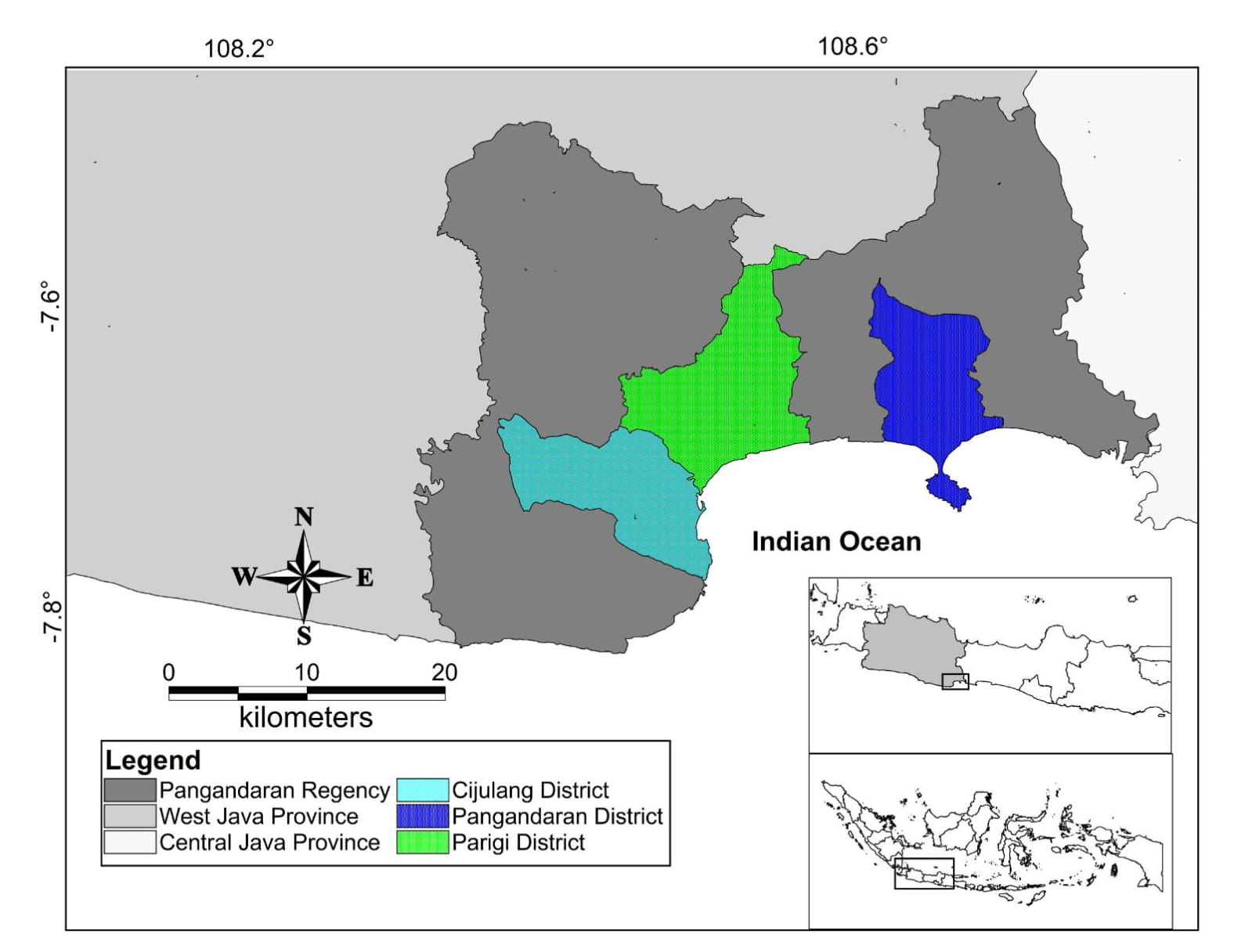
Pangandaran was originally a district within Ciamis Regency, West Java, and later became an independent regency following a regional division on November 16, 2012, under Law Number 21 of that same year. The Pangandaran Regency comprises part of the former Ciamis area and is divided into 10 districts: Parigi, Cijulang, Cimerak, Cigugur, Langkaplancar, Mangunjaya, Padaherang, Kalipucang, Pangandaran, and Sidamulih. The regency's capital is located in Parigi District. Pangandaran has significant tourism potential and remains one of West Java's most popular beach destinations. However, not every district in Pangandaran hosts the dahon plant. Consequently, this research focuses on the Parigi, Cijulang, and Pangandaran District. These locations were selected because they are coastal areas where the dahon plant is present.
Data Collection and Analysis
This research uses a qualitative ethnographic method. According to Paul Willis and Mats Trondman (2000) in O'Reilly (2019), ethnography is a methodology that refers to a set of methods involving direct and sustained social contact with participants, and rich writing about these encounters, honouring, recording, and representing, at least in part on their own terms, the irreducibility of human experience. In this study, the researcher served as the primary instrument in the field, collecting data through field observations, audiovisual recordings, in-depth interviews, and document review.
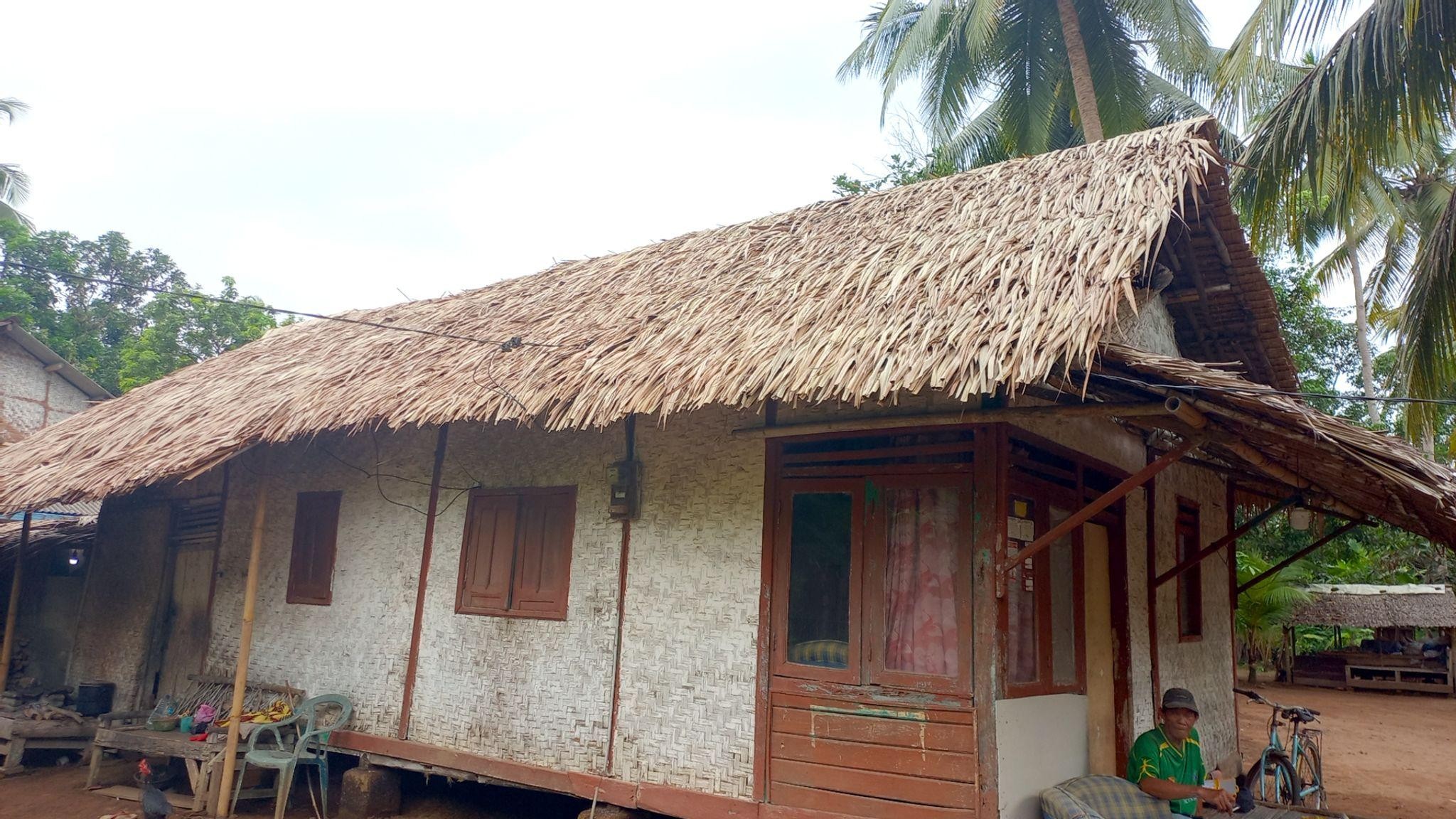
Field observations and recordings were conducted to capture activities that support the research topic, such as craftsmen making roofs from dahon leaves, processing plant sap into sugar, and photographing dahon-roofed houses and dahon plantations in Pangandaran. Interviews were conducted with government officials, community leaders, dahon artisans, fishermen, farmers, youth, and knowledgeable individuals about dahon plants in Parigi, Cijulang, and Pangandaran Districts. The determination of these informants used a purposive sampling method (sampling with certain criteria), specifically selecting samples based on characteristics determined by the researcher. Informants were selected based on the criteria that they were native residents of Pangandaran and grew up in the area.
The interview instrument included open-ended and closed-ended questions. Open-ended questions aimed to elicit information about local knowledge about the condition and availability of the dahon plant, its various economic and ecological benefits, and opinions about its future. Closed-ended questions aimed to determine the level of awareness of this plant, its benefits to the local environment, its connection to specific communities or folklore, and so on. There are 23 informants (14 men and 9 women) who were interviewed.
A document review was conducted by searching for articles, manuscripts, brochures, and books related to the research topic, with a particular focus on those concerning the coastal area of Pangandaran. Observations, recordings, and data sampling were conducted from June to September 2024.
| Informants | Informant’s Initials | Gender | Age | Domicile | Position in the community |
|---|---|---|---|---|---|
| Informant 1 | S | Female | 19 | Parigi District | Student |
| Informant 2 | S | Female | 19 | Parigi District | Self-employed |
| Informant 3 | IDN | Male | 23 | Parigi District | Student |
| Informant 4 | AU | Male | 45 | Parigi District | Village secretary |
| Informant 5 | K | Male | 82 | Parigi District | Dahon artisan |
| Informant 6 | S | Female | 84 | Parigi District | Dahon artisan |
| Informant 7 | FY | Male | 33 | Parigi District | District secretary |
| Informant 8 | R | Male | 35 | Parigi District | Farm worker |
| Informant 9 | S | Male | 44 | Parigi District | Security |
| Informant 10 | SO | Female | 23 | Cijulang District | Employee |
| Informant 11 | AG | Male | 42 | Cijulang District | Village official |
| Informant 12 | AS | Male | 42 | Cijulang District | Village official |
| Informant 13 | ES | Female | 42 | Cijulang District | Village official |
| Informant 14 | A | Male | 64 | Cijulang District | Dahon artisan |
| Informant 15 | TS | Female | 56 | Cijulang District | Dahon artisan |
| Informant 16 | Y | Female | 60 | Cijulang District | Dahon artisan |
| Informant 17 | AR | Male | 55 | Cijulang District | Farmer |
| Informant 18 | IR | Female | 51 | Cijulang District | Farmer |
| Informant 19 | S | Male | 23 | Cijulang District | Student |
| Informant 20 | W | Male | 40 | Pangandaran District | Village official |
| Informant 21 | SM | Male | 60 | Pangandaran District | Dahon artisan |
| Informant 22 | UR | Male | 62 | Pangandaran District | Community leader |
| Informant 23 | OO | Female | 59 | Pangandaran District | Housewife |
Data analysis was conducted concurrently with data collection, involving the categorisation and grouping of information for descriptive analysis of the research object. The analysis was conducted through a preparatory stage, which involved listing various aspects to be explored as data sources, such as folklore related to cultural behaviour, identifying informants, and verifying the completeness of the data and relevant variables. Next, the research team worked in groups to collect the previously categorised data. The collected data was discussed in groups and then analysed in smaller teams to ensure time efficiency. The expertise of each team member also played a role in the interpretation. The next stage was verifying the credibility of the data. Data credibility was a crucial aspect through triangulation, peer review, and group discussions involving field experts or focus group discussions (FGD).
A focus group discussion was held on Saturday, October 26, 2024, in Kampung Turis, Pangandaran. The Senior Forestry Extension Officer from the West Java Provincial Forestry Office (Regional Branch VII) attended the session along with representatives from PT Unilever Tbk., the head of Sukaresik Village, educators, community figures, cultural practitioners, sugar entrepreneurs, youth leaders, and artisans of both sugar and roof products. The informants provided additional information regarding the timing of sap extraction, the ecological and economic benefits of the dahon plant, the challenges and potential risks when harvesting its leaves or sap, and efforts to preserve its habitat. The FGD also revealed that, to date, no government program focuses explicitly on the dahon plant. The valuable insights obtained from the FGD enriched and sharpened the data analysis.
Before this, the team had also held an audience with the West Java Provincial Forestry Office on September 2, 2024, represented by Mr. Irawan, S.Hut., M.Si. and Mr. Iyon Sugiono, S.Hut. Regarding mapping dahon plantations in Pangandaran, it was found through these meetings that the forestry office does not yet have data on this, as the dahon plant has not been a focus of government attention.
Due to the qualitative nature of this research, the numbers and percentages presented in the analysis section are not intended to be statistically measured. However, these numbers and percentages are used to indicate the tendency of informants' knowledge (Pangandaran coastal communities) regarding the factual conditions and benefits of the dahon plant. Next, the analysis uses three social variables—age, gender, and occupation—to clarify the cultural behaviour of the Pangandaran coastal community in relation to the presence of the dahon plant. These three variables are also used to describe the local community's cultural behaviour in utilising the dahon plant as a potential economic and ecological resource.
Results and Discussion
The theory of local wisdom was employed as an analytical framework to analyze the cultural behavior of Pangandaran's coastal community in utilizing the dahon plant as a resource with potential economic and ecological value. Local wisdom encompasses a broad dimension, including a community’s attitudes, perspectives, and abilities in managing its material and spiritual environment. It can also be defined as the life view, knowledge, and various strategies manifested in the activities performed by local communities in addressing challenges related to cultural fulfillment (Permana, 2010; Sibarani, 2012). In the Berlin Wisdom Paradigm (BWP), wisdom is defined as comprising two main aspects: factual knowledge (accurate understanding of conditions) and procedural knowledge (knowledge of processes) (Baltes & Staudinger, 2000; Dumbravă, 2017 in Rizal et al., 2022).
Revealing the values of local wisdom among the coastal community is crucial. Expressing maritime attitudes, perspectives, or artistic appreciation can enhance public awareness toward strengthening maritime cultural literacy and realizing local genius (Heriyawati and Wita, 2022).
Local Knowledge of Pangandaran's Coastal Community Regarding the Factual Condition of the Dahon Plant
Local knowledge is an accumulation of wisdom developed over a long period, reflecting creative thought and actions by successive generations within a community and the stable ecosystem in which they reside while addressing dynamic agroecological and socio-economic challenges (Kenickie and Mphahlele, 2002). According to Ruddle (1999 in Yuliaty et al., 2019), local knowledge is characterized by 1) its long-term, empirical, locally based, and detailed nature; 2) its practical orientation, focusing on behaviors and specific resource types and species; 3) its structured form; and 4) its dynamic quality. The local knowledge possessed by the coastal residents of Parigi, Cijulang, and Pangandaran regarding the factual condition of a dahon plant is summarized in Table 2 below.
| No | Question | Informant Answer | Number of informants (n) | Percentage (%) | Informant Answer | Number of informants (n) | Percentage (%) |
|---|---|---|---|---|---|---|---|
| 1 | Are there dahon plants around where you live? | Yes | 23 | 100 | No | 0 | 0 |
| 2 | If yes, where exactly are the dahon plants located? | Around riverbanks | 14 | 61 | River flows | 9 | 39 |
| 3 | Approximately how large is the area of the dahon plants? | Not sure | 13 | 57 | Very wide | 10 | 43 |
| 4 | Apart from where you live, where else do dahon plants grow? | Along rivers | 16 | 70 | Streams | 7 | 30 |
| 5 | Is the growth of dahon related to certain conditions/areas? | Related | 23 | 100 | Not related | 0 | 0 |
| 6 | Is it also related to certain communities? | Yes | 0 | 0 | No | 23 | 100 |
| 7 | Is the existence of the tree related to a story or fairy tale? | Yes | 0 | 0 | No | 23 | 100 |
| 8 | Do dahon plants have advantages? | Yes | 23 | 100 | No | 0 | 0 |
| 9 | Do communities care about dahon plants? | Still care | 19 | 82 | Don’t really care | 4 | 22 |
Table 2 shows that most of Pangandaran's coastal residents, including all ages (old, adult, and young), know that the dahon plant grows near their homes (n=23, 100%). They also know it typically grows along riverbanks (n=14, 61%) and at river flows (n=9, 39%). While many are unsure about the exact extent of the area in which the dahon grows (n=13, 57%), they generally describe it as spreading along rivers (n=16, 70%) or streams (n=7, 30%). The locals recognize that dahon grows in specific conditions (n=23, 100%), namely in brackish water areas (n=16, 70%) and along riverbanks (n=7, 30%). They also understand that, like coconut palms, dahon propagates not only by seed but also through vegetative reproduction, contributing to its rapid growth. Concerning folklore, the local community (n=23, 100%) does not associate the dahon plant with any specific legends.
According to the West Java Forestry Office (Regional Branch VII), as conveyed during the focus group discussion, the dahon plant is a significant component of mangrove forests, comprising approximately 30% of the total mangrove area. Dahon is a type of palm that grows in mangrove or intertidal zones along the coast. It is characterized by a trunk embedded in a layer of mud approximately 60 cm thick and leaves that may reach seven meters, with inflorescences up to 1 meter in length. Suitable growing conditions include a moist to wet environment with monthly rainfall exceeding 100 mm throughout the year, growth in river deltas, a tropical climate with a minimum temperature of around 20° C and a maximum temperature ranging from 32° C to 35° C, and a preference for lowland areas (0–10 meters above sea level) with a fine muddy soil of pH 6–6.5. Tidal currents from river flow influence its optimal growth.
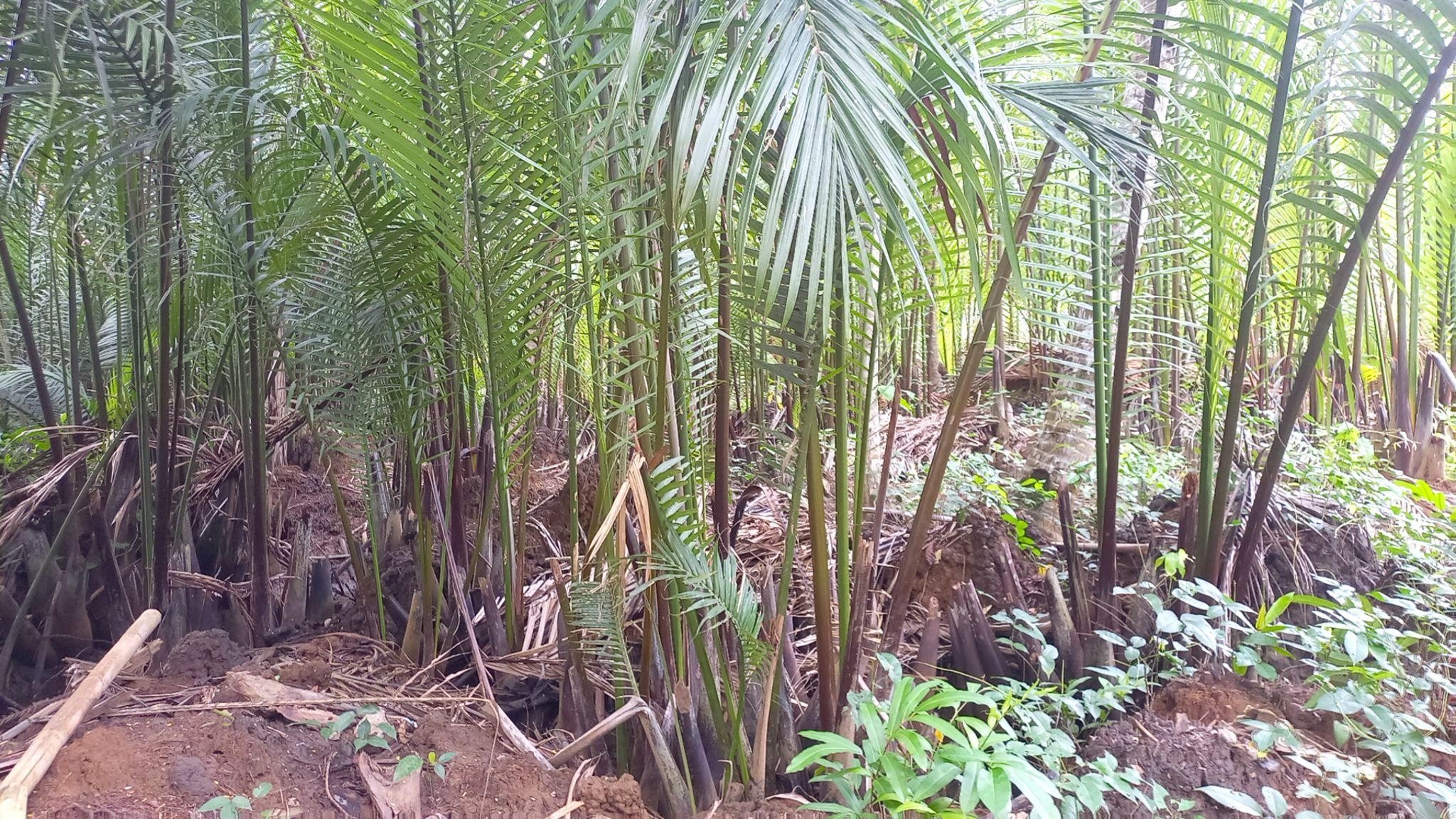
From a utilitarian perspective, the coastal residents of Pangandaran, including all ages (n=23, 100%), are aware that the dahon plant is rich in benefits. For example, its fruit is known for its antidiabetic properties and for treating heat-related illnesses (n=3, 13%). Historically, the sap from the tree was used to make sugar (n=20, 87%), which was believed to serve as an antidote for poison (Enceng, 2022). However, if processing is not hygienic or the sap quality is poor, it becomes unfit for consumption. In Sarawak, Malaysia, nipah sap is a traditional beverage commonly consumed by locals (Jaraee et al., 2023). Moreover, not only the fruit and sap but all parts of the nipah—leaf sheath, leaves, bark, and husk—can be utilized as food, adding to its high nutritional value (Hamilton & Murphy, 1998; Oh YJ, 2017 in Lee and Kim, 2020).
Regarding local attitudes toward the dahon plant, most informants from all age groups (n=19, 82%) answered that the coastal communities of Pangandaran still preserve it, even though most of its habitat has been converted into settlements. Meanwhile, a small number of informants (n=4, 18%) from adults and young people, such as sub-district and village officials (female and male), and male students answered that the community has begun to care less about the existence of the dahon plant. Therefore, disseminating knowledge about dahon to the younger generation is important to continue, aligning with research by Nur et al. (2023), which suggests that by integrating Indonesia's maritime heritage, the young people—including students—gain an understanding of marine conservation and a sustainable economy while embracing local wisdom in their daily lives. Ultimately, this implementation nurtures a generation that values the marine environment, respects cultural diversity, and contributes to sustainable development.
During the focus group discussion, it also emerged that harvesting dahon was a part-time job for fishermen when the sea conditions were unfavorable, such as during high waves. However, due to economic considerations, fewer than ten artisans make roof materials from dahon. The market price for dahon roofing materials is around Rp1,500.00, but the production process is complex and cannot be done individually. A similar phenomenon is observed in the coastal communities of Bangladesh's Sundarbans Impact Zone (SIZ), where locals depend on forest resources. The primary product obtained from nipah—the leaves used for roofing—is not a sustainable livelihood strategy due to underdeveloped infrastructure, the lack of fair market prices, and limited financial capital (Islam et al., 2020).
Cultural Behavior in Utilizing Dahon as an Economically Valuable Resource
Malinowski (1939, in Yuliaty et al., 2021) defines cultural behavior as the implementation, adaptation, and application of social organization rules, values, customs, ideas, and beliefs. Such behavior is socially transmitted rather than biologically inherited, making it dynamic. The influx of external cultural influences leads to shifts in every form of sociocultural expression, including those of coastal communities.
Coastal culture is embodied by communities living along the shorelines. According to Satria (2015), coastal communities are groups living together in coastal areas with a distinct culture related to their reliance on coastal resources. Coastal areas are inherently vulnerable due to being transitional zones between land and sea and are subject to various pressures from both terrestrial and maritime activities (Fitria et al., 2024). Coastal communities are typically associated with fishing, as most residents work as fishermen. Table 3 below illustrates the cultural behavior of Pangandaran's coastal community in utilizing the dahon plant for its economic potential.
| No | Question | Informant Answer | Number of informants (n) | Percentage (%) | Informant Answer | Number of informants (n) | Percentage (%) |
|---|---|---|---|---|---|---|---|
| 1 | Could dahon plants be used for community life? | Yes | 22 | 95.65 | No | 1 | 4.35 |
| 2 | What parts can be utilized? |
Leaves Leaves and flower Leaves and fruit Leaves and shoot |
3 5 2 3 |
13 21.8 8.7 13 |
Fruit Fruit and stems Leaves, flower, fruit, shoot, and stems |
2 2 6 |
8.7 8.7 26.1 |
| 3 | What can the dahon plant be used for? |
Roofs Roofs and nipah cigarettes Roofs, kolak, sugar palm, and sweets Roofs, sugar palm, and nipah cigarettes |
3 3 10 4 |
13 13 43.6 17.4 |
Roofs, mosquito repellent, pole climbing, torches, pennants, footholds, pestle, raft, and rope | 3 | 13 |
| 4 | Does it need special skills to process it? | Yes | 23 | 100 | No | 0 | 0 |
| 5 | Are there any special rituals (e.g. prayers) when taking/processing dahon plants? | Yes, there are | 8 | 35 | No, there are not | 15 | 65 |
| 6 | Number of craftsmen/plant processors |
Five residents of Parigi District Four residents of Pangandaran District |
3 4 |
13 17.4 |
Do not know | 16 | 69.6 |
Table 3 indicates that coastal residents, including the elderly, adults, and young (n=22, 95.65%), are aware that the dahon plant can be utilised to support community livelihoods. They recognize that the plant's shoot and leaves (n=3, 13%), leaves (n=3, 13%), leaves and flower (n=5, 21,8%), leaves and fruit (n=2, 8,7%), fruit (n=2, 8,7%), fruit and stem (n=2, 8,7%), leaves, flower, fruit, shoot, and stems (n=6, 26,1%) are the parts used. Nipah leaves are the most commonly used part among local people of all ages, alongside the fruit and flowers. The use of the stem is only known to dahon artisans and community leaders. The use of the stem is primarily recognised by mature male farmers (over 50 years old). Meanwhile, one informant from among the male adult village officials (n=1, 4,35%) answered that dahon plants were being used less and less for the lives of the local community.
Regarding its various uses, informants (female and male dahon artisans) mentioned that the shoot can be processed into mosquito repellent; the leaves are used for roofing; the stem serves as support for flagpoles, decorative bunting (for Independence Day celebrations), rafts (as an alternative when no boat is available), and ropes; additionally, the stem can be used as a stepping platform and for firewood if dried. The fruit is processed into kulak, ko lang-kaling, and other candied products. At the same time, the stem can also be made into a type of paper used for wrapping tobacco (known as nipah cigarettes).
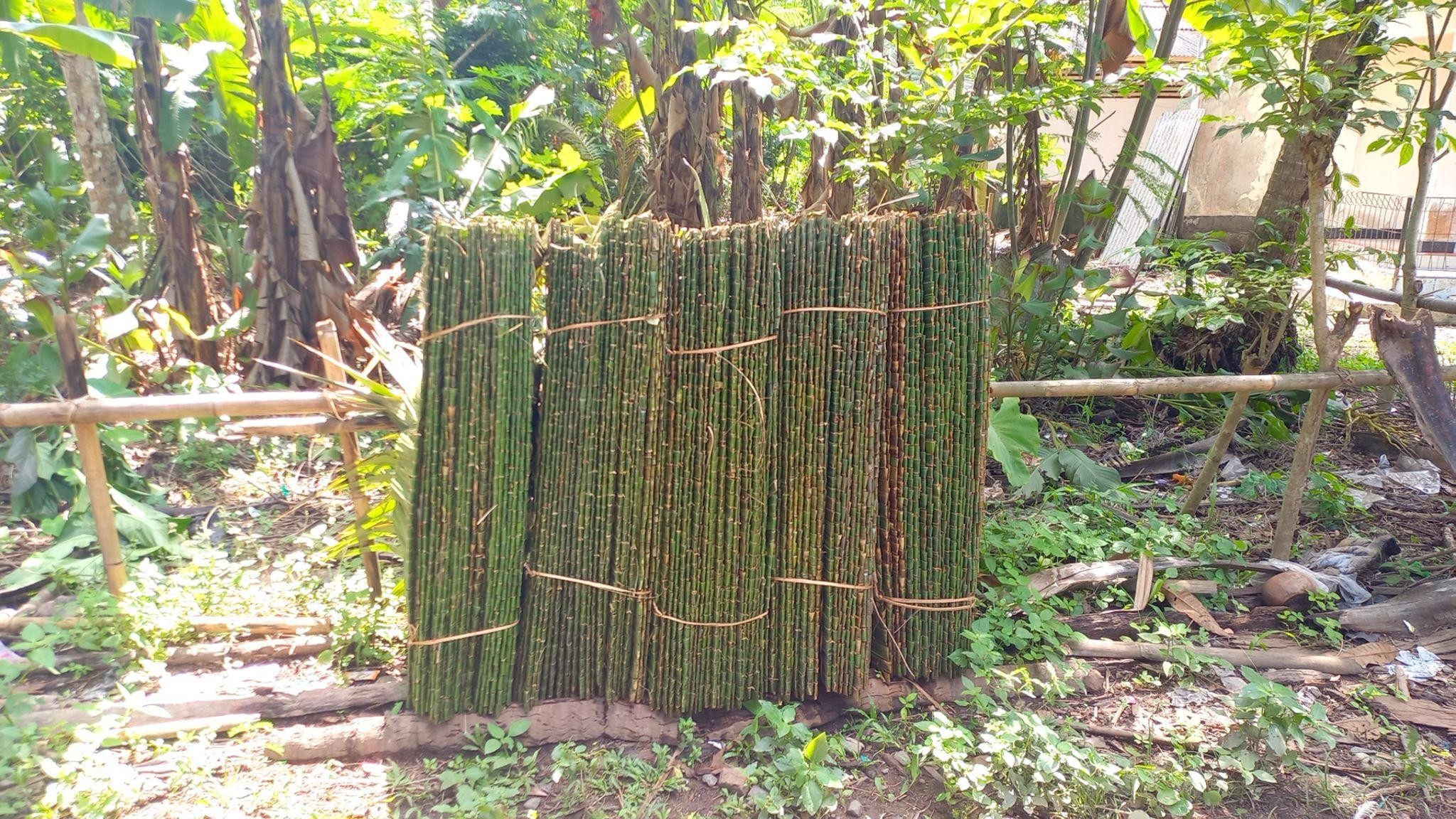
Among these diverse applications, the most widely recognized economic benefit of the dahon plant by the coastal residents is its use in roofing. According to interviews, the process of making a dahon roof begins with cutting the leaves, which are then braided. Only green leaves are selected for the weaving process. The braiding is performed using bamboo (locally known as jalon), which serves as a unit of measurement for one piece of roofing. One jalon length varies between 1 and 1.5 meters. Nowadays, plastic cords are sometimes used for practical purposes. To ensure the durability of the roof, the woven structure must be tightly and multilayered arranged. A dense weave ensures that the roof is resistant to damage even if an object falls on it—even a falling coconut will bounce off. Currently, the market price for one sajalon of roofing material ranges from approximately Rp1,500.00 to Rp2,000.00 for a length of 1.2 meters and between Rp2,500.00 and Rp3,000.00 for 1.4 or 1.5 meters.
For kolang-kaling or candied products, the process begins by peeling the fruit, followed by thorough washing. Since the fruit has two layers, the washing is performed in two stages. After cleaning, the fruit is soaked to separate the sap and then boiled before being processed into kolang-kaling, kolak, or other sweet dishes. The texture of the dahon fruit is softer compared to traditional kolang-kaling. Processing of the fruit is typically carried out during the month of Ramadan.
Historically, the dahon plant was also widely used for constructing house fences, well fences, young leaf clusters (janur), pounding rice (alu), hats, decorative costumes, and skirts resembling Dayak traditional attire, as well as for flagpole climbing events. Nowadays, its utilization has shifted; most coastal residents in Pangandaran now primarily recognize its economic benefit in roofing.
Processing the dahon plant according to the coastal community of Pangandaran, involving individuals of all ages —old, adult, and young (n=23, 100%) — requires specialised skills. Incorrect handling—such as misprocessing the fruit—can result in food poisoning or diarrhoea. Similarly, making roofing materials demands specific expertise. Unfortunately, the number of dahon artisans in Pangandaran has significantly decreased. Field observations recorded five artisans (n=3, 13%) from Parigi District (Bu Jumiro, Bu Suryani, Pak Kotong, Pak Aswian, and Bu Tuti) and four (n=4, 17,4%) from Pangandaran District (Pak Sikun, Pak Sarli, Egi, and one older woman). The remaining artisans tend to be from the older generation, as younger people appear less interested in pursuing this craft.
Regarding any special ritual during the harvesting/processing of the dahon plant, dahon artisans, community leaders, and female older adults (n=8, 35%) reported that any ritual performed is solely intended to ward off pests and to mark the appropriate day for harvesting the stem or fruit. According to Pak Sikun (one of the dahon artisans), among the Javanese, there is a concept known as manis paling. For example, if harvesting is done on a Monday and the result is manis (“favorable”), then if the yield is poor or infested with pests, even if the plant is young, it is preferable to cut it down. The concept of pahing is based on the Javanese calendar, which is still strictly observed by many. Terms such as wage, kliwon, pahing, and manis remain significant. In practice, if construction is planned for Senin Manis (Monday Manis), it is avoided if considered unfavorable; harvesting should be done on a pahing day, for example, Monday Pahing or Tuesday Pahing, which are considered auspicious. Such calculations may even lead some to refrain from gardening on a particular day to avoid misfortune.
Another informant (male dahon artisan) mentions that specific rituals for harvesting and processing the dahon plant used to be linked to specific days (e.g., it was forbidden to harvest on Wednesdays and Saturdays). Offerings such as incense were typically provided. Nowadays, such restrictions are frequently ignored, and offerings are no longer observed during the harvesting or processing of the dahon plant. Meanwhile, young people (students) and adults (village officials, farmers, fishermen, housewives) (n=15, 65%) answered that there was no special ritual in collecting and processing dahon plants.
Apart from Pangandaran, other areas in Indonesia also utilize the dahon plant based on local knowledge. For instance, in Kampung Narei, Kepulauan Yapen Regency, Papua, seven parts of the nipah plant are used: the root, fruit stalk, fruit, midrib, lateral rib, young leaf, and bud (Kayoi et al., 2018). According to Kayoi's research, differences exist between the utilization of the dahon plant in Pangandaran and Kampung Narei. For example, in Pangandaran, the bud makes mosquito repellent, whereas, in Kampung Narei, the Nipah root is utilized. Similarly, in Pangandaran, the stem is processed into wrapping paper for tobacco (nipah cigarettes). In contrast, in Kampung Narei, the young leaf is used to make cigarette paper (gau).
In addition to the aforementioned benefits, further economic potential has been identified. Research by Prasetyo et al. (2024) indicates that Nipah sap obtained from tapping the fruit stalk has economic value as a biofuel resource, which could support national energy independence. In Korea, using nipah seedlings as an additive in the traditional Korean steamed rice cake sulgidduk has enhanced antioxidant activity and provided health benefits (Lee and Kim, 2020).
Cultural Behavior in Utilizing Dahon as an Ecologically Valuable Resource
In addition to its economic benefits, the dahon plant also has significant ecological functions. Table 4, shown below, outlines the cultural behavior of the Pangandaran coastal community in utilizing the dahon plant as a potential ecological asset.
| No | Question | Informant Answer | Number of informants (n) | Percentage (%) | Informant Answer | Number of informants (n) | Percentage (%) |
|---|---|---|---|---|---|---|---|
| 1 | How do you know if a plant is a dahon? | Like coconut | 20 | 87 | Like snake fruit tree | 3 | 13 |
| 2 | Do dahon plants grow on their own or do they need to be cultivated? | They grow by themselves | 23 | 100 | Must be planted | 0 | 0 |
| 3 | In what areas does dahon grow? | Areas with brackish water | 15 | 65 | Areas with riverbanks | 8 | 35 |
| 4 | What is your impression of a place where dahon trees grow? | Normal | 10 | 43.6 | Creepy, scary, and dark | 13 | 56.4 |
| 5 | Are dahon plants beneficial to the natural environment? | Yes | 22 | 95.65 | No | 1 | 4.35 |
| 6 | What are the benefits if the dahon plant grows in that place? | Aesthetically pleasing | 6 | 26 | Prevents abrasion | 17 | 74 |
| 7 | How have local people treated dahon plants so far? | Left alone and leaves pruned | 17 | 74 |
Fruit taken Cut down |
3 3 |
13 13 |
| 8 | Do the dahon plants in your area need to be preserved? | Very necessary | 22 | 95.65 | No need | 1 | 4.35 |
Table 4 reveals that the coastal residents of Pangandaran identify the dahon plant by its physical characteristics, noting that it resembles a coconut tree (n=20, 87%). However, it is shorter, and its fruit resembles that of a snake fruit (n=3, 13%). They are of all ages, both old and young, and all already know that the dahon plant is a wild plant that grows on its own (n=23, 100%). They understand that the plant grows wild in brackish (n=15, 65%) or riverside areas (n=8, 35%).
Local impressions of areas covered by dahon are mixed. While many individuals from various groups, including the elderly, adults, and young people with occupations such as students, employees, village officials, security personnel, and farmers (n=10, 43.6%), think that the areas are ordinary. Another group of informants, including older, adult, and young individuals with occupations such as student, employee, village official, community leader, dahon artisan, farmer, and fisherman (n=13, 56.4%), describe the area as eerie, dark, or frightening. These ominous perceptions are often attributed to the remoteness and dimness of the areas, which are sometimes associated with mystical phenomena. Some even believe that urang cai (a term sometimes used to refer to crocodiles) inhabit these places. Additionally, when entering a dahon plantation, one must be cautious of wild animals, including snakes. In Bangladesh's Sundarbans, for example, coastal residents face life-threatening challenges such as Bengal tiger attacks (Panthera tigris tigris) when collecting dahon leaves (Islam et al., 2020).
Another critical point is that the path back home must be marked; otherwise, one risks getting lost. An interesting local term is cilebok, referring to areas where dahon grows. Cilebok is a compound of ci-, a shortened form of cai, meaning “water” or “river,” and lebok, roughly meaning “to consume” in colloquial terms. Whether this term is merely a name or contains an underlying sarcasm or mockery remains unclear.
The locals also acknowledge that areas covered with the dahon plant are aesthetically pleasing (n=17, 74%) and help prevent water from encroaching onto the land (n=6, 26%). In terms of local management, residents typically harvest the leaves every six months for roofing purposes (n=17, 74%), and the fruit is collected during Ramadan to be processed into candied products (n=3, 13%). Additionally, when river channels become constricted, locals and village authorities cut down dahon plants to normalize water flow (n=3, 13%).. The coastal community of Pangandaran firmly (n=22, 95,65%) believes that the existence of the dahon plant is crucial and must be preserved—not only because it is a native species but also due to its significant economic and ecological benefits. Only one male young informant (n=1, 4,35%) who worked as a village official answered that mangrove plants were more promising than dahon plants.
Most coastal residents, including the old, adult, and young (n=22, 95.65%), agree that the dahon plant is beneficial to the natural environment. They state that dahon can help reduce water erosion and act as a natural boundary for villages. The parts deemed most beneficial are primarily the tree itself and its roots. However, one female resident, who has been employed from a young age (n=1, 4.35%), argues that the dahon plant is not environmentally beneficial, as its primary use is for roofing.
Conclusions
Based on the data analysis, it can be concluded that, across all age groups, the coastal community of Pangandaran remains familiar with the dahon plant growing in their vicinity. They (students, employees, village officials, community leaders, dahon artisans, farmers, housewives, security, and fishermen) know its various uses and have a sense of care for the plant that persists despite the conversion of many dahon habitats. In West Java, the dahon plant has yet to become a primary focus of government attention, partly because it is considered a wild plant. A similar phenomenon occurs in the western coastal areas of Aceh, Indonesia, where the Nipah (Nypa fruticans) population is threatened by frequent land conversion into plantations, fishponds, ports, and settlements, resulting in reduced density and coverage (Fithria et al., 2024). Conversely, in Kepulauan Yapen Regency, Papua, conservation efforts have not been implemented to maintain nipah's potential and availability (Kayoi et al., 2018).
In contrast, the naturally occurring dahon on Hainan Island has been designated as a Class II National Protected Wild Plant in China. Research on theoretical bases for the recovery of the dahon population and the utilization of its resources has also been conducted (Zhang et al., 2024). Furthermore, conservation strategies have been developed to prevent the extinction of the dahon plant. As a key protected species in China, Nypa fruticans holds significant scientific value within tropical flora (Zhang et al., 2023).
As the cultural behavior of Pangandaran's coastal community in utilizing the dahon plant as a resource with economic potential, its usage is still practiced; however, its applications have begun to diminish. In the past, the stem of the dahon plant was used for constructing fences for houses and wells, pestles for pounding rice, hats, decorative costumes, skirts resembling Dayak attire, and as support for flagpole climbing events. Today, most coastal residents (male and female) in Pangandaran primarily recognize the economic value of dahon as a roofing material.
Ecologically, the Pangandaran community of all ages, occupations, and genders still identify the dahon plant by its resemblance to a coconut tree, albeit shorter, and with salak-like fruit. They understand that dahon grows wild in brackish water areas. While some (older, adult, and young individuals with occupations such as student, employee, village official, community leader, dahon artisan, farmer, and fisherman) perceive areas with dahon as eerie, dark, or frightening. The community, of all ages, occupations, and genders, finds the coastal landscape beautiful and appreciates its role in preventing erosion. The community's management practices include harvesting the leaves every six months for roofing, collecting the fruit during Ramadan for candy production, and felling dahon plants to normalize river flow. The coastal residents of Pangandaran maintain that the existence of the dahon plant is vital and must be preserved, not only because it is a characteristic local plant but also due to its dual economic and ecological benefits.
Acknowledgments
This paper is the output of research fully funded by DIKTI (Directorate of Research and Community Service, Directorate General of Research and Development, Ministry of Research, Technology and Higher Education, the Republic of Indonesia) through the National Competitive Research Basic Research scheme, number: 3848/UN6.3.1/PT. 00/2024. The authors thank all the informants, the West Java Provincial Forestry Service, and related parties for their contributions.
Endnotes
[i] Nypa fruticans locally called nipah (Eddy and Basyuni, 2020)
References
- Abdulwahid, I. dkk, 1998. Kodifikasi Cerita Rakyat Daerah Wisata Pangandaran Jawa Barat. Departemen Pendidikan dan Kebudayaan, Jakarta.
- Andreou, G. M., Fradley, M., Blue, L., and Breen, C, 2022. “Establishing A Baseline for The Study of Maritime Cultural Heritage in The Gaza Strip”. In Palestine Exploration Quarterly, Volume 156, Issue 1: 4–42. https://doi.org/10.1080/00310328.2022.2037923
- Danasasmita, Djatisunda, A, 1986. Kehidupan Masyarakat Kanekes: Bagian Proyek Penelitian danPengkajian Kebudayaan Sunda (Sundanologi). Bandung.
- Delgado, James P., Brennan, Michael L., Stokes, Emily, and Wagner, Daniel, 2024. “A Forgotten Maritime Highway: Maritime Cultural Heritage of The Emperor Seamounts with Implications for High Seas Conservation”, Journal of Maritime Archaeology, Volume 19, Issue 1:41–80. March 2024. https://doi.org/10.1007/s11457-024-09389-4
- Djajasudarma, T.F. dkk., 1997. Nilai Budaya dalam Ungkapan dan Peribahasa Sunda. Pusat Bahasa, Jakarta.
- Eddy, S., Basyuni, M., 2020. The phenomenon of nipah (Nypa fruticans) invasion in the Air Telang Protected Forest, Banyuasin District, South Sumatra, Indonesia. Biodiversitas 21.
- Enceng, 2022. Buah Dahon di Pangandaran Ternyata Bagus untuk Kesehatan [WWW Document]. www//harapanrakyat.com . (Accessed: 17 April 2025)
- Fithria, D., Basri, H., Indra, I., Muchlisin, Z.A., 2024. Density and distribution of nipah (Nypa fruticans) on the western coast of Aceh, Indonesia. Biodiversitas 25.
- Fitri, Y., Yusni, Y., Suryadi, T., & Mudatsir, M., 2023. Characteristic and bioactivities value of Nypa fruticans from coastal area in West Aceh District, Indonesia as a candidate antidiabetic agent. Biodiversitas Journal of Biological Diversity, 24(10).
- Fitria, Adinda Dwi, dkk, 2024. Perilaku dan Sikap Karakteristik serta Ekonomi Masyarakat Pesisir di Dusun XIV Desa Percut. El-Mujtama: Jurnal Pengabdian Masyarakat 4, 953–963.
- Haris, O. K., Syahbudin, S., & Yunus, A., 2019. Legal Existence of Local Wisdom for Bajo Fishery Tribe on Indonesian Maritime Border. Hasanuddin Law Review, 5(1), 41-54. DOI: 10.20956/halrev.v5i1.1727
- Hariyanto, S., Febri, B., & Putra, G. E., 2019. Indonesian Tallship to Develop Maritime Culture of Youth Generation. Journal of maritime research: JMR, 16(3), 61-68. Rahayu
- Heriyawati, Yanti, and Wita, Afri, 2022. Exploring the Indonesian Maritime Art Toward Appreciation of Coastal Literacy. In Harmonia: Journal of Arts Research and Education, Volume 22, Issue 2: 283 – 297, December 2022. DOI: https://doi.org/10.15294/harmonia.v22i2.37140
- Islam, M. N., Dana, N. H., Rahman, K. S., Hossain, M. T., Ahmed, M. U., & Sadig, A., 2020. Nypa fruticans Wurmb leaf collection as a livelihoods strategy: a case study in the Sundarbans Impact Zone of Bangladesh. Environment, Development and Sustainability, 22, 5553-5570. DOI: 10.1007/s10668-019-00438-w
- Jaraee, J., Awg-Adeni, D. S., Bilung, L. M., & Azmin, P. A., 2023. Physicochemical and microbiological assessment of Nypa fruticans sap collected in Sarawak, Malaysia. Food Research, 6(4), 44-50. DOI: 10.26656/fr.2017.6(S4).004
- Jeffery, B. and Kam, J. H-c., 2021. “Revealing a maritime cultural landscape of Hong Kong: The Sai Kung case study”. In International Journal of Asia Pacific Studies, Volume17, Issue 2: 107–133. https://doi.org/10.21315/ijaps2021.17.2.5
- Kayoi, M., Wanma, J.F., Sadsoeitoeboen, B.M., 2018. Deskripsi Pemanfaatan Nipah (Nypah Fruticans Wurmb.) Berbasis Pengetahuan Lokal Masyarakat Kampung Narei Kabupaten Kepulauan Yapen. Jurnal Kehutanan Papuasia 4, 76–85.
- Kenickie, A.M. and Mphahlele,K.M.E., 2002. Indigenous Knowledge for the Benefit of All: Can Knowledge Management Principles Be used Effectively? South African Journal of Libraries and Information Science, 68 (1).
- Kepel, T. L., Sumolang, S., Warouw, M. P., Daulat, A., Undap, N. I., & Tondo, F. H., 2024. Maritime Culture of Bantik Ethnic Group From North Sulawesi, Indonesia. Journal of Marine and Island Cultures, 13(2), 108-121.
- Lee, Y.N., Kim, Y.S., 2020. Nipa palm (Nypa fruticans) Improves the Storage quality and antioxidant activity of rice cake (Sulgidduk). Progress in Nutrition 22.
- Lim, K. A., Orillaneda, B. C. and King, C. P., 2021. “People and The Sea: A Values Perspective In The Conservation Management of Maritime Heritage in The Philippines”. In International Journal of Asia Pacific Studies, Volume 17, Issue 2: 39–73. July 2021. https://doi.org/10.21315/ijaps2021.17.2.3
- Nasution, R., Jeon, Y., Fadillah, H., Bahi, M., Marianne, M., 2024. Phytocemistry and Antidiabetic Activity from the Leaf Midrib of Nypa fruticans Wurm. Indonesian Journal of Chemistry 24, 470.
- Nasution, S.S.A., Elfita, E., Widjajanti, H., Ferlinahayati, F., 2024. Diversity, bioactivity, and phytochemistry of endophytic fungi in various organs of nipa palm (Nypa fruticans) mangrove. Biodiversitas 25.
- Nugroho, Iwan, 2011. Ekowisata dan Pembangunan Berkelanjutan. Yogyakarta: Pustaka Pelajar.
- Nur, Muhammad, Nurbayani, Siti, Mulyana, K. Agus, Darmawan, Wawan, Supriadi, Sapriya Acep, & Jumadi, 2023. Maritime History and Culture in Indonesia: Implementation in Social Studies Learning. Encounters in Theory and History of Education. Vol. 24, 230-253. DOI https://doi.org/10.24908/encounters.v24i0.16705.
- Perdana, Aditya Bayu and Buana, Muhammad, 2023. "Islands, maps, and Lontara’; Bugis counter-mapping on a nineteenth-century map of Nusantara". In Wacana, Journal of the Humanities of Indonesia Vol. 24, No. 3, DOI: 10.17510/wacana.v24i3.1653
- Permana, C.E., 2010. Kearifan Lokal Masyarakat Baduy dalam Mitigasi Bencana. Wedatama Widia Sastra, Jakarta.
- Prasetya, Muhammad Novan, 2017. "Membangun Kembali Budaya Maritim Indonesia: Melalui Romantisme Negara (Pemerintah) dan Civil Society". Dalam Jurnal Power in International Relations. 1(2). Medan: Universitas Potensi Utama Medan.
- Prasetyo, C. P., Effendi, A. J., & Chaerul, M., 2024. Analysis of the potential and characteristics of Nipa (Nypa fruticans) as a sustainable biofuel alternative source in Indonesia. In E3S Web of Conferences (Vol. 485, p. 03001). EDP Sciences. DOI: 10.1051/e3sconf/202448503001
- Rahayu, H. P., Comfort, L. K., Khoirunnisa, D., & Nurhasanah, D., 2024. Need Assessment for Coastal Tourism Area in the Face of Tsunami Risk: The Case of Pangandaran. International Journal on Advanced Science, Engineering & Information Technology, 14(2). DOI: 10.18517/ijaseit.14.2.19985
- Rahman, 2017. Keberadaan Tumbuhan Dahon di Pangandaran Mulai Terancam [WWW Document]. www//harapanrakyat.com . (Accessed: 17 April 2025)
- Rizal, A., Apriliani, I.M., Permana, R., 2021. Sustainable management policy strategy of coastal tourism in Pangandaran district, Indonesia. GeoJournal of Tourism and Geosites 37, 894–904.
- Rizal, A., Riyadi, A., Haryanti, Aliah, R.S., Prayogo, T., Prayitno, J., Purwanta, W., Susanto, J.P., Sofiah, N., Djayadihardja, Y.S., Ikhwanuddin, M., Wahyono, S., Yudo, S., Sachoemar, S.I., 2022. Development of sustainable coastal benchmarks for local wisdom in Pangandaran village communities. Sustainability 14, 14648.
- Sartini, N.W., Sanubarianto, S.T., 2022. Maritime Lexicon as Language Identity of Coastal Community in Tuban Regency, Indonesia. Theory and Practice in Language Studies 12, 2217–2224.
- Satria, A., 2015. Pengantar Sosiologi Masyarakat Pesisir. Yayasan Pustidaka Obor Indonesia, Jakarta.
- Sibarani, R., 2012. Kearifan Lokal: Hakikat, Peran, dan Metode Tradisi Lisan. Asosiasi Tradisi Lisan (ATL), Jakarta Selatan.
- Siswanto, Heni Waluyo, 2018. "Pendidikan Budaya Bahari Memperkuat Jati Diri Bangsa". Dalam Jurnal Pendidikan Ilmu Sosial. 27(2), Desember 2018. Surakarta: Universitas Muhammadiyah.
- Sobarna, C., Amien, S., Afsari, A.S., 2024. Pemanfaatan Keanekaragaman Hayati Lokal Sebagai Sumber Pendapatan Masyarakat Pesisir Pangandaran. Kumawula: Jurnal Pengabdian kepada Masyarakat, 7(3), 614 – 626 DOI: https://doi.org/10.24198.
- Sobarna, C. dkk, 2015. Kearifan Lokal Masyarakat Kecamatan Parigi, Kabupaten Pangandaran: Deskripsi dan Persepsi Cerita Rakyat. Bandung .
- Supriyadi, 2018. Pentingnya Pemahaman Budaya Maritim Sejak Dini sebagai Bentuk Kewaspadaan Nasional dalam Mewujudkan Indonesia sebagai Poros Maritim Dunia. Universitas Pertahanan, Bogor.
- Taofiqurohman, A., Zallesa, S., Faizal, I., 2023. Coastal scenic assessment in Pangandaran district, West Java province, Indonesia.GeoJournal of Tourism and Geosites 46, 184–193.
- Warnaen, S., 1988. Pandangan Hidup Orang Sunda. Sundanologi, Bandung.
- Yuliaty, Christina, Nendah Kurniasari, Nurlaili, Riesti Triyanti, Rismutia Hayu Deswati, 2019. Sosial Budaya Masyarakat Maritim. Jakarta: Amafrad Press.
- Yuliaty, C, Kurniasari, N, Triyanti, R And Zulham, A., 2020. Stakeholders Role in Economy Creative Development of Maritime Culture in Alor Regency. IOP Conference Series: Earth And Environmental Science, Vol. 744, International Symposium on Aquatic Sciences and Resources Management 16-17 November 2020, Bogor, West Java, Indonesia. DOI: 10.1088/1755-1315/744/1/012107
- Zhang, M., Zhong, C., Lv, X., Fang, Z., Cheng, C., & Hao, J, 2024. Germplasm Resource Status and Seed Adaptability of Nypa fruticans Wurmb, an Endangered Species in China. Forests, 15(8), 1396. https://doi.org/10.3390/f15081396
- Zhang, M., Zhong, C., Lyu, X., Fang, Z., & Cheng, C, 2023. Resource status and population characteristics of the relict mangrove species Nypa fruticans Wurmb. in China. Chinese Journal of Ecology, 42(12), 2918. DOI: 10.13292/j.1000-4890.202312.018