
The Phenomenological Dogma in the Spiritual Metaphor of the Sea
 10.21463/jmic.2025.14.3.17
Abstract
The seaside societies have always blessed the sea as a necessity of their socio-economic order and gave it a special value. They offered offerings to the gods with the rituals they tried to put forward theologically. When launching their vessels into the sea or when embarking on sea voyages, they have observed certain traditions based on their beliefs. Although these methods have varied over time, they share similar characteristics. The existence of sea gods and even monsters formed the main theme of their mythical narratives and turned into various heroic stories. While they thought that making offerings to the sea would please the sea gods, there has always been a feeling that they would be protected from bad disasters. The subject has been examined from a different perspective in order to increase the importance given to island culture and maritime affairs. The research has focused on the sacred beliefs of sailors. It has been prepared through a literature review within the scope of qualitative research methods. The work in Denmark was carried out with a grant received under the The Scientific and Technological Research Council of Türkiye (TÜBİTAK) 2219-International Postdoctoral Research Fellowship Programme for Turkish Citizens.
Keywords
Culture, Tradition, Myth, Ritual, Maritime
1. Introduction
Palaeolithic age is known as the longest period of human history. People struggling to survive during this period have turned many spiritual phenomena they could not comprehend into cults. They feared the power of the natural environment and saw themselves as weak in its presence. They believed that cults would bring them prosperity or spiritual power. Mircea Éliade called sacralisation “hierophany” (manifestation of the sacred). According to him, this situation is interpreted as the emergence of the sacred with the help of something other than itself. Humanity has witnessed the sudden emergence of the sacred, thus discovering its existence. The sacred is an inevitable necessity that transcends the world, yet makes it real by revealing itself there. The human being who discovered this sacred universe of the world was defined as “homo religiosus” (Tacou, 2000:14). Despite consensus that the Paleanthropians had a “religion” determining the content of this religion is practically impossible or at least very difficult. Researchers believe that findings that bear witness to the lives of paleoanthropologists will shed light on their religious significance. Human bones, especially skulls, stone tools, paints (red earth paint, hematite), and various objects found in graves are among these findings. Furthermore, cave paintings and various carvings, painted pebbles, and small bone and stone sculptures are archaeological sacred objects dating back to the Late Palaeolithic period. It is thought that tombs and works of art were also constructed for religious purposes (Éliade, 2003:19-20). The movements of the stars in sacredness, the annual rebirth of plant life, and cycles such as birth and death have been associated with culture. Cults have become symbols, and all of them remain related to each other in this sacred universe (Ricoeur, 1976:61). According to Otto, he emphasised the objective nature of God's revelation. He stated that the objective concept of the ‘sacred’ is psychological and can be understood through psychoanalytic methods (Otto, 1965:32). The sanctity of the sea is even more pronounced in the beliefs of coastal communities. The mysticism of the sea can be attributed to its vastness as a body of water and its depth, with its mysteries yet to be discovered by ancient societies. Therefore, the seas are frightening places and have sometimes been associated with suffering. Sailing ships have brought wealth, honour and prosperity to some, while bringing poverty, suffering and misery to others. There are certain rules on ships. One of the dogmas in maritime culture is whistling on board a ship. It has sometimes been believed that this is not done to prevent pain at sea, but rather that it brings bad luck. Similarly, women were not allowed on board unless absolutely necessary, as this was also considered a sign of bad luck. Frightening figureheads were placed on the bow to scare away storms (Bayazıtoğlu, 2015:340). Norton's research shows that the historical origins of ship's figureheads can be traced back approximately 20.000 years to the Upper Palaeolithic Aurignacian period (Norton, 1976:12-13). However, within the framework of some beliefs, the way to be protected from the evil monsters thought to live in the sea is to have a woman on board. Within the framework of the information given by Demirî, there is a sea monster named “Hûtü'l-Hayz”. This monster poses a great danger to ships. To protect themselves from it, the women on board must throw their menstrual pads into the sea. Therefore, the presence of a menstruating woman on board means that this monster will stay away from the ship (And, 2010:274).
This research is based on the historical examination of the beliefs of the lives dedicated to the sea that have turned into dogma. In particular, the rituals associated with the spirituality of the sea and islands are focused and emphasised. Rituals that continue with certain practices ranging from pagan beliefs in island cultures to monotheistic religions form the main subject of the research. The study is based on a literature survey.
2. Literature Review
The works of Kramer (1999), who has conducted research on Mesopotamian cultures, provide information about Sumerian society in particular. These studies focused on archaeological findings as well as mythological narratives. This topic has also been researched by Heidel (2000).
Ögel (1971) and Çoruhlu (2011) have written many publications on Turkish culture. Different data on Central Asian Turkish culture can be found in his works. It should be consulted by scholars who wish to conduct research on the lifestyles, beliefs and rituals of Sha-man societies.
Roberts (2010), especially the names of gods and goddesses can be learnt about Japanese mythology. In his study supported by some myths, the outlines of Shinto myths can be learnt. The narratives of Japanese peoples on water and sea mythology are quite intense.
The works of Cömert (2010) and Grimal (2012) describe the main features of Greek and Roman mythology. Both a dictionary and information about myths can be read. Visually, Cömert (2010)'s works are richer and deal with the topics from an iconographic point of view.
3. Genesis
Mythology aims to comprehend how the cosmos came into being, the reasons for its order, the ideology of existence, and everything living and non-living, seen and unseen, extraordinary and ordinary, material and immaterial in the human environment (Bayat, 2013:13). One of the main subjects of myths is cosmogony. Myths about the genesis of the universe and man have been told and written in different societies. The main theme of these myths is the existence of the sea in the first genesis of the universe. According to the myths, “sea/water” constitutes the first starting point of cosmogony.
According to Sumerian mythology, there was a “primordial sea” in the beginning, although no information about its origin and birth is given (perhaps they may have believed that it had always existed). The “primordial sea” was formed from the unity of “heaven” and “earth”. Enki (Ea) was recognised as the god of water (Kramer, 1999:83-84). The Babylonian genesis epic “Enûma Elish” is one of the myths read from the tablets found in Mesopotamia that tries to explain cosmogony. It has been shown as the main source of information about Mesopotamian cosmogony (Heidel, 2000:23). From the essence of the mythos, information about the formation of the universe is obtained through the concept of the first creator parents. The fresh water ocean “Apsû” and the salt water ocean “Ti'âmat” are mentioned. “Mummu”, symbolising mist and fog, rises from the middle of both bodies of water. These three sacred waters mixed with each other and formed a vast and unbounded mass containing the elements used in the structure of the universe (Heidel, 2000:12-13).
According to Hesiodos, a reference for Greek myths, at the beginning of the genesis of the universe there was “Khaos”, an infinite void. “Gaia” (mother earth) was born from this void. Earth Mother alone created “Uranos” (Sky), “Pontos” (Sea) and mountains (Cömert, 2010:20). In the Sumerians, the trinity of Anu-Enlil-Ea symbolises the sky-earth-sea gods (Çoruhlu, 2011:23). In the Turkish Türeyiş epic, Oğuz Kaan found his second wife in the hollow of a tree in the middle of a lake while hunting in the forest. He likened her hair to a river wave and her teeth to pearls and fell in love with her. The children born from this marriage were named (Kök) Gök-Kaan, (Tengiz) Deniz-Kaan and (Tagh) Dağ-Kaan (Ögel, 1971:63,67).
In particular, according to African mythology about the existence of the primordial sea, the “Orisas”, the gods and goddesses of the Yoruba Pantheon, who are believed to live in the sky, are mentioned in the narratives about the genesis of the universe in Nigeria. Below is composed of water, fog and swamps. The great god “Olorun” rules the sky and the sea goddess “Olokun” rules the watery world (Lynch, 2004:123). In Native American mythology, the great spirit “Maheo” lives in the void, there is nothing around him, after realising his own power, he created a water similar to a lake but salty with his power (Marriot and Rachlin, 2003:38). Japanese (Shinto) myths also present information that the world was formed from the sea during genesis (Roberts, 2010:24). The fact that the earth is covered with water/sea in genesis myths is also seen in Turkic myths. According to Altai belief, the god Ulgen was flying disfigured over the water, unable to find a place to land. At that moment, inspiration came to Ülgen's heart. He was endowed with the power of creation and inspiration by Ak-ene (White Mother), who is recognised by the Altai community as one of two female spirits. The myth compiled by Verbitskiy is that Ulgen was commanded by a voice from the heavens, and that Ulgen sat on a stone that came out of the sea (Çoruhlu, 2011:106). In fact, these myths bring to mind the Tethys Sea surrounding the supercontinent Pangea, which dates back to the Permian and Triassic periods 248-206 million years ago in geological times (İnan and İnan, 2013:51).
The biblical account of the formation of the universe is found in Genesis (1-10), where the “primordial sea” is also mentioned. In the beginning God created the sky. The earth is empty and nothing exists. It is darkness without boundaries, the spirit of God floating on these waters. God created light, then differentiated it from the darkness and called it day. Then God separated the waters by creating a dome in the centre of the waters. Under the sky, God ordered the waters to gather in one place and dry land to appear, and named the dry land “land” and the gathered waters “sea” (Kutsal Kitap, Eski Antlaşma, Yaratılış, Bölüm 1/50. (2025, Februrary 19). In the Holy Qur'an, there is no clear statement about the creation of the universe as in the Bible. The subject of creation in Islam is found in an Alevi (Shia Muslim) text dated to the 16th century, influenced by the Hurufi sect's thought. Here reference is made to the “radiant essence” of Prophet Muhammad and Prophet Ali. God first created a green sea. Then a precious stone emerged from the light in this sea, and after dividing this stone in two, He placed the lights (of Prophet Muhammad and Prophet Ali) in a dome-shaped lamp (Boratav, 2012:94).
Another noteworthy narrative in Turkish genesis myths is the issue of extracting land from under the sea. In the following Altai epic, there is also a great god and waters. In the narrative, the land was formed by spreading the soil that the white swan extracted from under the sea with its beak (Uraz, 1994:17). In the creation epic of the Yakut Turks, the White Creator “Ürüng-ayıg-toyon” stands high above the great sea at the beginning and sees a foam on the water. He asks the foam, who are you? The foam says that he is a devil and lives at the bottom of the water. God does not believe what he says and asks him to bring out a piece of earth from under the water. The devil then dives into the sea and after a long time appears with a little earth in his hand. The devil's main thought is to drown God in the sea and kill him. However, somehow the soil starts to grow, solidifies and a large part of the sea is filled with soil. In different versions of the Turkish creation myths, it is mentioned that before the creation of heaven and earth, everything was water. The “Tengere Kayra Kaan”, considered the highest of the gods and the ancestor of humans, created another being similar to himself and named him “Kişi” (Kiji). Both of them flew above the water like black geese, but Kişi was dissatisfied with this endless silence, wanted to rise higher than Kayra Kaan, rose for this purpose, but lost his ability to fly and rolled into the depths of the bottomless waters, was rescued by the merciful Kayra Kaan when he was about to drown. Then sat on top of the Kişi and ordered a star to rise from the sea so that he could be protected against water. The Kişi wanted to create the earth because of his inability to fly, for this, the Kişi said that he had to dive into the water and take out soil, he sprinkled this soil on the water. However the malicious the Kişi kept a piece of the soil in his mouth to create a different earth for himself. It is told that when he surfaced, the earth swelled in his mouth and he became unable to breathe. The Kayra Kaan saved him, the earth created by Kayra Kaan was smooth and flat, but many swamps and hills were formed with the pieces of earth splashed from the mouth of the Kişi. The Kayra Kaan was very angry with the Kişi in this incident and called him “Erlik” (Radloff, 2008:18-19). Seroşevskiy noted that this mythos is also reflected in the Christian faith. According to him, the devil is the older brother of Jesus Christ. However, he is as evil as Jesus is good. When God had the idea of creating a world and was thinking about how to create it, he called Satan. Saying that Satan was always boasting that he was bright, strong and could do anything, God asked him to dive into the sea and bring up earth from the sea. Satan dived into the sea upon this request, pulled out some earth, but it slipped from his palm. When he dived again for the second time, his hand came up empty again. When the devil realised that this would not be the case, he became a swallow and dived for the third time and came out with some slime in his beak. God took the slime consecrated to him and threw it into the sea and thus the earth was created (Ögel, 2003:448). This subject is also reminiscent of the ritual of taking the cross out of the sea, which is based on the baptism of Jesus, organised annually by the Orthodox world. In shamanism, the path of Kamlik also passes through the sea. In the myth about a Samoyed shaman; the person who became a shaman received his shamanic power from the master of water (as it is understood from the continuation of the narrative, it is thought to be the sea). He was called “huottarie” diver. In a period when the sea waters were contaminated with disease, he came out of the water, climbed a mountain, and was nursed there by a naked woman who was the spirit of water (Çirkin, 2023:309). In addition, in Turkish epics, the path to marriage is also quite arduous for the groom. He has tasks to accomplish and his rivals include the son of Erlik as well as those who participate in the marriage race like him. In some cases, however, his main rival is his future father-in-law. Rivals are sometimes mythological creatures and ugly beings. The biggest test is the task his father-in-law will give him. Among these tasks, he bings the stone from under the sea, the wing of the whale (whale) that carries the world on its back (Bekki, 2002:7-8).
4. Sea Gods and Sacred Persons
In Sumerian mythology, the name of the goddess associated with the “primordial sea” in the creation of the universe is “Nammu” (Kramer, 1999:140). In Sumerian society, the god of water was called “Enki” or “Ea”. The equivalent of Enki in Greek myths is “Poseidon” (Kramer, 1999:106). The city of Eridu is one of the five cities respected by the Sumerians and thought to have been founded before the flood. In this city built on the Persian Gulf, Enki, the god of water, was called “Nudimmud”. God established his sea house in this city and Enki ascended to Eridu from the depths of the sea (Kramer, 1999:119-120). In Egyptian mythology (although it is said to be of foreign origin) “Yamm” is the god of the sea (Remler, 2010:202), but among the deities they believed in there was another sea goddess named “Amathaunta”. There was also another god named “Anti” whose duty was to protect ships and sailors. The sailors believed that they should listen to him when they wanted to have a good sea voyage (Narçın, 2008:44,67). In Greek myths, Ino (Leukothea; White Goddess) saves people from drowning in the sea as she protects Odysseus (Burkert, 1999:33,43). Sea gods were also respected in cultures with other pagan religious beliefs. In Aboriginal mythology, the name of the sea god is “Tangaroa” (Daniel, 2014:26); “Yu Qiang”, a deity believed to have lived on an island in the North Sea, with a human face and a bird's body, but with two green snakes in its ears and two red snakes on its feet (Strassberg, 2002:2020) who is also the god of wind in Chinese mythology (Roberts, 2004:141); “Sagara” in Japanese (Shinto) mythology (Mackenzie, 1996:44); “Ægir” in Norse mythology (Lindow, 2002:47); “Poseidon” in Greek mythology and “Neptune” in Roman mythology (Grimal, 2012:524,656). It is also stated that the ruler of the seas in Turkish mythology is “Talay Kaan”. Altai peoples sometimes called him “Yayık Kaan” and his home is at the confluence of seventeen seas (Çoruhlu, 2011:39). There is also a sea god in the Hittite pantheon. In one narrative, Kumarbi even went to the palace of the Sea God and a feast was given to him because he was feared. Besides, a sea monster named “Hedammu” is mentioned in other myths. Ištar impressed him with the beautiful melodies he both played and sang, managed to bring him out of the Eastern Mediterranean where he was hiding, and tried to kill him (Ünal, 2016:67,75). Furthermore, a tablet found in Hittite in Boğazköy excavations states that the queen of Kaneš (Neša) gave birth to thirty male children in one year. Questioned herself on how she gave birth, filled the vessels with filth, put the children in them, left them in the river, the river took them to the sea in the country of Zalpuva. The gods took the children from the sea and raised them (Doğan Alparslan, 2009:129). It is stated that the river mentioned in this narrative is Kızılırmak and the sea is the Black Sea (Çığ, 2005:47). The birth of the Akkadian king Sargon is also similar to the text on this tablet. Found in the city of Ninive (A) K.3401 + Sm. 21 18 = CT; (B) K.4470 = CT 13 43a; (C) K.7249 = CT 46 46; (D) BM 47449 (81-1 1-3, 154) = CT 13 43b according to the transcript analysis of the text with code number; Sargon described himself as a powerful Akkadian king. His mother was a priestess, but he did not know his father. The city where he was born was called Azupirānu and was located by the Euphrates river. His priestess mother put him in a waterproof basket covered with pitch after giving birth to him and left him in the river. The river gave birth to him and dragged him. He was found by a person named Aqqi. Adopted him and took him to his garden, where he worked as a gardener and Ištar gave him love (Westenholz, 1997:38-41). The story of Auge in Greek mythology overlaps with this issue. In the narrative, one day Heracles is a guest of Aleos, the King of Arcadia. During this time, he has a secret union with the king's beautiful daughter Auge, who is also the priestess of the Temple of Athena. Telephos is born from this relationship. Telephos is left in the hollow of a plane tree. Auge, on the other hand, suffered the punishment for his sin by being put alive in a coffin, nailed and then thrown into the sea. With the help of the gods, the coffin is dragged in the sea to the shores of Pergamon and is adopted by Teuthras, the childless king of Mysia (Halikarnas Balıkçısı, 1992:78). The birth of Moses should also be remembered in relation to this narrative In Exodus Chapter 2 of the Torah, a Levite man married a girl from his own tribe. She became pregnant and gave birth to a son. When she saw that he was beautiful, she hid him for three months. When he realised he could not keep it, he placed it in a basket coated with pitch and tar and cast it into the Nile. The child's sister watched from afar to see what would happen. The basket was found by the Pharaoh's daughter, who took pity on him and called him the Hebrew child. The baby's sister told the Pharaoh's daughter that she could find a Hebrew wet nurse to breastfeed him if she gave her permission (İncil-Tevrat-Zebur. Mısırdan Çıkış 2. Musa’nın Doğumu. 2025, Februrary 17). The subject of Moses being left in a basket/crate in the river is also mentioned in the 38-39th verse of Surat al-Tâhâ in the Holy Qur'an (Diyanet İşleri Başkanlığı [Presidency of Religious Affairs Turkiye], Tâhâ Suresi - 25-55. Ayet Tefsiri. 2025, Februrary 17). Onef the prophetic miracles of Moses related to the sea is mentioned in Exodus 14 in the Torah. It is reported that Moses, with the help of Yahweh (RAB), will break the sea and the Israelites will cross the sea on dry land and defeat Pharaoh, his entire army, chariots and horsemen (İncil-Tevrat-Zebur. Mısırdan Çıkış 2. 2025, Februrary 17).
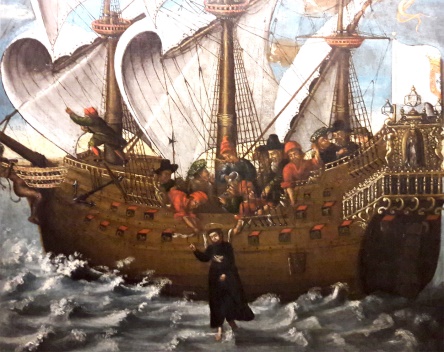
The information about Jesus walking on the waves of the sea among the miracles of Jesus and even the fact that the sea monster “Rahab”, which symbolises the forces of chaos and evil mentioned in Canaanite myths, bowed down to him is mentioned in Job (1-13) in the Bible (Kutsal Kitap, Eski Antlaşma, Eyüp, Bölüm 9/42. 2025, Februrary 19). Standing on the sea and helping the seafarers in difficulty is among the miracles of Mevlânâ (And, 2010:414). Apart from the prophets, it is also necessary to mention the existence of saints related to the cult of the sea. For example, St. Nicholas, for whom there is a church in Antalya Demre, is believed to have rescued people lost at sea and brought back their goods. It is even said that he resurrected a young man who fell overboard and drowned while travelling to Jerusalem. Due to his protection and rescue of sailors, the origin of the belief was attributed to Poseidon from the ancient Greek pantheon, and it was stated that he was his Christianised counterpart (Işık, 1997:460). In the Black Sea region, St. (Hagios) Phokas protected sailors (Karasalihoğlu, 2022:706). Another of these saints is St. Francis Xavier, who lived between 1506-1552 (Frei and Madella, 2021:16). His miracle during his voyage from the Singapore Strait to the small Sanchoão of China is described. During this voyage, the crew and five hundred passengers on the ship, which could not sail due to lack of wind, were dehydrated. Thanks to St. Xavier's blessing of the sea and his prayers, the sea water was sweetened and the sailors met their water needs in this way (Sousa, 2006:65). This event has been depicted in some Western iconography as Xavier's feet touching the water, causing it to become sweet (Fig. 1).
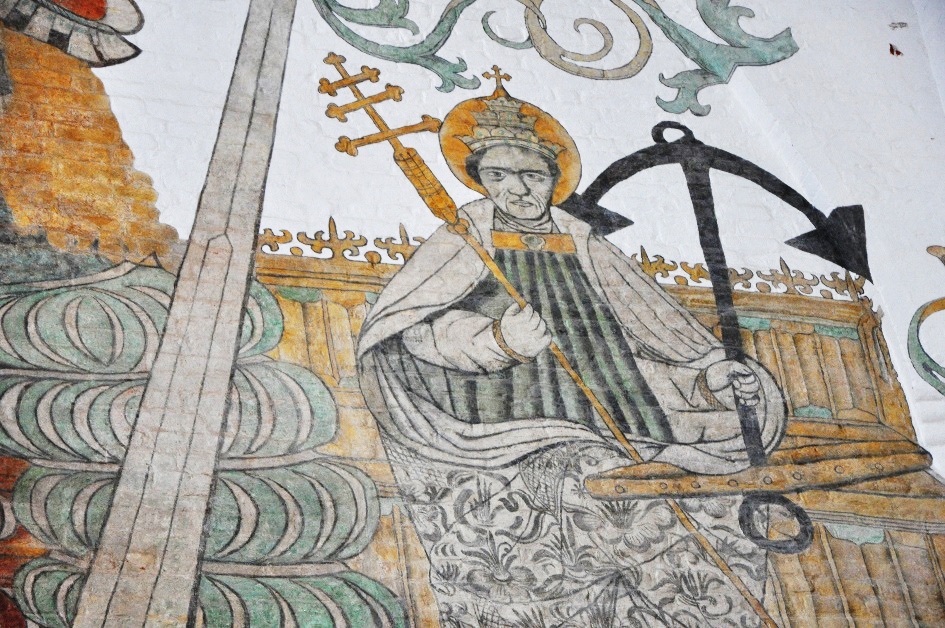
Another saint revered by sailors in Europe and believed to protect them was St. Clement. After the waters receded from the spot where St. Clement was martyred by being thrown into the sea with an anchor tied to his back, a chapel appeared. For this reason, some sailors believed it to be sacred (Bassett, 1885:83). The Aarhus Cathedral, located in the coastal city Denmark, is also dedicated to him. Inside the cathedral, one can see paintings on the walls depicting St. Clement with an anchor in his hand (Fig. 2).
The existence of the cult of Hızır-Ilyas is also kept alive in Anatolian beliefs. Especially the dates of 5-6 May, when both of them meet, are celebrated as Hıdrellez Feast in terms of heralding the spring. It was believed that Hızır had the power to resurrect the dead thanks to the “ab-ı hayat” (bengi/bengü) holy water he drank. In addition, there are narratives about him saving sailors and ships stuck in a storm at sea. For this reason, he was referred to as the “lord of the seas” in places close to rivers, lakes, rivers and water sources and in different coastal regions. However, in some sources, there are also myths about Hızır working on land and in deserts (Döğüş, 2015:84). In the work “Muhammediye” written by Yazıcıoğlu Mehmed in Gallipoli in the first half of the XIVth century, the place where they meet is a place with a sea view, a masjid was built here, and this place was named Hızır-Ilyas seat (ordeal centre). According to this work, Hızır was respected in the water and Ilyas in the dry (Döğüş, 2015:86-87,98). However, the belief that both of them are two holy people who come to the aid of those in distress is dominant in Anatolia. In some narratives about their meeting, especially on Hıdrellez, when the arrival of spring is celebrated. It is said that the prophets Hızır and Ilyas are two brothers or friends who drink the water of immortality. Every year on the night of 5 May, they come together to give life to nature. It is said that Hızır wore a long beard, red shoes and a robe adorned with flowers, that he gave life to plants and brought fertility to the land he trod upon. Ilyas was thought to be tall and cherub, carrying a long staff in his hand, wearing a long coat made of goatskin, and being the protector of both waters and animals (Döğüş 2015:98). Yahya Master (Efendi), St. (Aziz) Mahmûd Hüdâyi, Yûşa and Telli Father (Baba) can be counted among the saints who were respected by sailors and prayed for before sailing. In addition, Nazım Hikmet and Vala Nurettin, who visited İnebolu in 1920. He wrote the poem “Abaş Baba Tomb”. He gives information about the saint in his verses. In this poem, there are lines about him helping travellers caught in a storm at sea and about to drown (Karasalihoğlu, 2022:713).
5. Sacrificial Dogma to the Sea
In Turkish, the word “sacrifice” is defined as an animal with certain characteristics that is slaughtered to fulfil a religious command or a sacrifice (Türk Dil Kurumu [The Turkish Language Association] (TDK). “Kurban”. 2025, Februrary 11). Sacrificial rituals constitute a part of the whole set of beliefs about the sea. In ancient times, in some regions, the cult of the skull for apotropaic purposes, consisting of real animal skulls, hides or horns, was placed on the bows of ships as a ship's head figure (Beydiz, 2019:33). This practice continues today in the form of hanging the hide of the sacrificial animal on the bows of fishing boats in Spain and Portugal.
Fish sacrifices were offered to “Enki (Ea)”, the Sumerian god of water/sea and wisdom, as evidenced by the large number of fish bones and dense ash layers recovered during excavations. In the first millennium BC, the Assyrian king Sanherib (Sennaherib) offered “pure sacrifices” to the god Enki. There are even reports that he threw a ship full of gold, a golden fish and a golden turtle into the sea (Kramer, 2000:47; Black and Green, 2004:82).
Diagoras said the following about the offerings made by sailors living in Semadirek (Samothrace). If those who drowned at sea had also had the opportunity to make offerings to the gods, the number of those protected by the gods would have been very large. The tradition of sacrifice for sailors plays an important role. During the Trojan War, the Achaean fleet gathered in the harbour of Aulis to sail towards Anatolia. However, the star could not move for days because of the black sea breeze. An oracle among them said that the goddess Artemis was angry with them for killing one of her favourite rabbits and that Iphigeneia, the daughter of Agamemnon, the commander-in-chief of the Achaian fleet, should be sacrificed to appease her anger (Halikarnas Balıkçısı, 1992:54). The Trojans commissioned Laokoon, the priest of the temple of Apollo in their city, to sacrifice a bull to Poseidon so that the enemy fleet would be destroyed in the storm, but at that time, the giant snake emerging from the sea attacked both himself and his sons (Grimal, 2012:418). Whether the wind blows or not is the sailor's most important concern. In New Britain, it was described that when a sorcerer wanted to make the wind blow from a certain direction for sailors: He would sprinkle burnt lime in the air while singing continuously, then he would wave ginger branches around, throw them into the air and catch them again. Then he would make a fire with these branches at the point where the burnt lime dust fell most intensely. He would turn around this fire while singing, and finally he would collect the ashes and sprinkle them on the water. Fishermen living on Fladdahuan Island believed that when they were unable to fish due to lack of wind, a favourable wind would appear after walking around the Fladda chapel in the direction of the sun's movement and pouring water on a damp, round, bluish stone on its altar. Sorcerers in Finland, on the other hand, commercialised the ritual a little more. They sold wind to sailors who could not go to sea due to the storm. According to their belief, the wind is hidden in three knots. When the first knot is tied, there is a moderate wind; when the second knot is tied, there is a gentle gale; when the third knot is tied, there is a storm. Women in Lerwick still make a living by selling wind. Shetland sailors also buy wind from old women, thinking that they manage the wind. In Norway, a wizard boasted of sinking a ship by opening a bag in which he hid the wind. Although it is a different geography, the Motumotu natives of New Guinea believed that the storm was sent by an Oiabu sorceress. According to them, the sorcerer has a bamboo that he opens when he wants to make wind (Frazer, 2004:28-29). For example, when Scottish fishermen are at sea, if one of them disrespectfully mentions God's name and the first person to hear it must shout ‘Cauld airn’ (meaning ‘cold iron’ in Scottish Gaelic), the other sailors must immediately hold a piece of iron nearby for a certain period of time (Frazer, 2004:173). According to the natives of Rook Island, located between Papua New Guinea and New Britain Island, whenever a disaster befell them, the entire population would gather in one place and wail, shouting curses. They beat the air with sticks to drive away Marsâba (the devil), whom they considered the creator of evil. They drove him step by step from the place of the disaster towards the sea. When they reached the shore, they continued to shout and beat the air in an attempt to drive Marsâba from the island. They believed Marsâba had taken refuge either in the sea or on Lottin Island (Frazer, 1992:150).
The respect for the sea is paid by bloody and bloodless sacrifices generously given in the name of the gods. In his work, Xenophon reported that Agesilaos saw the Argives sacrificing to Poseidon when he came to Corinth (Xenophon, 2020:107). Another ancient writer, Herodotus, wrote that the Spartan king Cleomenes sacrificed a bull to the sea before setting sail for war. That Xerxes sprinkled offerings from a golden cup into the sea, made offerings and prayed to the sun before crossing the Hellespont (Dardanelles) and conquering Greece. He also described throwing the golden cup and kratero and the Persians' national swords called “akinakes” into the sea (Herodotus, 2006:492,560). A different bloodless sacrifice practice is seen in Homer's Iliad, which is about the Trojan War. In this epic, Achilles' father sacrificed his hair to the Sperkheios River so that he would return from the war healthy. For this reason, Achilles never cut his hair during the war (Erhat and Kadir, 1993:502). When ancient sailors set sail from Anatolia to their colonies, they threw amphorae filled with wine or olive oil into the sea in order to have Poseidon grant them favorable weather conditions and winds, and they also sacrificed horses (Halikarnas Balıkçısı, 1995:44,110). In addition, ancient sailors threw the first fish they caught into the sea back into the sea in order to bring them luck, out of respect for Poseidon, as part of the tradition of sacrifice (Norton, 2016:23). Fishermen also perform various rituals during the Tianheng Sea Sacrifice Festival celebrated in China. During these events, fishermen at sea light sparklers with prayers. They believed that the longer and more enthusiastically the sparklers burned, the more fertile the sea would be that year. It was also said that they threw the small candies in their hands onto the beach, and that children and women waiting on the beach competed with each other to grab as many of them as possible. Because they thought that the more candies they collected, the more their wishes would come true. In addition, fishermen prayed to the immortals of the sea, especially the Dragon King, the Queen of Heaven (Mazu), the Immortal Priestess of the Sun and the Fish Catchers (Whales), in order to prevent any bad disasters from happening to them during their activities at sea and to have a fertile catch (Dong, 2024:123-124). In Japanese myths, there is a similar practice for the sea god Sagara. Sailors threw jewels into the sea to calm him down on stormy days (Mackenzie, 1996:44). In Aboriginal myths, “Tangaroa”, who is accepted as the sea god on whom they base their life, should be pleased before setting off on a journey (Hattstein, 2013:457). In Norse mythology, it is stated that “Ran”, the wife of the sea god “Ægir”, spreads her net in the sea, pulls everything she catches to the bottom of the sea, drowned people go to “Ran” and people thrown into the sea are sacrificed to her (Eliade, 2005:248).
Some rituals that Anatolian coastal cultures have experienced are another way of blessing and respecting the sea. In a ritual that is stated to have been determined in 1939 in the Zonguldak region, women threw cloth dolls into the Black Sea in order to calm the sea on stormy days and to protect their relatives in the sea (Boratav, 2012:57). If the cloth dolls are symbolized stylized human figures, it should be considered whether the basis of this tradition is related to the throwing of Yunus into the sea (And, 2010:220). Bloodless sacrifice practices are also found among fishermen trying to survive in Bodrum. They called this “Gift to the Sea”. According to them, the sea is insatiable and swallows a few young men every year, and for this reason, instead of making bread, a large dessert top made of molasses is placed in the middle and thrown into the sea from the bow of the boat with the accompaniment of the basmalah, so that their voyage will be fruitful and lucky (Halikarnas Balıkçısı, 1997a:18-19). In addition, if sailors are caught in a storm, they offer sacrifices to Allah in order to come out safely (Halikarnas Balıkçısı, 1997b:106). Throwing bread into the sea is a tradition practiced by Turkish sailors passing through the Dardanelles. The basis of this belief dates back to the Battle of Dardanelles. On April 25, 1915, the breakfast of Turkish soldiers was boiled cracked wheat soup and half a loaf of bread. This breakfast menu is kept alive by tradition among Turkish sailors. When passing through the Dardanelles from all ships flying the Turkish flag (even a small sailboat), half a loaf of bread is left in the sea in front of the Martyrs' Memorial or the “Dur Yolcu” (Stop Traveler) inscription on Kilitbahir Hill. The martyred Turkish soldiers are commemorated and the Fatiha is recited for them, and the Turkish flag on their ships is lowered to half-staff to show respect (Köyatası, 2011). In Anatolia, the tradition of bloodless sacrifice to the sea continues as a ritual in various festivals. In the “Giresun Aksu Festival” celebrated in Giresun on May 18-20, where the Aksu stream flows into the sea, people turn their backs to the water and throw seven pairs of single stones into the water with wishes in order to keep evil away from them and for their wishes to come true (Doğanay, 2019:451). Similar rituals are also practiced in the same region, especially in Ordu and Trabzon, during the “Traditional Seventh of May” festivals (Korkmaz, 2024:83,89). Historical information about the abundance that comes from throwing stones into the sea in Turkish-Islamic culture is also narrated in the work called “Acâ’ibü’l-Mahlûkât”. Here, a sea called “Baḥr’l-Ġamām” is mentioned. It is written that this sea is in Turkestan and that if a stone is thrown into this sea, the sky will thunder with majesty, it will rain heavily and even destroy a person (Sarıkaya, 2019:169). It should not be forgotten that stones called “yad, yada” in Central Asian Turkish beliefs have the power to cause rain, snow and wind (Çoruhlu, 2011:46). The tradition of blood sacrifice to the sea is also seen in different regions in Anatolia. If sailors in the Mersin region are financially well off, they sacrifice before setting sail when the fishing season begins. If they are caught in a storm or heavy rain at sea and cannot get on land for a few days, they make a sacrifice to get rid of this bad situation and fulfill this vow as soon as they set foot on land (Çıblak Coşkun, 2024:260). In addition, sacrifices are made when launching boats or ships. This tradition is also seen in the Ottoman Empire when ships are launched with prayers (Fatiha) (Uzunçarşılı, 1988:491). In the Bodrum shipyards, in the ritual called “Blood Flying”, when the construction of a boat begins, a ram is sacrificed and its blood is smeared on the stem of the boat (Gülsöken, 2020:127).
6. Conclusion
Since pagan societies, the sea has been a distinct cultural sphere for humankind. The fact that the sea was feared as much as it was important to them was emphasised by its deification. The basis of rituals performed in the name of the sea is also this blessing. Although these rituals have varied geographically throughout history, their Gnostic theological structure has remained unchanged. The belief in the sanctity of the sea has continued in monotheistic religions with similar ideas but different practices. Geographies may change, but the fear of the sea has been overcome by various cultures. Religious figures, as sanctified as God, are the saviours of sailors. Additionally, certain dogmatic ideas have emerged regarding the necessity of bringing prosperity when required. Furthermore, ancient myths dictate that sacrifices, whether bloody or bloodless, must be made to sea gods, and prayers must be offered. Sometimes an animal, and sometimes any object that has been deified, can be offered as a sacrifice to the sea. Sacrifices to appease the sea signify freedom from fear and abundance. Ship decorations were made with similar sentiments. Beginning with the figurehead, both mythological and cultic figures and symbols were placed on the bows and stern sections. These decorations, described as aesthetically pleasing, also reflect the culture of that society. Learning about the myths and beliefs of societies opens the way to reading their cultural codes and helps to easily interpret maritime art. Maritime affairs should not be considered merely as an economic activity. The cultural values of coastal communities, ranging from their works of art to their mythical narratives, both tangible and intangible, will ensure that future generations continue to respect the sea.
References
- And, M., 2010. Minyatürlerle Osmanlı-İslâm Mitologyası.Yapı Kredi Yayınları, İstanbul.
- Bassett, F. S., 1885. Legends and Superstitions of the Sea And of Sailors. Belford, Clarke&Co., Chicago and New York.
- Bayat, F., 2013. Mitolojiye Giriş. Ötüken Yayınları, İstanbul.
- Bayazıtoğlu, Y. A., 2015. Denizlerden Denizlere. Denizler Kitabevi, İstanbul.
- Bekki, S., 2002. Altay-Türk Destancılık Geleneği ve Maaday-Kara Destanı. Türkler Ansiklopedisi, Volume III. Yeni Türkiye Yayınları, Ankara, p.569-579.
- Beydiz, M. G., 2019. Gemibaş Figürleri. Çizgi Yayınları, Konya.
- Black, J. and Anthony G., 2004. Gods, Demons and Symbols of Ancient Mesopotamia. The British Museum Press, London.
- Boratav, P. N., 2012. Türk Mitolojisi. R. Özbay (Trans.). Bilge Su Yayınları, Ankara.
- Burkert, W., 1999. İlkçağ Gizem Tapıları. S. Şener (Trans.). İmge Kitabevi, Ankara.
- Cömert, B, 2010. Mitoloji ve İkonografi. De Ki Yayınları, Ankara.
- Çıblak Coşkun, N., 2024. Mersin'de Balıkçılık ve Balıkçı Folkloru. In Uluslararası Deniz ve Kıyı Sempozyumu Bildiriler Kitabı. M. N. Önal and N. Özdemir, (Ed.), Atatürk Kültür Merkezi Başkanlığı, Ankara, p.247-264.
- Çığ, M. I., 2005. Hititler ve Hattuşa, İştar’ın Kaleminden. Kaynak Yayınları, İstanbul.
- Çirkin, S., 2023. Güney Sibirya Arkeolojisi ve Şamanizm. Yapı Kredi Yayınları, İstanbul.
- Çoruhlu, Y., 2011. Türk Mitolojisinin Ana Hatları. Kabalcı, İstanbul.
- Daniel, M., 2014. Bir Nefeste Dünya Mitolojisi. Maya Kitap, İstanbul.
- Diyanet İşleri Başkanlığı [Presidency of Religious Affairs Turkiye]. 2025, Februrary 17., Tâhâ Suresi - 25-55. Ayet Tefsiri. https://kuran.diyanet.gov.tr/tefsir/T%C3%A2h%C3%A2-suresi/2373/25-55-ayet-tefsiri
- Doğan Alparslan, M, 2009. Hitit Mitolojisinin Ana Hatları. M. Alparslan, prepared, Hititolojiye Giriş. Türk Eskiçağ Dilleri Enstitüsü, İstanbul, p.128-132.
- Doğanay, G., 2019. Giresun Aksu Festivali Ritüellerinde Coğrafi İzler. In 1. İstanbul Uluslararası Coğrafya Kongresi Bildiri Kitabı. B. Gonencgil, T. A. Ertek, I. Akova and E. Elbasi (Ed.), İstanbul Üniversitesi Yayınları, İstanbul, p.446-455.
- Dong, S., 2024. A Study of the Application of Tianheng Sea Sacrifice Festival in Digital Illustration. Proceedings of the 3rd International Conference on Literature, Language, and Culture Development, p.121-127.
- Döğüş, S., 2015. “Anadolu’da Hızır-İlyas Kültü ve Hıdrellez Geleneği”. Türk Kültürü ve Hacı Bektaş Veli Araştırma Dergisi 74:77-100.
- Éliade, M., 2003. Dinsel İnançlar ve Düşünceler Tarihi. Kabalcı, İstanbul.
- Éliade, M., 2005. Dinler Tarihi İnançlar ve İbadetlerin Morfolojisi. Serhat Kitabevi, Konya.
- Erhat, A. and A. Kadir., 1993. Homeros İlyada, Can Yayınları, İstanbul.
- Frazer, J. G., 1992. Altın Dal, Dinin ve Folklorun Kökleri II. M. H. Doğan, (Trans.), Payel Yayınları, İstanbul.
- Frazer, James G., 2004. Altın Dal Dinin ve Folklorun Kökleri. M. H. Doğan, (Trans.), Payel Yayınevi, İstanbul.
- Frei, E. and Laura M., 2021. The Devils Sang Matins So Properly: Francis Xavier’s Close Encounters with Demons in Daniello Bartoli’s Asia (1653). Quaderni d’italianistica 42, 2:15-41.
- Grimal, P., 2012. Mitoloji Sözlüğü, Yunan ve Roma. Kabalcı, İstanbul.
- Gülsöken, S., 2020. Bodrum’un Gayıkları. Bodrum Deniz Müzesi Yayınları, Bodrum.
- Halikarnas Balıkçısı, 1992. Anadolu Efsaneleri. Bilgi Yayınevi, Ankara.
- Halikarnas Balıkçısı, 1995. Arşipel. Bilgi Yayınevi, Ankara.
- Halikarnas Balıkçısı, 1997a. Deniz Gurbetçileri. Bilgi Yayınevi, Ankara.
- Halikarnas Balıkçısı, 1997b. Aganta Burina Burinata. Bilgi Yayınevi, Ankara.
- Hattstein, M., 2013. Avustralya ve Okyanusya Mitolojisi. Mitoloji. NTV Yayınları, İstanbul, p.450-467.
- Heidel, A., 2000. Enûma Eliş, Babil Yaratılış Destanı. İ. Berkan (Trans.), Ayraç Yayınları, Ankara.
- Heredot., 2017. Tarih. M. Ökmen (Trans.), Türkiye İş Bankası Kültür Yayınları, İstanbul.
- Işık, H., 1997. Dini Köken Açısından Noel ve Yılbaşı. Necmettin Erbakan Üniversitesi İlahiyat Fakültesi Dergisi 7, 7:447-468.
- İnan, N. and İnan S., 2013. Anadolu’yu Doğuran Deniz, Tetis’in İzlerini Sürmek, Yol Hikâyeleri. Bilim ve Teknik, 50-56.
- İncil-Tevrat-Zebur., 2025, Februrary 17. Mısırdan Çıkış 2. Musa’nın Doğumu. https://incil.info/kitap/Misirdan+Cikis/2
- İncil-Tevrat-Zebur., 2025, Februrary 17. Mısırdan Çıkış 2. https://incil.info/kitap/exo/14
- Karasalihoğlu, M., 2022. Helesa/Heyamola Geleneğindeki Senkretik Unsurlar. Folklor/Edebiyat Dergisi 28, 3:697-720.
- Korkmaz, M. A., 2024. Mayıs Yedisi Bayramları ve Giresun Ordu Trabzon Kıyı Folklorunda Ritüel-Bereket Arınma. In Uluslararası Deniz ve Kıyı Sempozyumu Bildiriler Kitabı. M.N. Önal and N. Özdemir (Ed.), Atatürk Kültür Merkezi Başkanlığı, Ankara, p.75-100.
- Köyatası, M., 2025, February 26. Denizciler neden denize ekmek atar, Milliyet Gazetesi. Erişim Tarihi:26.02.2025. https://www.milliyet.com.tr/yazarlar/meric-koyatasi/boyle-saka-olmaz-ki-1384547
- Kramer, S. N., 1999. Sümer Mitolojisi. H. Koyukan (Trans.), Kabalcı, İstanbul.
- Kramer, S. N., 2000. Sümerlerin Kurnaz Tanrısı Enki. H. Koyukan (Trans.), Kabalcı, İstanbul.
- Ksenophon., 2020. Yunan Tarihi. S. Sinanoğlu (Trans.), Türk Tarih Kurumu, Ankara.
- Kutsal Kitap., 2025, Februrary 19. Eski Antlaşma, Yaratılış, Bölüm 1/50, https://www.kutsal-kitap.net/bible/tr/index.php?mc=1&sc=4&id=5
- Kutsal Kitap., 2025, Februrary 19. Eski Antlaşma, Eyüp, Bölüm 9/42, https://www.kutsal-kitap.net/bible/tr/index.php?mc=1&sc=457&id=466
- Lindow, J., 2001. Norse Mythology: A Guide to the Gods, Heroes, Rituals, and Beliefs. ABC-Clio, California.
- Lynch, P. A., 2004. African Mythology A to Z. Chelsea House, New York.
- Mackenzie, D. A., 1996. Çin ve Japon Mitolojisi. K. Akten (Trans.), İmge Kitabevi, Ankara.
- Marriot, A. and Rachlin C. K., 2003. Kızılderili Mitolojisi. Ü. Özünlü (Trans.), İmge Kitabevi, Ankara.
- Narçın, A., 2008. A’dan Z’ye Mısır. Ozan Yayıncılık, İstanbul.
- Norton, L. A., 2016. Folklore, Superstitions and the Sea. The Northern Mariner/Le Marin du Nord XXVI, 1:21-30.
- Norton, P., 1976. Ships’ Figureheads, Crown, New York.
- Otto, W. F., 1995. Dionysus Mith and Cult. R. B. Palmer (Trans.), Indiana University Press, Bloomington and London.
- Ögel, B., 1971. Türk Mitolojisi. Volume I. Devlet Kitapları, Ankara.
- Ögel, B., 2003. Türk Mitolojisi. Volume I. Türk Tarih Kurumu Yayınları, Ankara.
- Radloof, W., 2008. Türklük ve Şamanlık. A.Temir, T.Andaç and N.Uğurlu (Trans.), Örgün Yayınevi, İstanbul.
- Remler, P., 2010. Egyptian Mythology A to Z. Chelsea House, New York.
- Ricoeur, P., 1976. Interpretation Theory: Discourse and The Surplus of Meaning. Sixth, Texas.
- Roberts, J., 2004. Chinese Mythology A to Z. Facts On File, New York.
- Roberts, J., 2010. Japanese Mythology A to Z. Chelsea House, New York.
- Sarıkaya, B., 2019. Tercüme-i Acâ’ibü’l-Mahlûkât ve Garâ’ibü’l-Mevcûdât. In G. Kut (Ed.), Türkiye Yazma Eserler Kurumu Başkanlığı Yayınları, İstanbul.
- Sousa, I.C., 2006. St. Francis Xavier’s Letters From China (1552). Review of Culture 19:64-79.
- Strassberg, R. E., 2002. A Chinese Bestiary, Guideways Through Mountains and Seas. University of California Press, California.
- Tacou, C., 2000. Din ve Fenomenoloji, Mircea Éliade’ın Eserlerine Toplu Bakış. H. Köser (Trans.), İz Yayıncılık, İstanbul.
- Türk Dil Kurumu (TDK)., 2025, Februrary 11. Kurban. https://sozluk.gov.tr/
- Uraz, M., 1994. Türk Mitolojisi. Düşünen Adam Yayınları, İstanbul.
- Uzunçarşılı, İ. H., 1988. Osmanlı Devleti’nin Merkez ve Bahriye Teşkilatı. Türk Tarih Kurumu, Ankara.
- Ünal, A., 2016. Hititlerde ve Eski Anadolu Toplumlarında Din, Devlet, Halk ve Eğlence. Bilgin Yayınları, Ankara.
- Westenholz, J. G., 1997. Legends Of The Kings Of Akkade. Eisenbrauns Publishing, Indiana.