
Heritage in Harmony: Preserving Traditional Ecological Knowledge to Develop Sustainable Cultural Tourism in Borneo Island, Indonesia
 10.21463/jmic.2025.14.3.07
Abstract
This study explores the preservation and integration of Traditional Ecological Knowledge (TEK) of the coastal communities in Kayong Utara, West Kalimantan, with a particular focus on the annual ritual of Nyapat Taon. Employing a qualitative-ethnographic method trough in-depth interviews, participant observation, focus group discussions (FGDs), and document analysis, the research involved; students, customary leaders, local communities, and stakeholders from the education and tourism sectors. The finding reveal that as both an agrarian and coastal tradition, Nyapat Taon embodies ecological wisdom, spiritual beliefs, and social values, yet its continuity is increasingly challenged by modernization and weakened intergeneration transmission. Digitalization and integration into school curricula strengthen cultural transmission, while Sustainable Cultural Tourism provide economic opportunities without compromising authenticity. Integration of TEK into Sustainable Cultural Tourism is best understood through the Quadruple Helix framework, which positions government, community, schools, and mass media as the main pillars of development tourism in Kayong Utara. With this model, TEK is mobilized not as a static heritage but as a dynamic cultural and ecological resource. Ultimately, the integration TEK into cultural heritage tourism strengthens socio-ecological resilience, enhances local identity, and fosters equitable economic opportunities.
Keywords
Traditional Ecological Knowledge, Digitalization, Quadruple Helix, Nyapat Taon, Sustainable Cultural Tourism, Borneo Island
Introduction
Indonesia, as an archipelagic nation, processes extraordinary cultural and ecological wealth, particularly in coastal areas that serve as the living space for various traditional communities. Kayong Utara, a coastal regency in Borneo Island, holds a rich cultural heritage deeply rooted in the relationship between its people and the environmental (Purmintasari, 2025). the communities in this region have developed Traditional Ecological Knowledge (TEK) through intergenerational practices in managing marine resources, forest, and agricultural lands. However, with the rapid pace of modernization and chances in society lifestyles, particularly among younger generations, this knowledge is increasingly under threat of erosion (Akhmar et al., 2022).
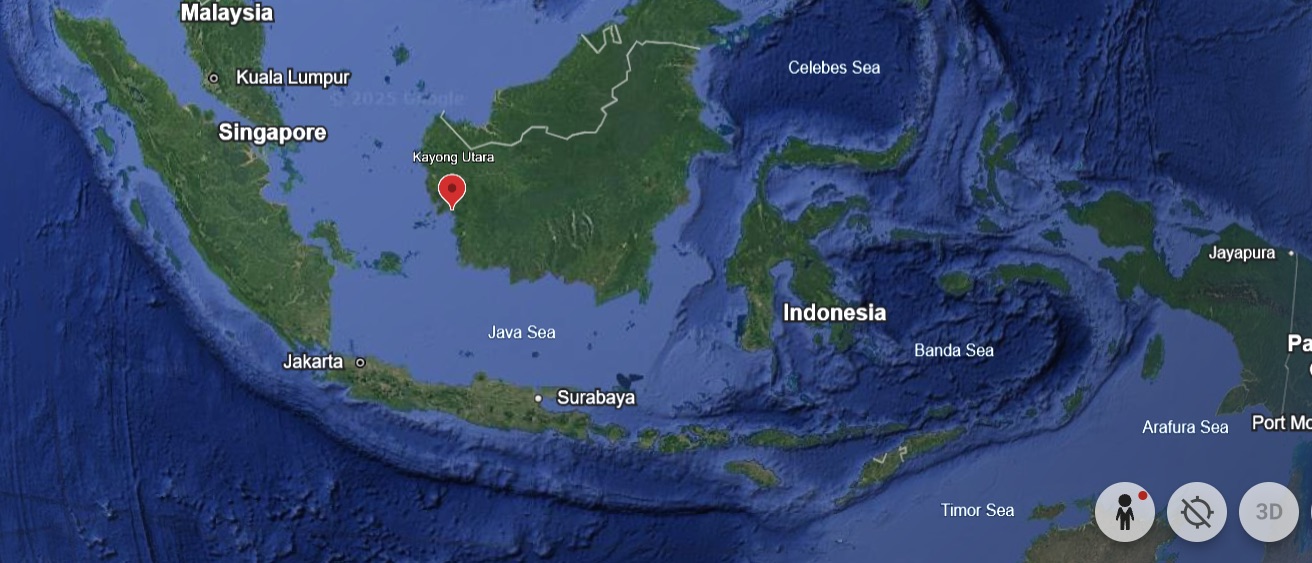
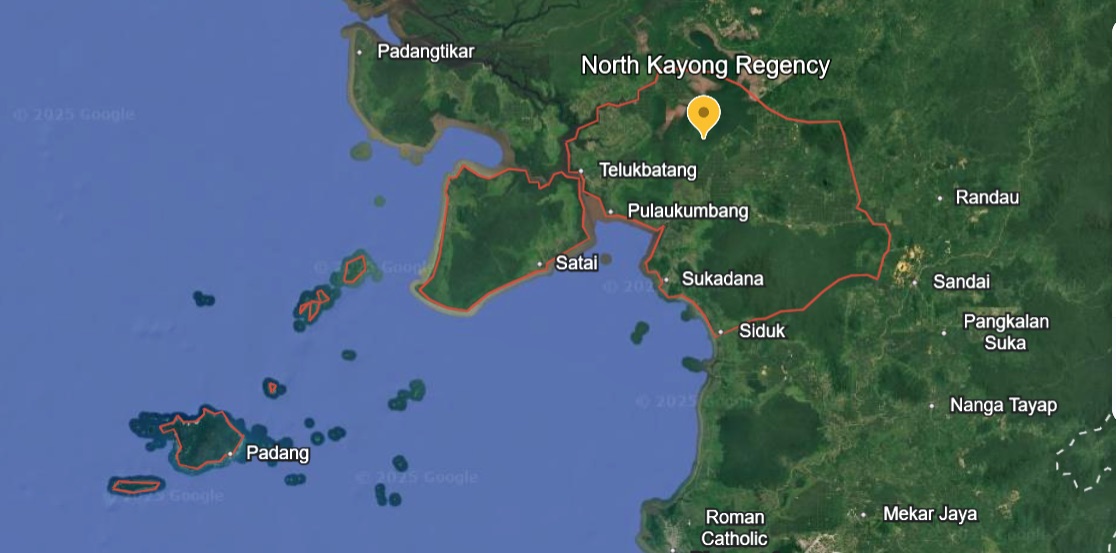
North Kayong Regency has a distinctive geographical character, as most of its area consists of a combination of coastal regions, islands, and mainlands in the western part of Borneo. According to BPS North Kayong Regency of the total area of approximately 4,110 km², marine and island areas dominate compared to the mainland. This condition creates a close ecological interconnection between land and sea, where local livelihoods depend on the balance between the two. Previous research on the Semah Laut tradition in North Kayong shows that this ritual is not only an expression of the local belief system but also strengthens social cohesion and ecological-cultural resilience (Purmintasari, 2025) reflecting marine TEK rooted in spiritual and ethical relationships with the sea.
However, the cultural identity of coastal communities in Kayong Utara is not limited to marine practices. Nyapat Taon, a traditional agricultural practice in Kayong Utara, marks the end of the previous farming cycle and the opening of a new one. In line with Bai’s study, the traditional seasonal calendar in several agrarian communities in China not only serves as a tool to regulate planting and harvesting schedules but also functions as an ecological knowledge system adaptive to climate variability (Bai & Weng, 2023). As Hatfield and Hong emphasize, safeguarding TEK is crucial for fostering both cultural and ecological resilience in island societies. In this context, Nyapat Taon tradition can be understood as a living embodiment of TEK, preserving ecological balance while reinforcing the cultural identity of coastal communities (Hatfield & Hong, 2017). This demonstrates that traditional agricultural practices such as those found in Nyapat Taon represent complex forms of TEK that hold strategic value in maintaining ecological and cultural resilience.
Modernization and socio-economic changes have brought serious challenges to the sustainability of traditions and local knowledge. Younger generations are becoming increasingly detached from customary values, while community-based rituals and resource management practices are gradually eroding (Aswani et al., 2018; Urbaite, 2024). Jensen warm that globalization increases the complexity of cultural identity formation among youth, leading to identity confusion and generational disconnection (Jensen et al., 2011). The loss of these practice risks weakening social bonds, degrading ecosystems, and erasing cultural values than underpin the harmony between society and nature. Despite previous studies in Kayong Utara, particularly on the Semah Laut maritime tradition, research focusing on agrarian-based Traditional Ecological Knowledge (TEK) remains limited. Furthermore, the potential of TEK to support Sustainable Cultural Tourism, including its digitalization and transmission to younger generations, has not been thoroughly explored. Existing literature also tends to emphasize either tangible cultural heritage or marine TEK, leaving the integration of terrestrial TEK, tourism development, and island–coastal community dynamics under-investigated. This study addresses these gaps by examining the Nyapat Taon tradition, a terrestrial TEK practice, as a foundation for community-based sustainable cultural tourism, highlighting both its ecological significance and cultural relevance in coastal and island contexts. Traditional practices grounded in TEK have been proven effective in supporting ecosystem restoration and building socio-ecological resilience, particularly in areas experiencing environmental stress and rapid social change (Haq et al., 2023). This indicates that preserving TEK including Nyapat Taon makes a tangible contribution to environmental sustainability while strengthening the adaptive capacity of local communities. Similar to how fishing material culture fosters a sense of place in coastal communities (Khakzad & Griffith, 2016), the tradition of Nyapat Taon anchors ecological practices within the cultural identity of Kayong Utara’ people.
Amid these threats, TEK preservation becomes a strategic effort to safeguard cultural heritage whole addressing the need for sustainable environmental management (Omma, 2025). Beyond that, TEK holds significant potential for the development of cultural tourism. Tourism based on TEK not only offers authentic and educational experiences for visitors but can also open economic opportunities for local communities and strengthen cultural heritage as a core attraction. This integration, however, must consider principles of cultural and ecological sustainability. Sacred traditions, must be safeguarded from commodification or misinterpretation, and tourism activities should align with the community’s cultural cycle and sacred spaces. For instance, Nyapat Taon cannot be turned into a weekly show soley for tourism purpose without risking the erosion of its spiritual values and ecological balance (Esfehani & Albrecht, 2019). Therefore, community consensus, customary regulations, and supportive policies are essential to preserving these values.
From an economic perspective, tradition-based tourism can generate local economic benefits through supporting sectors such as handicrafts, traditional cuisine, homestay accommodations, and local guide services. Nevertheless, these economic gains should be distributed fairly and transparently. Community cooperatives or locally owned enterprises can ensure that benefits are not monopolized by outsiders or a small local elite but instead contribute to collective economic resilience (Hariyadi et al., 2024).
A study by Anindhita illustrates how community-based tourism among the Kamoroo people in Papua contributes to the preservation of cultural and natural landscape through the integration of spiritual values and traditional practices (Anindhita et al., 2024). These finding reaffirm that TEK is not merely an inherited body of knowledge but also an essential foundation for the development of Sustainable Cultural Tourism , oriented toward both sustainability and local autonomy. Unfortunately, research on cultural tourism generally remains focused on tangible cultural objects such as dances, culinary heritage, and historical sites. Conversely, TEK studies are often linked solely to conservation or food security issues, without exploring their potential in tourism development. In Kayong Utara, there has been little research explicitly connecting agricultural TEK with community based cultural tourism strategies.
While previous studies on Semah Laut have predominantly highlighted its maritime dimension, this study emphasizes the agrarian dimension through the tradition of Nyapat Taon. Both traditions demonstrate that TEK functions not only as an ecological compass for local communities but also as a foundation for developing Sustainable Cultural Tourism . Accordingly, this research focuses on exploring the role of Nyapat Taon as a representation of agrarian based TEK that can be safeguarded through a Sustainable Cultural Tourism model integrated with digitalization and education for younger generations in Kayong Utara.
Material and Methods
This study adopts a qualitative design using an ethnographic approach to explore the preservation of Traditional Ecological Knowledge (TEK) and its relevance for cultural tourism development in the coastal region of Kayong Utara, West Kalimantan. Ethnography is particularly suitable as it enables deep immersion into the cultural meanings, practices, and values embedded in daily life and their intergenerational transmission highlighted as essential in semiotic cultural research (Black et al., 2021).
Data collection involved students across elementary to senior high school levels as young knowledge bearers, complemented with insight from traditional leaders and local community members well versed in TEK. Focus Group Discussions (FGDs) with representatives from the Department of Education, the Department of Tourism, and customary authorities enriched institutional perspectives on cultural preservation and integration into education and tourism.
The study employed triangulation, gathering data through in-dept interview, participant observation, and document analysis, enhancing depth and credibility of finding (Purmintasari et al., 2021; Valencia, 2022). Such triangulation strengthens understanding through diverse empirical angles rather than relying on a single source. For analysis, thematic analysis was used to systematically identify and interpret recurring patterns of meaning across data sources (Jowsey et al., 2021; Naeem et al., 2023). Thematic analysis enables rigorous, data-driven interpretation research by coding, organizing, and reviewing emerging themes.
Finally, validity of the findings was maintained through triangulation of sources, member checking, and prolonged researcher immersion in the field, conforming to best practices that ensure trustworthiness in qualitative inquiry (Valencia, 2022)
Result and Discussion
A. Nyapat Taon: Between Scared Tradition and Ecological Wisdom
Nyapat Taon is a tradition that marks the closing of the previous agricultural year and the opening of the new farming cycle. In line with Bai’s study, which highlights that traditional seasonal calendars among several agrarian communities in China function not only as tools for regulating planting and harvesting periods but also as ecological knowledge system adaptive to climate change (Bai & Weng, 2023). This indicates that traditional farming practices such as those embedded in Nyapat Taon constitute a complex form of TEK with strategic value for sustaining both ecological resilience and cultural continuity.
Nyapat Taon is a ritual of gratitude to God for the completed harvest and a prayer for a smooth planting season ahead. As a coastal community, the people have traditions related to both the sea and the land. Similar to Semah Laut, a maritime ritual of thanksgiving for the fish catch, Nyapat Taon, is rooted in the belief that God always provides sustenance to all creatures, both visible and invisible. Therefore, blessings must be shared, and no harm should be inflicted upon other beings. This tradition also aims to purify both nature and humans from negative energies, and to ask the ancestors for abundant harvests, where the majority of the population is muslim, tis tradition has been adapted to Islamic practices, as reflected in changes to offerings and prayers.
In the Nyapat Taon tradition, the determination of the opening and closing of the agricultural year, as well as the regulation of planting and harvesting seasons, is carried out by the dukun (traditional spiritual leader). This timing is based not only on customary calculations and inherited practices, but also on natural signs and prevailing environmental conditions. The tradition is performed once a year, usually after the second rice harvest (rendeng), as an expression of gratitude to God and nature. Agricultural land is divided into two categories; paddy fields and upland fields. In the upland areas, if the agreed to plant seeds in August, the community will burn the hillsides in June to clear the fields, followed by drying process between July and August. Meanwhile, the paddy fields, the seeds are not planted directly but are first sown in seedbeds, so that by August the seedlings are ready for transplantation.
The Nyapat Taon ritual unfolds through a series of structured stages, each carrying symbolic significance and reinforcing the community’s social cohesion, spiritual devotion, and harmonious relationship with the natural environment:
- Preparation and Customary Cleansing. The ceremony begins with cleaning the village and ritual sites. This activity is meant to repel misfortune and purify the environment to receive blessings from God. It symbolically represents purification of both oneself and the living space.
- Offerings and Prayers to God. The Balian (ritual leader/dukun) leads prayers requesting protection and blessings. Offerings of new rice, chickens, pigs (for non-Muslims), palm wine, betel leaves, and other produce are placed on small altars as symbols of gratitude and respect for ancestors.
- Traditional Animal Sacrifice .The animals offered are ritually slaughtered, and their blood is sprinkled at specific points as a symbol of sacrifice and purification of both the individual and the village from misfortune.
- Bersaprah (Communal Meal). Following the prayers, all villagers sit in a circle to eat together. This reinforces kinship, equality, and community cohesion
The Nyapat Taon ritual involves the participation of a large number of community members, reflecting the collective spirit and social cohesion of the village. This annual ceremony is not limited to ritual specialists but engages people from all social groups, emphasizing the communal nature of traditional agrarian life. Various figures play distinct yet complementary roles to ensure the success and sacredness of the event, including duku (ritual leaders), Tetua adat (customary elders), community representatives, and all villagers who take part in mutual cooperation and shared celebration.
Nyapat Taon embodies harmony with nature. Humans are not seen as rulers over nature but as part of the life cycle that must be kept in balance. One key aspect of Nyapat Taon is its regulation of the natural farming cycle. The ceremony marks the end of the harvest season and the beginning of the next planting season, demonstrating the community’s deep knowledge of seasons and environmental conditions, passed down through generations through direct observation. Farming is never forced outside its proper season, as it is believed that each period has its own strength and balance. This seasonal alignment reflects local wisdom that is highly relevant in the current context of climate change and environmental degradation.
The practice of Nyapat Taon also reflects a non-exploitative attitude toward nature. At every stage of the ritual, only natural materials such as bamboo, leaves, and local produce are used. There is no environmental destruction or waste of resources. Some parts of the ritual even carry the symbolic meaning of “cleansing” nature, presenting respect for and protection of the environment. This reflects a collective awareness that nature should be preserved, not merely exploited.
Nyapat Taon, also imparts spiritual and social values that strengthen the human environmental relationship. In the traditional community worldview nature consists not only of physical elements but is also inhabited by ancestral spirits and unseen forces. Through prayers and offerings, the community seeks permission and show reverence to the universe. These values serve as unwritten conservation laws passed down through generations and followed because they are considered integral to the order of life. Even before the concept of “sustainable environment” was introduced on academic discourse and public policy, the traditional community had already been practicing a way of life that honored nature. In today’s global ecological crisis, such local wisdom should be highlighted as a reference for building are harmonious relationship between humans and the environment.
Throughout the process, the community upholds customary norms and values. There are taboos that must be observed, such as prohibitions on opening farmland before customary deliberations, avoiding days considered unfavorable for activities like cutting or clearing trees, and refraining from cultivating land deemed scared or spiritually significant. During the planting season, it is forbidden to affect the harvest. In some communities, women who are menstruating or in a state of ritual impurity are not allowed to participate in planting. At harvest time, no crops may be taken before a thanksgiving ritual is conducted usually a small ceremony led by the traditional leader or spiritual figure to honor the bounty given by God and nature. These taboos are not arbitrary rules but reflect the community’s way of maintaining harmony with nature and their spirituality. By following them, the community believes they will receive blessings and abundant harvests.
In the implementation of Nyapat Taon tradition, various ritual implements and materials are indispensable. Several tools and offerings are utilized in this ritual, each carrying symbolic and ecological values:
- Ajong (Two Traditional Boats). Two traditional boats, painted yellow and black, represent respectively the royal vessel and the guardian vessel. These ritual boats serve as symbols and as media for communication with spiritual forces. The ajong symbolizes the sea, which is later harmonized with the ancak—the symbol of the land.
- The ancak functions as a vessel or container for offerings. It is made from bamboo and symbolizes gratitude for the harvest, serving as an expression of devotion and reverence toward divine powers that sustain the fertility of the earth. Five ancak of varying sizes are prepared and placed at both the upstream (hulu) and downstream (hilir) parts of the village.
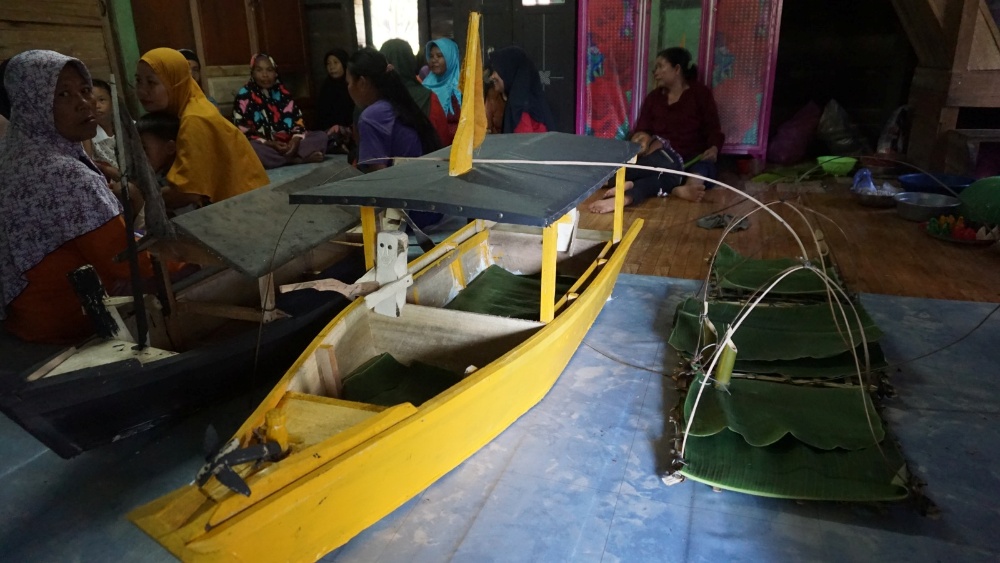
- Rice Seeds. Rice is a symbol of life, fertility, and prosperity. In the Nyapat Taon ritual, rice represents the beginning of a new life cycle, starting with planting and ending with harvest. It embodies hope for success, abundance, and the continuity of life. The rice seeds to be planted are placed outside the house and later blessed through collective prayer, serving as the main ritual offering.
- Sesaji Pelantara (Pelantara Offerings) The pelantara offerings consist of several ritual items placed within the ancak and ajong. Each component carries deep symbolic and ecological significance. The following are the pelantara offerings used in the ceremony:
- Chicken Rice Porridge inside Ketupat. The ketupat (rice cake wrapped in young coconut leaves) symbolizes purity, interconnectedness, and unity—the word janur (young coconut leaf) connotes “as pure as the light of the heart.” The chicken rice porridge inside represents the soul and life residing within the physical body. The unity of both signifies harmony between the physical and spiritual realms, between humans and the Creator. The Ecological Value is he use of natural materials such as coconut leaves reflects respect for nature and sustainable use of local resource.
- Eggs. Eggs symbolize the origin of life, fertility, and renewal. In the context of Nyapat Taon, eggs are prayers for a fertile and prosperous planting season. The ecological value is they emphasize the importance of maintaining the natural cycle of life and ecological balance
- Nasi Curung Empat Warna (Four-Colored Sticky Rice). The four colored sticky rice, red, yellow, green, and black holds profound cosmological meanings. Red symbolizes courage, vitality, and the essence of life; yellow represents prosperity and divine radiance; green embodies fertility and natural balance; and black signifies the strength and firmness of the earth. Philosophically, nasi curung represents harmony among the four natural elements earth, water, fire, and air and the four cardinal directions. The ecological value are reflects the Malay cosmological worldview that humans live in harmony with the four elements of nature, which must be preserved.
- Bubur Putih (White Porridge). White porridge symbolizes purity, sincerity, and new beginnings. In the Nyapat Taon ritual, it is offered first to nature and the guardian spirits of the village. The ecological value are reminds humans to maintain purity of heart in treating nature with respect and integrity.
- Tepung Tawar (Blessing Mixture). Tepung tawar is made from floral water, rice, and sacred leaves (such as pandan, lime, or lemongrass). It is used for purification of individuals and the village, as well as to ward off misfortune. Performed by community elders, the mixture is applied to participants’ hands, foreheads, or shoulders—or sometimes sprinkled. It is represents purification, blessing, and prayers for prosperity. The ecological value are reflects an environmentally friendly ritual practice, utilizing natural, non-destructive ingredients.
- Cengkaruk (Fried Rice Snack). Cengkaruk is a light yet crispy snack, symbolizes a simple but meaningful life, the result of patience and a long process. Fried rice grains that expand upon heating represent transformation from simplicity to prosperity, from a small seed to a fulfilling product reflecting blessed human labor. Made from the year’s harvest, it embodies gratitude for the sustenance provided by God. The ecological value are demonstrates traditional ecological awareness in food consumption, emphasizing sustainable processing of agricultural produce without preservatives or artificial coloring.
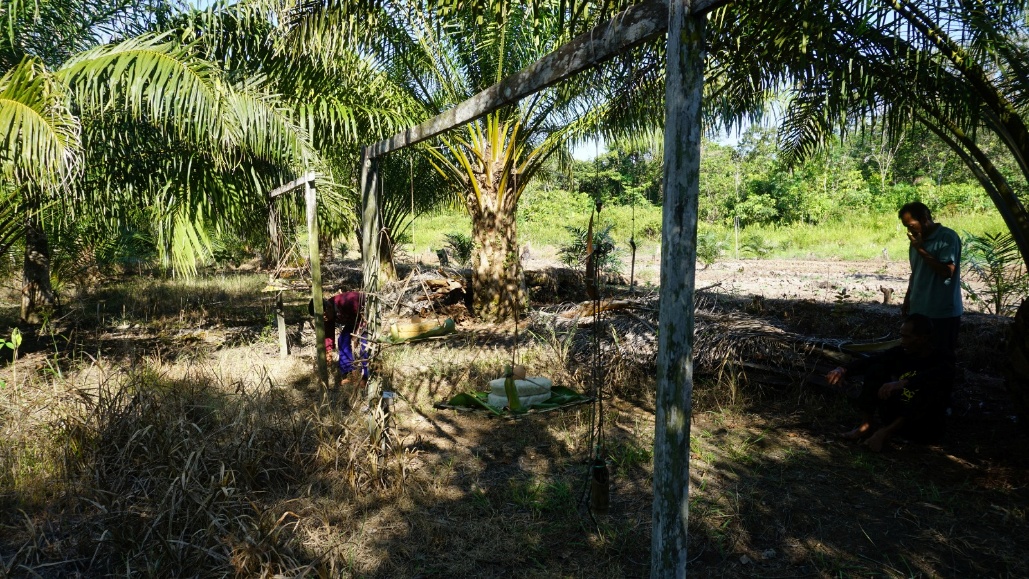
The tools used for land clearing are generally traditional. Machetes or axes are used for cutting and felling trees, while simple tools such as Tunggal or linggai are used to make planting holes for rice. Crops from the fields are typically carried in woven baskets (bakul). All these activities are carried out collectively, reflecting the values of cooperation and communal labor that are central to the life of the indigenous community. Several tools and materials are used in this ritual, one of which is two traditional boats (Ajung) painted yellow and black, symbolizing the king’s vessel and the escort. The ritual offering (sesajen) served as a symbolic representation intended to communicate with spiritual force. Two main types of offerings are prepared. The first consists of rice seeds to be planted, which are kept outside the house and later blessed through collective prayer. The second, known as pelantara, includes porridge, apam cakes in red, yellow, green, and black, nasi junjung, ketupat (rice cake), raw chicken, cooked chicken, and eggs. All offering were derived from daily necessities, symbolizing the community’s well-being and prosperity as blessings from the God.
These offerings are then placed in the boats, which are set adrift into the sea as the core part of ritual. In addition to the Ajung, there are also five Ancak of varying size, which are placed at the upstream and downstream parts of the village. Ancak contains five colored apam cakes along with ketupat. The Ajung and Ancak symbolize the land and the sea, reflecting the harmonious relationship between the two realms.
B. Digitalization and Preservation of Tradition in the Era of Social Change
Traditional Ecological Knowledge (TEK) constitutes an integral part oof the intangible cultural heritage that has evolved through the continuous interaction between local communities and their surrounding environment (Akhmar et al., 2022; Berkes, 2017). In the coastal region if North Kayong, TEK manifests in various forms, such as season based agricultural systems, knowledge of winds and tidal patterns, customary prohibitions on marine resource extraction, and annual rituals such as Nyapat Taon, which serve as markers of ecological and social cycles. Such practices represent the ways in which local communities maintain a harmonious relationship with nature while upholding principles of sustainability in resource utility.
However, along with the rapid pace of modernization and shifts in societal lifestyle particularly among children, who are regarded as the pillars of tradition preservation there is an increasing detachment from these practices (Imran et al., 2020). The existence of TEK faces serious challenges, both in terms of integrational transmission and its relevance in everyday life (Akhmar et al., 2023).The core issue lies in the weakening of intergenerational knowledge transmission a phenomenon not only occurring in Kayong Utara but also experienced by many indigenous communities worldwide (Aswani, 2018). Despite these challenges, the people of Kayong Utara continue to strive to preserve TEK through the annual execution of rituals and collective cultural activities. At the same time, customary leaders and cultural practitioners retain significant roles as custodians of local narratives and implementers of ecological values within their communities.
Traditionally, knowledge has been transmitted orally and through hands on practice within the social environment. This process is no being disrupted, with many young people no longer actively involved in traditional and customary activities, thereby widening the gap between them and their ancestral heritage. Customary leaders, village elders, and cultural practitioners maintain the continuity of this knowledge through annual ritual, community activities, and informal teaching within families (Akhmar et al., 2022; Ibrahim & Yuningsih, 2025). The Nyapat Taon tradition is not only understood as a ritual marking the closing and opening of the farming year, but also as a forum for transmitting ecological and spiritual values.
Cultural globalization and the influx of external values that do not align with local traditions have led to an increasing number of young people feeling alienated from their ancestral heritage (Ajani et al., 2024; Saad et al., 2024; Urbaite, 2024). Younger generations often fail to inherit customary knowledge due to living away from their hometowns or not participating directly in traditional activities. In principle, yet this is hindered by a lack of interest among youth, many of whom participate without understanding the meaning behind each activity.
Given the behavioral shift among children who are now more deeply engaged with the digital world, digitalization emerges as a relevant and potentially effective preservation approach. Digitalization serve as means to archive cultural practices at risk of disappearing over time, while also providing wider access. Technologies such as audiovisual recordings, digital archiving, and community database make it possible to document, widely disseminate, and safeguard cultural practices against generational disruption (Putranto, 2025). For digitalization to be effective, however, it must account for ethics, data sovereignty, and active participation of local communities.
The researcher has undertaken the process of digitalizing the indigenous knowledge of North Kayong community, encompassing both terrestrial and marine traditions. The resulting digital media serve as tools for learning and disseminating information to broader audiences, thereby strengthening preservation strategies (Febrianto et al., 2025; Vrettakis et al., 2019). The development of these educational media aims to rebuild cultural and ecological awareness among younger generations (Johan et al., 2022; Masenya, 2023). Students are encouraged not only to learn about traditions as relics of the past but also to view them as relevant to the present and future (McCarter & Gavin, 2011). Beyond cultural aspects, digital media also support the exchange of ecological knowledge and traditional practices within the community, expanding the reach of environmental preservation messages through more modern and interactive approaches.
These media are developed contextually, highlighting local narratives, employing visual and interactive methods, and designed to support learning in subjects such as Social Studies, Arts and Cultural, Local Content, and co-curricular activities. Students thus engage not only with culture and the environment as academic subjects, but also as active agents in preserving their community’s identity (Liu et al., 2024; Muntazarah et al., 2024). Through education, TEK is preserved not merely as a cultural artifact but as living identity that can continue to evolve (Sumarwati et al., 2020).
The strategy for TEK preservation must be developed adaptively, taking into the current social dynamics of the community. Preservation efforts cannot rely solely on indigenous communities but must also involve institutional and policy support (Sakapaji et al., 2024). Local governments, through relevant agencies such as the Department of Education and Culture and the Department of Tourism, play crucial roles in formulating programs and policies that integrate TEK into development and educational activities (Maryani & Indrianty, 2024). Schools can serve as strategic spaces to embed local values into curricula. Non-governmental organization and cultural practitioners are equally important in ensuring authenticity and sustainability in community-based preservation efforts (Harada et al., 2022). Collaborative efforts from multiple stakeholders create more inclusive and adaptive preservation strategies responsive to local socio-ecological contexts (Bodin, 2017).
Multi stakeholder collaboration thus forms an essential foundation for the sustainable preservation of TEK (Chigwada & Ngulube, 2023). Each actor plays a complementary role: Indigenous communities safeguard authenticity, schools instill values through education, governments provide supportive systems, and the wider public acts as both consumers and practitioners of preservation. Through such synergy, TEK preservation can extend beyond safeguarding the past, becoming a social and cultural investment for the future and forming a vital foundation for building a sustainable preservation ecosystem.
In conclusion, the TEK preservation strategy in Kayong Utara must adopt a multidimensional approach encompassing documentation, education, community empowerment, and policy support. Ultimately, these preservation efforts not only ensure the continuity of local knowledge but also strengthen the community’s cultural identity and open opportunities fo developing other sectors, such as cultural tourism and local wisdom-based education.
C. The Quadruple Helix Framework for Integrating Tradition into Sustainable Cultural Tourism
The strategy for preserving Traditional Ecological Knowledge (TEK) in Kayong Utara can be implemented by combining community-based approaches, digital innovation, and educational integration. This approach not safeguards traditional knowledge but also strengthens cultural identity and creates opportunities for the sustainable development of tourism based on local wisdom. Tradition is no longer viewed merely as a static heritage to be preserved but can serve as a dynamic and productive cultural resource, making cultural tourism a space for dialogue between the past, present, and future (Mitra & Paul, 2025). This strategy not only involves specific indigenous groups but is aimed at the entire population of Kayong Utara, encouraging broad participation from various segments of society to preserve, practice, and utilize TEK collectively. In Kayong Utara, the potential for integrating tradition with cultural tourism development is considerable, given the richness of customary practices, local narratives, and ecological knowledge that remain embedded in the community.
One of the most prominent local traditions is Nyapat Taon, an annual ritual marking the closure and commencement of the traditional agricultural cycle. More than a mere agrarian celebration, Nyapat Taon embodies cosmological values, environmental ethics, and collective identity integrated within the social structures of the community. This tradition unites spiritual, ecological, and communal dimensions into a single cultural event. When managed appropriately, Nyapat Taon can become an authentic, educational, and culturally sustainable tourism attraction that simultaneously supports the preservation of local knowledge. Empirical data provide an initial indication of Kayong Utara’s tourism potential. Data from the BPS North Kayong Regency show that during the Eid al-Fitr holidays, total visits to tourism sites across the regency reached 35.310 people, with Pantai Datok alone attracting around 10.000 visitors in a single day. The regency’s total population was recorded at 127.350 people indicating that local tourism activity is relatively high compared to its demographic scale. Following infrastructure improvements, the local government estimates annual visits of 70.000-80.000 tourists. Provincially, West Kalimantan received 10,480 foreign tourist arrivals in December 2024. While these statistics primarily reflect general tourism activity rather than cultural-specific events, they demonstrate the significant potential for community-based tourism when linked to traditional practices such as Nyapat Taon. A visitor profile study at Pantai Pulau Datok found that 53.3% of tourists were women and 43% were aged 17–22 years, indicating a young, domestic audience base that could be engaged through educational and participatory cultural programs.
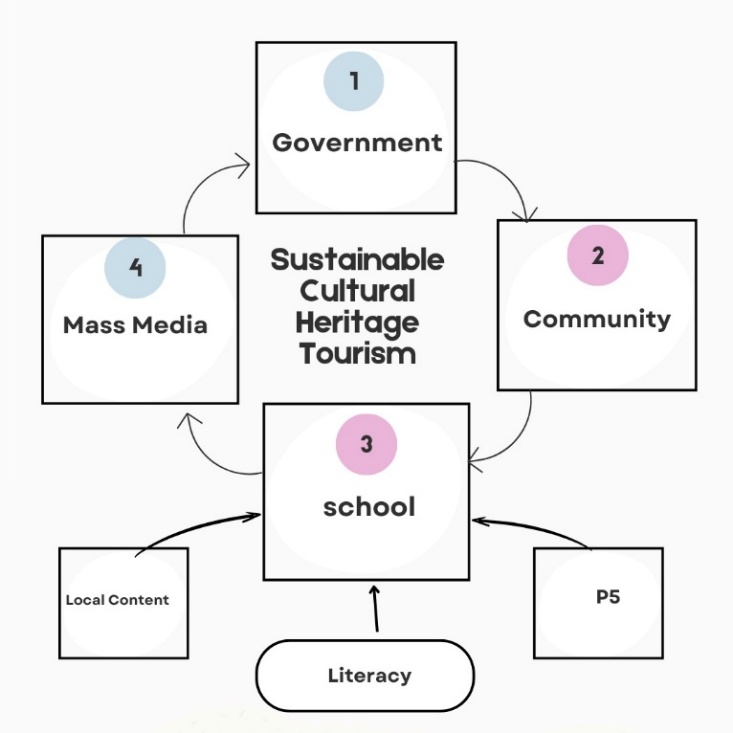
The development of sustainable cultural tourism in Kayong Utara can be understood through the Quadruple Helix framework (Carayannis & Campbell, 2009), which positions government, community, school, and mass media as the main pillars of sustainability. The government acts as a regulator and facilitator, providing policies and legal protection for local traditions- an effort formalized through Regional Regulation No. 16/ 2018 on Cultural Heritage. The community serves as the owner and guardian of cultural heritage, ensuring that spiritual values and ecological knowledge are preserved. Schools play a strategic role ass educational center, transmitting cultural values through local content, co-curricular activities, and literacy program. Meanwhile, mass media function as channels for documentation, promotion, and communication, extending the reach of cultural narratives to national and event global levels. Meanwhile, mass media function as channels for documentation, promotion, and communication, extending cultural narratives to national and global levels
However, integrating tradition into the tourism sector cannot be undertaken carelessly. Cultural commodification when traditional elements are performed solely for tourist consumption without regard to their spiritual meaning or social context, risk undermining the authenticity and symbolism of culture (Bai & Weng, 2023). On the other hand, as noted in Cole’s study, cultural tourism can enhance local pride and identity if guided from local perspective. Research in Bali has shown that participatory approaches enable ‘toned down’ cultural performances to remain relevant and locally acceptable (Cole, 2006). Uncontrolled commodification, however, can erode the symbolic meaning and authenticity of tradition itself. Therefore, cultural tourism development must be grounded in the principles of community engagement, cultural equity, and socio ecological sustainability.
Within this framework, the Sustainable Cultural Tourism model is the most relevant. Sustainable Cultural Tourism positions local communities as the primary actors in the planning, implementation, and monitoring of tourism activities. Importantly, this approach targets not only specific cultural groups but engages the broader Kayong Utara society, ensuring that traditional values and benefits are shared across the entire community. Community involvement in Sustainable Cultural Tourism should be in the form of strong participation, where strategic decision-making and benefit-sharing are controlled by the community rather than limited to passive participation (Prasad, 2024). In Kayong Utara, the involvement of Indigenous communities and cultural leaders is essential to ensure that local values are not diluted within tourism narratives. Communities must retain control over the narratives and cultural interpretations presented to tourists so than mere aesthetic consumption.
Hakim emphasizes that local community involvement is the key to ensuring the sustainability of cultural practices in coastal areas (Hakim, 2022). Active participation is not only important in managing activities but also in safeguarding values, knowledge, and traditional practices within their original context. This aligns with the Nyapat Taon tradition in Kayon Utara, where the safeguarding of TEK cannot be separated from its community custodians. By involving customary leaders, young generations, and community groups at every stage, the process of preservation places greater emphasis on strengthening cultural identity and the continuity of ancestral heritage. This focus underscores that primary goal of local involvement is not merely economic benefit but safeguarding of cultural authenticity to remain relevant amid changing times.
Integrating TEK into tourism narratives also creates opportunities for ecological education for visitors Knowledge of planting seasons, sustainable shifting cultivation techniques, customary prohibitions on illegal logging, and traditional marine resource management can be incorporated into “local stories” that enrich the tourism experience. This approach aligns with the concept of interpretive tourism, where the visitor experience is directed toward building understanding, awareness, and critical reflection on culture and the environment (Moscardo & Hughes, 2023). Moreover, recent studies show that effective tourism interpretation, particularly by trained guides, can encourage pro-environmental behavior among tourists, thereby reinforcing ecological and cultural preservation objectives (Alzghoul et al., 2024).
The safeguarding of TEK through the Nyapat Taon tradition is highly relevant to the framework of socio-ecological resilience in small island tourism development. Tran and Caldicott highlight the importance of resilience thinking in tourism planning for small islands by integrating environmental, social, and economic sustainability (Caldicott & Tran, 2022). In the context of Kayong Utara, TEK is not only a form if cultural heritage but also functions as an adaptive mechanism for communities in facing environmental changes and the pressures of modernization. Thus, the integration of TEK into Sustainable Cultural Tourism model aligns with efforts to strengthen local community resilience, as emphasized in the tourism resilience studies by Tran and Caldicott.
Digitalizing traditions as part of TEK preservation also holds potential for supporting both the promotion and educational dimensions of tourism. Digital media-such as video archives, documentaries, infographics, and cultural maps-allow local narratives to be packaged in engaging informative, and accessible ways (Kasemsarn & Nickpour, 2025). In addition to serving as promotional material, these resources can be utilized in local tour guide training to enhance their capacity to deliver cultural narratives in a contextual and sensitive manner (Heliawati & Munawaroh, 2025; Yang & Ning, 2025). This integration is important to ensure that cultural tourism does not merely offer visual spectacles but fosters a deeper understanding of the social and ecological contexts of inherited traditions.
Nevertheless, challenges remain. One of the primary issues is the capacity gap between local communities and external actors in the tourism industry. Not all Indigenous communities have the resources to manage tourism independently, especially when confronted with global market demands. Research on the Kamoro community in Papua reveals that limited technical support, inadequate training, and minimal participation in planning are significant barriers (Anindhita et al., 2024). Therefore, the role of local governments and supporting institutions is crucial in ensuring knowledge transfer, capacity building, and legal protection for community cultural heritage (Marzuki & Khoo, 2016; Yang & Ning, 2025). The integration of tradition into tourism must be protected from unilateral exploitation and supported by an ethical framework that ensures economic benefits return to Indigenous communities (Bello et al., 2018; Dangi & Jamal, 2016).
Furthermore, this integration must consider principles of cultural and ecological sustainability. Sacred traditions must be protected from trivialization or the misuse of meaning (Ihemezie et al., 2023; Jihana, 2025) The frequency of visits, performance formats, and tourist participation must be adapted to the cultural cycles and sacred spaces of the community. For instance, Nyapat Taon cannot be turned into a weekly performance purely for tourism purposes without undermining its spiritual value and ecological balance. Thus, community agreements, customary boundaries, and preservation-oriented regulation are essential (Aulet & Duda, 2020).
From an economic perspective, tourism development based on tradition opens opportunities to strengthen the local economy through supporting sectors such as handicrafts, traditional cuisine, homestay-based accommodation, and local guiding services. Distribution of these economic benefits is intended for the broader Kayong Utara population, not limited to select groups, through village cooperatives and community-owned enterprises, ensuring that the gains support collective resilience and social equity. However, these economic gains must be distributed fairly and transparently. Village cooperatives or community owned enterprises can ensure that economic benefits are not monopolized by external actors or small local elite, but instead contribute to strengthening the collective economic resilience of residents(Jackson, 2025). A study on the economic valuation of mangrove ecosystems in the coastal area of Kayong Utara estimated a direct tourism benefit of IDR 8.7 million per year and an ecosystem service value exceeding IDR 42 billion per year for coastal protection. These findings underscore that TEK-based ecotourism and conservation practices not only sustain cultural identity but also contribute tangible economic value.
In summary, integrating tradition into tourism development is not only a cultural preservation strategy but also a form of social reconstruction that can strengthen local identity, broaden community participation, and create alternative economies based on local wisdom (Reddy & Sailesh, 2024). By emphasizing participation from the entire population of Kayong Utara, this approach ensures that cultural tourism benefits and responsibilities are inclusive rather than restricted to specific communities. However, this requires participatory planning, equitable regulation, and robust cultural protection mechanisms to ensure that traditional values are not sacrificed for industrial interests but are instead honoured within the framework of sustainable development (Ottaviani et al., 2023; Reddy & Sailesh, 2024).
Conclusion
The Nyapat Taon tradition, as a form of Traditional Ecological Knowledge (TEK), reflects the close interconnecting between the coastal communities of Kayong Utara and their natural environment, while serving as a medium for transmitting ecological, spiritual, and social values. Digitalization has proven effective in revitalizing traditional practices, particularly ny engganging younger generations and providing broader access to cultural narratives. The integration of TEK into Sustainable Cultural Tourism with Quadruple Helix framework, government, community, schools, and mass media function as key actors in ensuring that traditions are not merely preserved but mobilized as dynamic cultural and ecological resources. However, tourism development must be guided by principles of authenticity, community participation, cultural equality, and ecological sustainability to avoid risks of commodification and exploitation. Ultimately, TK preservation and Sustainable Cultural Tourism integration in Kayong Utara provide a model for strengthening socio-ecological resilience, reinforcing cultural identity, and fostering fair economic opportunities. By positioning tradition as both a cultural heritage and living, adaptive resource, sustainable cultural tourism in Kayong Utara can serv as a pathway to balance cultural preservation with development needs.
Acknowledgements
This work was supported by the Ministry of Education, Culture, Research and Technology of Indonesia fund in 2025 (0067/E5/AL.04/20025).
References
- Ajani, Y. A., Oladokun, B. D., Olarongbe, S. A., Amaechi, M. N., Rabiu, N., Bashorun, M. T. 2024. Revitalizing indigenous knowledge systems via digital media technologies for sustainability of indigenous languages. Preservation, digital technology & culture, 53(1), 35–44. https://doi.org/10.1515/pdtc-2023-0051
- Akhmar, A. M., Rahman, F., Supratman, Hasyim, H., Nawir, M. 2023. The cultural transmission of traditional ecological knowledge in Cerekang, South Sulawesi, Indonesia. Sage Open, 13(4), 21582440231194160. https://doi.org/10.1177/21582440231194160
- Akhmar, A. M., Rahman, F., Supratman, S., Hasyim, H., Nawir, M. 2022. Poured from the sky: The story of traditional ecological knowledge in Cérékang Forest conservation. Forest and Society, 6(2), 527–546. https://doi.org/10.24259/fs.v6i2.15176
- Alzghoul, Y. A., Jamaliah, M. M., Alazaizeh, M. M., Mgonja, J. T., Al-Daoud, Z. J. 2024. Tour guides’ interpretation and tourists’ pro-environmental behavior: differences across cultural and natural world heritage sites. Journal of Ecotourism, 23(3), 366–394. https://doi.org/10.1080/14724049.2023.2263665
- Anindhita, T. A., Zielinski, S., Milanes, C. B., Ahn, Y.-j. 2024. The protection of natural and cultural landscapes through community-based tourism: The case of the Indigenous Kamoro Tribe in West Papua, Indonesia. Land, 13(8), 1237. https://doi.org/10.3390/land13081237
- Aswani, S., Lemahieu, A., Sauer, W. H. 2018. Global trends of local ecological knowledge and future implications. PloS one, 13(4), e0195440. https://doi.org/10.1371/journal.pone.0195440
- Aulet, S., Duda, T. 2020. Tourism accessibility and its impact on the spiritual sustainability of sacred sites. Sustainability, 12(22), 9695. https://doi.org/10.3390/su12229695
- Bai, L., Weng, S. 2023. New perspective of cultural sustainability: Exploring tourism commodification and cultural layers. Sustainability, 15(13), 9880. https://doi.org/10.3390/su15139880
- Bello, F. G., Lovelock, B., Carr, N. 2018. Enhancing community participation in tourism planning associated with protected areas in developing countries: Lessons from Malawi. Tourism and Hospitality Research, 18(3), 309–320. https://doi.org/10.1177/1467358416647763
- Berkes. 2017. Sacred Ecology Routledge. https://doi.org/10.4324/9781315114644
- Black, G. B., Van Os, S., Machen, S., Fulop, N. J. 2021. Ethnographic research as an evolving method for supporting healthcare improvement skills: a scoping review. BMC medical research methodology, 21(1), 274. https://doi.org/10.1186/s12874-021-01466-9
- Bodin, Ö. 2017. Collaborative environmental governance: Achieving collective action in social-ecological systems. Science, 357(6352), eaan1114. https://doi.org/10.1126/science.aan1114
- Caldicott, R. W., Tran, G. H. T. 2022. Developing resilience for small island tourism planning: A qualitative design infusing the sustainability trilogy with three streams of resilience thinking. Journal of Marine and Island Cultures, 11(1), 1–30. https://doi.org/10.21463/jmic.2022.11.1.10
- Carayannis, E. G., Campbell, D. F. 2009. 'Mode 3'and'Quadruple Helix': toward a 21st century fractal innovation ecosystem. International journal of technology management, 46(3-4), 201–234.
- Chigwada, J., Ngulube, P. 2023. Stakeholders in the acquisition, preservation, and dissemination of indigenous knowledge projects. Information Development(0), 0. https://doi.org/10.1177/02666669231192851
- Cole, S. 2006. Cultural tourism, community participation and empowerment (M. Smith & M. Robinson, Eds.). channel View Publications.
- Dangi, T. B., Jamal, T. 2016. An integrated approach to “sustainable community-based tourism”. Sustainability, 8(5), 475. https://doi.org/10.3390/su8050475
- Esfehani, M. H., Albrecht, J. N. 2019. Planning for intangible cultural heritage in tourism: Challenges and implications. Journal of Hospitality & Tourism Research, 43(7), 980–1001. https://doi.org/10.1177/1096348019840789
- Febrianto, P. T., Puspitasari, A. D., Pritasari, A. C., Razali, A., Sulaiman, S. 2025. Digitalization of intangible cultural heritage in the era of disruption: Utilization of social media in cultural preservation and education in schools Digitalisasi WBTB di era disrupsi: Pemanfaatan media sosial dalam pelestarian dan pendidikan budaya di sekolah. Jurnal Sosiologi Dialektika Vol, 20(1), 13–28. https://doi.org/10.1177/1096348019840789
- Hakim, L. 2022. Wildlife and tourism in East Java southern coastal area: Challenges for ecologically sustainable tourism. Journal of Marine and Island Cultures, 11(1), 91–102. https://doi.org/10.21463/jmic.2022.11.1.07
- Haq, S. M., Pieroni, A., Bussmann, R. W., Abd-ElGawad, A. M., El-Ansary, H. O. 2023. Integrating traditional ecological knowledge into habitat restoration: implications for meeting forest restoration challenges. Journal of ethnobiology and ethnomedicine, 19(1), 33. https://doi.org/10.1186/s13002-023-00606-3
- Harada, K., Habib, M., Sakata, Y., Maryudi, A. 2022. The role of NGOs in recognition and sustainable maintenance of customary forests within indigenous communities: The case of Kerinci, Indonesia. Land use policy, 113, 105865. https://doi.org/10.1016/j.landusepol.2021.105865
- Hariyadi, B. R., Rokhman, A., Rosyadi, S., Yamin, M., Runtiko, A. G. 2024. The role of community-based tourism in sustainable tourism village in Indonesia. Revista de Gestao Social e Ambiental, 18(7), 1–24. https://doi.org/10.24857/rgsa.v18n7-038
- Hatfield, S. C., Hong, S.-K. 2017. Islanders of South Korea: culture, climate change, and traditional ecological knowledge. Journal of Marine and Island Cultures, 6(2), 64–77. https://doi.org/10.21463/jmic.2017.06.2.05
- Heliawati, C., Munawaroh, M. 2025. Peran Teknologi Digital dalam Pengembangan Pariwisata Budaya dan Religi di Banten. Jurnal Ilmiah Ekonomi Dan Manajemen, 3(2), 398–403. https://doi.org/10.61722/jiem.v3i2.3860
- Ibrahim, R., Yuningsih, S. H. 2025. Dynamics of Intergenerational Transmission of Traditional Agricultural Knowledge in the Dayak Kenyah Community: Challenges and Opportunities for Strengthening Ethno-Sciences in the Modern Era. International Journal of Ethno-Sciences and Education Research, 5(3), 101–106. https://doi.org/10.46336/ijeer.v5i3.1046
- Ihemezie, E. J., Albaladejo‐García, J. A., Stringer, L. C., Dallimer, M. 2023. Integrating biocultural conservation and sociocultural valuation in the management of sacred forests: What values are important to the public? People and Nature, 5(6), 2074–2092. https://doi.org/10.1002/pan3.10542
- Imran, I., Alam, I., Khattak, M., Jawad, M., Khan, M. 2020. Social change an d development: Connecting modernization and family institution on qualitative grounds. Humanities Social Sciences Reviews, 8(6), 82–90. https://doi.org/10.18510/hssr.2020.869
- Jackson, L. A. 2025. Community-based tourism: a catalyst for achieving the United Nations sustainable development goals one and eight. Tourism and Hospitality, 6(1), 29. https://doi.org/10.3390/tourhosp6010029
- Jensen, L. A., Arnett, J. J., McKenzie, J. 2011. Globalization and cultural identity. In Handbook of identity theory and research (pp. 285–301). Springer. https://doi.org/10.1007/978-1-4419-7988-9_13
- Jihana, T. 2025. Spiritual Tourism: Exploring Sacred Sites Worldwide. SIWAYANG Journal: Publikasi Ilmiah Bidang Pariwisata, Kebudayaan, Dan Antropologi, 4(1), 1–10. https://doi.org/10.54443/siwayang.v4i1.2691
- Johan, R., Cahyani, I., Wibisono, Y. 2022. Digital Media Access: Folklore Learning For Cultivating Love. Indonesian Culture Character, 21(1), 1–9. https://doi.org/10.21831/ltr.v20i3.30699
- Jowsey, T., Deng, C., Weller, J. 2021. General-purpose thematic analysis: a useful qualitative method for anaesthesia research. BJA education, 21(12), 472–478. https://doi.org/10.1016/j.bjae.2021.07.006
- Kasemsarn, K., Nickpour, F. 2025. Digital Storytelling in Cultural and Heritage Tourism: A Review of Social Media Integration and Youth Engagement Frameworks. Heritage, 8(6), 200. https://doi.org/10.3390/heritage8060200
- Khakzad, S., Griffith, D. 2016. The role of fishing material culture in communities’ sense of place as an added-value in management of coastal areas. Journal of Marine and Island Cultures, 5(2), 95–117. https://doi.org/10.1016/j.imic.2016.09.002
- Liu, Y., Williams, R. M., Xie, G., Wang, Y., Zuo, W. 2024. Promoting the Culture of Qinhuai River Lantern Shadow Puppetry with a Digital Archive and Immersive Experience. arXiv preprint arXiv:2410.03532. https://doi.org/10.48550/arXiv.2410.03532
- Maryani, E., Indrianty, S. 2024. The role of government and community in the development of local wisdom-based sustainable tourism village. IOP Conference Series: Earth and Environmental Science,
- Marzuki, A., Khoo, J. 2016. Community development strategies for tourism development in Langkawi Islands, Malaysia. From empirical research towards practical application, 15–29. https://doi.org/10.5772/62575
- Masenya, T. M. 2023. Revitalization and digital preservation of indigenous knowledge systems for sustainable development of indigenous communities in South Africa. The Serials Librarian, 84(5-8), 86–102. https://doi.org/10.1080/0361526X.2023.2277962
- McCarter, J., Gavin, M. C. 2011. Perceptions of the value of traditional ecological knowledge to formal school curricula: opportunities and challenges from Malekula Island, Vanuatu. Journal of ethnobiology and ethnomedicine, 7(1), 38. https://doi.org/10.1186/1746-4269-7-38
- Mitra, A., Paul, S. 2025. Empowering Indigenous Communities Through Regenerative Tourism: Cultural Preservation and Socio-Economic Resilience in Northeast India. In Regenerative Tourism for Social Development (pp. 281–310). IGI Global Scientific Publishing. https://doi.org/10.4018/979-8-3373-0235-5.ch012
- Moscardo, G., Hughes, K. 2023. Rethinking interpretation to support sustainable tourist experiences in protected natural areas. Journal of Interpretation Research, 28(1), 76–94. https://doi.org/10.1177/10925872231158988
- Muntazarah, F., Fathahillah, F., Prasojo, K. 2024. Implementasi Projek Penguatan Profil Pelajar Pancasila (P5) Berbasis Media Visual di UPT SPF SMPN 8 Makassar. Jurnal MediaTIK, 150–155. https://doi.org/10.59562/mediatik.v7i2.2830
- Naeem, M., Ozuem, W., Howell, K., Ranfagni, S. 2023. A step-by-step process of thematic analysis to develop a conceptual model in qualitative research. International journal of qualitative methods, 22, 16094069231205789. https://doi.org/10.1177/16094069231205789
- Omma, F. M. 2025. Nature guides’ enactments of Traditional and Local Ecological Knowledge: Pathways to sustainable relations? Journal of Outdoor and Environmental Education, 1–21. https://doi.org/10.1007/s42322-025-00198-4
- Ottaviani, D., Demiröz, M., Szemző, H., De Luca, C. 2023. Adapting methods and tools for participatory heritage-based tourism planning to embrace the four pillars of sustainability. Sustainability, 15(6), 4741. https://doi.org/10.3390/su15064741
- Prasad, K. 2024. The Role of local community in enhancing sustainable community based tourism. J. Electrical Systems, 20(7s), 558–571. https://doi.org/10.52783/jes.3360
- Purmintasari, Y. D., Nurhakim, I., Rivasintha, E., Firmansyah, H. 2021. The Arus Kualan Traditional School: Preservation Of Dayak Simpank Environmental And Cultural Heritage. IOP Conference Series: Earth and Environmental Science, 747(1), 012049. https://doi.org/10.1088/1755-1315/747/1/012049
- Purmintasari, Y. D., I; Lizawati; Hartati, M; Putri, M. 2025. Semah Laut: Cultural Exsistence for Sustainable Living of Karimata Islanders in Tanah Betuah North Kayong Regency, Indonesia. Journal of Marine and Island Cultures, 14(1), 148–161. https://doi.org/10.21463/jmic.2025.14.1.10
- Putranto, W. A., Mayzana, R.D.S.,Ishita, E. 2025. Digitization in Indonesian Libraries and Archives: Mapping Cultural Heritage Across the Archipelago. Sustainability and Empowerment in the Context of Digital Libraries. ICADL 2024., Singapore.
- Reddy, K., Sailesh, B. 2024. Cultural guardianship in tourism: Indigenous communities' quest for economic stability and identity preservation. Journal of Environmental Management and Tourism, 15(2), 328. https://doi.org/10.14505/jemt.v15.2(74).08
- Saad, S., Wediyantoro, P. L., Zolkifli, A. N. F. 2024. Cultural Preservation in the Digital Age: The Future of Indigenous Folktales and Legends. International Journal of Research and Innovation in Social Science, 8(9), 2835–2847. https://doi.org/10.47772/IJRISS.2024.8090237
- Sakapaji, S. C., García Molinos, J., Parilova, V., Gavrilyeva, T., Yakovleva, N. 2024. Navigating legal and regulatory frameworks to achieve the resilience and sustainability of indigenous socioecological systems. Resources, 13(4), 56. https://doi.org/10.3390/resources13040056
- Sumarwati, S., Anindyarini, A., Lestari, W. D. 2020. Integration of Traditional Ecological Knowledge into Primary School Learning. Retorika Journal: Jurnal Bahasa, Sastra, dan Pengajarannya, 13(2), 346–357. https://doi.org/10.26858/retorika.v13i2.13993
- Urbaite, G. 2024. The Impact of Globalization on Cultural Identity: Preservation or Erosion? Global Spectrum of Research and Humanities, 1(2), 3–13. https://doi.org/10.69760/f9g3vn77
- Valencia, A. M. M. 2022. Principles, scope, and limitations of the methodological triangulation. Investigacion y educacion en enfermeria, 40(2). https://doi.org/10.17533/udea.iee.v40n2e03
- Vrettakis, E., Kourtis, V., Katifori, A., Karvounis, M., Lougiakis, C., Ioannidis, Y. 2019. Narralive–Creating and experiencing mobile digital storytelling in cultural heritage. Digital Applications in Archaeology and Cultural Heritage, 15, e00114. https://doi.org/10.48550/arXiv.1912.01368
- Yang, L., Ning, W. 2025. Mechanisms and Effects of the Sustainable Integration of Digital-driven Rural Cultural Tourism from the Perspective of Symbiosis. Sustainable Futures, 100867. https://doi.org/10.1016/j.sftr.2025.100867