
Carrying Capacity and Restricted Models in Marine Tourism: A Systematic Literature Review of Global Practices and Governance Implications
 10.21463/jmic.2026.15.1.10
Abstract
The rapid expansion of coastal and marine tourism has intensified ecological pressure on vulnerable marine ecosystems, highlighting the growing need for effective visitor regulation and carrying capacity management. Although Marine Protected Areas (MPAs) and nature-based tourism initiatives have expanded globally, a systematic understanding of how visitor restriction frameworks are conceptualized and implemented remains limited. This study presents a systematic literature review (SLR) of 39 peer-reviewed articles published between 2010 and 2025 that explicitly address restricted or limited-entry marine tourism. Following the PRISMA protocol, the review applies domain classification, frequency mapping, Multiple Correspondence Analysis (MCA), and UpSet analysis to examine interactions among ecological, socio-cultural, economic, and governance dimensions. Results indicate that the vast majority of studies adopt a multidomain perspective, with Governance & Policy most frequently integrated with Ecological-Environmental approaches. Through qualitative synthesis, six recurring categories of visitor-management mechanisms are identified: spatial zoning, carrying capacity, behavioral-educational measures, governance and justice arrangements, economic incentives, and technological-adaptive systems. Spatial zoning and technological-adaptive approaches emerge as the most frequently discussed strategies, whereas quota-based and economic instruments remain comparatively underexplored. The findings reveal a persistent imbalance between ecological regulation and socio-economic integration, underscoring the need for adaptive cross domain governance frameworks that link ecological indicators with social, economic, and policy instruments.
Keywords
restricted marine tourism, visitor management, carrying capacity, systematic literature review, marine protected areas, governance frameworks, adaptive management
1. Introduction
Marine and coastal tourism has become one of the fastest-growing sectors of the global blue economy, yet its economic gains are often uneven and accompanied by ecological degradation (Lange, 2015). Activities such as diving and snorkeling, concentrated in ecologically fragile reefs, can accelerate coral damage under inadequate regulation (Plathong et al., 2000) and degrade water quality through eutrophication and turbidity (Nazar et al., 2023). In response, many destinations have adopted limited-access frameworks, such as visitor quotas, temporal zoning, and permit systems to balance ecological protection with tourism benefits (Dvarskas, 2017). These include no-access zones (Guabiroba et al., 2022), quota-based diving limits (Simarangkir et al., 2022), and low-impact diving guidelines that sustain coral cover (García-charton, 2022). Complementary measures include marine spatial planning (Martin et al., 2013), coastal vulnerability assessments (Phillips et al., 2018), and collaborative management (Spinelli and Benevolo, 2022).
Limited-access strategies thus aim to reconcile economic and conservation goals, though evidence on their ecological and socio-economic effectiveness remains fragmented. Each site requires context-specific solutions reflecting its biophysical, socio-cultural, and governance conditions (Wongthong and Harvey, 2014). Restricted tourism should therefore be viewed not merely as access control, but as an adaptive governance mechanism integrating quotas and spatial regulation to sustain both ecosystems and local livelihoods. A systematic literature review (SLR) is essential to consolidate dispersed knowledge, identify conceptual and methodological gaps, and evaluate how restriction mechanisms influence ecological outcomes, community participation, and management performance.
Over the past two decades, the notion of carrying capacity has evolved from a static ecological indicator into a dynamic governance instrument within socio-ecological systems (SES). Adaptive governance emphasises participatory decision-making, learning, and responsiveness to ecological change (Lewin et al., 2025). Yet current scholarship remains fragmented across disciplinary lines. This review therefore aims to synthesise global research on carrying capacity and visitor limitation models in marine tourism, by (i) classifying dominant limitation mechanisms, (ii) examining cross-domain relationships across ecological, socio-cultural, economic, and policy dimensions, and (iii) assessing the integration of adaptive and participatory principles within marine tourism governance.
2. Materials and Methods
2.1. Sources selection and search scope
A systematic literature review (SLR) was conducted following the PRISMA 2020 guidelines. A comprehensive literature search was performed in ScienceDirect, Wiley Online Library, Springer, and Taylor & Francis using the primary keyword ‘marine tourist quota’. Only open-access articles published between 2010 and 2025 and indexed in Q1–Q4 ranked journals were considered. During the screening stage, we limited the subject areas to environmental, social, economic, business, and management disciplines. Eligibility was assessed by full-text reading and inclusion required explicit reference to at least one of the following content keywords: marine tourism carrying capacity, visitor quota, marine protected area tourism management, or limited entry marine tourism. The selection process followed the PRISMA 2020 framework and is summarized in Figure 1.
2.2. Study selection and analysis procedure
The search initially identified 6256 records. After removing non-research articles (n = 1708) and studies published before 2020 (n = 3517), 1031 records remained for screening. Of these, 567 were subjected to detailed evaluation, including 450 open-access articles, 110 screened by specific subject relevance and 7 screened by duplicate articles. Following exclusion of 464 records that did not meet the predefined inclusion criteria, 26 articles were assessed for eligibility based on content keywords. Resulting in 39 studies being included in the final review with 13 of these identified through additional keyword-based searches from other resources. The selection process is illustrated in Figure 1, which follows the PRISMA 2020 flow diagram.
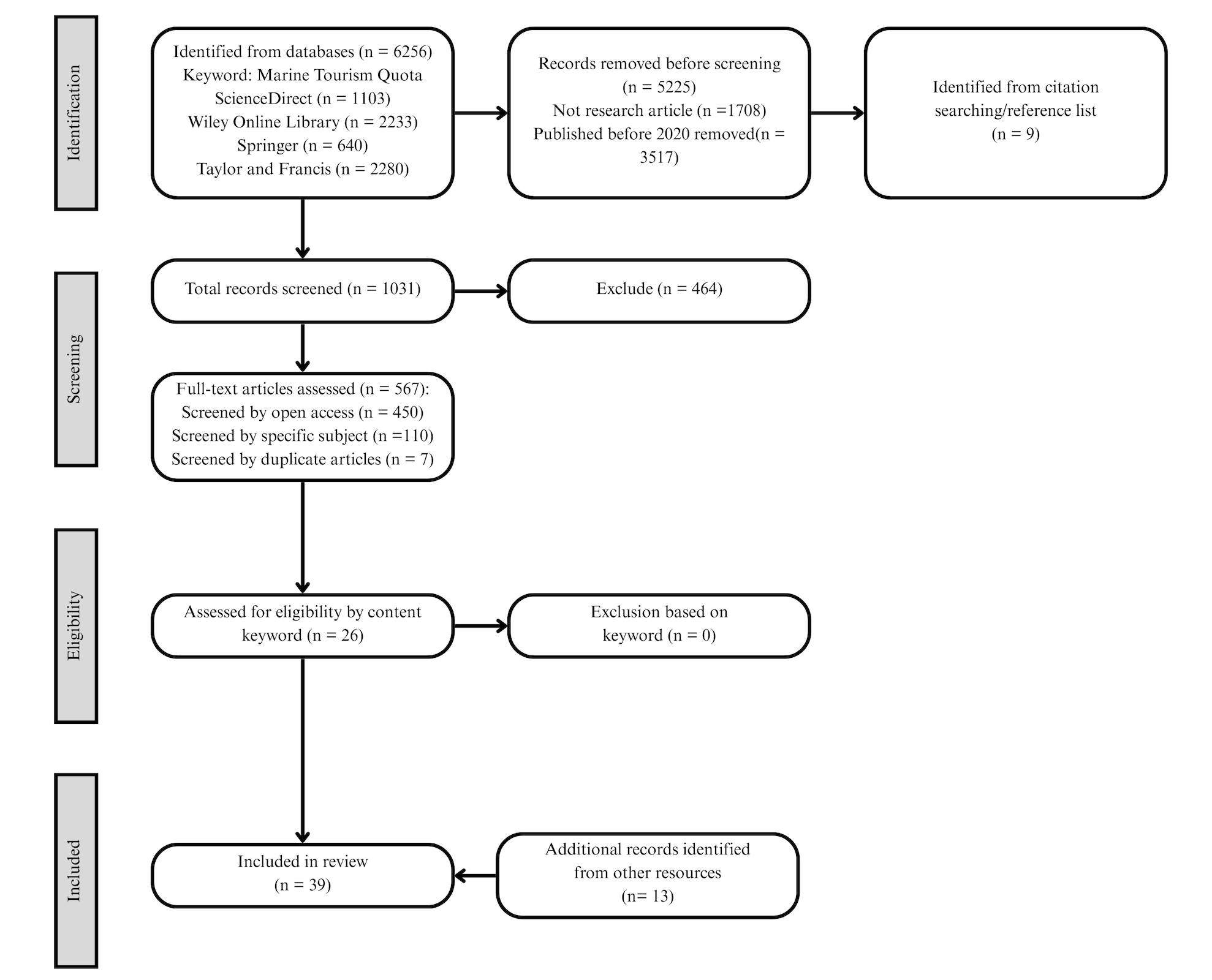
The PRISMA flow diagram summarizes a transparent and rigorous selection of studies for this systematic review. Literature was comprehensively searched across four major databases, ScienceDirect, Wiley Online Library, Springer, and Taylor & Francis, yielding 6,256 initial records. Following international guidelines, non-research papers and publications prior to 2020 were removed, leaving 1,031 records for screening. During screening, titles and abstracts were evaluated for relevance to restricted marine tourism, reducing the set by 464 records and resulting in 567 full-text articles assessed. Of these, 450 were open access, 110 met specific subject criteria, and seven were duplicates, consistent with PRISMA 2020 recommendations for multi-stage filtering to limit selection bias. Eligibility assessment applied focused keywords: tourist, quota, tourist quota, restricted tourist, and restricted tourism. That is identifying 26 articles that met all inclusion criteria, while 541 were excluded for lack of relevance or incomplete data. Ultimately, 39 studies were included: 26 from the primary screening and 13 identified through citation searching and reference checks. This combination of primary and secondary searches aligns with Cochrane and PRISMA standards to maximize the sensitivity and completeness of the literature review.
3. Results
3.1. Studies Demographic
Studies Demographic of the 39 articles reviewed, 14 papers (35.9%) were published prior to 2020, while the remaining 25 papers (64.1%) appeared thereafter. Earlier publications primarily concentrated on developing conceptual frameworks, descriptive analyses, or employing relatively simple quantitative techniques.
3.2. Distribution and Interconnection of Research Domains in Restricted Marine Tourism Studies
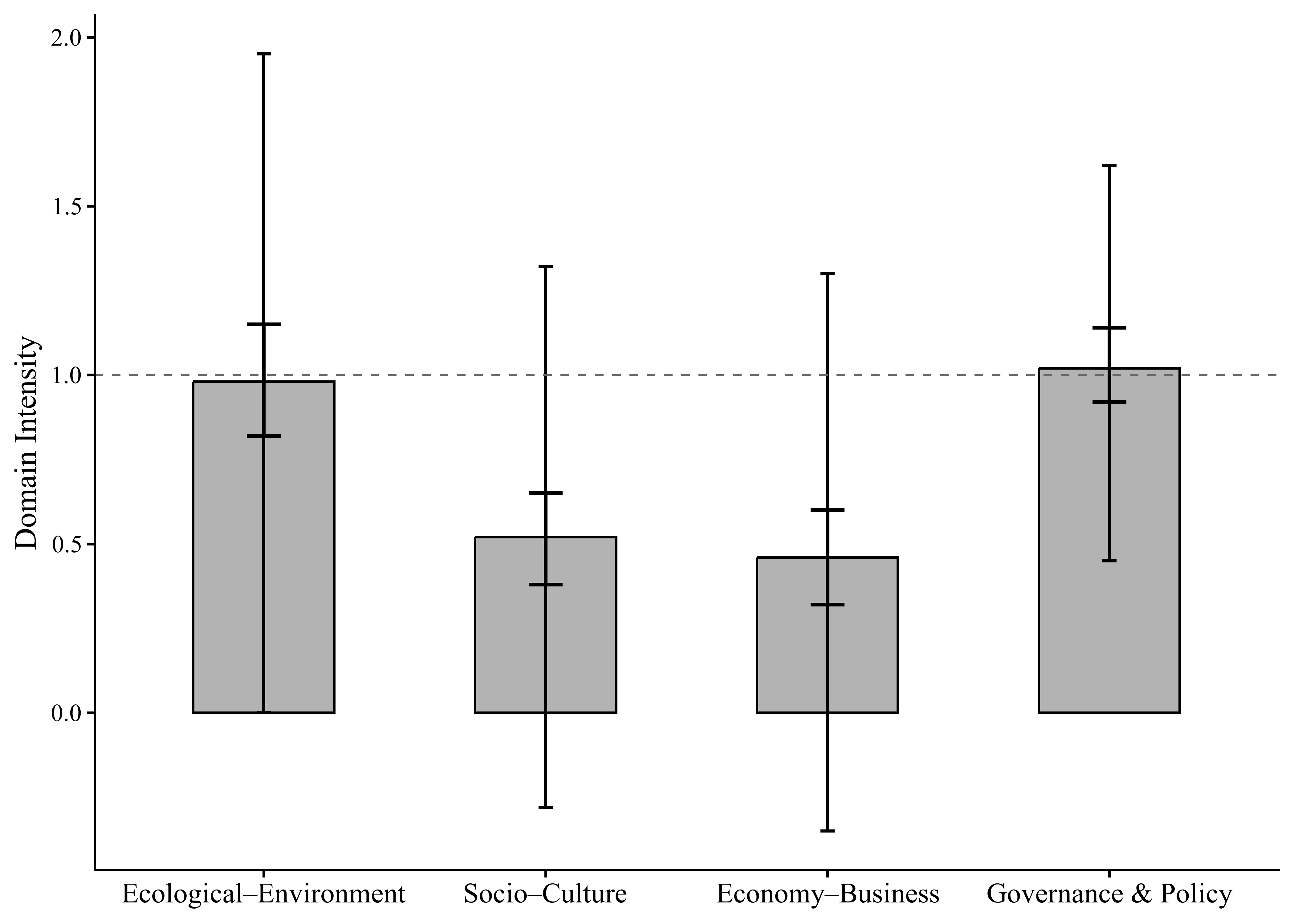
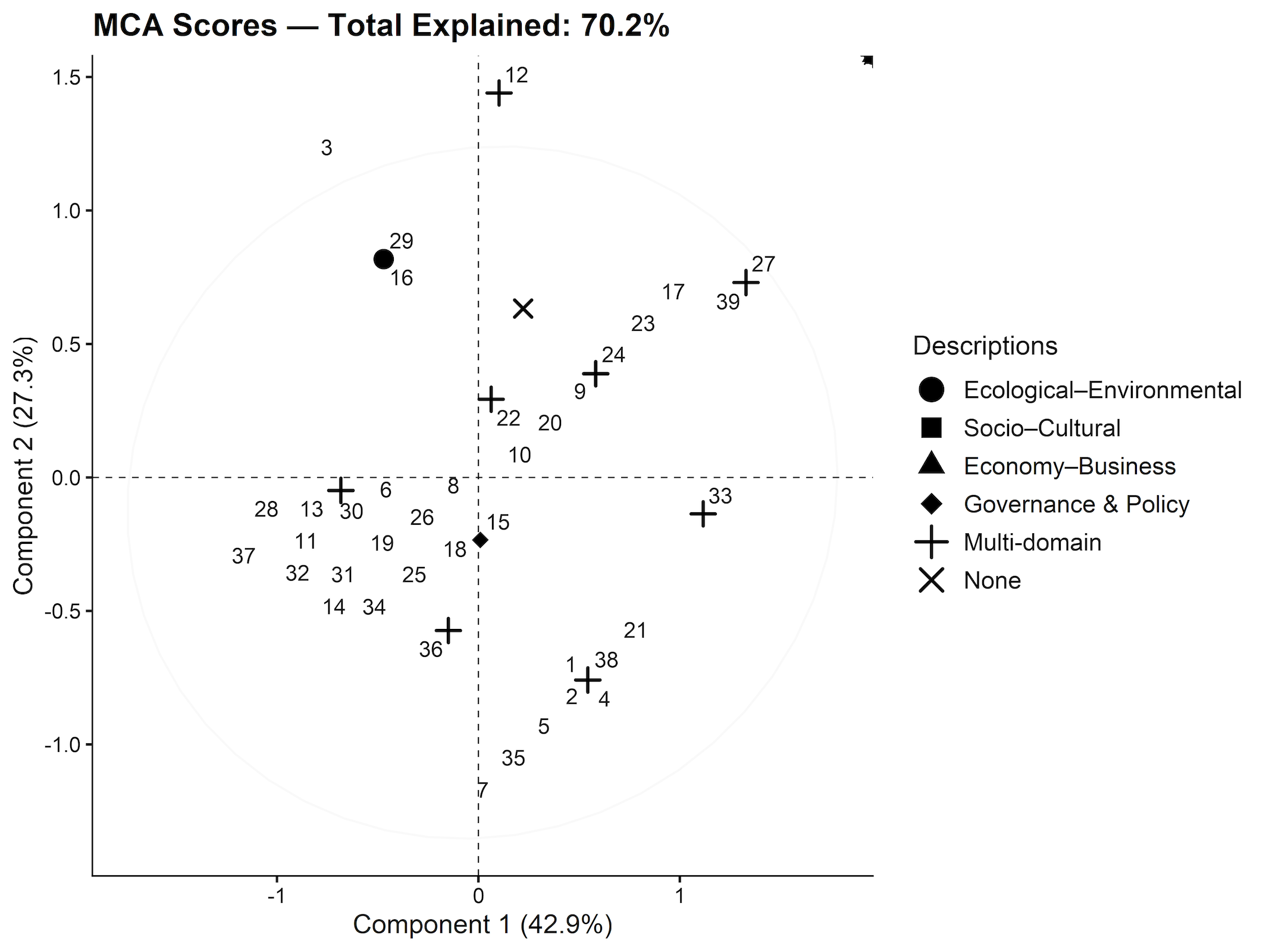
The distribution of domain intensity (Figure 2) reveals that Governance & Policy and Ecological-Environmental domains hold the highest median relevance (≈1.0 and 0.9, respectively), while Socio-Cultural and Economic-Business remain substantially lower (< 0.5). Interconnection of Domains in Marine and Coastal Tourism Research (Figure 3) explains 70.2% of total variance, illustrating a strong clustering between Governance & Policy and Ecological–Environmental domains, whereas Socio-Cultural and Economic-Business dimensions are spatially distant.
3.3. Studies Research Approaches and Analytical Techniques in Marine Tourism Studies
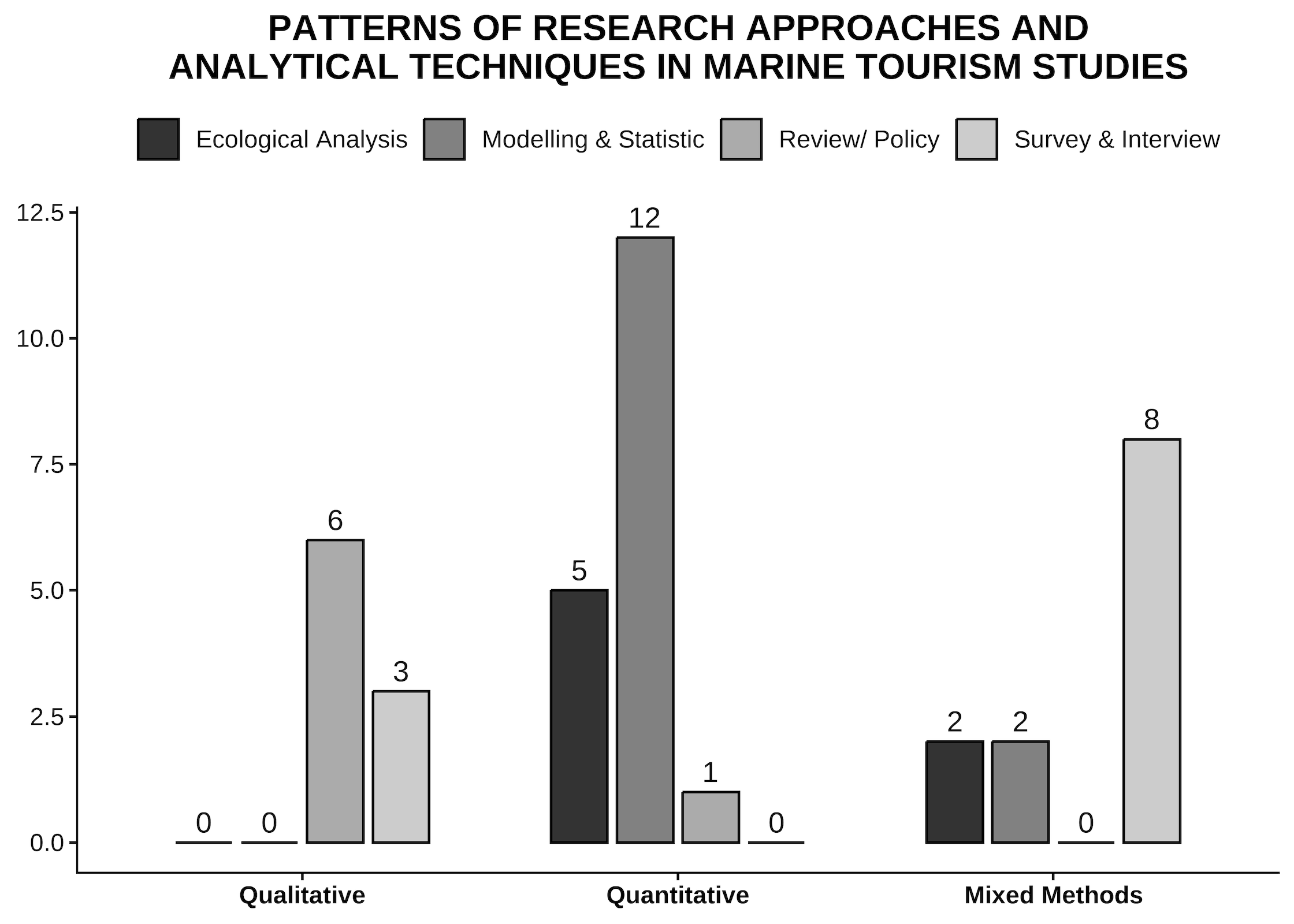
The distribution of research approaches (Figure 4) shows a marked predominance of quantitative studies (n = 18), particularly those employing modelling, statistical, and ecological analyses, while qualitative (n = 9) and mixed-method (n = 12) approaches remain under-represented.
3.4. Frequency of Research Domain Combinations
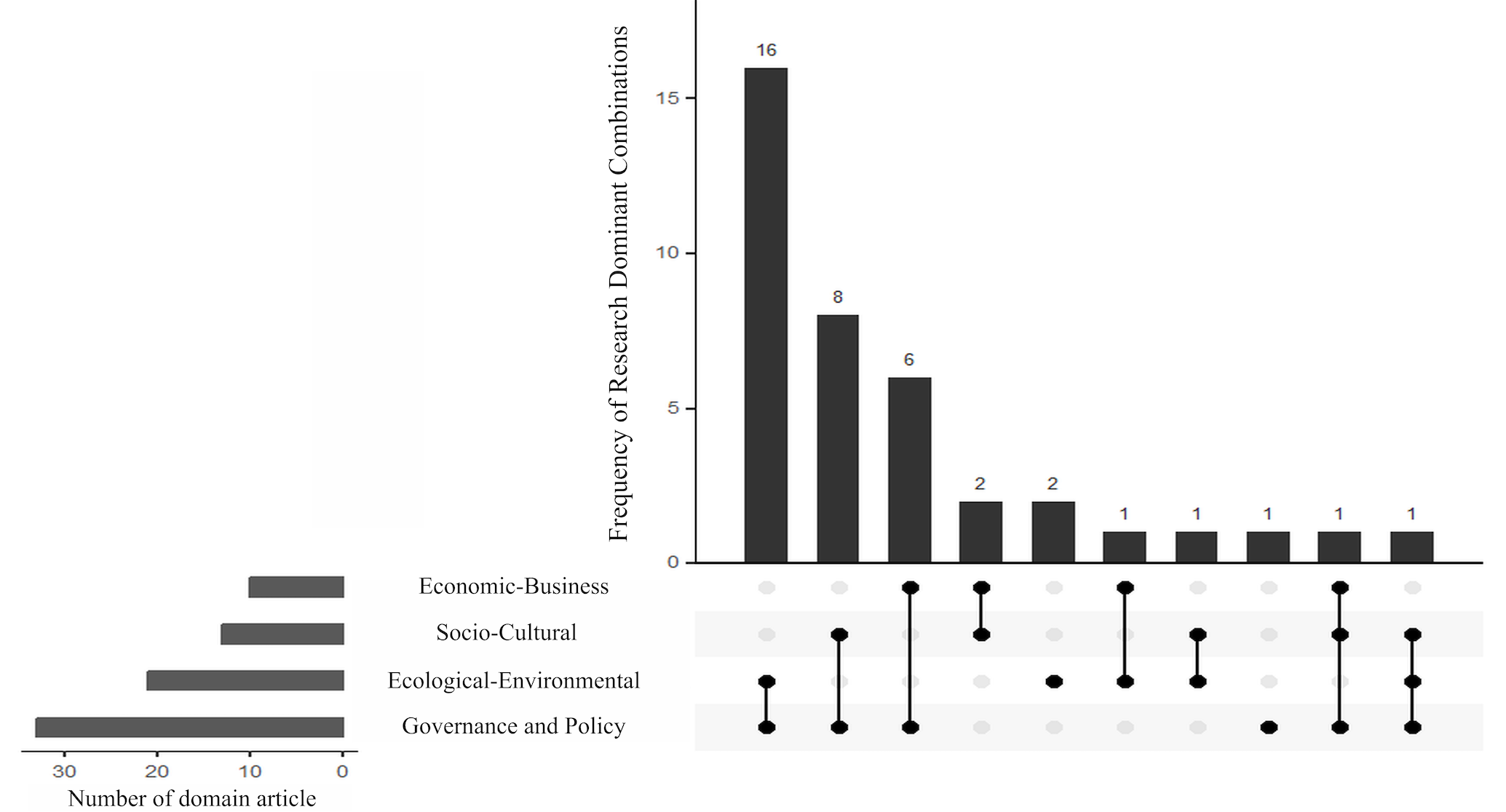
The UpSet analysis (Figure 5) further confirms the dominance of the Governance & Policy + Ecological–Environmental pairing, observed in 16 out of 39 studies, followed by limited integrations with Socio-Cultural (n = 8) and Economic-Business (n = 6) domains.
3.5. Typology of Tourism Restriction Mechanisms in Coastal and Marine Areas: A Synthesis of Six Management Approaches
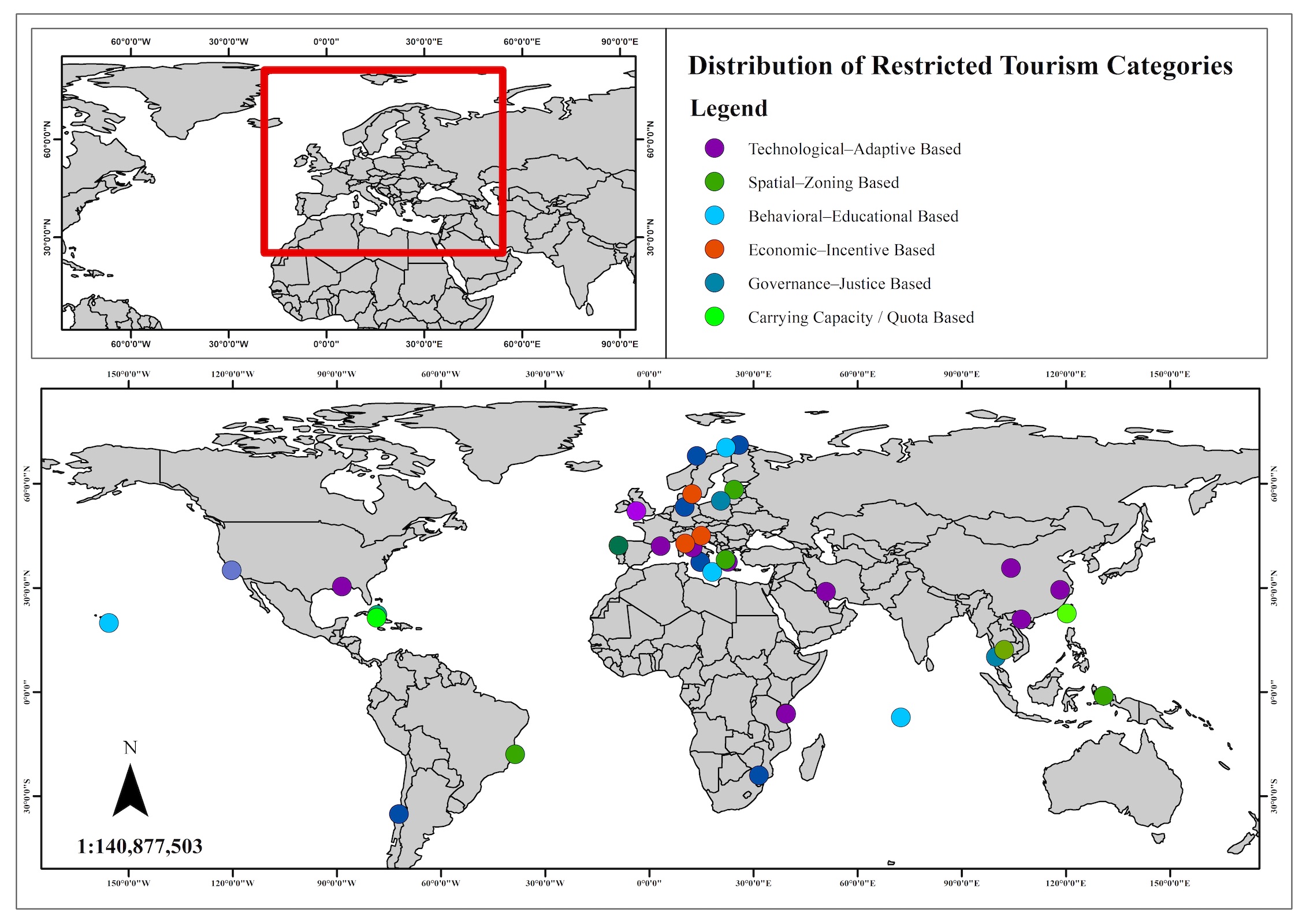
Analysis of 39 articles reveals that mechanisms for regulating coastal and marine tourism can be conceptually categorized into six major types: spatial-zoning based, carrying capacity/quota based, behavioral–educational based, governance-justice based, economic-incentive based, and technological–adaptive based. This classification reflects the multidimensional approaches adopted across international studies to manage tourism pressures on coastal and marine ecosystems (Figure 6).
4. Discussion
4.1. Studies Demographic
Analysis of studies demographic reveals that Q1 journals possess substantially higher and more variable Impact Factors (3.8–9.1; median ≈5.0) than Q2–Q3 journals (1.2–3.1), underscoring their dominant visibility and influence in marine and sustainable tourism research. Most publications (31 of 39; 79.5%) appeared in Q1 outlets such as Marine Pollution Bulletin, Ocean & Coastal Management, and Journal of Environmental Management, highlighting Elsevier’s central role (≈69% of total articles) as the main publisher, followed by Taylor & Francis and Springer Nature. The top eight journals account for the majority of outputs, reflecting a concentration of studies in high-impact platforms integrating ecological, policy, and coastal management perspectives. A strong positive correlation between Impact Factor (JCR 2023) and SJR (2024) confirms consistent journal quality, with Tourism Management and Journal of Sustainable Tourism ranking highest. Disciplinary mapping indicates dominant ecological-environmental (23.1%), socio-cultural (17.9%), economic-business (15.4%), and governance-policy (12.8%) domains, with 30.8% of studies adopting multi-domain approaches. Overall, research on restricted marine tourism demonstrates a shift toward data-driven, cross-sectoral, and participatory frameworks, emphasizing that visitor limitation represents a complex governance challenge rather than a purely technical issue.
4.2. Distribution and Interconnection of Research Domains in Restricted Marine Tourism Studies
Figure 2 indicates that most research on restricted marine tourism continues to privilege ecological protection and regulatory frameworks over human-centred or market-based perspectives. Conceptually, such a bias reflects the persistence of a top-down conservation paradigm, in which governance is viewed as control rather than collaboration. From a policy standpoint, this suggests that current management approaches may secure ecological outcomes but risk social disengagement and weak local legitimacy. Integrating socio-economic indicators, such as community well-being and livelihood equity, into visitor-limitation policies is therefore critical to achieving both ecological resilience and social acceptance. Scientifically, Figure 3 implies that existing studies predominantly address regulatory and ecological aspects in tandem, while social and economic linkages remain weakly articulated. Conceptually, the pattern underscores an imbalance between compliance-based management and participatory adaptive governance, revealing that human dimensions are often treated as contextual variables rather than integral components of the system. In policy terms, the finding highlights the necessity of transitioning from rigid protection models toward adaptive co-management frameworks that combine ecological monitoring with stakeholder participation and socio-economic learning.
4.3. Research Approaches and Analytical Techniques in Marine Tourism Studies
Scientifically, based on Figure 4 reveals a field heavily shaped by positivist traditions that privilege measurement and prediction over contextual understanding. Conceptually, it reflects a methodological imbalance that limits the integration of social perceptions, behavioural drivers, and community-based knowledge within the evaluation of visitor-management effectiveness. In policy terms, the prevalence of model-based research strengthens technical precision but weakens social legitimacy; thus, future studies should prioritise mixed and participatory methodologies to inform adaptive, evidence-based, and socially responsive marine-tourism governance.
In qualitative studies, Di Cintio et al. (2023), Bennett et al. (2022), and Lewin et al. (2025) employed survey and interview methods under a participatory socio-ecological paradigm, emphasizing that marine resource crises (e.g., declining fish stocks, ecosystem degradation) require collaborative governance, science–society integration, and coastal economic transformation. Despite sharing this paradigm, their focal points differ: Cintio highlights local economic resilience, Bennett focuses on social justice and community activism, while Lewin examines institutional reform and adaptive regional policy. Within the review and policy approach, six studies collectively contribute to understanding sustainable ocean and coastal management by linking human, policy, and marine systems, albeit with varied emphases. Hein et al. (2024) addresses inequitable ocean access through an ocean justice lens; Ballantyne et al. (2023) analyze stakeholder negotiation in visitor management; Phillips et al. (2018) discuss managed retreat and climate-driven policy risks; Giglio et al. (2020) evaluates ecological impacts of recreational diving; Spinelli & Benevolo (2022) explore economic and governance opportunities in nautical tourism; and Martin et al. (2013) emphasize marine spatial planning for balancing conservation, economy, and tourism. Overall, these studies share a sustainability and cross-sectoral collaboration paradigm but vary in scale, from global justice frameworks to local governance and in emphasis across social, ecological, economic, and policy dimensions.
Eighteen studies adopted quantitative methods. Among these, five used ecological analysis to explore human-ecosystem interactions. Guabiroba et al. (2022) demonstrated that access restrictions enhance marine conservation effectiveness; Ottone et al., (2025) applied multidimensional analyses combining ecological and behavioral factors; Maas et al. (2020) highlighted the significance of peripheral ecosystems like jellyfish lakes in conservation policy; Anfuso et al. (2014) assessed coastal landscape appeal in Cuba; and Guabiroba et al. (2022) examined marine debris impacts in the Mediterranean. Collectively, these works underscore integration between conservation, governance, and marine tourism, with varying emphases from zoning effectiveness and visitor behavior to coastal aesthetics and pollution pressures. Twelve modelling and statistical studies emphasize evidence-based, adaptive governance for balancing economic benefits and ecosystem sustainability under the overarching paradigm of sustainable and regulated marine tourism. They differ by focus: Larsen et al. (2023) & Huyen et al. (2022)on pollution and technical models; Zentner et al. (2023) & Gioia et al. (2025) on ecology and climate adaptation; Ahi et al. (2023) & Dvarskas (2017) on economics and dynamic modelling; Tan–Morteza on spatial planning; Needham & Szuster (2011) & García-charton (2022) on regulatory effectiveness; and Lange Liu on governance and policy justice. These variations reflect a continuum of approaches from biophysical and economic modelling to social, behavioral, and institutional dimensions. Finally, Buzzi et al. (2022) examined heavy-metal pollution on tourist beaches, identifying the COVID-19 tourism decline as a natural experiment that temporarily reduced coastal contamination. The study highlights the direct linkage between tourism intensity and environmental degradation, emphasizing that ecosystem recovery remains transient without adaptive management and long-term monitoring frameworks.
The reviewed studies collectively demonstrate a paradigm shift in restricted marine tourism governance toward adaptive, collaborative, and evidence-based management. Overall, they emphasize the integration of ecological, social, economic, and policy dimensions to balance conservation with sustainable marine tourism use. Approaches vary across contexts: (Collins et al., 2025) & Estévez et al. (2024) highlight participatory and expert-informed frameworks for setting quotas and seasonal closures; Booth et al. (2022) introduces an economic instrument through a marine tourism levy; Molina-Uruella et al. (2024), Iliopoulou-georgudaki et al. (2016), and Wongthong & Harvey (2014) integrate Integrated Coastal Management principles in zoning and visitor capacity control; Reineman & Ardoin (2017) and Waldo et al. (2023) emphasize cultural stewardship and traditional fisheries preservation; Williams et al. (2021) and Roman & Dearden (2007) advance socio-ecological indicators and the Limits of Acceptable Change framework; while Engen et al. (2024) and Bin et al. (2025) expand the scope through participatory co-production of sustainability indicators and multi-source spatial modeling for ecological risk zoning. Collectively, these works affirm that marine tourism sustainability depends on the synergy among science, policy, and community participation within adaptive, cross-scale governance systems.
4.4. Frequency of Research Domain Combinations
Figure 5 evidence that marine-tourism restriction research remains largely anchored in regulatory–ecological reasoning, while inclusive social or economic framings are comparatively scarce. Conceptually, it demonstrates that knowledge production in this field tends to reinforce the protect-and-control paradigm rather than advancing equity-based and participatory governance. From a management perspective, these results call for multi-domain policy design, where visitor quotas are not only determined by ecological thresholds but also adjusted through social feedback mechanisms, economic incentives, and local capacity-building.
4.5. Typology of Tourism Restriction Mechanisms in Coastal and Marine Areas: A Synthesis of Six Management Approaches
The carrying capacity or quota-based category highlights restrictions on visitor numbers or the intensity of tourism activities through the establishment of visitor limits, diver quotas, and rotational activity systems (Figure 6). This approach is commonly applied in marine parks and small island ecosystems with limited carrying capacity, such as those in Taiwan and the Mediterranean region. Quota regulation is viewed as a preventive mechanism that helps maintain the balance between economic utilization and long-term conservation. Meanwhile, the behavioral-educational based approach emphasizes modifying tourist and operator behavior through environmental education, diving codes of conduct, and conservation awareness campaigns. Studies from Hawaii, Norway, and tropical regions demonstrate that behavioral interventions play a crucial role in internalizing conservation values among marine tourism participants. Within the governance-justices-based category, tourism control mechanisms focus on governance structures, community participation, and equitable access to marine resources. Research conducted in South Africa, Canada, and Indonesia indicates that the success of tourism restrictions largely depends on the integration of formal policy frameworks with community-based management practices. This approach strengthens the social legitimacy of restriction policies by involving local stakeholders in planning and evaluation processes. The economic–incentive-based approach centers on the use of economic instruments such as marine levies, compensation mechanisms, and conservation incentives. Studies in Zanzibar, Italy, and Indonesia confirm that economic incentives can effectively encourage conservation-oriented behavior among tourism actors while simultaneously enhancing funding for protected area management. Finally, the technological–adaptive based category represents the use of technology, spatial data, and adaptive systems to monitor and regulate tourism impacts. Research in Vietnam, Greece, and China highlights that implementing hydrodynamic models, multi-source data integration, and adaptive ecological indicators significantly improves evidence-based decision-making. This approach also enables more flexible management responses to environmental changes such as global warming and marine pollution. Overall, these findings underscore that marine tourism regulation cannot rely on a single mechanism but instead requires a context-specific and adaptive combination of approaches. The integration of spatial, educational, economic, and technological instruments is essential for achieving sustainable and socially equitable marine tourism governance.
4.6. Control mechanism of mass tourism and Novelty of The Articles
This review underscores a global transition in restricted marine tourism toward adaptive, science-based, and participatory governance frameworks that integrate ecological, social, and economic dimensions.
| No | Authors | Control Mechanism of Marine Tourism | Novelty Type | Article Novelty |
|---|---|---|---|---|
| 1 | Di Cintio et al. (2023) | Tourism restriction is implemented through adaptive economic mechanisms integrating fishing tourism (pescatourism). | Contextual | Characterization of traditional fisheries for tourism integration. |
| 2 | Bennett et al. (2022) | Tourism is controlled through community access and social values. | Participatory & Socio-Cultural | Application of social movement and local stewardship approaches. |
| 3 | Lewin et al. (2025) | Restrictions are imposed via catch quotas and temporary no-take zones. | Participatory & Socio-Cultural | Participatory workshops and multi-stakeholder cognitive mapping. |
| 4 | Ballantyne et al. (2023) | Tourism restrictions are applied through vehicle limits per zone, visitation time control, and enforcement of wildlife observation ethics. | Participatory & Socio-Cultural | Multi-actor consensus using Delphi and focus group discussions (FGDs). |
| 5 | Hein et al. (2024) | Tourism restrictions emphasize distributive justice regulations. | Participatory & Socio-Cultural | Marine access analysis from an equity perspective. |
| 6 | Giglio et al. (2020) | Limiting the number of divers per site through rotation zones (closed seasons), education, and eco-certification of diving behavior. | Policy/Instrumental | Review of impact mitigation strategies for diving tourism. |
| 7 | Martin et al. (2013) | Tourism restriction is implemented through marine spatial zoning. | Policy/Instrumental | Marine spatial planning as a tourism management instrument. |
| 8 | Phillips et al. (2018) | Tourism is spatially restricted via “managed retreat” and risk zoning. | Policy/Instrumental | Conceptual analysis of coastal tourism risk under climate change. |
| 9 | Spinelli & Benevolo (2022) | Study literature review. | – | – |
| 10 | Kouvara et al. (2025) | Tourism is limited through waste control and prohibition of recreational activities in high-pollution harbor zones. | Methodological | ROV and scuba surveys for marine litter quantification. |
| 11 | Ottone et al. (2025) | Spatial zoning and capacity quota control with “general reserve” areas; diving allowed only within 100 m of buoys; maximum of 12 divers per session. | Methodological | Integration of bioindicators and spatial analysis for diving impact assessment. |
| 12 | Maas et al. (2020) | Tourism is restricted by lake zoning and visitor quotas, allowing only scientific or limited ecotourism. | Contextual | Focus on peripheral ecosystems within MPAs. |
| 13 | Anfuso et al. (2014) | Establishing priority zones for tourism vs. conservation; Class 1–2 for controlled tourism; Class 3–5 restricted or restored. | Contextual | Quantitative index of nature–human-based tourism landscapes. |
| 14 | Guabiroba et al. (2022) | Tourism is fully prohibited in core areas, allowing only research and monitoring. | Policy/Instrumental | Empirical evidence of access restriction effects on fish biomass. |
| 15 | Larsen et al. (2023) | Regulation of hotel distance from MPAs, centralized wastewater treatment, and water quality monitoring for diving/snorkeling tourism. | Methodological | High-resolution hydrodynamic modeling of tourism-related pollution. |
| 16 | Liu & Yin (2022) | Control of ecological pressure, environmental carrying capacity, and provincial policy response. | Methodological | Spatiotemporal modeling of tourism dynamics. |
| 17 | Zentner et al. (2023) | Diving tourism regulation through adaptive diver quotas and rotational visitation schedules. | Multidomain Integration | Ecological population modeling under climate scenarios. |
| 18 | Gioia et al. (2025) | Implementation of diver quotas, access restrictions in sensitive sites, and use of fixed mooring buoys. | Methodological | Substrate-interaction-based mitigation of diving impacts. |
| 19 | Ahi et al. (2023) | Development of the “Blue Diving” responsible diving framework—including quotas, restricted access, mooring buoys, and diver behavior certification. | Methodological | DCE and mixed logit modeling for marine tourism behavior. |
| 20 | Huyen et al. (2022) | Environmental regulation-based restrictions on vessel tourism to maintain air quality and visitor health in World Heritage Bays. | Contextual | Emission inventory and spatiotemporal modeling in Southeast Asia. |
| 21 | Calo (2022) | Effective tourism restriction through quotas, site rotation, and prohibition of specific activities (e.g., fish feeding, snorkeling in core zones). | Policy/Instrumental | Simulation of diving quota impacts. |
| 22 | Dvarskas (2017) | Tourism limited by ecological carrying capacity and water quality (coliform level). | Methodological | Dynamic systems modeling for coastal eco-economic interactions. |
| 23 | Tan et al. (2018) | Visitation quotas, facility capacity limits, and pollution mitigation guided by a Driving-Force–State–Response model. | Methodological | Decision Support System based on dynamic modeling. |
| 24 | Lange (2015) | Tourism restriction through incentive-based management and community economic rights allocation. | Contextual | Analysis of economic benefit distribution in coastal tourism. |
| 25 | Morteza et al. (2016) | Restriction based on prioritizing low-impact zones and rejecting development in sensitive areas. | Methodological | Application of MCDM (ANP & Fuzzy TOPSIS). |
| 26 | Buzzi et al. (2022) | Management strategies to mitigate heavy metal pollution on tourist beaches. | Methodological | Analysis of heavy metal data on tourist beaches. |
| 27 | Needham & Szuster (2011) | Direct restrictions combining quotas, education, and facility improvement based on coral damage levels. | Methodological | Conjoint analysis for marine tourism preferences. |
| 28 | Collins et al. (2025) | Regulatory simplification, compliance enhancement, and participatory scenario planning. | Multidomain Integration | Scenario planning and MSE for recreational fisheries. |
| 29 | Estévez et al. (2024) | “Bag limits” and seasonal closures for recreational fishing tourism. | Participatory & Socio-Cultural | Expert elicitation (IDEA protocol). |
| 30 | Booth et al. (2022) | Economic instruments (beneficiary-pays) and community-based conservation integration. | Multidomain Integration | Willingness-to-pay analysis. |
| 31 | Molina-Urruela et al. (2024) | Anchorage zoning, vessel prohibition in sensitive zones, visitor quotas, and adaptive marine reserve systems. | Participatory & Socio-Cultural | Participatory ecosystem services mapping. |
| 32 | Iliopoulou-Georgudaki et al. (2016) | Restriction of coastal development, accommodation quotas, and green belt zoning. | Contextual | Integration of social surveys with sustainability indicators. |
| 33 | Reineman & Ardoin (2017) | Protection of surfing sites from development with stakeholder participation. | Multidomain Integration | Surfer survey and socio-economic analysis. |
| 34 | Wongthong & Harvey (2014) | ICM-based restrictions, codes of conduct, and visitor capacity limits. | Multidomain Integration | Integration of social and ecological data. |
| 35 | Waldo et al. (2023) | Non-physical restriction based on economic value and visitation capacity. | Contextual | Analysis of fisheries–tourism linkages. |
| 36 | Williams et al. (2021) | Tourism zones managed through social–ecological indicators and adaptive feedback systems. | Multidomain Integration | Adaptation of the IEA framework. |
| 37 | Roman & Dearden (2007) | Spatial zoning and capacity quota control. | Policy/Instrumental | Application of the LAC framework. |
| 38 | Engen et al. (2024) | Participatory restriction based on carrying capacity and social–ecological indicators. | Multidomain Integration | Co-created participatory model. |
| 39 | Bin et al. (2025) | Risk zoning and activity limitation in erosion-prone habitats. | Multidomain Integration | Integration of remote sensing, statistics, and social surveys. |
The synthesis of 39 international studies reveals methodological advancements in spatial modeling and ecosystem monitoring, alongside policy innovations such as zoning, visitor quotas, and carrying-capacity regulations. Yet, the predominance of technological and spatial approaches highlights a research gap in governance equity and community adaptive capacity. Future studies should therefore advance cross-domain frameworks that couple ecological integrity with social inclusion and economic resilience, ensuring that restricted marine tourism evolves as a balanced, sustainable system supporting both biodiversity conservation and local livelihoods.
5. Conclusion
Beyond their ecological and managerial functions, the findings of this systematic literature review demonstrate that carrying capacity and restricted tourism models have profound implications for local island cultures and community revitalization. By regulating visitor intensity, spatial access, and tourism behavior, restriction mechanisms actively shape cultural spaces, daily social practices, and the distribution of tourism benefits within island communities. The predominance of governance and policy, and ecological-environmental frameworks identified in this review suggests that while environmental objectives are often achieved, socio-cultural dimensions, including local values, customary practices, and place-based identities remain insufficiently integrated into tourism governance. Nevertheless, evidence from participatory and justice-oriented studies indicates that when restriction policies are co-designed with local stakeholders, they can foster community revitalization by strengthening local stewardship, enhancing livelihood resilience, and re-embedding tourism within culturally meaningful practices. Consequently, carrying capacity should be understood not merely as a technical threshold, but as a socio-cultural governance instrument that mediates the relationship between ecosystems, tourism economies, and island communities. Advancing sustainable marine tourism therefore requires adaptive, cross-domain governance frameworks that explicitly recognize island cultures as active agents in decision-making processes, ensuring that tourism restriction contributes not only to ecological conservation but also to the long-term social and cultural vitality of island societies. Despite these advances, the existing body of literature reveals several unresolved gaps that constrain the effective translation of adaptive, culturally informed governance frameworks into practice.
5.1. Research Gap
The synthesis of 39 reviewed articles reveals several significant research gaps in the study of restricted marine tourism. First, studies explicitly assessing the effectiveness of tourist quota systems remain scarce, only one publication addresses this issue directly, while most research primarily emphasizes ecological, governance, and socio-economic aspects. Second, socio-cultural dimensions are rarely integrated into analytical frameworks, resulting in limited attention to local values and community knowledge in tourism management planning. Third, the majority of studies rely on snapshot data with short temporal horizons, indicating a lack of longitudinal research capable of evaluating the medium and long-term impacts of visitor restrictions. Although several studies employ mixed-methods approaches, the integration between quantitative and qualitative analyses tends to remain parallel rather than truly synthetic.
5.2. Novelty
This review provides a novel perspective by framing marine tourism restrictions as an adaptive and socially mediated system rather than solely regulatory or spatial controls. It introduces a refined typology of restriction mechanisms that reflects the growing orientation toward behavior-centered governance, equity-driven decision-making, and selectively integrated cross-domain models. Furthermore, the study uncovers a critical research gap regarding the absence of comprehensive frameworks capable of simultaneously accommodating ecological thresholds, socio-economic fairness, and uncertainties associated with climate risk.
Disclosure statement
No potential conflict of interest was reported by the authors.
Funding
The authors gratefully acknowledge the financial support from:
- Indonesian Education Scholarships/Beasiswa Pendidikan Indonesia (BPI);
- Centre for Higher Education Funding and Assessment, Ministry of Higher Education, Science, and Technology, Republic of Indonesia; and
- Endowment Fund for Education Agency, Ministry of Finance, Republic of Indonesia.
References
- Ahi, J.C., Aanesen, M., Kipperberg, G., 2023. Testing the sensitivity of stated environmental preferences to variations in choice architecture. Ecol. Econ. 205: 107680. https://doi.org/10.1016/j.ecolecon.2022.107680
- Anfuso, G., Williams, A.T., Hernández, J.A.C., Pranzini, E., 2014. Coastal scenic assessment and tourism management in western Cuba. Tour. Manag. 42: 307–320. https://doi.org/10.1016/j.tourman.2013.12.001
- Ballantyne, R., Slabbert, L., Packer, J., Sneddon, J., 2023. Negotiating stakeholder solutions to complex visitor management problems : the case of traffic management in the Kruger National Park. Transactions of the Royal Society of South Africa 78 (3): 197-206. https://doi.org/10.1080/0035919X.2023.2214105
- Bennett, N.J., Billon, P.L., Belhabib, D., Satizábal, P., 2022. Local marine stewardship and ocean defenders. Ocean Sustainability 1 (3): 2–7. https://doi.org/10.1038/s44183-022-00002-6
- Bin, Z., Huitong, Q., Hu, Y., Lianlian, X., Xueling, T., Bingyu, L., 2025. Integrating multisource data for recreational ecological risk assessment in populous national park : A case study from Qianjiangyuan, China. Ecological Indicators 178: 114089. https://doi.org/10.1016/j.ecolind.2025.114089
- Booth, H., Mourato, S., Milner-gulland, E.J., 2022. Investigating acceptance of marine tourism levies , to cover the opportunity costs of conservation for coastal communities. Ecol. Econ. 201: 107578. https://doi.org/10.1016/j.ecolecon.2022.107578
- Buzzi, N.S., Menendez, M.C., Truchet, D.M., Delgado, A.L., Fernandez Severini, M.D., 2022. An overview on metal pollution on touristic sandy beaches : Is the COVID-19 pandemic an opportunity to improve coastal management ?. Mar. Pol. Bul. 174: 113275. https://doi.org/10.1016/j.marpolbul.2021.113275
- Collins, C., Taylor, B., Curnick, D.J., 2025. Participatory approaches to improving recreational fisheries management in a remote island system. Conservation Science and Practice, A journal of Society for Conservation Biology, 1–16. https://doi.org/10.1111/csp2.70065
- Di Cintio, A., Sulanke, E., Di Genio, S., Niccolini, F., Sbragaglia, V., Visintin, F., Bulleri, F., 2023. Regional Studies in Marine Science A socio-economic characterization of Tuscan Archipelago’s artisanal fisheries : Status quo , challenges and new business opportunities. Regional Studies in Marine Science 68: 1-103275. https://doi.org/10.1016/j.rsma.2023.103275
- Dvarskas, A., 2017. Dynamically linking economic models to ecological condition for coastal zone management : Application to sustainable tourism planning. J. Environ. Manage. 188: 163–172. https://doi.org/10.1016/j.jenvman.2016.12.014
- Engen, S., Helene, V., Eirik, H., Hege, M., Hartvig, G., Falk, J., Benjamin, A., Fauchald, P., 2024. Co‑creating coastal sustainability goals and indicators. Sustain. Sci. 19: 1327–1343. https://doi.org/10.1007/s11625-024-01521-6
- Estévez, R.A., Azocar, C., De, C., Francisca, B., Hiriart-bertrand, M.G.L., Fern, F., Rivera, J., Smith, A., Pérez-matus, A., Toro, J., Ponte, D., 2024. Using expert knowledge to propose recreational marine reef-fish management measures in Chile. Conservation Science and Practice behalf of Society for Conservation Biology, 13057. https://doi.org/10.1111/csp2.13057
- García-charton, A., 2022. Quotas regulation is necessary but not sufficient to mitigate the impact of SCUBA diving in a highly visited marine protected area. Journal of Environmental Management 302: 113997. https://doi.org/10.1016/j.jenvman.2021.113997
- Giglio, V.J., Luiz, O.J., Ferreira, C.E.L., 2020. Ecological impacts and management strategies for recreational diving : A review. J. Environ. Manage. 256: 109949. https://doi.org/10.1016/j.jenvman.2019.109949
- Gioia, C., Camillo, D., Turicchia, E., Roveta, C., Quadrini, G., Storari, A., Scarpa, C., Coppari, M., Marrocco, T., Torsani, F., Gregorin, C., Pulido, T., Cerrano, C., Ponti, M., 2025. Towards blue diving : analysis and solutions to prevent scuba diving impact in the Mediterranean sea. Ocean Coast. Manag. 269: 107833. https://doi.org/10.1016/j.ocecoaman.2025.107833
- Guabiroba, H.C., Vilar, C.C., Pinheiro, H.T., Joyeux, J., 2022. Limited human access is linked to higher effectiveness in a marine sanctuary. J. Environ. Manage. 311: 114838. https://doi.org/10.1016/j.jenvman.2022.114838
- Hein, J., Klepp, S., Lena, A., 2024. Bringing a justice lens to ocean access. Maritime Studies 23:45. https://doi.org/10.1007/s40152-024-00387-9
- Huyen, T.T., Thi, N., Oanh, K., Huy, L.N., 2022. Environmental Technology & Innovation Impact of lowering fuel sulfur content on atmospheric emissions from shipping activities in a World Heritage Bay in Vietnam. Environ. Technol. Innov. 27: 102507. https://doi.org/10.1016/j.eti.2022.102507
- Iliopoulou-georgudaki, J., Kalogeras, A.P., Konstantinopoulos, P., Theodoropoulos, C., 2016. Sustainable tourism management and development of a Greek coastal municipality. International Journal of Sustainable Development & World Ecology 23: 143-153. https://doi.org/10.1080/13504509.2015.1102780
- Molina-Urruela, J., Fern´andez E., Castro, A.J., Exposito-Granados, M., Ovejero-Campos A., Villasante S., Mendez-Martínez, G., 2024. Participatory mapping of uses and ecosystem services as a useful tool for the identification of conflicts in Marine Protected Areas : The case of the Cíes Islands archipelago (NW Spain) 259: 107474. https://doi.org/10.1016/j.ocecoaman.2024.107474
- Lange, G., 2015. Tourism in Zanzibar : Incentives for sustainable management of the coastal environment. Ecosyst. Serv. 11: 5–11. https://doi.org/10.1016/j.ecoser.2014.11.009
- Larsen, J., Maar, M., Lydholm, M., Boye, L., Hamad, Y., Anton, P., Stæhr, U., 2023. High-resolution hydrodynamics of coral reefs and tracing of pollutants from hotel areas along the west coast of Unguja Island , Zanzibar. Mar. Pollut. Bull. 191: 114968. https://doi.org/10.1016/j.marpolbul.2023.114968
- Lewin, W., Pierce, M.E., Arlinghaus, R., Weltersbach, M.S., Strehlow, H. V, 2025. Stakeholder workshops on western Baltic cod fisheries – conflict and consensus in the face of a highly dynamic ecosystem. Biol. Conserv. 302: 110983. https://doi.org/10.1016/j.biocon.2025.110983
- Maas, D.L., Capriati, A., Ahmad, A., Erdmann, M. V, Lamers, M., Leeuw, C.A. De, Prins, L., Putri, A.P., Tapilatu, R.F., Becking, L.E., 2020. Recognizing peripheral ecosystems in marine protected areas : A case study of golden jellyfish lakes in Raja Ampat , Indonesia. Mar. Pollut. Bull. 151: 10700. https://doi.org/10.1016/j.marpolbul.2019.110700
- Martin, G., Kotta, J., Aps, R., Kopti, M., 2013. Marine spatial planning as a tool for promoting sustainable economic development including tourism and recreation in a coastal area : an example from Pärnu Bay, NE Baltic Sea. WIT Transactions on Ecology and The Environment, 173: 393–404. https://doi.org/10.2495/SDP130331
- Nazar, U.R., Authority, E.P., Pilditch, C.A., Cornelisen, C., 2023. Managing cumulative effects in the marine environment-research roundup.
- Needham, M.D., Szuster, B.W., 2011. Situational in fl uences on normative evaluations of coastal tourism and recreation management strategies in Hawai ’ i. Tour. Manag. 32: 732-740. https://doi.org/10.1016/j.tourman.2010.06.005
- Ottone, L., Mancini, G., Ventura, D., Belluscio, A., Jona, G., Casoli, E., 2025. A multi-faceted approach to assess the sustainability of diving tourism : The case of Rome’s MPA. Mar. Pollut. Bull. 221: 118504. https://doi.org/10.1016/j.marpolbul.2025.118504
- Phillips, M.R., Jones, A.L., Thomas, T., 2018. Climate Change, Coastal Management and Acceptable Risk : Consequences for Tourism. Journal of Coastal Research 85: 21-25. https://doi.org/10.2112/SI85-001.1
- Plathong, S., Inglis, G.J., Huber, M.E., 2000. Effects of Self-Guided Snorkeling Trails on Corals in a Tropical Marine Park. Conservation Biology 14 (6): 1821–1830.
- Reineman, D.R., Ardoin, N.M., 2017. Sustainable tourism and the management of nearshore coastal places : place attachment and disruption to surf-spots places : place attachment and disruption to surf-spots. J. Sustain. Tour. 1352590. https://doi.org/10.1080/09669582.2017.1352590
- Roman, G.S.J., Dearden, Æ.P., 2007. Application of Zoning and “Limits of Acceptable Change” to Manage Snorkelling Tourism. Environ Manage 39: 819–830. https://doi.org/10.1007/s00267-006-0145-6
- Simarangkir, O.R., Tawang, F., Irwan, Utami, P.B., Ricky, Nani, Kodiran, T., 2022. Carrying capacity studies of marine tourism during COVID-19 pandemic in Derawan Island , Berau, East Kalimantan. Earth and Environmental Science 967: 012030. https://doi.org/10.1088/1755-1315/967/1/012030
- Spinelli, R., Benevolo, C., 2022. Journal of Outdoor Recreation and Tourism Towards a new body of marine tourism research : A scoping literature review of nautical tourism. J. Outdoor Recreat. Tour. 40: 100569. https://doi.org/10.1016/j.jort.2022.100569
- Waldo, S., Blomquist, J., Sundström, K., Waldo, Å., 2023. Are local fisheries important for marine tourism ? A case study of the Swedish fishing village Träslövsläge. Reg. Stud. Mar. Sci. 61: 102888. https://doi.org/10.1016/j.rsma.2023.102888
- Williams, G.D., Andrews, K.S., Brown, J.A., Gove, J.M., Hazen, E.L., Leong, K.M., Montenero, K.A., Moss, J.H., Rosellon-druker, J.M., Schroeder, I.D., Siddon, E., Whitehouse, G.A., Zador, S.G., Harvey, C.J., 2021. Place-Based Ecosystem Management : Adapting Integrated Ecosystem Assessment Processes for Developing Scientifically and Socially Relevant Indicator Portfolios Place-Based Ecosystem Management : Adapting Integrated Ecosystem Assessment Processes for Developing. Coast. Manag. 49: 46–71. https://doi.org/10.1080/08920753.2021.1846154
- Wongthong, P., Harvey, N., 2014. Ocean & Coastal Management Integrated coastal management and sustainable tourism : A case study of the reef-based SCUBA dive industry from Thailand. Ocean Coast. Manag. 95: 138–146. https://doi.org/10.1016/j.ocecoaman.2014.04.004
- Zentner, Y., Margarit, N., Ortega, J., Casals, D., Figuerola-ferrando, L., Lluís, J., Hereu, B., Garrabou, J., Linares, C., 2023. Marine protected areas in a changing ocean : Adaptive management can mitigate the synergistic effects of local and climate change impacts. Biological Conservation 282: 4–11. https://doi.org/10.1016/j.biocon.2023.110048