
Institutionalizing Benefit-Sharing in an Island Energy Transition: The Case of Shinan County, South Korea
 10.21463/jmic.2026.15.1.12
Abstract
This study examines the legitimacy and institutional sustainability of Shinan County’s renewable energy benefit-sharing system in South Korea from the perspective of a just transition. Moving beyond viewing benefit-sharing as a mere compensatory or distributive policy, the study conceptualizes it as a rule-constituted governance mechanism grounded in commons-based resource use. By integrating institutional analysis with the three core dimensions of justice—distributive, procedural, and recognition justice—this research analyzes how ordinance-based rules, participation structures, and perceptions of fairness interact to shape policy sustainability and scalability. Using qualitative document analysis and secondary synthesis of empirical studies, the paper demonstrates that procedural justice exerts a stronger influence on resident satisfaction than the scale of monetary distribution. Recognition justice and locational conditions further mediate perceptions of legitimacy, particularly in geographically constrained island contexts. While Shinan’s distance-based differentiated compensation and resident participation model institutionalize distributive rationality, they may also generate boundary and equity debates if perceived as legitimizing devices rather than as substantively fair arrangements. The findings suggest that long-term sustainability depends less on financial magnitude than on participatory architecture, governance transparency, and capacity-building infrastructures. The study contributes to island studies and energy transition scholarship by proposing an integrated analytical framework for evaluating community-based benefit-sharing systems in vulnerable regions.
Keywords
Renewable energy, Benefit-sharing, Just transition, Commons governance, Procedural justice, Island regions, Community participation
1. Introduction
Carbon neutrality and energy transition are not limited to changes in the composition of energy generation sources. Rather, they foreground fundamental questions of local governance: who bears the costs and who receives the benefits arising from the siting and operation of energy infrastructure, through what procedures, and according to which criteria. In particular, renewable energy facilities such as solar and wind power tend to expand on a large scale across spaces with strong common-pool characteristics—farmland, forest land, tidal flats, and coastal waters. When the structure of benefit allocation and the tangible gains experienced by residents remain unclear, such developments may lead to declining social acceptance and the institutionalization of conflict. Previous studies indicate that various community benefit mechanisms—such as co-ownership models, local return funds, and resident participation schemes—are employed to enhance local acceptance (Revez et al., 2026). However, the design of such mechanisms may amplify disparities in investment capacity and access to information, thereby generating new equity concerns. Moreover, participation itself may not function as an effective persuasive tool for opponents of renewable energy projects (Johansen and Emborg, 2018). It is also emphasized that, for community benefit funds to contribute to meaningful public participation and sustainable regional development, the key variable lies not merely in financial scale but in the institutional structure of the fund, including governance arrangements, allocation rules, and decision-making systems (Boyle et al., 2026).
These concerns are equally observable in the Korean context. In recent years, the Korean government has actively promoted resident-participatory renewable energy projects, and empirical studies demonstrate that resident investment participation can generate positive spillover effects on local income, corporate earnings, and sales of local firms (Kim et al., 2021). Nevertheless, the possibility of economic contribution does not automatically guarantee social legitimacy or sustainable institutionalization. Renewable energy expansion can be consolidated as a pathway toward a just transition only when institutional design provides persuasive solutions regarding the distribution of benefits, participatory procedures, and the recognition of local identity and values.
Shinan County in Jeollanam-do is frequently cited as a representative Korean case that has established ordinance-based institutional mechanisms to share the benefits of renewable energy development with local communities and to formalize community participation (Kim and Ban, 2025). Previous research evaluates the Shinan case as significant in that it refined practical rules through local deliberation and institutionalization, continuously revised and evolved its ordinances in response to changing conditions, and critically revealed the limitations of a standardized, state-led model (Woo, 2023). At the same time, important questions remain: who constitutes “the local” and who qualifies as “a resident” in the process of institutional expansion and stabilization? How are the scope and criteria of benefits determined? To what extent does the participatory structure confer substantive influence upon residents? For example, a study analyzing residents’ satisfaction with Shinan’s solar power development profit-sharing scheme from the perspective of spatial justice shows that levels of satisfaction and influencing factors vary across regions and social groups, suggesting that even under the same institutional framework, perceived effects differ according to spatial and social conditions (Kim et al., 2024). Furthermore, recent research examining participation structures in regional benefit-sharing schemes in island areas highlights that success depends less on financial scale than on the structuring of participation, institutional rationality, and the securing of community autonomy (Choi and Kang, 2025). These discussions underscore the need to move beyond labeling Shinan’s profit-sharing scheme as a “best practice” and instead to analyze its core operating principles and systematically identify its key issues.
The purpose of this study is to examine Shinan County’s renewable energy profit-sharing system in order to: (1) analyze the logic underlying its institutional design and operational structure; (2) evaluate its implications in terms of the core dimensions of just transition—distribution, procedure, and recognition; and (3) identify the conditions for its sustainability and scalability. The following research questions are proposed: First, through ordinances and operational rules, what institutional mechanisms (e.g., participation requirements, decision-making structures, allocation rules, transparency devices) constitute Shinan’s profit-sharing system? Second, how do institutional outcomes appear in terms of resident satisfaction and social acceptance, and what differences and influencing factors are identified across regions and social groups? Third, in comparison with international discussions on community benefits, what strengths and limitations characterize the Shinan model, and under what conditions can it contribute to sustainable regional development and meaningful public participation?
The scope of this study encompasses the overall benefit-sharing system associated with renewable energy development in Shinan County, with particular focus on the institutionalization process (ordinance-based framework), resident participation structures, and the criteria and procedures of benefit allocation. Methodologically, the study synthesizes institutional success factors and discussions on participation and sustainability identified in previous research (Woo, 2023; Choi and Kang, 2025); interprets empirical findings that reveal differences in perceived institutional effects and satisfaction from a spatial justice perspective (Kim et al., 2024); and employs the equity and participatory design issues raised by Johansen and Emborg (2018) and Boyle et al. (2026) as comparative analytical frameworks.
2. Theoretical Background and Review of Previous Studies
2.1 The Concept of Renewable Energy “Benefit-Sharing” and Its Policy Implications
Benefit-sharing in renewable energy development can be understood not merely as compensation or one-time support, but as an institutional mechanism aimed at realizing distributive justice by rationally allocating the economic and non-economic outcomes generated by development to members of the local community. Research focusing on island regions conceptualizes regional benefit-sharing systems not as fiscal compensation tools, but as policy instruments for sustaining and restoring local communities, securing the legitimacy of development, and enhancing resident acceptance. Such studies emphasize that institutional success depends less on the scale of financial resources than on the design of participation structures and the rationality of institutional arrangements (Choi and Kang, 2025).
Studies addressing the Shinan County case similarly define renewable energy benefit-sharing as “a mechanism that offsets externalities arising from facility siting and distributes benefits among local community members to realize distributive justice,” while noting that the rarity of successful cases in Korea stems from the lack of cooperation from local community organizations and the absence of commons-based, context-sensitive institutional design (Woo, 2023). These discussions suggest that Shinan’s benefit-sharing system should not be regarded as a supplementary policy instrument for securing local acceptance, but rather as a core governance mechanism that constructs the legitimacy of development grounded in shared resources.
2.2 Theoretical Perspectives for Analysis: Commons, Justice, and Participation Structure
First, from a commons perspective, renewable energy development based on natural resources such as sunlight, wind, and public waters requires clear rules for resource use and principles of distribution. The Shinan case explicitly assumes that renewable energy development possesses strong characteristics of common-pool resources—wind, sunlight, sea, and tidal flats—and states that the foundational principles of commons governance form the conceptual basis of its benefit-sharing system (Woo, 2023). This implies that the central issue lies in the rights–rules framework: who may access benefits, under what qualifications, and according to which rules. Second, from a justice perspective, social acceptance of renewable energy is often explained through the combination of distributive justice and procedural justice. Studies on wind energy shareholding in Europe report that perceptions of distributive injustice intensify when local communities bear most of the costs and risks while external actors—particularly developers—capture the benefits. Community benefits may, under certain conditions, be interpreted as “bribes,” revealing practical dilemmas in implementation (Johansen and Emborg, 2018). Similarly, monetary compensation may increase support in some contexts but also risks being perceived as immoral or coercive. Consequently, benefit-sharing must be premised on early-stage consultation, transparent procedures, and fair decision-making processes (Kim et al., 2024). Third, as an analytical framework for participation structures, research on island-region benefit-sharing systems applies Fung’s (2006) Democracy Cube to compare modes and levels of citizen participation, demonstrating that institutional sustainability and the potential for institutionalization are closely linked to the degree of structured participation (Choi and Kang, 2025). This justifies the need to examine not only distributive outcomes but also the design of participation—representativeness, deliberative quality, and allocation of decision-making authority—in analyzing Shinan’s benefit-sharing model.
2.3 Synthesis of Previous Studies and the Distinctiveness of This Research
Previous studies can be broadly categorized into four areas: (1) institutional design and operational rules; (2) resident perceptions, satisfaction, and acceptance factors; (3) regional economic effects; and (4) corporate social responsibility. First, studies on institutional design show that Shinan’s ordinances and operational regulations specify allocation criteria for benefit-sharing based on spatial factors such as distance and zones of impact, and clearly define joint participation shares and distribution caps for residents and local governments (Woo, 2023). They further highlight that authority rules—stipulating roles and responsibilities within decision-making bodies—are codified in ordinance provisions, underscoring that the Shinan model constitutes not merely a distribution formula but a set of institutionalized governance rules (Woo, 2023). Second, research on resident perceptions consistently finds that both distributive fairness and procedural fairness significantly influence resident satisfaction and attitudes. In particular, distributive fairness concerns arise when the scope of the benefiting community does not align with the group bearing the costs. Monetary compensation alone cannot reliably secure stable perceptions of legitimacy (Kim et al., 2024). These findings suggest that evaluations of Shinan’s “policy success” should analyze not only institutional outputs (e.g., dividend scale) but also the processes through which perceptions of fairness are formed. Third, studies on regional economic effects empirically demonstrate that resident-participatory renewable energy development can generate spillover effects in local economies through resident investment. In Korea, the allocation of Renewable Energy Certificate (REC) weighting has been discussed as a core governmental support mechanism, while requirements regarding minimum resident investment ratios and facility capacity standards influence institutional diffusion (Kim et al., 2021). Findings that resident participation increases household income, expands sales of local firms, and enhances local tax revenues support the view that benefit-sharing can function not as a “cost of acceptance,” but as a mechanism for regional development.
Fourth, research examining corporate social responsibility defines “community benefit” or “community benefit funds” (CBF) as ethical and social obligations linked to CSR/ESG frameworks, positioning them as categories of responsible conduct that communities may reasonably expect from developers (Boyle et al., 2026). However, when community benefits are perceived as transactional tools to secure acceptance, problems of legitimacy erosion may arise. Therefore, transparency of operation, alignment of fund objectives, and representativeness in decision-making are emphasized alongside distributive scale. Moreover, research on Denmark’s wind energy co-ownership (share sale) model, grounded in distributive and procedural justice frameworks, shows that benefit design influences residents’ willingness to invest and project acceptance, while variations in trust and motivation within local communities may produce complex outcomes (Johansen and Emborg, 2018). This suggests that, despite formal similarities such as “resident participation” and “dividends,” institutional design, allocation of participatory authority, and local identity may generate significantly different outcomes.
In sum, previous studies provide meaningful explanations of Shinan’s benefit-sharing system in terms of ordinance-based institutionalization, specification of allocation criteria, resident perceptions (fairness, satisfaction, acceptance), and regional economic effects (Woo, 2023; Kim et al., 2021; Kim et al., 2024; Boyle et al., 2026). However, domestic research tends to accumulate in relatively fragmented strands—focusing separately on institutional design, resident perceptions, or economic impacts. Attempts to integrate institutional design, participation structures, perceptions of fairness (legitimacy), and sustainability within a unified analytical framework remain limited. To address this gap, the present study reinterprets Shinan’s benefit-sharing system both as a “rule-constituted institution” and as a “local governance mechanism constructing legitimacy,” thereby systematically deriving its policy implications and conditions for broader applicability.
3. Research Site and Methodology
3.1 Research Site and Scope
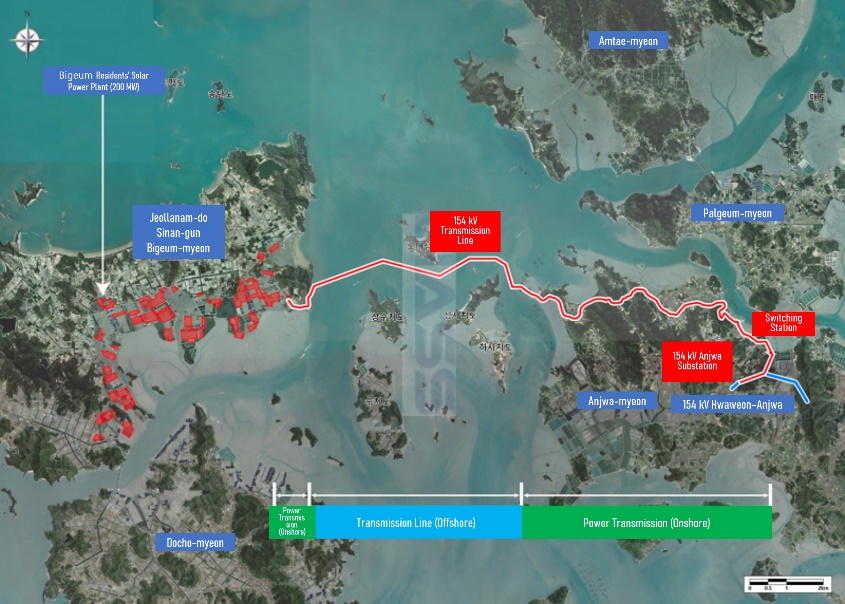
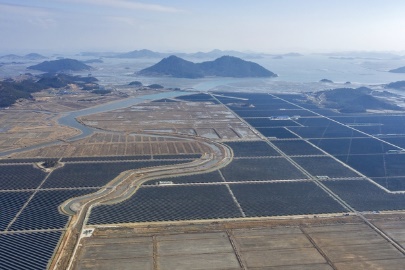
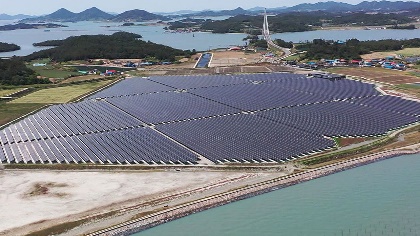
The empirical focus of this study is the renewable energy development profit-sharing system implemented in Shinan County, Jeollanam-do, Republic of Korea. The Shinan case has been evaluated as a policy experiment in which rules for returning development benefits to the local community were institutionalized through ordinances and related regulatory mechanisms, while seeking to secure long-term sustainability through resident participation in a context where energy projects expand across locally grounded spatial and resource bases such as common lands, salt fields, and coastal waters (Woo, 2023). Moreover, under the structural conditions characteristic of island regions—physical isolation, population decline, and weakening community cohesion—regional benefit-sharing is regarded as a key determinant of policy sustainability, making Shinan County an appropriate and representative case for examining island-region benefit-sharing systems (Choi and Kang, 2025).
The scope of analysis encompasses the institutional design of Shinan’s profit-sharing system, its participation structure, the criteria and procedures of benefit allocation, and resident satisfaction and acceptance factors identified in prior research as indirect indicators of policy outcomes. In particular, a comparative study analyzing resident satisfaction and influencing factors regarding Shinan’s solar power development profit-sharing scheme demonstrates that, even under an identical institutional framework, perceptions and evaluations vary across regions and social groups (Kim et al., 2024). These findings provide important empirical clues for examining the linkage among institutional design, participation, and legitimacy. Furthermore, research showing that resident-participatory renewable energy development can contribute to increases in household income and local firm sales (Kim et al., 2021) serves as a basis for discussing the potential of benefit-sharing not merely as a compensatory policy, but as a mechanism for regional development.
3.2 Analytical Framework: Integrating Institutional Analysis with Justice and Participation Structure
This study does not reduce Shinan’s profit-sharing system to a single distributive policy. Instead, it adopts an integrated analytical framework that combines institutional rules, energy/transition justice, and participation architecture. Specifically, the study establishes a linkage structure in which institutional rules → participation structure → perceptions of justice/legitimacy → policy sustainability and scalability are sequentially connected, and aims to explain how each component is constructed and mediated (Woo, 2023; Kim et al., 2024).
First, institutional analysis examines what kinds of operational rules are constituted by Shinan County’s ordinances and regulatory arrangements within the context of commons-based development. As previous research notes, a key feature of the Shinan model lies in institutionalizing participation, allocation, and management frameworks through formal rules (ordinances), rather than leaving benefit-sharing to administrative discretion or case-by-case negotiation, and in revising and evolving these rules in response to changing local conditions (Woo, 2023). Accordingly, this study categorizes the rule system into four analytical dimensions: (1) eligibility and boundary rules (who qualifies as a “resident”); (2) decision-making positions and allocation of authority (representation and accountability); (3) information disclosure and procedural arrangements (transparency); and (4) benefit distribution and fund management (payment schemes, funds, and designated uses).
Second, justice-based evaluative criteria are structured along three dimensions: distributive justice (allocation of benefits and burdens), procedural justice (fairness of decision-making processes), and recognition justice (respect for local values, identity, and lifeworld). This framework aligns with discussions suggesting that even when monetary benefits influence acceptance of renewable energy projects, their effects may be strengthened or weakened depending on procedural integrity, trust, and recognition (Johansen and Emborg, 2018). Furthermore, research emphasizing that the effectiveness of community benefits depends more on governance structures—decision-making arrangements, support systems, and transparency—than on financial transfers per se supports the argument that justice evaluation cannot be confined solely to distribution (Boyle et al., 2026).
Third, participation structure analysis is introduced to assess whether resident participation is limited to enrollment or consent, or whether it entails substantive influence, including decision-making authority, monitoring capacity, and accountability. As studies on island-region benefit-sharing systems indicate, the inclusiveness of participants, the quality of deliberation (access to information and opportunities for discussion), and the substantive nature of decision-making power function as key determinants of policy sustainability (Choi and Kang, 2025). Applying these criteria, this study analyzes how Shinan’s participation structure connects to perceptions of fairness and satisfaction, and ultimately to broader discussions of institutional sustainability.
3.3 Data and Research Methods
This study employs a qualitative case study approach centered on document and institutional analysis, complemented by secondary synthesis of empirical findings from prior research. The data sources are organized as follows.
First, core domestic academic studies are used as primary materials. These include research analyzing the institutionalization and sustainability of Shinan’s benefit-sharing system from a commons perspective (Woo, 2023); studies theoretically organizing participation structures in island-region benefit-sharing systems (Choi and Kang, 2025); comparative analyses of resident satisfaction and influencing factors in Shinan’s solar power profit-sharing scheme from a spatial justice perspective (Kim et al., 2024); and empirical research examining the regional economic effects of resident-participatory renewable energy development (Kim et al., 2021). These studies are cross-examined to analyze institutional design logic, determinants of acceptance and satisfaction, and the potential for regional economic contribution. Second, international literature on community benefits and co-ownership is referenced as a comparative benchmark. Research on Denmark’s wind energy co-ownership model demonstrates that co-ownership may operate unequally depending on residents’ investment capacity, and that disparities in resources underlying participation affect perceptions of legitimacy (Johansen and Emborg, 2018). Studies on community benefit funds (CBFs) in energy infrastructure further show that effective utilization requires local capacity, governance arrangements, and procedural support, emphasizing that operational structures are more critical than the act of financial distribution itself (Boyle et al., 2026). These findings are employed as comparative criteria in discussing the scalability and transferability of the Shinan model to other regions.
Third, the analytical procedure proceeds through the following stages: (1) data collection and categorization; (2) structuring the institutional rule system; (3) deriving evaluative statements across justice dimensions; (4) comparative and integrative interpretation in relation to prior empirical findings; and (5) identifying conditions for sustainability and scalability. To ensure reliability, the study avoids reliance on a single source for key claims and conducts cross-validation across domestic studies where possible (Woo, 2023; Kim et al., 2024; Choi and Kang, 2025). International research is applied selectively as a comparative reference for extracting general implications regarding institutional design (Johansen and Emborg, 2018; Boyle et al., 2026). The methodological design is thus structured to reconstruct Shinan’s benefit-sharing system as a “rule-constituted institution” and to explain how this institutional configuration secures sustainability through the mediation of justice (fairness) perceptions and resident participation.
4. Institutional Design and Operational Structure of Shinan’s Benefit-Sharing System
4.1 Institutional Development and Design Logic
A defining characteristic of Shinan County’s benefit-sharing system is that the return of development profits was not left to administrative discretion or ad hoc agreements, but was structured through formal ordinances. Since the enactment of the Ordinance on Sharing Profits from Renewable Energy Development in Shinan County in 2018, the system has been progressively supplemented and expanded through provisions such as operational support for resident communities, clauses on leasing national and public property, and the establishment of renewable energy-related committees. This process of institutional evolution has been assessed as being driven by deliberation and negotiation between the county government and resident communities (Woo, 2023).
The core logic of this institutionalization lies in the recognition that, as renewable energy development expands across locally grounded common spaces—such as reclaimed farmland and salt fields—failure to clarify the local allocation of development benefits may lead to structuralized conflict. In practice, solar facilities in Shinan have been reported to concentrate in reclaimed agricultural land and salt fields, a pattern attributable to the locational suitability of salt fields for solar installations and to broader shifts in local economic conditions. In this sense, the Shinan model can be interpreted as a policy response that seeks to preemptively manage issues of distribution, procedure, and recognition through institutional rules in proportion to the scale and speed of project expansion driven by locational suitability.
4.2 Mechanisms of Resident Participation
Resident participation in Shinan’s benefit-sharing system is institutionalized through cooperatives, with the key feature being the explicit specification of participation eligibility within the ordinance. Woo (2023) analyzes that Shinan’s ordinance establishes “boundary rules” that clearly define actor qualifications and membership, thereby functioning to prevent conflicts arising from complex stakeholder interests. Specifically, the ordinance clarifies eligibility for participation in resident cooperatives, treating existing and newly relocated residents in principle as equal, while differentiating participation shares according to the date of residency registration and duration of settlement. Furthermore, the ordinance distinguishes among types of renewable energy projects (solar, offshore wind, tidal, etc.), clarifying the scope of boundaries for each and stipulating differentiated allocation between residents and the county government in joint equity participation. Thus, the rules explicitly define who participates in which type of project and in what manner.
In operational terms, Shinan’s participation model also differs from general cooperative structures. Residents participate by paying membership fees and are categorized not as “cooperative members” but as “members” (hoe-won), a designation reportedly unique to Shinan’s resident–county cooperative model. While this membership system lowers barriers to participation and enhances inclusiveness, the evaluation of procedural legitimacy ultimately depends on how substantive participatory rights—such as decision-making authority and entitlement to distribution—are guaranteed through rules and procedures. This becomes a key issue for further assessment (see Section 5).
4.3 Structure of Benefit Distribution
The distribution structure of Shinan’s benefit-sharing system combines equity participation rules with compensation-type payment mechanisms. According to Woo (2023), compensation rules constitute the most critical operational rules within the institutional framework. The ordinance specifies that resident participation shares must amount to “at least 30% or at least 4% of total project costs,” thereby numerically formalizing participation thresholds. Additional provisions include cash compensation in cases of equity extinction, contributions to cooperative operating expenses and village public interest projects, and the distribution of resident dividends in the form of local vouchers (related to Article 16 of the ordinance). These detailed and precise rule designs are evaluated as mechanisms intended to prevent conflicts surrounding distribution.
In practice, benefit-sharing payments to residents are framed as compensation. A study analyzing resident satisfaction from a spatial justice perspective explains that Shinan conceptualizes externalities from solar facilities—such as landscape impacts and light reflection—as forms of damage compensation. Compensation amounts are differentiated across four distance-based zones, with greater weight assigned to residences located closer to facilities. Importantly, such compensation does not strictly depend on the causal verification of actual damage; rather, it functions as a legitimizing rationale for benefit-sharing across the entire community and as a basis for differentiated payments according to impact zones (Kim et al., 2024). In summary, Shinan’s distribution structure simultaneously adopts institutionalized equity participation rules and distance-based differentiated compensation. This dual structure may be interpreted as an attempt to embed distributive justice (rational differentiation) and recognition justice (social acknowledgment of inconvenience or perceived harm) within institutional design.
4.4 Operational Outcomes and Governance Issues
In terms of operational performance, the Shinan model is frequently cited in connection with the expansion of resident-participatory solar power projects. Reports indicate that in 2021 Shinan accounted for a significant share of new installations and resident-participatory solar facilities (Woo, 2023; Choi and Kang, 2025), often presented as evidence of institutional success measured by expansion scale. At the national policy level, government support through Renewable Energy Certificate (REC) weighting for resident-participatory renewable energy projects—granted when specified investment and capacity criteria are met—suggests that Shinan’s expansion has been facilitated not only by local institutional design but also by alignment with national incentive structures.
However, expansion alone does not guarantee stable legitimacy. For instance, although the ordinance treats existing and newly relocated residents in principle as equal, differentiated equity shares based on settlement duration represent a formal institutional response to the boundary problem of defining “local membership.” At the same time, this design may influence perceptions of distributive fairness among residents (Woo, 2023). Similarly, distance-based differentiated compensation strengthens the rationality of impact-zone recognition but, given that compensation operates regardless of verified damage, may also trigger perceptions of relative deprivation or equity disputes among residents (Kim et al., 2024).
Finally, broader discussions on community benefits emphasize that financial mechanisms must not be perceived as tools to “purchase” local approval. Instead, benefit-sharing should be justified as an integral component of energy policy and accompanied by capacity-building and support systems to ensure equitable access for vulnerable groups (Revez et al., 2026; Boyle et al., 2026). Applied to the Shinan case, this implies that benefit-sharing is not merely a matter of payment, but of strengthening procedural conditions such as information access, participatory capacity, and representativeness.
Accordingly, Shinan’s operational structure demonstrates institutional innovation in establishing an ordinance-based rule system that enabled large-scale diffusion. At the same time, its design regarding boundaries, differentiation, and representation may generate variations in resident satisfaction and perceptions of fairness, underscoring the need for a more refined evaluation from the perspective of a just transition.
5. Achievements and Limitations of Shinan’s Benefit-Sharing System from a Just Transition Perspective
5.1 Framing the Evaluation: The Simultaneous Pursuit of Distribution–Procedure–Recognition under Spatial Conditions
Just Transition centers on correcting imbalances in the distribution of benefits and burdens arising from transition processes and securing the legitimacy of that transition (Kim and Ban, 2025). A spatial justice–based study of Shinan’s benefit-sharing system notes that benefit-sharing has rarely been used as an evaluative indicator of low-carbon transition outcomes at the local level. Accordingly, it proposes distributive justice, procedural justice, and recognition justice—together with locational conditions reflecting the geographic characteristics of renewable energy—as key determinants of resident satisfaction.
Two implications follow. First, legitimacy cannot be secured through monetary distribution alone; fairness in decision-making opportunities (procedure) and respect for local identity and lifeworld (recognition) must be pursued simultaneously. Second, the geographic conditions of island regions—limited accessibility, transportation constraints, and dispersed settlement patterns—may restrict opportunities for participation and deliberation. Thus, the realization of procedural justice is itself conditioned by spatial factors.
5.2 Distributive Justice
Distributive justice concerns perceptions of fairness regarding how the benefits and burdens (damages and risks) of transition are allocated (Darren et al., 2013; Jenkins et al., 2026). In the Shinan case, the core distributive mechanisms are the membership-based participation structure and distance-differentiated compensation payments. Residents participate by paying membership fees and are granted the status of “members,” rather than cooperative shareholders—a distinctive institutional arrangement within Shinan’s resident–county cooperative model. Moreover, instead of distributing returns as interest from bond-type resident investments, Shinan reframes potential externalities of solar development—such as landscape impacts and light reflection—as forms of damage compensation. Compensation is provided under a four-tier distance-based system, with greater weight assigned to residences located closer to facilities.
However, this compensation does not strictly correspond to the empirically verified degree of damage; rather, it functions as a legitimizing rationale for benefit-sharing across the entire community and as a justification for differentiated payments to adjacent areas (Kim et al., 2024). While Shinan institutionalizes distributive justice by allocating greater benefits to groups perceived as bearing greater burdens, the fact that compensation operates as a legitimizing device rather than as damage verification may reopen debates over the legitimacy of allocation criteria. This tension resonates with Johansen and Emborg’s (2018) findings that community benefits, although grounded in reciprocity, may be interpreted by some residents as “bribery,” and that co-ownership schemes may generate complex outcomes due to differences in trust and motivation. Empirically, distributive justice manifests unevenly across space. Kim et al. (2024) report that, at the aggregate level, procedural justice, locational conditions, and recognition justice significantly influence resident satisfaction. Yet in specific areas such as Imja-myeon (‘myeon’ corresponds to a county-level unit), distributive justice also emerges as a significant factor alongside procedural and recognition justice. This suggests that the importance of distribution varies spatially and contextually.
5.3 Procedural Justice
Procedural justice refers to the fairness of opportunities to participate in consultation and decision-making processes related to renewable energy development (Mari et al., 2021). It is also a precondition for realizing distributive justice. In geographically constrained areas such as islands, where transportation and accessibility may be limited, the design of participatory procedures becomes especially critical. Empirical evidence clearly underscores this point. Regression analysis across Shinan County identifies procedural justice as the most significant determinant of resident satisfaction (t = 4.915, p < 0.001) (Kim et al., 2024). In Jido-eup (‘eup’ is correspond to village), procedural justice appears as the sole significant explanatory variable. These findings indicate that “how decisions are made” is as important as “how much is distributed” in shaping perceptions of legitimacy. Choi and Kang (2025) further emphasize that successful institutionalization of regional benefit-sharing systems requires not only distributive structures but also well-designed participation structures, representativeness, and substantive decision-making authority. The absence of institutionalized resident-led governance, limited participant authority, or formalized communication may constrain policy effectiveness. Applied to the Shinan case, this suggests that although participation is institutionalized through a membership-based system, procedural justice may vary across regions and groups if participation does not extend beyond enrollment to encompass representation, deliberation, monitoring, and accountability.
5.4 Recognition Justice
Recognition justice entails acknowledging the unique identities, histories, and values of communities and individuals (Jenkins et al., 2014; 2016). Acceptance of transition measures depends on how they interact with place identity and lived experience. Place attachment, landscape concerns, and NIMBY responses may all reflect perceived threats to local identity. In Shinan, the concentration of solar facilities on reclaimed farmland and salt fields interacts with local geographic and environmental characteristics. Changes in landscape and living environments—such as glare and visual transformation—may be interpreted positively or negatively by residents. If recognition justice is insufficiently realized—that is, if concerns are not adequately identified and addressed—it may translate into procedural dissatisfaction or erosion of trust. Empirical analysis confirms that recognition justice significantly influences resident satisfaction across the county (Kim et al., 2024). This demonstrates that Shinan’s benefit-sharing system cannot be explained solely by distributive mechanisms; rather, perceptions that local lifeworld are respected—through information provision, explanation of environmental impacts, and incorporation of resident experiences—play a substantive role in policy evaluation.
5.5 Locational Conditions
Kim et al. (2024) also incorporates locational conditions—reflecting the geographic and spatial characteristics of renewable energy—into their evaluation model. At the county-wide level, the perceived importance of solar siting conditions significantly affects resident satisfaction.
This finding suggests that siting cannot be viewed solely as a technical or environmental issue. Shinan’s four-tier distance-based compensation scheme presupposes that location determines the spatial distribution of burdens, which in turn shapes justice perceptions and satisfaction. Similarly, Denmark’s wind co-ownership model allocates priority participation rights based on proximity to projects or residence within the relevant municipality (Johansen and Emborg, 2018), converting adjacency into an institutionalized allocation rule. This comparison reinforces the structural linkage between locational criteria, distributive design, and procedural arrangements.
Overall, resident satisfaction with Shinan’s benefit-sharing system is more strongly explained by procedural justice than by the scale of monetary distribution, a pattern consistently observed across regional analyses. Recognition justice and locational conditions also significantly influence satisfaction, indicating that the legitimacy of transition depends simultaneously on respect for lifeworld and on spatial context. While distance-based differentiated compensation strengthens distributive rationality through impact-zone logic, it may reignite equity debates if perceived not as empirically grounded damage compensation but as a legitimizing device. Consequently, distributive design must be managed in close conjunction with procedural and recognition justice.
6. Discussion: Conditions for Sustainability and Scalability
First, sustainability hinges not on payment but on governance of operation. Shinan’s institutional achievement lies in formalizing benefit-sharing through ordinance-based rules, enhancing predictability and reproducibility (Jenkins et al., 2026). Yet long-term sustainability depends on stabilizing operational governance. International research on community benefit funds emphasizes that effective use requires not merely funding, but an infrastructure of support—decision-making structures, administrative and professional assistance, and transparency mechanisms (Boyle et al., 2026). Accordingly, sustainability in Shinan depends on: (1) strengthening representativeness in decision-making; (2) institutionalizing accountability mechanisms such as disclosure, auditing, and dispute resolution; and (3) embedding administrative and expert support to mitigate disparities in community capacity.
Second, inclusive participation requires careful boundary-setting and accessibility. Defining who constitutes the “community” remains a recurring challenge. While Shinan addresses this through residency-based rules (Woo, 2023), boundary definitions directly affect perceptions of legitimacy and distributive fairness. In island regions, constraints in information, transportation, and digital access may limit effective participation. Thus, ensuring equitable access—particularly for elderly residents, precarious workers, vulnerable livelihoods, and small settlements—is essential. Although the membership model lowers entry barriers, inclusiveness in enrollment does not automatically translate into substantive decision-making power. Enhanced representativeness, deliberative quality, and monitoring functions must therefore accompany participatory expansion (Choi and Kang, 2025).
Third, the purpose of fund utilization must be clarified. While Shinan integrates distributive rationality and recognition through distance-based compensation, long-term resilience and transition capacity require alignment of fund objectives. Benefit-sharing resources should be structured to balance short-term income support with long-term investments in community welfare, industrial foundations, human capital, and energy welfare. Institutionalizing portfolio allocation (e.g., partial collective funds) and deliberative ratification procedures—such as public forums, information sessions, and formal approval processes—can enhance legitimacy and sustainability.
Fourth, institutional responses to moral dilemmas are necessary. Community benefits may enhance acceptance but risk being perceived as transactional tools to “purchase” approval. As research on Danish co-ownership indicates, financial incentives can simultaneously raise acceptance and generate perceptions of bribery (Johansen and Emborg, 2018). Similarly, Shinan’s compensation logic may face comparable risks if viewed merely as a legitimizing device. Thus, expansion should prioritize justification of policy purpose and procedure rather than expansion of payments. Clearly positioning benefit-sharing within energy and regional development policy frameworks, transparently disclosing allocation criteria and amendment rules, and institutionalizing objection and mediation procedures are essential safeguards.
Finally, scalability requires adaptive design rather than simple replication. As research on island-region benefit-sharing systems notes, insufficient participation structures, restricted authority of resident organizations, and formalized communication may constrain policy effectiveness (Choi and Kang, 2025). Therefore, a transferable model should be grounded not in a standardized distribution formula but in principles of participatory design (representativeness, deliberation, decision-making authority), transparency mechanisms (disclosure, auditing, dispute resolution), and capacity-building infrastructures (education, consultation, intermediary support). Such an approach enables adaptation to diverse regional conditions while maintaining legitimacy and sustainability.
In conclusion, the central achievement of Shinan’s benefit-sharing system lies in making development profit-sharing institutionally feasible (Kim and Ban, 2025). Its central challenge is to elevate this institution into a governance framework for just transition. Future research should examine longitudinal changes in resident satisfaction, conflict dynamics, and regional economic effects; compare participation structures and distribution rules across different project types (solar versus offshore wind); and analyze how boundary and representation design shapes distributive outcomes. Such efforts will contribute to refining a Korean model of resident participation and benefit-sharing capable of achieving both legitimacy and sustainability in energy transitions, particularly in vulnerable island and rural regions.
Acknowledgments
This research was supported by Glocal University Project of Mokpo National University, 2025.
References
- Boyle, E., Revez, A., Carr, D., Reid, C. I., Deane, A., Gallachóir, B. Ó, 2026. Community benefit funds for energy infrastructure: Paving the way for public engagement and sustainable development? Energy Policy 208, https://doi.org/10.1016/j.enpol.2025.114873
- Choi, J. H., Kang, H.C. 2025. A Study on the Introduction of Benefit-Sharing Schemes in Island Regions. Journal of the Korean Urban Management Association, 38(3):121-135, DOI https://doi.org/10.36700/KRUMA.2025.9.38.3.121
- Darren, M., Raphael, H., Hannes, S., Kirsten, J. 2013. Advancing Energy Justice: The Triumvirate of Tenets. International Energy Law Review. 32(3):107-110. https://www.researchgate.net/publication/259459020
- Fung, A. 2006. Varieties of participation in complex governance. Public Administration Review. 66: 66-75. https://www.jstor.org/stable/4096571?origin=JSTOR-pdf
- Jenkins, K., D.A.McCauley, Heffron, D.A., Stephanm, R.H. 2014. Energy Justice: A Whole Systems Approach. Queen's Political Review. 2(2): 74-87. Retrieved from http://hdl.handle.net/1765/125765
- Jenkins, M. D., Raphael, H., Hannes, S. 2016. Energy Justice: A Conceptual Review. Energy Research & Social Science. 11: 174-182. https://doi.org/10.1016/j.erss.2015.10.0042.
- Johansen, K., Emborg, J., 2018. Wind farm acceptance for sale? Evidence from the Danish wind farm co-ownership scheme. Energy Policy 117:413–422. https://doi.org/10.1016/j.enpol.2018.01.038
- Kim ,Y., Yun, S., Im, H., Yun, T., 2021. Impact of Community Investment Renewable Development Project on the Local Economy: Aspects of Residential Income and Local Company Revenue. New & Renewable Energy, 17(1): 61-75. https://doi.org/10.7849/ksnre.2021.2030
- Kim, H. C., Son, C. H., Ban, Y.U., 2024. Comparison of Resident Satisfaction and Influencing Factors by Region and Group of Shinan-gun Solar Power Development Profit Sharing System- Focusing on Spatial Justice. Crisisonomy, 20(5):119-141. https://doi.org/10.14251/crisisonomy.2024.20.5.119
- Kim, H., Ban, Y. 2025. Exploring the Potential of Development Benefit-Sharing Schemes for a Just Transition in Shinan County: An In-Depth Analysis of Residents’ Justice Perceptions in Participation. Journal of Environmental Policy and Administration. 33(4):147-183. DOI https://doi.org/10.15301/jepa.2025.33.4.147
- Mari, M., Jenkins, K.E.H., Stefan, B., Debbie H. 2021. A Spatial Whole Systems Justice Approach to Sustainability Transitions. Environmental Innovation and Societal Transitions. 41:110-112. https://doi.org/10.1016/j.eist.2021.10.030
- Revez, A., Boyle, E., Goarzin, A., Byrne, E., Peterson, J. D., Rogan, F., Connolly, C., Deane, A., Cuffe, J., Latimier, R.L.G., Dochartaigh, C.Ó, Espes, D., Gallachóir, B.Ó, 2026, New directions for interconnector research: drawing from social sciences and humanities perspectives to explore the Celtic Interconnector. Energy Research & Social Science. 131, https://doi.org/10.1016/j.erss.2025.104473
- Woo, Y.-H., 2023. Is It Possible to Realize a Sustainable Profit Sharing System with Local Community? The Case of Sinan-gun, Jeollanam-do, Korea. The Korean Journal of Local Government Studies. 27(2): 165-191. https://doi.org/10.20484/klog.27.2.8