
Bibliographic Analysis of Mangrove Conservation in Southeast Asia: Insights, Trends and Future Direction
 10.21463/jmic.2026.15.1.20
Abstract
The mangrove ecosystems in Southeast Asia are essential for biodiversity, climate change mitigation, and coastal protection. However, these ecosystems are increasingly threatened by escalating anthropogenic pressures. This study aims to identify research trends, challenges and collaboration patterns in mangrove conservation in Southeast Asia via bibliometric techniques. A total of 572 peer-reviewed papers from 1982 to 2024 were evaluated using VOSviewer and Biblioshiny (R) to discern publication trends, co-authorship networks, theme developments, and citation impact. The result indicates a significant increase in mangrove studies, particularly post-2010. Indonesia leads in publication volume, whereas Singapore and the USA demonstrate higher citation impact and international collaboration. Prominent emergent themes encompass blue carbon, restoration, governance, and ecological services. Thematic evolution indicates a transition from ecological research to transdisciplinary and policy-oriented investigations. To enhance the effectiveness and sustainability of the mangrove conservation efforts, the future research should prioritize integrated approaches, boost international collaboration, and adopt advanced spatial technology for the monitoring and management of mangroves to enhance sustainability.
Keywords
mangrove conservation, Southeast Asia, bibliometric assessment, blue carbon, ecosystem services
1. Introduction
Mangroves are among the most productive coastal ecosystems, sustaining both ecological functions and human well-being across tropical shorelines. They provide climate regulation through carbon sequestration, habitat and nursery grounds for marine species, and risk reduction by buffering abrasion, erosion, flooding, and extreme events (Carugati et al., 2018; Hernández-Blanco et al., 2022). The Indo-Pacific region hosts the highest global mangrove diversity, and Southeast Asia contains a substantial proportion of global mangrove cover, with Indonesia contributing a major share of the region’s mangrove area (Gandhi & Jones, 2019; Richards & Friess, 2016; Spalding, 2010). Because these benefits are experienced through coastal livelihoods, local governance, and place-based practices, mangrove conservation in Southeast Asia is inherently socio-ecological rather than purely biophysical.
Regardless of their ecological significance, mangroves are increasingly threatened by land-use change, pollution, and climate-related stressors. Conversion to aquaculture, urban expansion, and infrastructure development remains a dominant driver of mangrove loss in many settings, while industrial and domestic pollution and unsustainable harvesting further undermine ecosystem functioning and biodiversity support (Alongi, 2014; M. Brander et al., 2012). These pressures are often compounded by uneven enforcement, limited public awareness, and governance constraints, and are amplified by sea-level rise and the increasing frequency of extreme events (Duke et al., 2007; Lovelock & Ellison, 2007). In Indonesia, shrimp aquaculture has been reported as a major driver of mangrove degradation, with cascading impacts on fisheries productivity, coastal vulnerability, and carbon emissions (Carugati et al., 2018; Ilman et al., 2016). Efforts at mangrove preservation must contend with difficult problems in governmental, socioeconomic, and environmental spheres. Furthermore, weak enforcement of conservation regulations and a lack of public awareness exacerbate the threats to these ecosystems (Duke et al., 2007). Notwithstanding different attempts at protection and restoration, mangrove ecosystems also present difficulties. Although coastal protection and mangrove regeneration by replanting have been used, their efficacy differs depending on the area (Bakrin Sofawi et al., 2017; Charoenlerkthawin et al., 2024). Effective restoration calls for a thorough awareness of local hydrological conditions, species biology, and socioeconomic aspects as well as a knowledge of local hydrological conditions and ensuring the long-term viability of conservation projects depends also on including spatial planning strategies, community involvement, and regional water management (Damastuti, 2022; Damastuti & de Groot, 2019).
Research on mangrove conservation in Southeast Asia has expanded rapidly, spanning ecosystem mapping and monitoring, restoration science, blue carbon and climate mitigation, and assessments of ecosystem services (Aslan et al., 2016; Sofue et al., 2025). Remote sensing and vegetation indices are widely applied to detect change and evaluate restoration potential, while combined modelling approaches have been used to identify restoration priorities (Baloloy, 2020; Prayudha et al., 2024; Syahid, 2023; Syahid et al., 2020; Wong, 2020). Parallel socio-economic and policy-oriented studies have examined governance arrangements and financing mechanisms, including blue carbon initiatives, while noting persistent implementation challenges in practice (Kwan et al., 2025; Quevedo et al., 2023).
However, the growth of this literature makes it difficult to track how the field is evolving, which themes dominate, where collaboration is concentrated, and which topics remain less visible within the indexed research record. Bibliometric analysis offers a structured way to synthesise publication patterns, collaboration networks, and thematic development, helping to clarify how scientific attention is distributed across ecological, governance, and community-related perspectives (Mejia et al., 2021). Importantly, bibliometric findings should be interpreted as patterns within the retrieved corpus which may under-represent locally grounded or community-based knowledge documented in grey literature or non-indexed outlets.
Accordingly, this study maps mangrove conservation research in Southeast Asia using bibliometric techniques to: (1) describe publication growth and influential sources, authors, institutions, and countries; (2) examine collaboration patterns across the region; and (3) identify dominant and emerging thematic structures in the indexed literature, including the relative visibility of community-oriented and socio-cultural dimensions within the retrieved corpus. By providing an evidence-based overview of research trajectories and thematic emphases, the study aims to support researchers, practitioners, and policymakers in designing more integrated conservation agendas that better connect ecological priorities with governance and community–environment contexts in Southeast Asia.
2. Methodology
2.1 Data source
The literature was retrieved from the Web of Science (WoS) on January 15, 2025. WoS database was selected for its comprehensive, standardized bibliographic records (Wang & Waltman, 2016) and supports reliable export for network analysis (Donthu et al., 2021). We applied the following Boolean query: "Mangrove AND Conservation AND (Brunei OR Cambodia OR Indonesia OR Malaysia OR Myanmar OR Philippines OR Singapore OR Thailand OR Timor OR Vietnam)". An advanced filtering process excluded book sections, proceeding papers, and review papers. The search covered publications from 1982 to 2024, yielding 572 journal articles. Bibliometric data were exported in "full record and cited references" format. As a result, locally grounded studies reported in grey literature or non-indexed outlets may be under-represented. Therefore, findings are interpreted as patterns within the retrieved corpus rather than the full universe of mangrove conservation knowledge in Southeast Asia.
2.2 Bibliometric analysis and visualization
Analyses were conducted using Bibliometrix/Biblioshiny (R) for descriptive and thematic analyses and VOSviewer for network visualization. Biblioshiny was used to generate descriptive indicators (e.g., annual output, source/journal performance, citation impact, leading authors and countries, and keyword statistics) and to support thematic mapping and evolution. VOSviewer was used to visualize collaboration and co-occurrence networks and to identify clusters in bibliographic relationships (Aria & Cuccurullo, 2017; van Eck & Waltman, 2010).
We applied a standard bibliometric workflow comprising (1) Descriptive performance analysis (publication growth, productive sources/authors/countries, and citation impact); (2) Science mapping and network analyses, including co-authorship networks (author, institution, and country levels) and keyword co-occurrence (co-word) networks; and (3) Thematic mapping and thematic evolution, to assess the structure and temporal shifts of research themes based on centrality and density.
2.3 Indicators components
2.3.1 Performance indicators
To evaluate influence and knowledge diffusion, we reported total citations, citations per document, and highly cited articles, and used bibliometric indices such as h-index, g-index, and m-index to summarize productivity and impact where appropriate (Bornmann & Daniel, 2009; Egghe, 2006; Hirsch, 2005). These indicators were used descriptively to contextualize patterns in research output and its significance.
2.3.2 Co-authorsip analysis
To define collaboration patterns tangibly, co-authorship networks were examined at several levels (Zare-Farashbandi et al., 2014), including authors, institutions, and countries of co-authorship. Network analysis revealed the interconnected structure of mangrove conservation research by describing collaboration intensity and identifying prominent contributors and collaboration hubs in Southeast Asian mangrove conservation research (Abramo & D’Angelo, 2014).
2.3.3 Co-word analysis
To map the conceptual structure of a research field, we performed keywords co-occurrence (co-word) analysis based on bibliographic data. The extracted data is then processed using Biblioshiny to produce a keyword co-occurrence matrix, which indicates the main research themes. Co-word analysis mapped the conceptual structure by examining keyword co-occurrences, with natural language processing (NLP) techniques applied to extract key terms from titles and abstracts, revealing dominant research themes and their interconnections. Co-occurrence patterns were then used to identify dominant themes and thematic clusters in the retrieved corpus.
2.3.4 Thematic mapping and evolution
Thematic mapping was performed following the framework that proposed by (Callon et al., 1983) and Cobo et al., (2011), which classifies research themes into four quadrants based on their centrality (connectedness to the broader field) and density (internal coherence). This approach distinguished between well-established core themes, specialized niche topics, foundational cross-cutting concepts, and emerging or declining research areas. Thematic evolution was used to track how themes changed across defined periods, highlighting continuity and identified transitions in research focus, also revealed emerging thematic clusters and knowledge gaps.
3. Results
3.1 Comprehensive information of datasets
Table 1 showed how we summarized the information of the dataset collected from 1982 to 2024. The study gathered 572 peer-reviewed papers from WoS database, with solely original research articles. The results underscore the significance of a robust peer review process in maintaining scientific rigor, reliability, and the ability to compare research outcomes. The released papers had considerable impact which was indicated by the citation number per document to 28.83. The publications number experienced an average growth rate of 10.76% per year. There were credits given to 2,275 writers across 572 documents. Also, the study found that 35 documents were written by a single author and 537 documents which published by multi-author, while the average document had 5.02 co-authors, showing a shift toward working together. A total of 1786 author keywords found in these works, which show a wide range of topics. Furthermore, up to 49.65% of the studies included foreign co-authors, signifying a substantial degree of international collaboration.
| Description | Results |
|---|---|
| Main Information about data | |
| Timespan | 1982–2024 |
| Sources | 247 |
| Documents | 572 Peer-reviewed Journals |
| Annual Growth Rate % | 10.76% |
| Average citation per doc | 28.83 |
| Average citation per year per doc | 3.161 |
| References | 25532 |
| Document contents | |
| Keywords (ID) | 1392 |
| Author’s keywords (DE) | 1786 |
| Authors | |
| Authors | 2275 |
| Authors of single-authored docs | 35 |
| Authors of multi-authored docs | 537 |
| Authors Collaboration | |
| Single-authored docs | 42 |
| Documents per Author | 0.251 |
| Co-authors per doc | 5.02 |
| International Co-Authorships % | 49.65 |
3.2 Growth trend in publications
Our analysis of publication trends reveals a distinct exponential growth pattern in research output from 1982 to 2024, as illustrated in Figure 1. The field reached its peak in productivity in 2024 with 73 publications (12.76% of total output), contrasting sharply in the range of 1983 – 1990, 1992, 1996, and 1998 where none of articles published regarding mangrove conservation. The earliest publication of mangrove conservation found in our dataset was published in 1982 (ONG J.E., 1982).
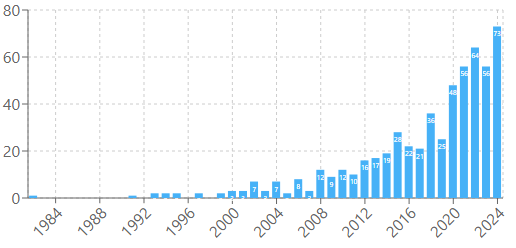
The publication trajectory can be split into three distinct stages of development. During the emergence phase (1982–2007), there weren’t many studies goings on; each year there were less than five publications. The rising number of publications starting from 2008, despite of a little fluctuating in 2016 – 2019, but it consistently growing to 2024. This was followed by a period of steady expansion (2008–2018), marked by consistent growth in research output. The field then entered a phase of accelerated growth (2019–2024), characterized by dramatic annual increases in publication volume. The field's remarkable expansion is particularly evident in the years 2019 and 2022, when the publication output for each year surpassed the cumulative total of the previous decade's research. There are several reasons behind the number of publications. Trend of exploitation instead of conservation existed before year 2000. Prior to the 2000s, field surveys and low-resolution satellite images were the only ways to keep an eye on mangroves. After 2000, many countries began to realize the role of mangroves in climate change mitigation through carbon sequestration (blue carbon). Mangrove restoration and rehabilitation programs were initiated, leading to an increase in research and publications related to mangrove conservation.
3.3 Most cited authors, documents, journals, affiliations, and countries
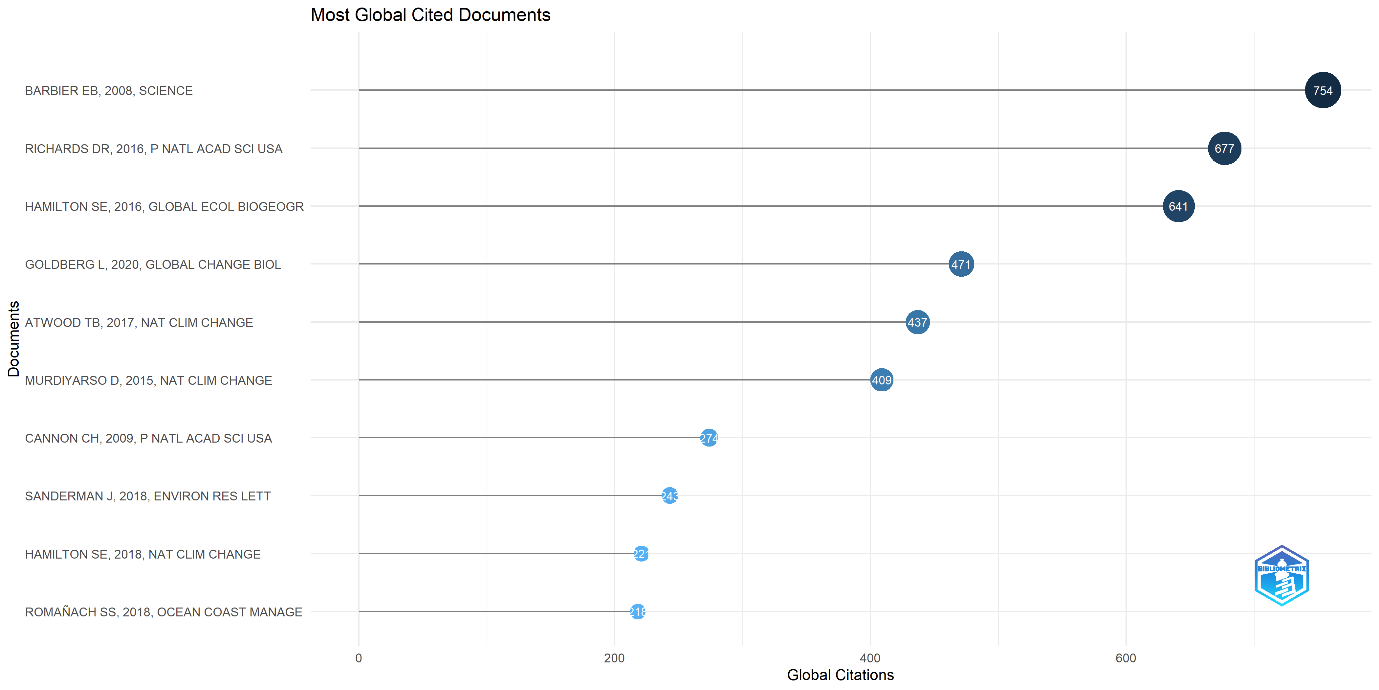
In bibliometric analysis, the most internationally cited documents are publications that have garnered the highest citation counts, signifying their impact on research within a discipline. Figure 2 presents the top 10 most cited documents related to mangrove conservation. The most cited publication is Barbier et al. (2008), Coastal Ecosystem-Based Management with Nonlinear Ecological Function and Values, published in science, with a total of 754 citations (TC). Other highly influential works include Richards & Friess (2016) (PNAS, 677 citations), (Hamilton & Casey, 2016) (Global Ecology and Biogeography, 641 citations), and Goldberg et al. (2020) (Global Change Biology, 471 citations). The high citation count of these documents reflects their significant contributions to mangrove conservation, coastal ecosystem management, and climate change mitigation, and carbon sequestration research.
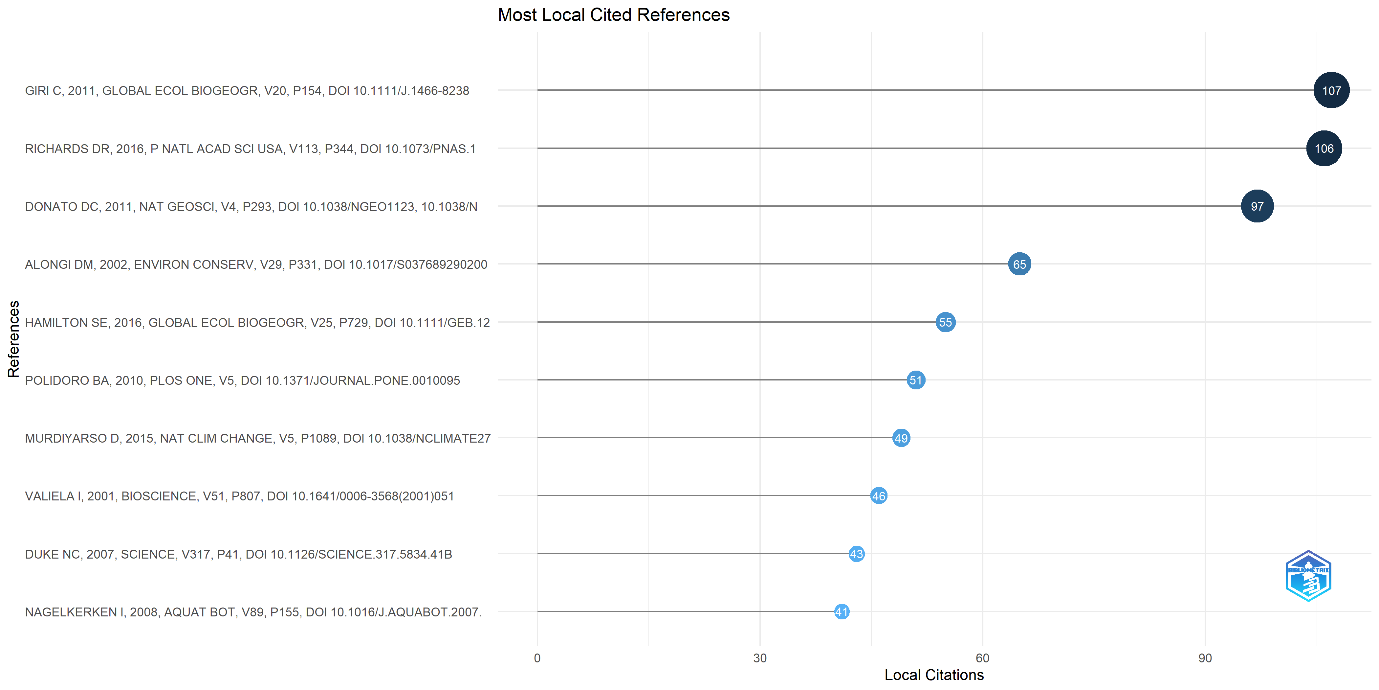
In addition, Figure 3 shows the most locally cited references, referring to documents frequently cited within the dataset used in this study. The most local cited document is Giri et al. (2011), Global Ecology and Biogeography, with 107 citations, followed by Richards & Friess (2016) (PNAS, 100 citations) and (Alongi, 2002) (Environmental Conservation, 87 citations). These references serve as foundational studies within the mangrove research community, influencing local research directions and thematic evolution in the field.
Both Figures 2 and 3 compared how research documents influence the broader academic community versus their specific research field. For example, Barbier et al. (2008), which is highly cited globally, is a seminal work because it set important guidelines for coastal ecosystem management. It has had a big impact on conservation policies and scientific study around the world. In contrast, Giri et al. (2011), the most locally cited study, made a major contribution to mangrove mapping by providing a comprehensive global dataset of mangrove distribution, which has become a key reference for ecological and remote sensing research.
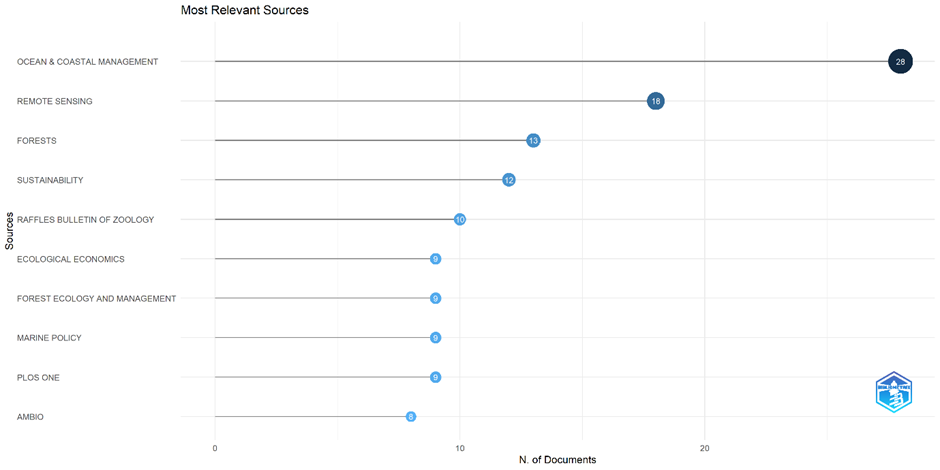
Coming to the most Relevant Sources (Journals), Figure 4 highlights the most relevant journals publishing research on mangrove conservation. The top source is Ocean & Coastal Management, with 28 published documents, followed by Remote Sensing, Forests, and Sustainability. These journals play a crucial role in disseminating findings on mangrove ecosystems, conservation strategies, and their role in mitigating climate change.
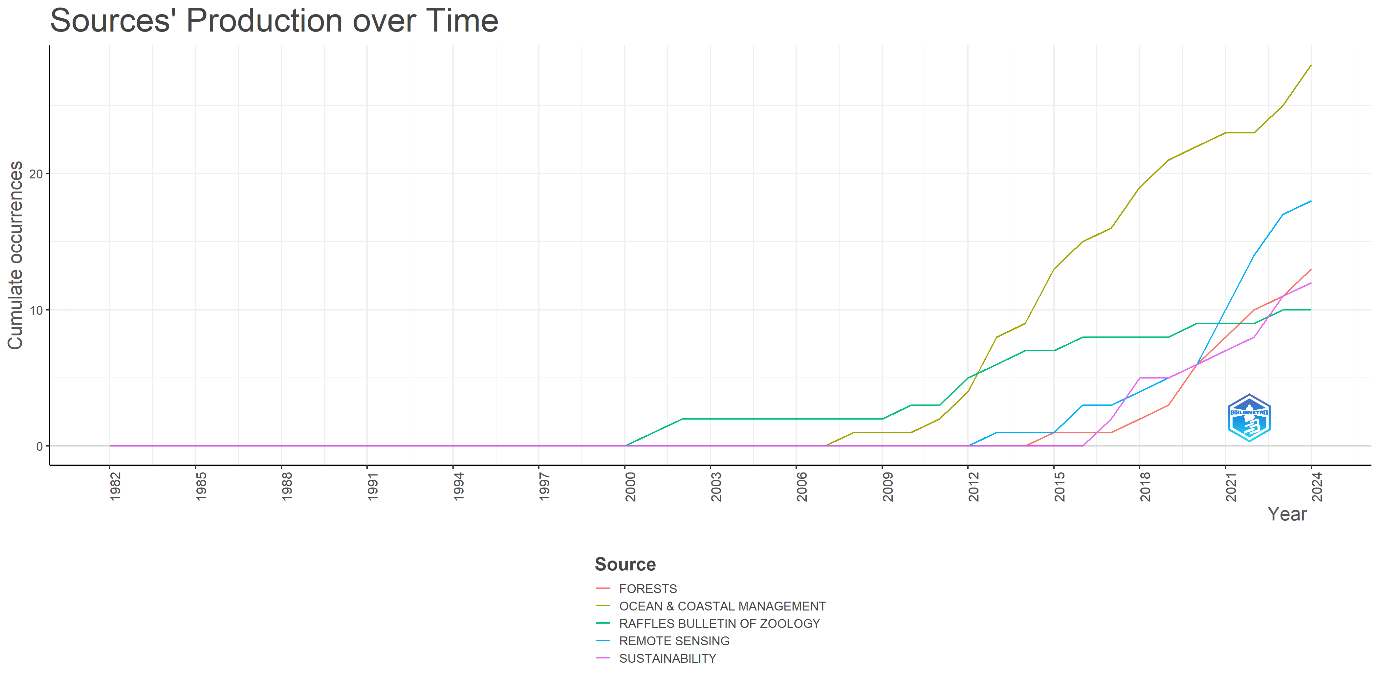
The result showed in Figure 4 also enhanced by the other result of journal’s production over time (Figure 5). Figure 5 illustrates the cumulative publication trends of the most relevant journals in mangrove conservation research over time. The data reveal a steady increase in publications from 2010 onwards, reflecting the growing scientific interest in this field. Forests and Ocean & Coastal Management been the most growth among the top producing journals, especially after 2015. It indicated that studies related to mangroves were becoming more important in the forestry and coastal management fields.
Other journals, like Remote Sensing, Sustainability, and the Raffles Bulletin of Zoology, are also going up. It shows that multidisciplinary approach is essential in mangrove research such combination of biodiversity conservation, ecological sustainability, and remote sensing technology. The variety of publication sources shows that protecting mangroves is connecting over many fields, including policy, sustainability management, and application of geospatial technology.
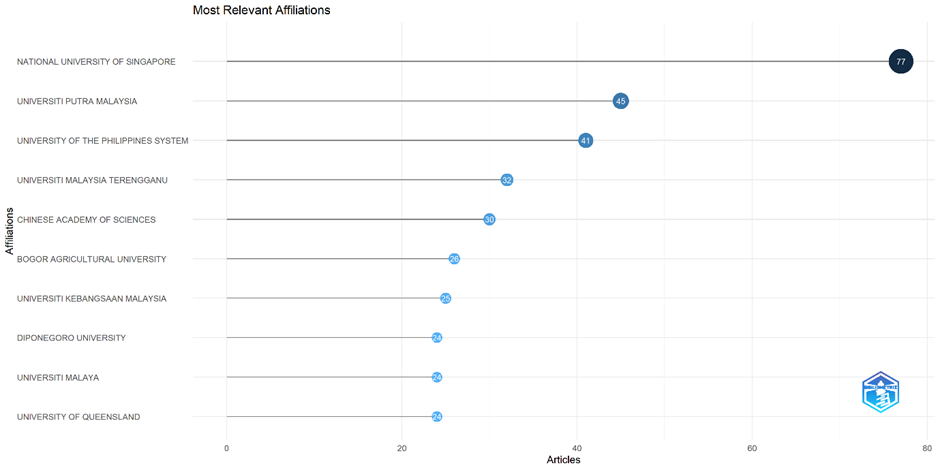
Most Relevant Affiliations (Universities and Research Institutions), Figure 6 displays the top 10 universities and research institutions contributing to mangrove conservation research. The National University of Singapore (NUS) leads with 77 published articles, followed by Universiti Putra Malaysia, the University of the Philippines System, and Universiti Malaysia Terengganu. The presence of Southeast Asian institutions at the top of mangrove conservation publications likely correlates with the ecological significance of Southeast Asia as a center of mangrove biodiversity. Moreover, additional significant contributors such as the Chinese Academy of Sciences and the University of Queensland, thereby strengthening global collaborative initiatives in mangrove conservation research.
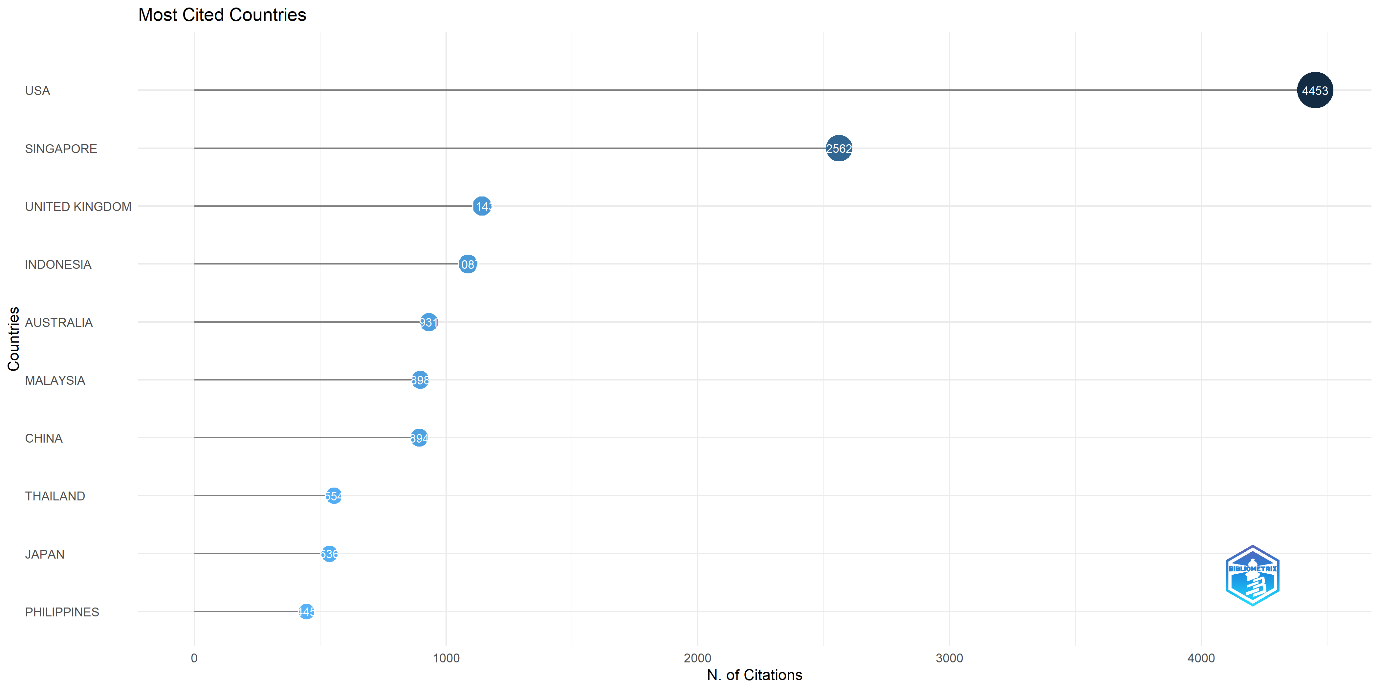
From a country-level perspective, the Southeast Asia countries including Singapore (ranked second), Indonesia, Malaysia, Thailand, and Philippines appeared among the top 10 Most Cited Countries, indicating their strong involvement in mangrove conservation research (Figure 7). The United States, on the other hand, has the most citations (4,453) in mangrove conservation study, which shows how important it is for them to produce high-impact studies. At the same time, the UK, Australia, and China are also making big contributions to the world's knowledge. Overall, the results in Figure 7 indicated that a number of Asian countries has been actively engaged in decades to mangrove conservation research.
The pre-eminence of high-impact journals, globally respected institutions, and eminent research nations highlights the multidisciplinary character and expanding relevance of mangrove research in addressing world environmental problems.
3.4 Author performance analysis
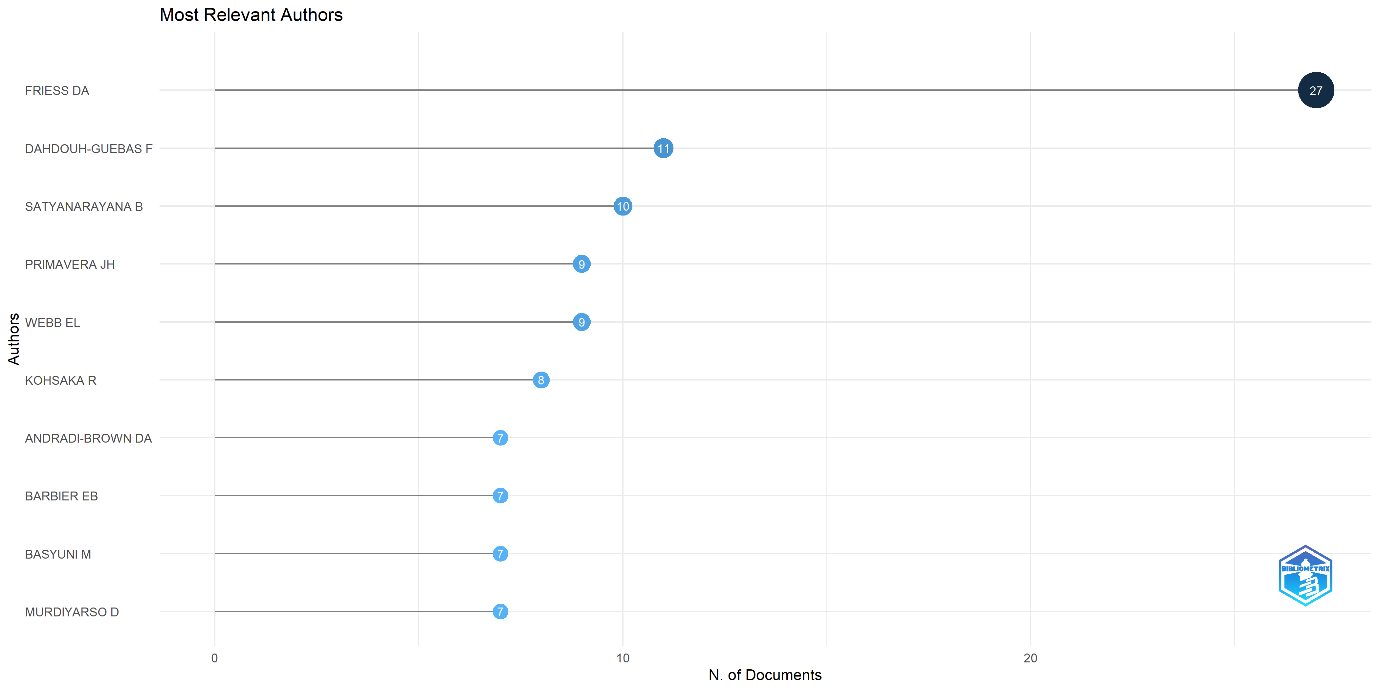
Figure 8 highlights the most prolific authors in mangrove conservation research. Friess DA (Tulane University, USA) leads with 27 publications, followed by Dahdouh-Guebas F and Satyanarayana B, both known for their contributions to mangrove ecology and conservation. Other notable authors include Barbier EB (ecosystem services), Murdiyarso D (blue carbon and climate change), as well as Primavera JH, Webb EL, and Kothawar R, whose works span restoration and policy.
These contributors reflect the interdisciplinary nature of mangrove research, bridging ecology, climate science, and environmental economics. Strong international collaboration—particularly between Southeast Asia, Europe, and other regions—underscores the global urgency to address coastal degradation, climate change, and biodiversity loss. The findings also identify key thought leaders, providing a foundation for future research directions and collaborative opportunities in mangrove conservation.
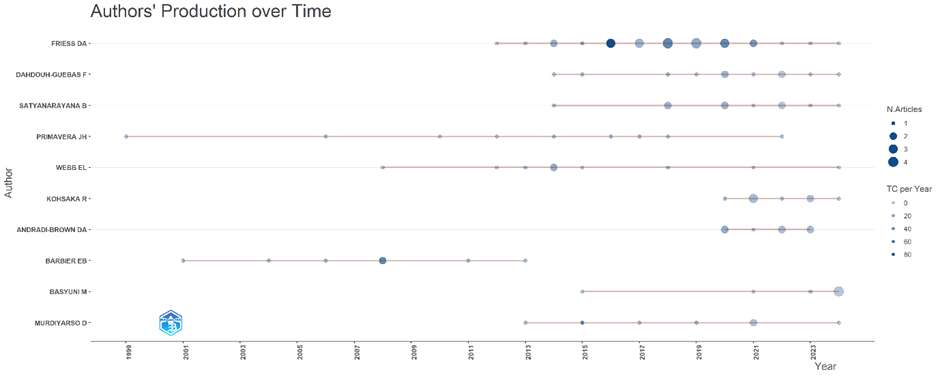
Stumble upon the trends in author productivity, Figure 9 reveals the publication activity of the most relevant authors in mangrove conservation research over time. This is based on the variation in the number of articles published (symbolized by dot size) from year to year by each author. The visualization results reveal that Friess DA is one of the most active researchers and shows consistent contributions to the field over the years especially after 2011 to present. Looking at the timeline, authors Primavera JH and Webb EL have contributed for more than two decades. The variation in publication and its frequency among authors suggests a mix of long-term and new contributors on this field, reflecting the dynamic and regenerative nature of mangrove conservation studies, the evolution of research contributions, and their ongoing efforts to advance mangrove conservation science.
3.5 Global Collaboration Networks in Mangrove Conservation Research
To examine patterns of scientific collaboration in mangrove conservation research, we analysed co-authorship networks at the international level. Figure 10 presents a network visualization of international collaborations, mapping countries with a minimum of five publications. Around 27 nations within the network are color-coded according to normalized citation rates and collaborative relationships. The node size in Figure 10 reflects the total link strength which offered insights into the intensity of international collaboration. This resulted in five distinct clusters that signify internal collaboration patterns among specific groups of countries. Indonesia appeared as a pivotal collaboration centre in Southeast Asia, establishing robust research networks with Malaysia, Singapore, the Philippines, and Vietnam. Furthermore, the USA, England, Australia, China, and Japan are prominent collaborators. The intricate relationships within the network suggest that mangrove conservation is a collaborative study field, engaging numerous countries in a joint effort to tackle urgent environmental issues.
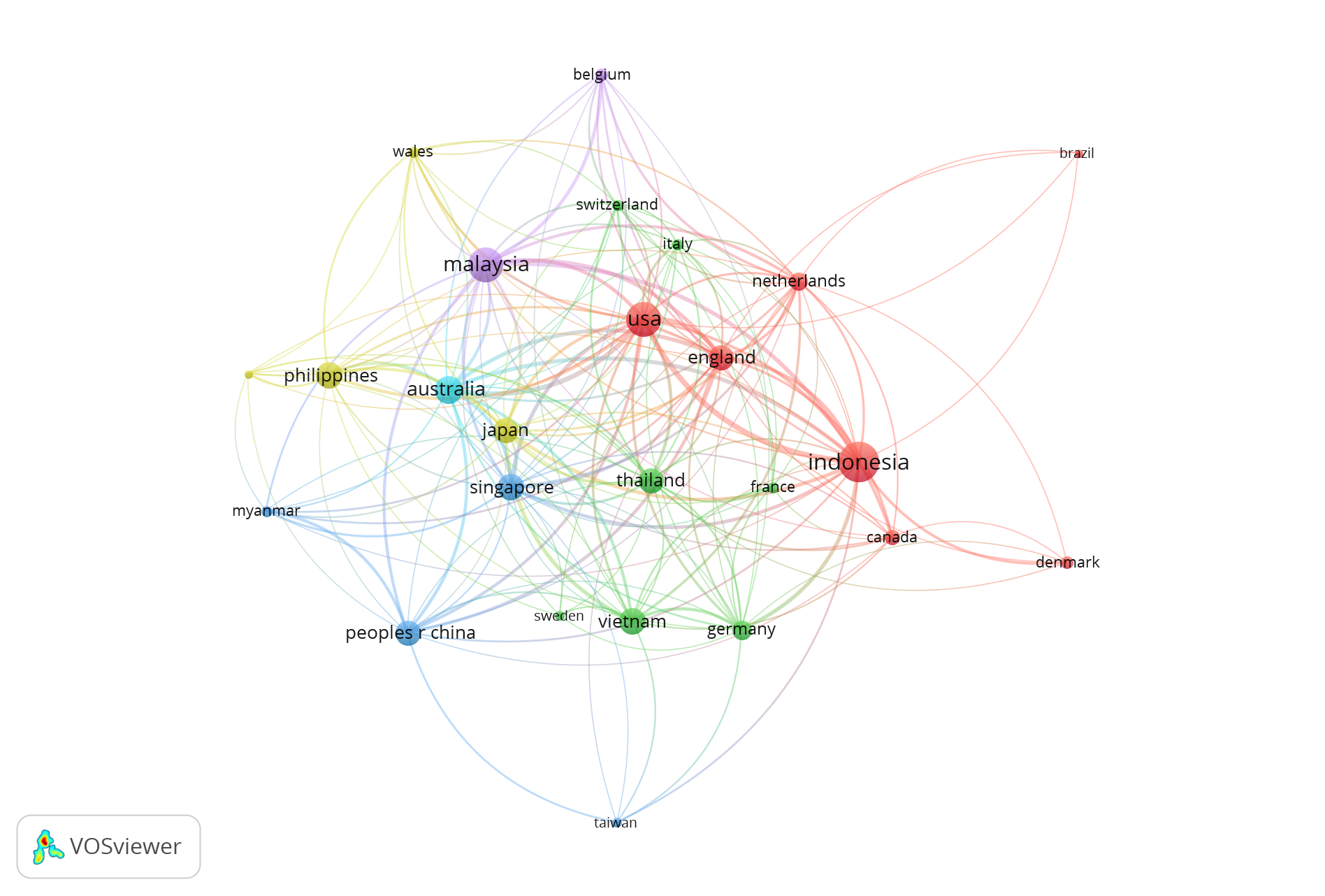
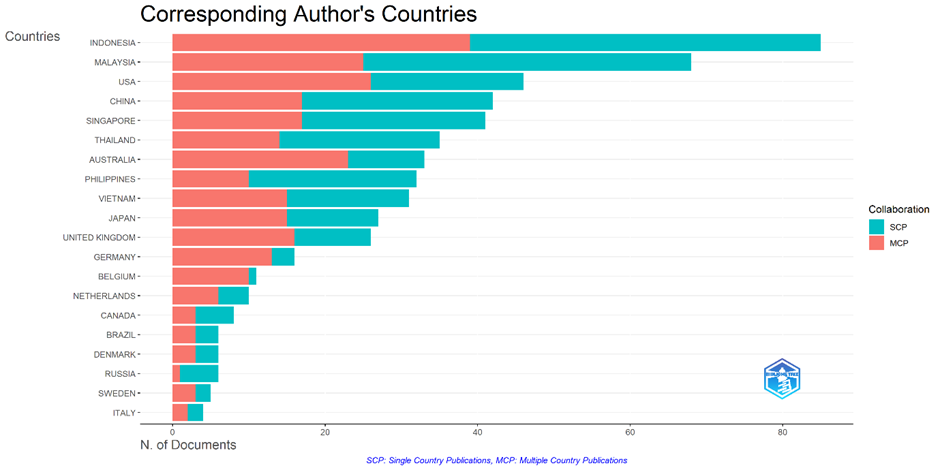
Figure 11 illustrates the distribution of corresponding authors' countries by distinguishing the collaboration type, Single Country Publications (SCP) and Multiple Country Publications (MCP). This visualization provides insights into which countries actively involve in mangrove conservation research, update the research publication, and how actively engage in international collaborations.
Indonesia leads in the total number of publications, with a slightly greater on SCP than MCP, stating a strong domestic collaboration. Malaysia, the USA, and China followed by showing a balance between single-country and multi-country collaborations. Meanwhile, Singapore, Australia, and the United Kingdom demonstrated higher MCP proportions, reflecting their active participation in international research networks. Refers to previous study using bibliometric analysis (Tsilika, 2023), these results show that Indonesia could increase its scientific influence by expanding international collaborations. This trend also fits with country's co-authorship network result in Figure 10 that showed countries such as Indonesia, Malaysia, and other Southeast Asian countries play a big role in mangrove conservation research.
3.6 Universities and countries performance analysis
In terms of publication output, Indonesia leads the field with 131 published documents, surpassing all other nations (Table 2). However, despite having the highest number of publications, Indonesia’s total citation (2,014) is still lower than that of the USA and Australia (with 3rd rank in citation impact and link strength, highlighting its influential role in global mangrove). It is indicating a need to further boost up the international visibility of Indonesia's publications. The high research productivity in Indonesia, Malaysia, Vietnam, and the Philippines aligns with the ecological importance of mangroves in the region, which drives local and regional research efforts.
Among other highly productive nations, Malaysia (97 publications, 1,685 citations), Singapore (58 publications, 3,274 citations), England (53 publications, 2,441 citations), and Japan (52 publications, 1,214 citations) have reflected the international engagement in mangrove ecosystem studies beyond Southeast Asia.
| Country | Documents | Citations | Total link strength |
|---|---|---|---|
| USA | 97 | 6295 | 145 |
| INDONESIA | 131 | 2014 | 118 |
| AUSTRALIA | 64 | 3587 | 103 |
| ENGLAND | 53 | 2441 | 102 |
| MALAYSIA | 97 | 1685 | 98 |
| SINGAPORE | 58 | 3274 | 77 |
| JAPAN | 52 | 1214 | 73 |
| NETHERLANDS | 27 | 986 | 58 |
| PEOPLES R CHINA | 51 | 1257 | 55 |
| VIETNAM | 60 | 822 | 54 |
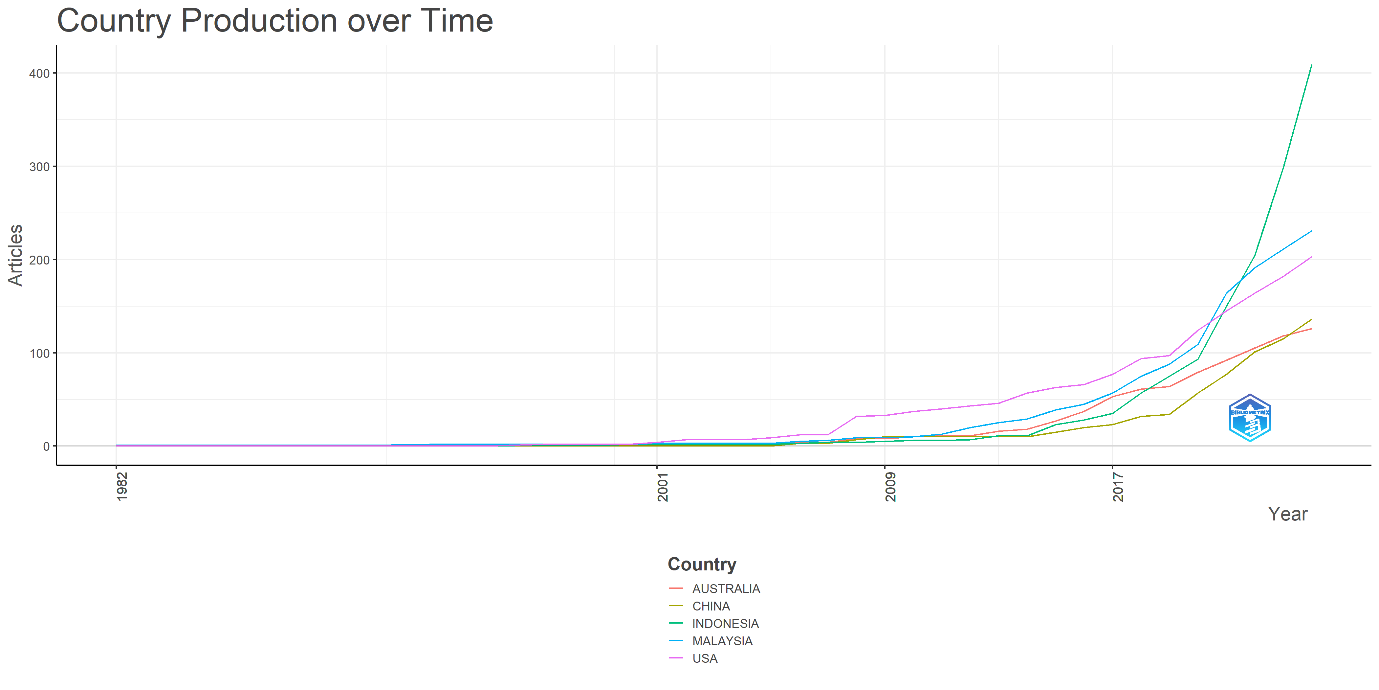
The temporal evolution of country-level research output is depicted in Figure 12, showing a sharp increase in mangrove-related publications after 2010, particularly in Indonesia, Australia, China, and Malaysia. This trend reflects the growing global attention to mangrove conservation, driven by climate change mitigation efforts, blue carbon initiatives, and biodiversity conservation policies.
3.7 Keyword Co-Occurrence Analysis
Keyword co-occurrence analysis is an important bibliometric technique for identifying key topics, research trends, and conceptual structures within a scientific area. This approach sheds light on the principal focal areas and changing research trends in mangrove conservation by analysing frequently occurring terms.
Figure 13a depicts the most relevant keywords found in the bibliometric dataset, with node sizes denoting the frequency of keyword occurrences. "Conservation" is the most commonly used keyword, appearing 182 times, demonstrating the essential importance of mangrove conservation efforts in scholarly discourse. "Management" (78 occurrences) and "forests" are also common terms, stressing the relationship between mangrove ecosystems, sustainable resource use, and conservation efforts.
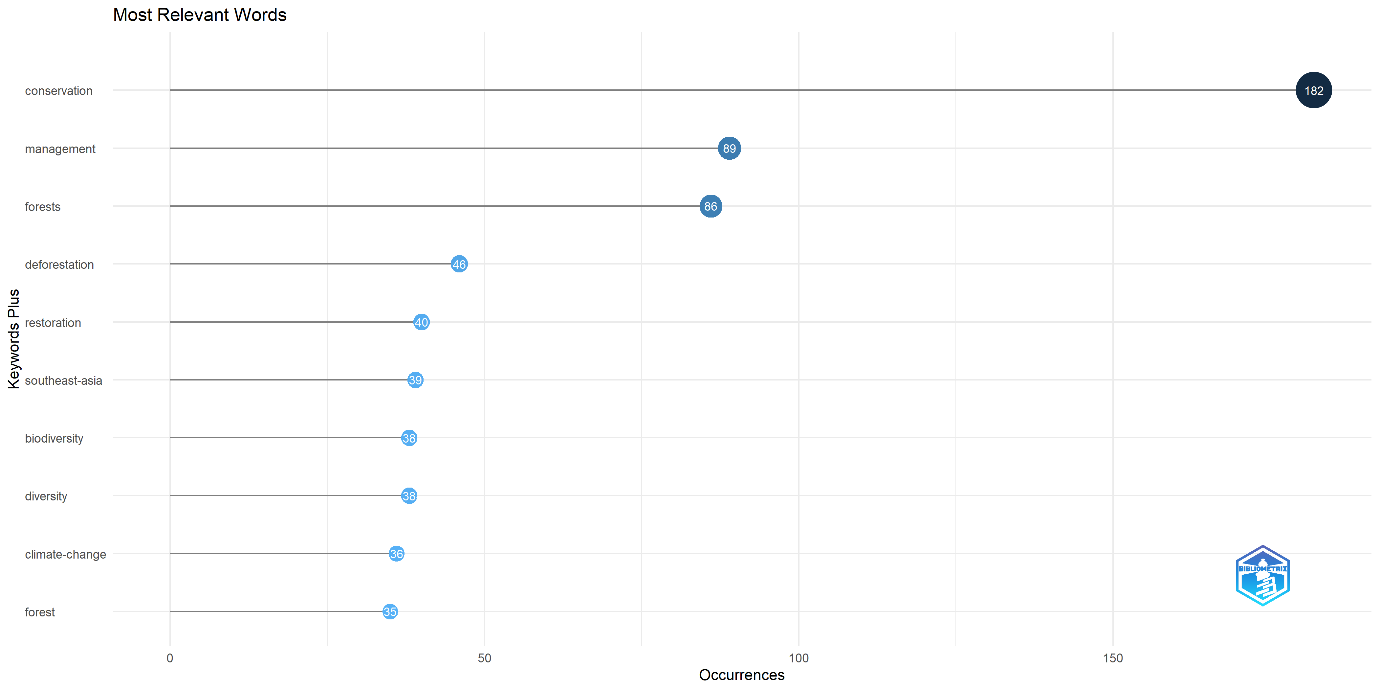
Also, words such as "deforestation," "restoration," and "biodiversity" are frequently used. Thus, it implies that people are still worried about the destruction of mangroves and the need for restoration initiatives. Since "climate change" is one of the top keywords, so mangrove forests are becoming highly recognized as important blue carbon sinks and being an essential part to combat climate change. Also, due to the world's largest and most diverse mangrove forests are in Southeast Asia then the word "Southeast Asia" is often used.
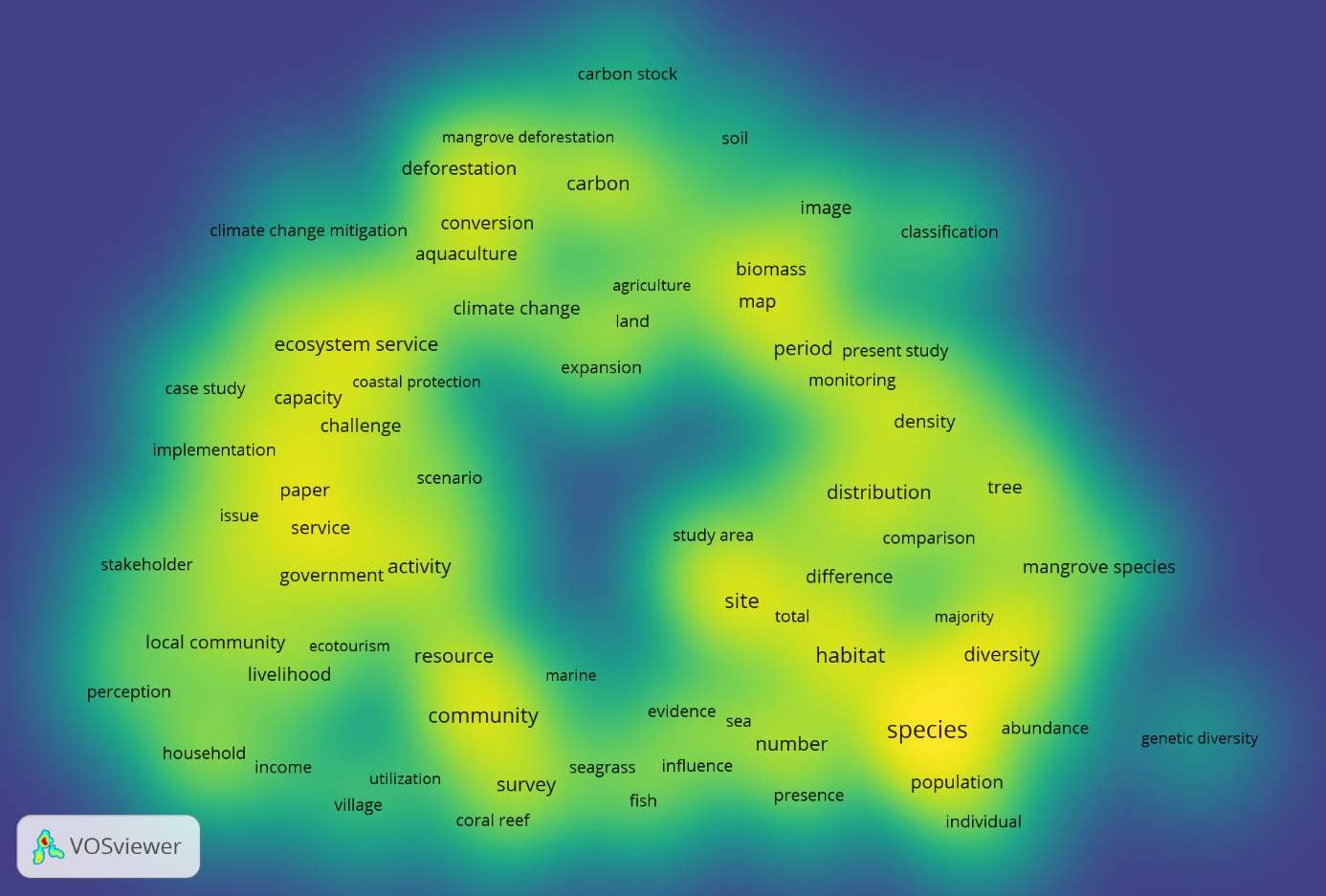
It should be noted that socio-economic and community-related aspects do not explicitly appear among the keywords in Figure 13a, as this figure is devoted to the most frequently occurring terms in the bibliometric dataset. Consequently, keywords related to livelihoods, local communities, governance, and stakeholder engagement fall outside the top-ranked list due to their relatively lower individual frequencies. However, this does not imply the absence or marginal importance of socio-economic dimensions within mangrove research.
Referring to Figure 13b, a more comprehensive examination using keyword co-occurrence and density visualization, the social economics aspect emerged in the analysis results based on the density analysis. Socio-economic related keywords, such as Community, local community, livelihood, ecotourism, household, income, and village, appeared in the density map. although they occur in comparatively lower-density zones than the dominant biophysical hotspots. The highest-density areas are concentrated around biodiversity/ecology terms (e.g., species, population, diversity, habitat) and carbon/land-use change framings (e.g., carbon, climate change, deforestation, conversion, aquaculture). Overall, the contrast between frequency-based rankings (Figure 13a) and density/co-occurrence patterns (Figure 13b) suggests that the field remains primarily driven by biophysical and climate-related agendas, while socio-economic dimensions are present in the retrieved corpus but tend to be less dominant and less consolidated—often appearing in relation to management implementation, conservation outcomes, and local-scale impacts. This pattern suggests that socio-economic dimensions are present within the retrieved corpus, yet remain less dominant and less consolidated than the core biophysical themes.
3.8 Mapping Journal Networks in Mangrove Conservation Studies
By mapping journal networks, it is possible to identify key sources, research clusters, thematic evolution of research, and interdisciplinary relationships that define the structure of mangrove conservation studies. Also, by examining these networks, we can determine which journals serve as the main drivers of scientific discourse on mangrove conservation and how different disciplines contribute to this body of research.
Table 3 shows the top mangrove conservation journals by publication count, citation impact, and total link strength. These publications are the primary sources for mangrove ecosystem management, conservation, biodiversity, and climate adaption research. Among the top-ranking journals, Remote Sensing emerges as the most influential, with 18 published documents, 462 citations, and the highest total link strength of 3,529. This highlights the increasing use of remote sensing technologies in mangrove monitoring, mapping, and assessment. Then it followed by Ocean & Coastal Management (with 28 documents and 1,093 citations), Forests (13 documents, 314 citations), Sustainability (12 documents, 342 citations), and Estuarine, Coastal and Shelf Science (9 documents, 336 citations) which emphasizing the multidisciplinary nature of mangrove conservation research and reflecting the importance of policy-driven conservation for sustainable coastal ecosystem management. Moreover, journal such as Ecological Economics also emphasize the interdisciplinary discussions which linking mangrove conservation to broader themes such as socio-economic impacts.
| Journal | Documents | Citations | Total link strength |
|---|---|---|---|
| Remote Sensing | 18 | 462 | 3529 |
| Ocean & Coastal Management | 28 | 1093 | 2687 |
| Forest | 13 | 182 | 1891 |
| Forest Ecology & Management | 9 | 314 | 1642 |
| Sustainability | 12 | 131 | 1479 |
| Estuarine Coastal & Shelf Science | 8 | 462 | 1440 |
| Plos One | 9 | 362 | 1409 |
| Frontiers in Forest and Global Change | 5 | 63 | 1323 |
| Science of the Total Environment | 6 | 215 | 1185 |
| Marine Policy | 9 | 121 | 1165 |
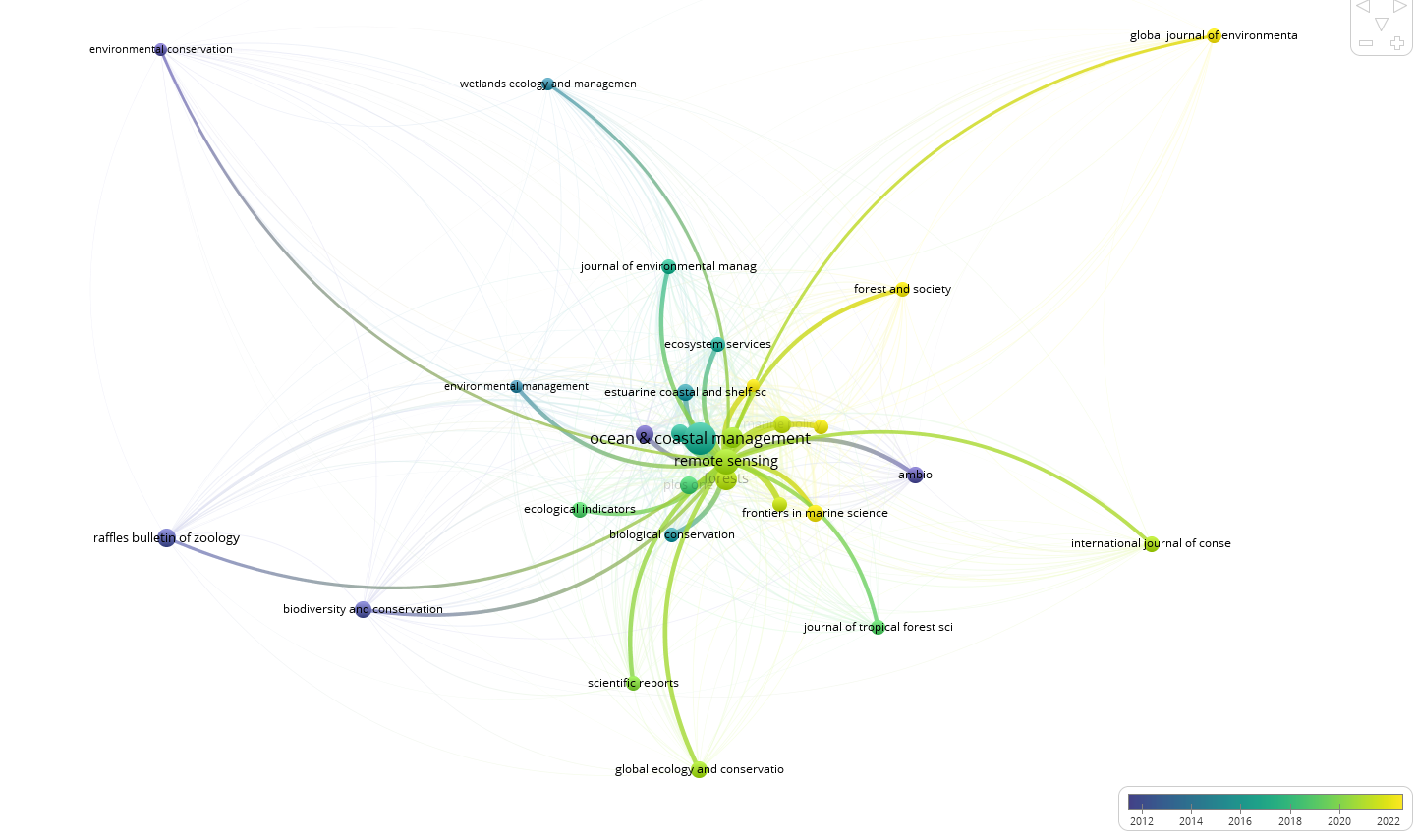
The co-citation network in Figure 14 illustrates the interconnections between journals in mangrove conservation research, highlighting how different publication sources are frequently cited together in other studies. This network allows for the identification of key research hubs and emerging interdisciplinary collaborations based on citation patterns over time. In a co-citation network visualization, the size and proximity of the nodes convey important bibliometric relationships.
In line with results in Table 3, the most prominent journals in mangrove conservation as shown in Figure 14 are Ocean & Coastal Management and Remote Sensing. Ocean & Coastal Management and Remote Sensing again were seen as major centres in mangrove conservation research, as they have extensive connections with other journals. Research published in Remote Sensing often use satellite imagery, spatial analysis, and remote sensing methodologies to assess mangrove dynamics and health, quantify carbon sequestration, and evaluate habitat degradation. The strong co-citation relationship between Remote Sensing and Ocean & Coastal Management indicates that mangrove monitoring based on geospatial data increasingly use as the basis on deriving coastal management policies. Its co-citation patterns suggest a strong scientific foundation for understanding ecosystem processes.
The evolution of journal networks over time, as depicted in Figure 14, reveals important trends in how mangrove conservation research has diversified across disciplines. lighter colours (yellow-green) indicate recent trends (over 2020), meaning journals such as International Journal of Conservation, Forest and Society, Frontiers in marine Science, Global Ecology and Conservation, and Global Journal of Environmental Ecology are becoming increasingly relevant in current research.
3.9 Conceptual thematic map
3.9.1 Trend topics
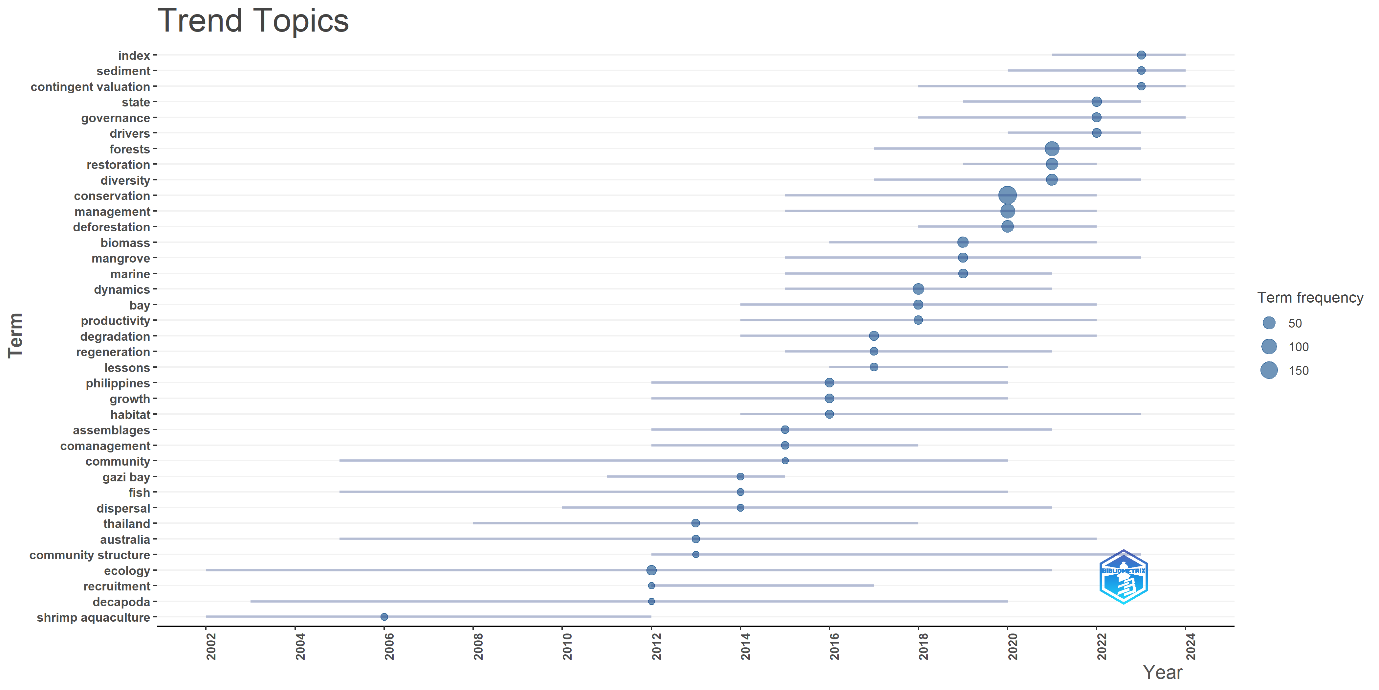
The topic trend in Figure 15 illustrates the development of research topics over the years. The topics that emerge correspond to the frequency of word occurrences in studies on mangroves and conservation. A higher frequency of word usage is represented by a larger blue circle, while newer terms appear further to the right in the diagram. From 2002 to 2010, only a few terms appeared, and their sizes were relatively small, indicating that research in this field was still limited. However, starting in 2012, there was a significant increase in the number of terms, suggesting a growing interest in this research area. In the early years, only a few dominant terms, such as ecology, recruitment, and shrimp aquaculture, were present. After 2016, however, various new terms emerged, reflecting a shift in research focus toward governance, conservation, restoration, and contingent valuation.
Early research primarily addressed ecological fundamentals such as community structure, population dynamics, and biomass. In contrast, the past decade has seen a shift toward conservation, restoration, and natural resource management, with increased use of governance-related terms post-2018, reflecting policy-oriented approaches. A notable rise in studies on ecosystem restoration since 2016 highlights growing concern over climate change and anthropogenic impacts.
While early studies (2002–2012) were geographically focused—e.g., Gazi Bay, the Philippines, Thailand, and Australia—research after 2016 adopted a more global scope, using broader terms like mangrove, forests, and marine dynamics. Moving forward, research is expected to embrace multidisciplinary approaches, integrating ecology, policy, economics, and technology, with growing emphasis on climate change impacts and mitigation in coastal ecosystems.
3.9.2 Thematic map
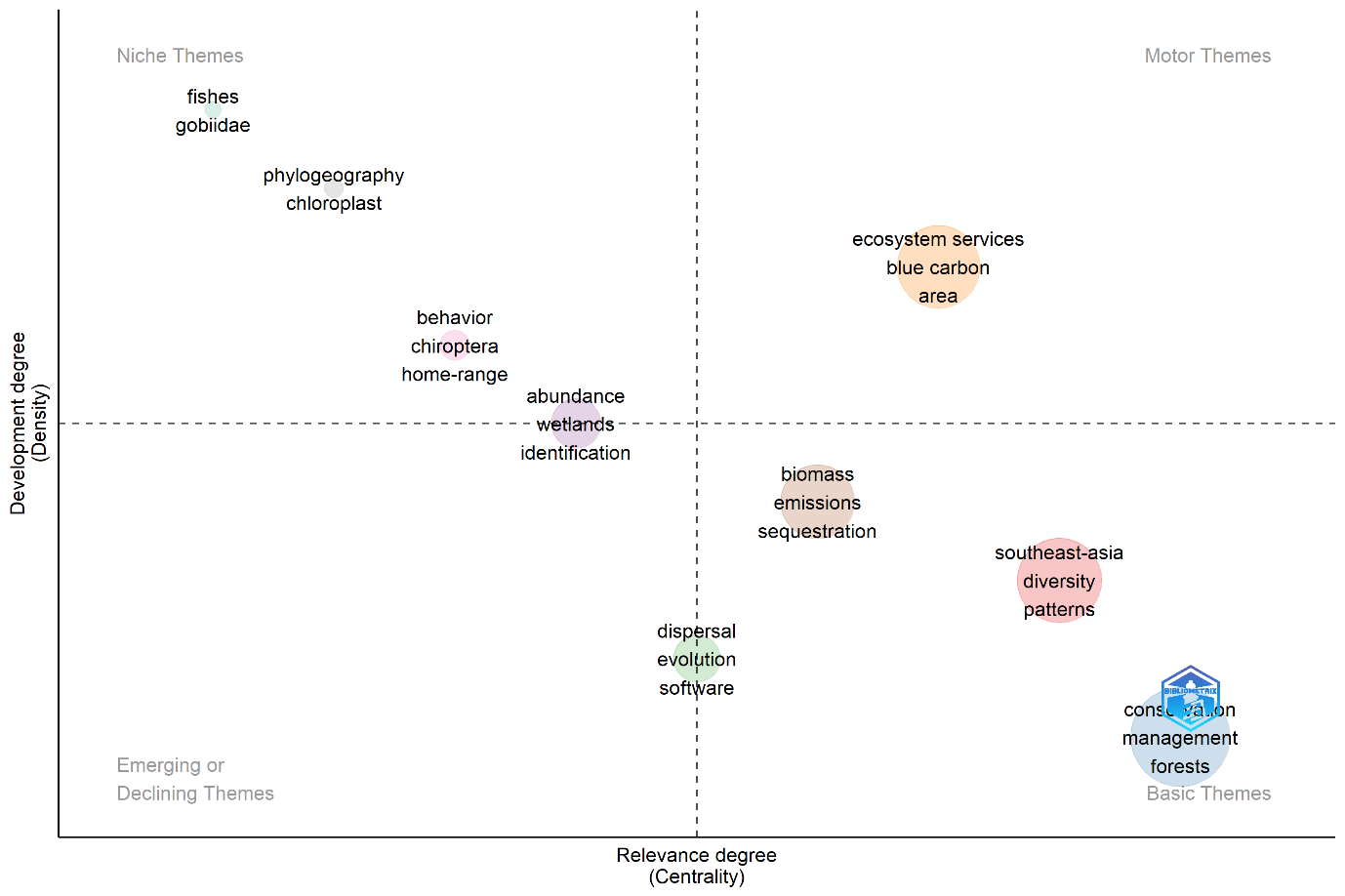
Thematic maps (Figure 16) visualize the conceptual structure of mangrove conservation research based on keyword co-occurrence. Themes are categorized in two main dimensions: (1) Centrality or Degree of Relevance on the horizontal axis (X) representing the extent to which a theme is connected to the broader research field; and (2) Density or Development Degree on the vertical axis (Y) indicating the maturity of a theme within the research community/ how internally developed and cohesive a theme is.
The upper-left quadrant (Niche Themes) contains specialized themes that are well-developed yet relatively isolated from broader research agenda. In Figure 16, this includes “fishes”, “Gobiidae”, “phylogeography”, and “chloroplasts”, suggesting specialized work on taxonomy and genetic/phylogeographic questions that is advancing within focused communities but still loosely integrated with broader conservation concerns.
The lower-left quadrant (Emerging or Declining Themes) includes themes with low centrality and low density, reflecting either early-stage topics or areas receiving diminishing attention in this corpus. To strengthen this research trajectory, more integrative and multidisciplinary approaches are needed to bridge fundamental themes—such as dispersal and evolution—with global challenges, including conservation management and ecosystem services.
The upper-right quadrant (Motor Themes) represents themes that are central and well developed. Figure 16 highlighted terms such as “ecosystem services”, “blue carbon”, and “area”, indicating increased number of mangrove studies shifted towards services-oriented and the role of mangrove ecosystems in climate change mitigation.
The lower-right quadrant (Basic and Transversal Themes) represents themes that are considered fundamental and cross-cutting, characterized by a low level of development but high centrality and relevance. In Figure 16, “conservation”, “management”, and “forests” appeared as core themes within this quadrant, indicating that while these topics are essential and widely relevant, their development remains relatively limited. Carbon-related terms (biomass, emissions, and sequestration) also fall in this quadrant, indicating that carbon dynamics are broadly significant across the field but less consolidated as a narrowly delimited thematic core than "blue carbon" and ecosystem services. Additionally, themes related to Southeast Asia, diversity, and patterns highlight the significance of biodiversity research in the Southeast Asian region, recognized as a global biodiversity hotspot.
The positioning of conservation, management, and forest as basic themes suggests that these topics is consistent with the need for stronger conceptual integration between ecological objectives and governance and community–environment contexts. Nevertheless, an acknowledgement of sociocultural dimensions (e.g., indigenous/local knowledge, customary governance, livelihoods) should be discussed as an important integration agenda rather than assumed to be fully represented by the map, as bibliometric thematic maps reflect the visibility of keywords in the retrieved corpus, unless those terms are explicitly included in the keyword structure.
3.9.3 Thematic Evolution
Figure 17 presents a thematic evolution flowchart, illustrating changes and developments in mangrove and conservation research across three main periods: 1982–2010, 2011–2020, and 2021–2024. The periodization reflects the observed growth in publication volume after the early 2010s and enables comparison between earlier foundations, mid-period expansion, and the most recent research.
During 1982–2010, mangrove and conservation research primarily focused on ecosystem descriptive and management concerns. Thirteen themes emerged, centred on mangrove ecosystems, coastal land, and natural resource conservation. Dominant keywords included mangrove, land, growth, conservation, co-management, assemblages, dispersal, shrimp aquaculture, reflecting early attention to ecosystem dynamics, coastal change, and the impact of aquaculture.
The 2011–2020 period marked a thematic broadening and diversification of themes (17 identified) which a shift toward quantitative methods. Research expanded geographically (e.g., Kalimantan) and thematically, incorporating biomass, variability, and coastal habitats. The increased use of modelling and remote-sensing-driven approaches and a stronger linkage to ecosystem service framings suggested by keywords such as model, hyperspectral data, and services, alongside growing interest in coral reefs, ecological history, and sector composition. Notably, co-management continues to appear, indicating sustained attention to governance and collaborative management themes.
In 2021–2024, ten themes highlighted an increasing reliance on digital tools, pattern analysis, and biodiversity studies. Keywords such as conservation, forests, diversity, patterns, software, land cover, beta-diversity, and abundance illustrate a broader ecological focus and analysis-supported work. This period underscores the transition from descriptive and localized themes to data-driven approaches and landscape-scale ecological characterization, supported by computational tools.
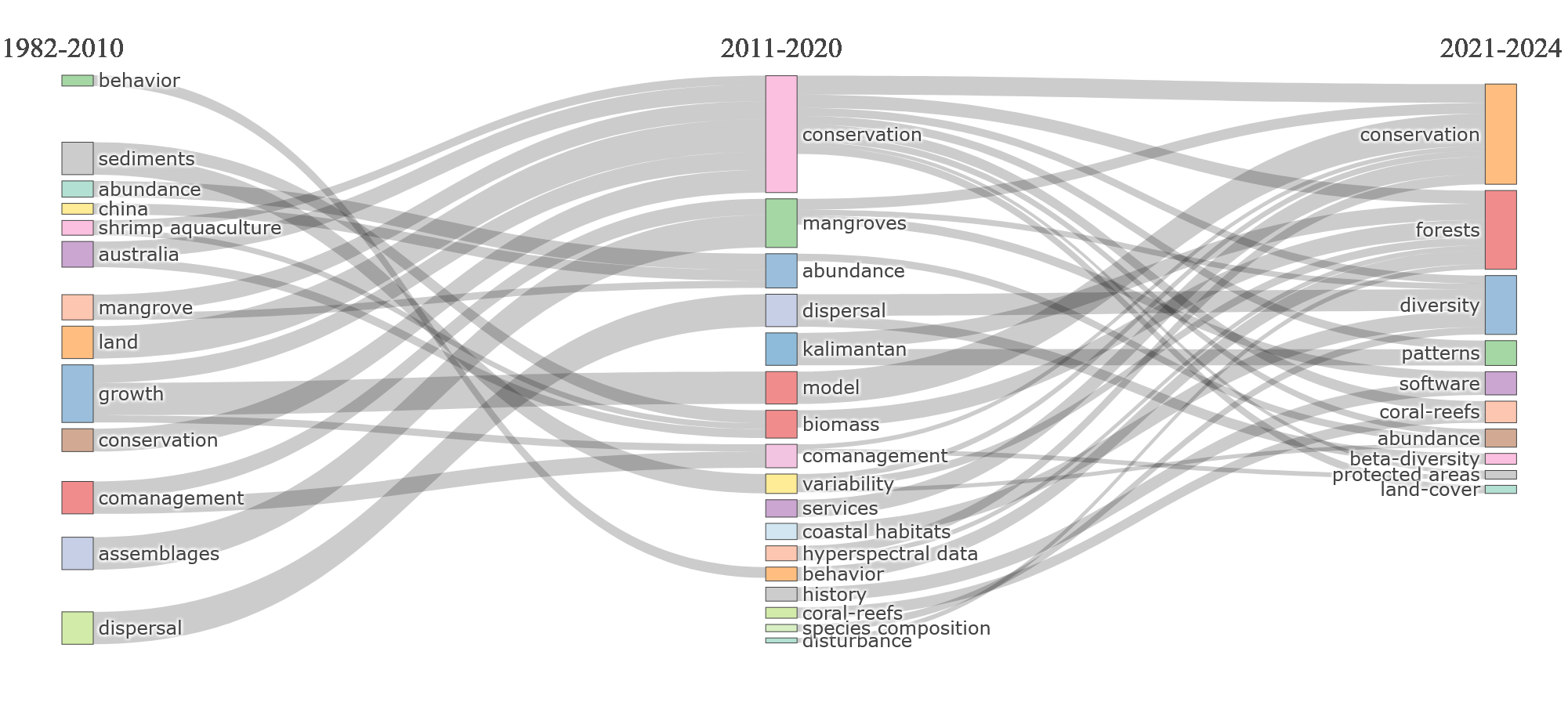
This bibliometric analysis reveals growing prevalence of service- and carbon-related framings throughout periods alongside increasing dependence on modelling, remote sensing, and software-supported analysis in recent years. Together, these findings suggest that future study will use more data-intensive and analytical at broader spatial scales. As a result, conservation research and practice will benefit from more explicitly interdisciplinary framing that connects ecological evidence with governance and community–environment dimensions—particularly where conservation implementation depends on local institutions and livelihoods. At the same time, the visibility of sociocultural themes in bibliometric outputs depends strongly on indexing practices and keyword choices within the retrieved corpus.
4. Discussions
4.1 Trends in mangrove conservation research in Southeast Asia over decades
The bibliometric results show that mangrove conservation research in Southeast Asia expanded markedly after 2010, following relatively low and intermittent output in earlier decades. This pattern is consistent with broader shifts in scientific and policy attention toward coastal ecosystem degradation and climate-related priorities, including the growing salience of carbon storage and ecosystem services in mangrove systems (Alongi, 2002; Malik et al., 2015). The increase in post-2010 publications also align with the wider availability of satellite data and spatial analytical tools, which enable rapid, large-scale mapping and monitoring of mangrove extent, condition, and restoration outcomes (Dharmawan et al., 2016; Jachowski et al., 2013; Proisy et al., 2018; Salmo et al., 2024). Importantly, the growth in research output should be interpreted alongside persistent implementation challenges in the region. Even as technological capacity and ecological understanding improve, evidence from Southeast Asia indicates that conservation effectiveness can be constrained by weak enforcement, conflicting land uses, and social contestation around access and benefits (Damastuti et al., 2022; Damastuti & de Groot, 2019; Datta et al., 2012). Therefore, the observed growth of the literature does not automatically imply improved on-the-ground outcomes; rather, it highlights the need to connect biophysical research expansion with governance and community–environment realities that shape conservation feasibility.
Addressing these gaps requires interdisciplinary approaches, integrating scientific insights, technological advancements, payment for ecosystem services, and participatory governance to foster sustainable management of Southeast Asia's mangrove ecosystems (Suhardi et al., 2024). Additionally, the most notable increase in publication output occurred after 2010, aligning with global environmental initiatives such as the Paris Agreement and the UN Sustainable Development Goals (SDGs), particularly Goal 14 (Life Below Water) and Goal 13 (Climate Action) (Dzebo et al., 2019; Recuero Virto, 2018). The growing emphasis on blue carbon has led to a surge in studies investigating mangrove restoration, carbon storage potential, and sustainable coastal management (Choudhary et al., 2024; Moritsch et al., 2021; Tang et al., 2018).
4.2 Disclosing the sociocultural gap in mangrove conservation research
Across the thematic map and keyword density patterns, community-oriented and socio-economic terms appear less visible than biophysical and management-related concepts within the retrieved corpus. The dimension, as depicted in Figure 16, has positioned terms of "conservation, management, and forests" appear as highly central basic themes, whereas community-related terms are not prominent within the core thematic structure. This finding is also corroborated by the keyword density analysis (Figure 13b) where terms such as local community, livelihood, ecotourism, household, income, and village appeared in low-density zones. Taken together with the limited emphasis on community-centred approaches in Section 3.7, these outputs suggest that sociocultural dimensions are not absent, but remain less consolidated and less central in the indexed keyword structure of Southeast Asian mangrove conservation research.
Two underdeveloped directions stand out. First, the role of indigenous and local knowledge systems and customary institutions in shaping conservation compliance and ecological outcomes is inconsistently represented in the indexed literature, despite the practical importance of local governance arrangements and long-term place-based knowledge (Kadaverugu et al., 2021; Loch & Riechers, 2021). Second, the distributional and livelihood consequences of conservation interventions remain comparatively under-examined, including whether restoration and protection initiatives improve welfare, restrict access, or generate inequitable benefit-sharing outcomes (Thompson & Friess, 2019). Prior studies indicate that conservation preferences and outcomes vary substantially depending on livelihood dependencies, reinforcing the importance of participatory processes and socially legitimate governance (Datta et al., 2012; Valenzuela et al., 2020).
At the same time, bibliometric results capture the visibility of themes within the retrieved dataset and may under-represent locally grounded knowledge documented in grey literature or non-indexed outlets. Accordingly, the “gap” identified here should be interpreted as a gap in indexed thematic visibility, which points to a clear agenda for future research: evaluating how community institutions, tenure security, participation, and benefit-sharing mechanisms interact with ecological restoration and management effectiveness (Damastuti et al., 2022; Damastuti & de Groot, 2019; Satyanarayana et al., 2013). Systematic comparative assessment of community-based approaches relative to state-led or NGO-driven initiatives remains limited in the peer-reviewed record, even though alignment with local institutional frameworks is often associated with higher compliance and improved ecological outcomes (Damastuti & de Groot, 2019; Satyanarayana et al., 2013). Future research should therefore prioritise the bidirectional relationship between mangrove ecosystems and island communities, recognising that durable conservation outcomes depend on social legitimacy alongside ecological integrity (Damastuti et al., 2022).
4.3 Scientific collaborations and thematic developments in mangrove conservation research
This bibliometric analysis highlights distinct patterns of scientific collaborations and thematic developments in mangrove conservation research, notably the emergence of regional and international research networks. At the regional level, Indonesia, Malaysia, and Singapore have established themselves as central hubs for mangrove conservation research within Southeast Asia, reflecting both their ecological significance and relatively stronger research capacity. International collaboration links—particularly with the USA, Australia, and China—suggest a sustained global research interest in Southeast Asian mangroves and the contribution of external partnerships to methodological capacity and monitoring efforts, including remote-sensing-supported assessments (Gerona-Daga & Salmo, 2022).
The coupling among leading journals also highlights interdisciplinary convergence in mangrove research. Ocean & Coastal Management stands out as the preeminent journal, strongly interconnected with multiple journals and thus serving as the primary research hub in coastal ecosystem management (Kongkeaw et al., 2019), conservation policies (Khan et al., 2020; Satyanarayana et al., 2013), and governance frameworks (Triyanti et al., 2017). Closely linked is Remote Sensing, reflecting the rising importance of spatial analysis and satellite-based monitoring in mangrove studies in decades (Giardino et al., 2015; Kuenzer et al., 2011; Win & Sasaki, 2024). Additionally, the journal Forests demonstrates significant coupling, emphasizing research on forest ecology including mangrove and its carbon sequestration (Mariano et al., 2022) to mangrove forest management strategies (Khan et al., 2024). The broader interdisciplinary journals such as Sustainability, Estuarine, Coastal and Shelf Science, and Science of the Total Environment reflect a notable trend toward integrated approaches, including ecosystem services valuation, climate resilience, and sustainable development strategies. This suggests increasing cross-disciplinary engagement spanning forest ecology, ecosystem services, climate-related risk, and sustainable development.
Nevertheless, research output remains uneven across the region. Countries with documented mangrove loss but lower publication presence—such as Brunei Darussalam and Timor-Leste—remain under-represented in indexed studies, which may reflect limited baseline data and constrained access to analytical infrastructure (Stankovic et al., 2023). Addressing this imbalance requires more inclusive regional collaboration, capacity building, and shared access to methods and data, alongside research designs that connect ecological measurement with governance conditions and community contexts that influence conservation implementation.
Finally, thematic evolution (Figure 17) indicates a shift from earlier ecosystem- and location-specific topics toward broader analytical emphases. In recent years, terms associated with computational and spatial approaches (e.g., model, hyperspectral data, software, land-cover, and patterns) become more visible alongside continued attention to conservation and biodiversity-related themes (conservation, forests, diversity, protected-areas, beta-diversity). Overall, these patterns suggest a field that is increasingly data-intensive and landscape-scale, reinforcing the value of interdisciplinary integration linking ecological evidence with governance and community–environment dynamics, particularly where local institutions and livelihoods shape conservation implementation.
Conclusion
Mangrove conservation research in Southeast Asia has expanded substantially over time, with the strongest growth occurring after 2010. The field increasingly emphasizes ecosystem services and carbon-related framings and shows rising reliance on modelling, remote sensing, and software-supported analyses. Collaboration networks highlight regional hubs—particularly Indonesia, Malaysia, and Singapore—alongside strong partnerships with institutions outside the region, reflecting continued global investment in Southeast Asian mangrove research.
Despite these advances, the bibliometric outputs suggest that sociocultural and community-centred dimensions remain less visible and less consolidated within the indexed corpus compared with dominant biophysical themes. Future progress therefore depends on more inclusive regional capacity-building and explicitly interdisciplinary research designs that connect ecological monitoring with local governance, tenure arrangements, participation, and equitable benefit-sharing. Strengthening these linkages is essential to ensure that conservation strategies are both ecologically effective and socially legitimate across Southeast Asia.
Funding
This research did not receive any specific grant from funding agencies in the public, commercial, or not-for-profit sectors.
References
- Abramo, G., D’Angelo, C.A., 2014. How do you define and measure research productivity?. Scientometrics 101(2): 1129–1144. https://doi.org/10.1007/s11192-014-1269-8
- Alongi, D.M., 2002. Present state and future of the world’s mangrove forests. Environmental Conservation 29(3): 331–349. https://doi.org/10.1017/S0376892902000231
- Alongi, D.M., 2014. Mangrove Ecosystems of Asia: 199–211. https://doi.org/10.1007/978-1-4614-8582-7
- Aria, M., Cuccurullo, C., 2017. Bibliometrix: An R-tool for comprehensive science mapping analysis. Journal of Informetric 11(4): 959–975. https://doi.org/10.1016/j.joi.2017.08.007
- Aslan, A., Rahman, A.F., Warren, M.W., Robeson, S.M., 2016. Mapping spatial distribution and biomass of coastal wetland vegetation in Indonesian Papua by combining active and passive remotely sensed data. Remote Sensing of Environment 183: 65–81. https://doi.org/10.1016/j.rse.2016.04.026
- Bakrin Sofawi, A., Rozainah, M.Z., Normaniza, O., Roslan, H., 2017. Mangrove rehabilitation on Carey Island, Malaysia: an evaluation of replanting techniques and sediment properties. Marine Biology Research 13(4): 390–401. https://doi.org/10.1080/17451000.2016.1267365
- Baloloy, A.B., 2020. Development and application of a new mangrove vegetation index (MVI) for. ISPRS Journal of Photogrammetry and Remote Sensing 166: 95–117. https://doi.org/10.1016/j.isprsjprs.2020.06.001
- Barbier, E.B., Koch, E.W., Silliman, B.R., Hacker, S.D., Wolanski, E., Primavera, J., Granek, E.F., Polasky, S., Aswani, S., Cramer, L.A., Stoms, D.M., Kennedy, C.J., Bael, D., Kappel, C.V., Perillo, G.M.E., Reed, D.J., 2008. Coastal ecosystem-based management with nonlinear ecological functions and values. Science 319(5861): 321–323. https://doi.org/10.1126/science.1150349
- Bornmann, L., Daniel, H.D., 2009. The luck of the referee draw: The effect of exchanging reviews. Learned Publishing 22(2): 117–125. https://doi.org/10.1087/2009207
- Brander, L.M., Wagtendonk, A.J., Hussain, S.S., McVittie, A., Verburg, P.H., de Groot, R.S., van der Ploeg, S., 2012. Ecosystem service values for mangroves in Southeast Asia: A meta-analysis and value transfer application. Ecosystem Services 1(1): 62–69. https://doi.org/10.1016/j.ecoser.2012.06.003
- Callon, M., Courtial, J.P., Turner, W.A., Bauin, S., 1983. From translations to problematic networks: An introduction to co-word analysis. Social Science Information 22(2): 191–235. https://doi.org/10.1177/053901883022002003
- Carugati, L., Gatto, B., Rastelli, E., Lo Martire, M., Coral, C., Greco, S., Danovaro, R., 2018. Impact of mangrove forests degradation on biodiversity and ecosystem functioning. Scientific Reports 8(1): 13298. https://doi.org/10.1038/s41598-018-31683-0
- Charoenlerkthawin, W., Bidorn, K., Burnett, W.C., Sopon, A., Otarawanna, S., Bidorn, B., 2024. Evaluating the effectiveness of mangrove rehabilitation: A novel approach for sustainable coastal management. Journal of Environmental Management 365: 121673. https://doi.org/10.1016/j.jenvman.2024.121673
- Choudhary, B., Dhar, V., Pawase, A.S., 2024. Blue carbon and the role of mangroves in carbon sequestration: Its mechanisms, estimation, human impacts and conservation strategies for economic incentives. Journal of Sea Research 199: 102504. https://doi.org/10.1016/j.seares.2024.102504
- Cobo, M.J., López-Herrera, A.G., Herrera-Viedma, E., Herrera, F., 2011. Science mapping software tools: Review, analysis, and cooperative study among tools. Journal of the American Society for Information Science and Technology 62(7): 1382–1402. https://doi.org/10.1002/asi.21525
- Damastuti, E, de Groot, R., Debrot, A. O., Silvius, M. J, 2022. Effectiveness of community-based mangrove management for biodiversity conservation: A case study from Central Java, Indonesia. Trees, Forests and People 7: 100202. https://doi.org/10.1016/j.tfp.2022.100202
- Damastuti, E., de Groot, R., 2019. Participatory ecosystem service mapping to enhance community-based mangrove rehabilitation and management in Demak, Indonesia. Regional Environmental Change 19(1): 65–78. https://doi.org/10.1007/s10113-018-1378-7
- Datta, D., Chattopadhyay, R.N., Guha, P., 2012. Community based mangrove management: A review on status and sustainability. Journal of Environmental Management 107: 84–95. https://doi.org/10.1016/j.jenvman.2012.04.013
- Dharmawan, B., Böcher, M., Krott, M., 2016. The failure of the mangrove conservation plan in Indonesia: Weak research and an ignorance of grassroots politics. Ocean & Coastal Management 130: 250–259. https://doi.org/10.1016/j.ocecoaman.2016.06.
- Donthu, N., Kumar, S., Mukherjee, D., Pandey, N., Lim, W.M., 2021. How to conduct a bibliometric analysis: An overview and guidelines. Journal of Business Research 133: 285–296. https://doi.org/10.1016/j.jbusres.2021.04.070
- Duke, N.C., Meynecke, J.-O., Dittmann, S., Ellison, A.M., Anger, K., Berger, U., Cannicci, S., Diele, K., Ewel, K.C., Field, C.D., Koedam, N., Lee, S.Y., Marchand, C., Nordhaus, I., Dahdouh-Guebas, F., 2007. A World Without Mangroves?. Science 317(5834): 41–42. https://doi.org/10.1126/science.317.5834.41b
- Dzebo, A., Janetschek, H., Brandi, C., Iacobuta, G., 2019. Connections between the Paris Agreement and the 2030 Agenda: The case for policy coherence. Stockholm Environment Institute, Stockholm. Available at: https://www.sei.org/publications/connections-between-the-paris-agreement-and-the-2030-agenda/Accessed 19 December 2025.
- Egghe, L., 2006. Theory and practise of the g-index. Scientometrics 69(1): 131–152. https://doi.org/10.1007/s11192-006-0144-7.
- Gandhi, S., Jones, T.G., 2019. Identifying Mangrove Deforestation Hotspots in South Asia, Southeast Asia and Asia-Pacific. Remote Sensing 11(6): 728. https://doi.org/10.3390/rs11060728
- Gerona-Daga, M.E.B., Salmo, S.G., 2022. A systematic review of mangrove restoration studies in Southeast Asia: Challenges and opportunities for the United Nation’s Decade on Ecosystem Restoration. Frontiers in Marine Science 9: 987737. https://doi.org/10.3389/fmars.2022.987737
- Giardino, C., Bresciani, M., Fava, F., Matta, E., Brando, V., Colombo, R., 2015. Mapping Submerged Habitats and Mangroves of Lampi Island Marine National Park (Myanmar) from in situ and satellite observations. Remote Sensing 8(1): 2. https://doi.org/10.3390/rs8010002
- Giri, C., Ochieng, E., Tieszen, L.L., Zhu, Z., Singh, A., Loveland, T., Masek, J., Duke, N., 2011. Status and distribution of mangrove forests of the world using earth observation satellite data. Global Ecology and Biogeography 20(1): 154–159. https://doi.org/10.1111/j.1466-8238.2010.00584.x
- Goldberg, L., Lagomasino, D., Thomas, N., Fatoyinbo, T., 2020. Global declines in human-driven mangrove loss. Global Change Biology 26(10): 5844–5855. https://doi.org/10.1111/gcb.15275
- Hamilton, S.E., Casey, D., 2016. Creation of a high spatio-temporal resolution global database of continuous mangrove forest cover for the 21st century (CGMFC-21). Global Ecology and Biogeography 25(6): 729–738. https://doi.org/10.1111/geb.12449
- Hernández-Blanco, M., Moritsch, M., Manrow, M., Raes, L., 2022. Coastal Ecosystem Services Modeling in Latin America to Guide Conservation and Restoration Strategies: The Case of Mangroves in Guatemala and El Salvador. Frontiers in Ecology and Evolution 10: 843145. https://doi.org/10.3389/fevo.2022.843145
- Hirsch, J.E., 2005. An index to quantify an individual’s scientific research output. Proc. Natl. Acad. Sci. U.S.A. 102(46): 16569–16572. http://www.pnas.orgcgidoi10.1073pnas.0507655102
- Ilman, M., Dargusch, P., Dart, P., Onrizal, 2016. A historical analysis of the drivers of loss and degradation of Indonesia’s mangroves. Land Use Policy 54: 448–459. https://doi.org/10.1016/j.landusepol.2016.03.010
- Jachowski, N.R.A., Quak, M.S.Y., Friess, D.A., Duangnamon, D., Webb, E.L., Ziegler, A.D., 2013. Mangrove biomass estimation in Southwest Thailand using machine learning. Applied Geography 45: 311–321. https://doi.org/10.1016/j.apgeog.2013.09.024
- Kadaverugu, R., Dhyani, S., Dasgupta, R., Kumar, P., Hashimoto, S., Pujari, P., 2021. Multiple values of Bhitarkanika mangroves for human well-being: synthesis of contemporary scientific knowledge for mainstreaming ecosystem services in policy planning. Journal of Coastal Conservation 25(2): 00819. https://doi.org/10.1007/s11852-021-00819-2
- Khan, M.F.A., Rahman, M.S., Giessen, L., 2020. Mangrove forest policy and management: Prevailing policy issues, actors’ public claims and informal interests in the Sundarbans of Bangladesh. Ocean & Coastal Management 186: 105090. https://doi.org/10.1016/j.ocecoaman.2019.105090
- Khan, W.R., Nazre, M., Akram, S., Anees, S.A., Mehmood, K., Ibrahim, F.H., Edrus, S.S.O. Al, Latiff, A., Fitri, Z.A., Yaseen, M., Li, P., Zhu, X., 2024. Assessing the Productivity of the Matang Mangrove Forest Reserve: Review of One of the Best-Managed Mangrove Forests. Forests 15(5): 747. https://doi.org/10.3390/f15050747
- Kongkeaw, C., Kittitornkool, J., Vandergeest, P., Kittiwatanawong, K., 2019. Explaining success in community-based mangrove management: Four coastal communities along the Andaman Sea, Thailand. Ocean & Coastal Management 178: 104822. https://doi.org/10.1016/j.ocecoaman.2019.104822
- Kuenzer, C., Bluemel, A., Gebhardt, S., Quoc, T.V., Dech, S., 2011. Remote Sensing of Mangrove Ecosystems: A Review. Remote Sensing 3(5): 878–928. https://doi.org/10.3390/rs3050878
- Kwan, V., Friess, D.A., Sarira, T.V., 2025. Permanence risks limit blue carbon financing strategies to safeguard Southeast Asian mangroves. Communications Earth & Environment: 1–8. https://doi.org/10.1038/s43247-025-02035-4
- Loch, T.K., Riechers, M., 2021. Integrating indigenous and local knowledge in management and research on coastal ecosystems in the Global South: A literature review. Ocean & Coastal Management 212: 105821. https://doi.org/10.1016/j.ocecoaman.2021.105821
- Lovelock, C.E., Ellison, J., 2007. Vulnerability of mangroves and tidal wetlands of the Great Barrier Reef to climate change, in: Johnson, J., Marshall, P. (Eds.), Climate Change and the Great Barrier Reef: A Vulnerability Assessment. Great Barrier Reef Marine Park Authority and Australian Greenhouse Office, pp. ta237-269. https://hdl.handle.net/11017/542
- Malik, A., Fensholt, R., Mertz, O., 2015. Mangrove exploitation effects on biodiversity and ecosystem services. Biodiversity and Conservation 24(14): 3543–3557. https://doi.org/10.1007/s10531-015-1015-4
- Mariano, H., Aguilos, M., Dagoc, F.L., Sumalinab, B., Amparado, R., 2022. Abandoned Fishpond Reversal to Mangrove Forest: Will the Carbon Storage Potential Match the Natural Stand 30 Years after Reforestation?. Forests 13(6): 0847. https://doi.org/10.3390/f13060847
- Mejia, C., Wu, M., Zhang, Y., Kajikawa, Y., 2021. Exploring Topics in Bibliometric Research Through Citation Networks and Semantic Analysis. Frontiers in Research Metrics and Analytics 6: 742311. https://doi.org/10.3389/frma.2021.742311
- Moritsch, M.M., Young, M., Carnell, P., Macreadie, P.I., Lovelock, C., Nicholson, E., Raimondi, P.T., Wedding, L.M., Ierodiaconou, D., 2021. Estimating blue carbon sequestration under coastal management scenarios. Science of the Total Environment 777: 145962. https://doi.org/10.1016/j.scitotenv.2021.145962
- Ong, J.E., 1982. Mangroves and aquaculture in Malaysia. Ambio 11(5): 252–257.
- Prayudha, B., Ulumuddin, Y.I., Siregar, V., Suyarso, Agus, S.B., Prasetyo, L.B., Suyadi, Avianto, P., Ramadhani, M.R., 2024. Enhanced mangrove index: A spectral index for discrimination understorey, nypa, and mangrove trees. MethodsX 12: 102778. https://doi.org/10.1016/j.mex.2024.102778
- Proisy, C., Viennois, G., Sidik, F., Andayani, A., Enright, J.A., Guitet, S., Gusmawati, N., Lemonnier, H., Muthusankar, G., Olagoke, A., Prosperi, J., Rahmania, R., Ricout, A., Soulard, B., Suhardjono, 2018. Monitoring mangrove forests after aquaculture abandonment using time series of very high spatial resolution satellite images: A case study from the Perancak estuary, Bali, Indonesia. Marine Pollution Bulletin 131: 61–71. https://doi.org/10.1016/j.marpolbul.2017.05.056
- Quevedo, J.M.D., Lukman, K.M., Ulumuddin, Y.I., Uchiyama, Y., Kohsaka, R., 2023. Applying the DPSIR framework to qualitatively assess the globally important mangrove ecosystems of Indonesia: A review towards evidence-based policymaking approaches. Marine Policy 147: 105354. https://doi.org/10.1016/j.marpol.2022.105354
- Recuero Virto, L., 2018. A preliminary assessment of the indicators for Sustainable Development Goal (SDG) 14 Conserve and sustainably use the oceans, seas and marine resources for sustainable development. Marine Policy 98: 47–57. https://doi.org/10.1016/j.marpol.2018.08.036
- Richards, D.R., Friess, D.A., 2016. Rates and drivers of mangrove deforestation in Southeast Asia, 2000–2012. Proceedings of the National Academy of Sciences of the United States of America 113(2): 344–349. https://doi.org/10.1073/pnas.
- Salmo, S.G.III., Manalo, S.P.B., Jacob, P.B., Gerona-Daga, M.E.B., Naputo, C.F.P., Maramag, M.W.A., Basyuni, M., Sidik, F., MacKenzie, R., 2024. Improving soil carbon estimates of Philippine mangroves using localized organic matter to organic carbon equations. Carbon Balance and Management 19(31): 1-12. https://doi.org/10.1186/s13021-024-00276-y
- Satyanarayana, B., Mulder, S., Jayatissa, L.P., Dahdouh-Guebas, F., 2013. Are the mangroves in the Galle-Unawatuna area (Sri Lanka) at risk? A social-ecological approach involving local stakeholders for a better conservation policy. Ocean & Coastal Management 71: 225–237. https://doi.org/10.1016/j.ocecoaman.2012.10.008
- Sofue, Y., Quevedo, J.M.D., Lukman, K.M., Kohsaka, R., 2025. Identifying changes in mangrove landscapes in the Philippines and Indonesia using remote sensing and community perceptions: Towards ecosystem services management. Regional Studies in Marine Science 82: 104023. https://doi.org/10.1016/j.rsma.2025.104023
- Spalding, M., 2010. World Atlas of Mangroves. Routledge, London. https://doi.org/10.4324/9781849776608
- Stankovic, M., Panyawai, J., Khanthasimachalerm, N., Prathep, A., 2023. National assessment and variability of blue carbon in seagrass ecosystems in Thailand. Marine Pollution Bulletin 197: 115708. https://doi.org/10.1016/j.marpolbul.2023.115708
- Suhardi, R.M., Rahardi, W., Shih, H.C., Mantiquilla, J.A., Wu, Y.H., Shiao, M.S., Chiang, Y.C., 2024. A review of the mangrove ecosystem in Indonesia: Biodiversity, conservation, and challenges in sustainable management. Ecological Genetics and Genomics 32: 100282. https://doi.org/10.1016/j.egg.2024.100282
- Syahid, L.N., 2023. Optimizing the spatial distribution of Southeast Asia mangrove. Estuarine, Coastal and Shelf Science 293: 108477. https://doi.org/10.1016/j.ecss.2023.108477
- Syahid, L.N., Sakti, A.D., Virtriana, R., Wikantika, K., Windupranata, W., Tsuyuki, S., Caraka, R.E., Pribadi, R., 2020. Determining optimal location for mangrove planting using remote sensing and climate model projection in Southeast Asia. Remote Sensing 12(22): 3734. https://doi.org/10.3390/rs12223734
- Tang, J., Ye, S., Chen, X., Yang, H., Sun, X., Wang, F., Wen, Q., Chen, S., 2018. Coastal blue carbon: Concept, study method, and the application to ecological restoration. Science China Earth Sciences 61(6): 637–646. https://doi.org/10.1007/s11430-017-9181-x
- Thompson, B.S., Friess, D.A., 2019. Stakeholder preferences for payments for ecosystem services (PES) versus other environmental management approaches for mangrove forests. Journal of Environmental Management 233: 636–648. https://doi.org/10.1016/j.jenvman.2018.12.032
- Triyanti, A., Bavinck, M., Gupta, J., Marfai, M.A., 2017. Social capital, interactive governance and coastal protection: The effectiveness of mangrove ecosystem-based strategies in promoting inclusive development in Demak, Indonesia. Ocean & Coastal Management, 150, 3–11. https://doi.org/10.1016/j.ocecoaman.2017.10.017
- Tsilika, K., 2023. Exploring the Contributions to Mathematical Economics: A Bibliometric Analysis Using Bibliometrix and VOSviewer. Mathematics 11(22): 4703. https://doi.org/10.3390/math11224703
- Valenzuela, R.B., Yeo-Chang, Y., Park, M.S., Chun, J.N., 2020. Local People’s Participation in Mangrove Restoration Projects and Impacts on Social Capital and Livelihood: A Case Study in the Philippines. Forests 11(5): 580. https://doi.org/10.3390/f11050580
- van Eck, N.J., Waltman, L., 2010. Software survey: VOSviewer, a computer program for bibliometric mapping. Scientometrics 84(2): 523–538. https://doi.org/10.1007/s11192-009-0146-3
- Wang, Q., Waltman, L., 2016. Large-scale analysis of the accuracy of the journal classification systems of Web of Science and Scopus. Journal of Informetrics 10(2): 347–364. https://doi.org/10.1016/j.joi.2016.02.003
- Win, K., Sasaki, J., 2024. The Change Detection of Mangrove Forests Using Deep Learning with Medium-Resolution Satellite Imagery: A Case Study of Wunbaik Mangrove Forest in Myanmar. Remote Sensing 16(21): 4077. https://doi.org/10.3390/rs16214077
- Wong, C.J., 2020. Estimating Mangrove Above-Ground Biomass Loss Due to Deforestation in Malaysian Northern Borneo between 2000 and 2015 Using SRTM and Landsat Images. Forests 11(9): 1018. https://doi.org/10.3390/f11091018
- Zare-Farashbandi, F., Geraei, E., Siamaki, S., 2014. Study of co-authorship network of papers in the Journal of Research in Medical Sciences using social network analysis. Journal of Research in Medical Sciences 19(1): 41. https://pmc.ncbi.nlm.nih.gov/articles/PMC3963322/