
Narratives of Heritage, Tourism, and Community in Amami Ōshima: Reflections on an Animate Island and the Implications of the UNESCO World Natural Heritage Inscription
 10.21463/jmic.2026.15.1.06
Abstract
This article examines UNESCO World Natural Heritage designation’s multifaceted impacts on Amami Ōshima, Japan, through perspectives from conservation advocates, media practitioners, officials, tour guides, and community members. Ethnographic research in 2025 combined stakeholder interviews, an anonymous tour guide survey, participant observation, and analysis of institutional documents, media coverage, and petitions. While the 2021 UNESCO inscription increased international recognition and strengthened conservation mandates, it also intensified concerns over overtourism, cultural commodification, and governance failures.
Findings indicate an emerging consensus around a “high-value, low-impact” tourism approach, the “Amami Model”, prioritizing ecological integrity, cultural authenticity, and community agency. However, implementation faces barriers including infrastructural deficits, limited community participation in planning, and tensions across municipal, prefectural, and national authorities. Tour guides play a central interpretive and stewardship role but remain economically vulnerable, often reporting inconsistent income.
UNESCO designation thus operates as a “double-edged sword,” enabling conservation while attracting pressures that may undermine heritage values. The currently modest tourism increase offers a window to establish proactive visitor management. Sustainable outcomes require governance reforms, investment in guide infrastructure, and prioritization of long-term ecological and cultural integrity over short-term growth.
Abram’s phenomenological work on the “more-than-human” world and the animate landscape offers a theoretical lens to articulate what’s at stake in these tensions.
Keywords
UNESCO World Natural Heritage, heritage governance, heritage tourism, Amami Ōshima, Japan
1. Introduction
“Being registered as World Natural Heritage means Amami belongs not just to Amami people but to the world … In exchange for recognizing that, you must properly protect it; we bear that responsibility.” (Futoshi Hamada January 26 2026)
On July 26, 2021, Amami-Ōshima Island, Tokunoshima Island, Northern Part of Okinawa Island, and Iriomote Island was inscribed as Japan's fifth UNESCO World Natural Heritage site, encompassing 42,698 hectares of subtropical rainforests across four islands in the Ryukyu archipelago. This serial designation recognizes exceptional biodiversity and evolutionary processes that have generated unique terrestrial ecosystems found nowhere else, including endemic species such as the Amami rabbit, and numerous specialized flora adapted to the isolated island environment (UNESCO World Heritage Centre, 2021)
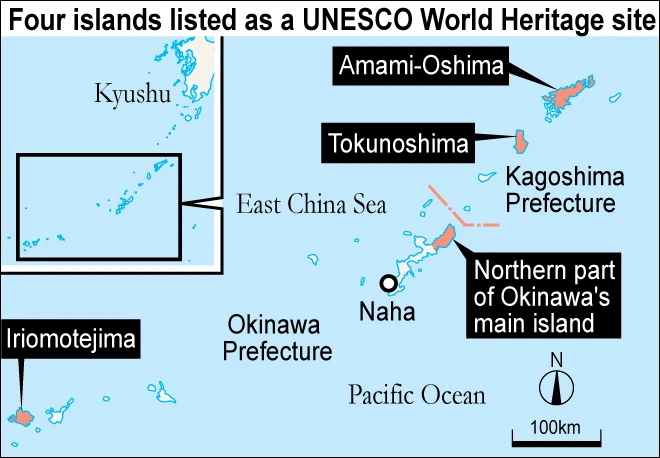
The UNESCO inscription represents a significant milestone in international conservation efforts, yet it also introduces profound challenges for host communities navigating the intersection of global heritage frameworks, domestic tourism development, and local livelihood needs. For Amami Ōshima, the largest component of the World Heritage property at approximately 712 square kilometers (UNESCO World Heritage Centre, 2021), the designation has catalyzed both celebration and anxiety among residents, government officials, conservation practitioners, and tourism stakeholders.
In this article I present findings from ethnographic research conducted in 2025, examining how diverse stakeholders, referred in this research as island agents—on Amami Ōshima perceive and negotiate the impacts of UNESCO designation. Through interviews with key island agents, a survey of professional tour guides, and ethnographic observations, this research makes a first attempt at mapping the communicative ecologies through which these island agents construct, contest, and reconstruct the island identity in response to global heritage recognition. In addition, David Abram's (1996) phenomenological work on the "more-than-human" world and the animate landscape offers a theoretical lens to articulate what's at stake in these tensions, specifically, what gets lost when islands transform from relational/animate places into visual/consumable destinations.
This research builds on ongoing collaborative ethnographic research that has been mapping various aspects and layers of the Amami islands communicative ecologies since 2017 (see Papoutsaki and Kuwahara, 2018, 2021, 2024, 2025). The central research questions seek to answer a) how different island agents and groups on Amami Ōshima perceive the impacts and implications of UNESCO World Natural Heritage designation; b) what tensions and negotiations emerge between conservation imperatives, tourism development, and community well-being; and c) what visions and models for sustainable tourism local actors propose, and what barriers impede their realization. By foregrounding local voices and documenting the lived realities of heritage designation, this research contributes to critical heritage studies scholarship that interrogates the assumptions, power dynamics, and socio-ecological consequences of global heritage regimes in island contexts (Salazar, 2010; Su and Wall, 2014; Hampton and Jeyacheya, 2015).
2. Amami Ōshima and the Amami Archipelago
2.1 Geography, Population, and Demographic Challenges
The Amami archipelago comprises eight inhabited islands located in the Ryukyu chain between Kyushu and Okinawa. Amami Ōshima, the largest island, serves as the administrative and economic center. The mountainous interior preserves extensive subtropical forest (Ota, 1998). The island's isolation and geological history have generated extraordinary endemism (Watari et al., 2013), including the Amami rabbit which functions as a flagship species for conservation efforts.
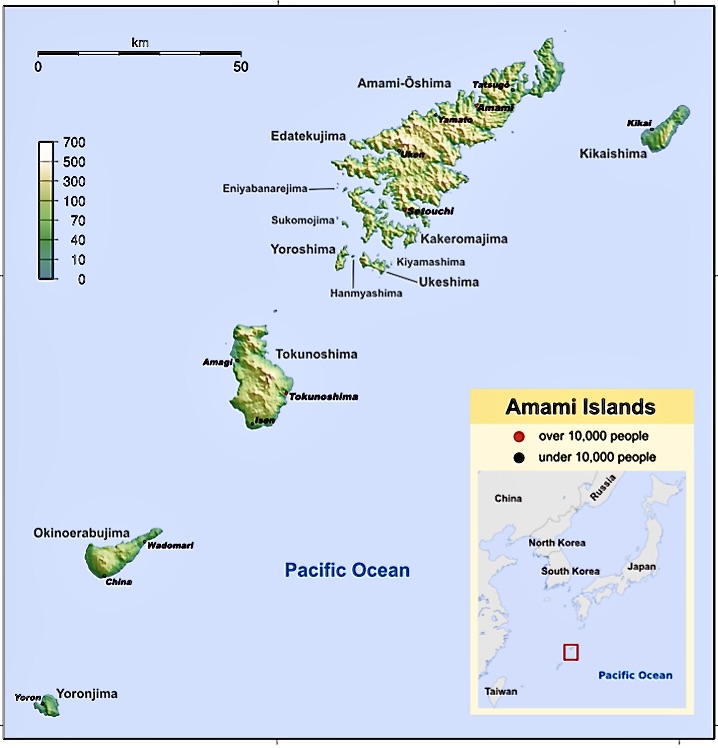
Amami Ōshima's population of approximately 59,000 (2020) has declined close to 50% since peaking in 1955, driven by sustained out-migration to metropolitan areas and with aging demographics exceeding national averages (National Census, 2020). This demographic crisis creates labor shortages and erosion of traditional knowledge as elder generations pass without intergenerational transmission (Matanle and Rausch, 2011), and represents perhaps the most fundamental threat to community sustainability.
2.2 Cultural Heritage and Identity
Positioned at the intersection of Japanese, Okinawan, and broader East Asian cultural spheres, Amami developed distinctive traditions, language, and social structures. The islands experienced complex political history under the Ryukyu Kingdom (1440-1609), the Satsuma Domain (1609-1945) and U.S. military administration (1945-1953), fostering distinct regional identity (Christy, 1993). The Amami language (Shimayumuta) is considered critically endangered (Heinrich et al., 2015). Traditional practices include shimauta (island songs), a participatory vocal tradition performed communally during work and ceremonies rather than as staged performance, and Oshima tsumugi (traditional silk textile). Contemporary cultural identity negotiates tensions between assertions of distinctiveness and assimilation pressures. Language shift and cultural revitalization efforts reflect ongoing identity negotiations, movements that UNESCO designation both reinforces and complicates through potential commodification pressures (Gillan, 2012).
2.3 Economic Structure and Development Challenges
Amami's economy historically centered on sugarcane cultivation, which remains significant despite declining profitability. Oshima tsumugi production, once employing thousands, has contracted dramatically as demand declined and artisan populations aged. Commercial fishing provides important livelihoods but faces resource depletion. Tourism emerged as a growth sector following improved air access, particularly Low-Cost Carrier services introduced in 2014, with annual visitors reaching 580,000 by 2019 before COVID-19 disruptions (Kagoshima Prefecture, 2020).
However, structural disadvantages common to remote island peripheries constrain Amami’s development. High transportation costs raise living expenses and reduce product competitiveness. Small-scale economies and distance from major markets limit diversification. The Amami Guntō Promotion and Development Special Measures Act provides ¥2–3 billion annually, but critics say it sustains dependency and prioritizes construction over community needs.
Environmental conservation emerged during the 1980s when proposed golf course developments mobilized activists into successful opposition campaigns (Ui, 1992). However, historical priorities favored resource extraction, logging reduced old-growth forests, agricultural expansion converted coastal areas, and road construction fragmented habitats.
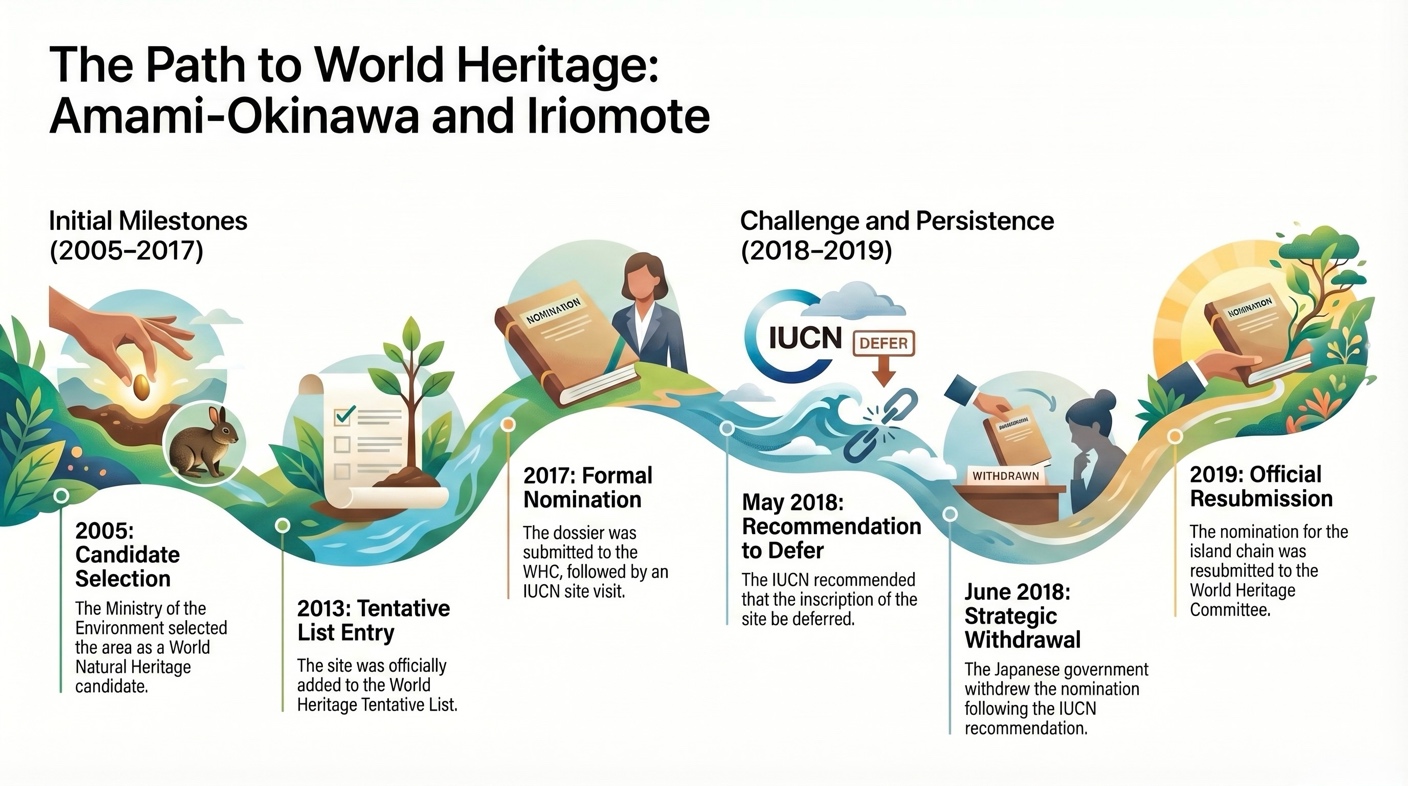
3. The 2021 UNESCO World Natural Heritage Inscription
3.1 Outstanding Universal Value and Conservation Justification
The Ryukyu archipelago's extraordinary biodiversity stems from complex geological history involving island separation from mainland Asia and glacial cycles which created conditions for unique evolutionary processes (Ota, 1998). These processes produced a biodiversity hotspot with exceptionally high endemism. The islands harbor ancient lineages functioning as evolutionary refugia where species extinct on mainland Asia continued evolving. The subtropical evergreen broadleaf forests represent the northernmost extent of this forest type in the Northern Hemisphere (Ministry of the Environment, 2021).
The inscribed Ryukyu Islands support remarkable concentrations of endemic flora and fauna. The site harbors 95 globally threatened species listed on the IUCN Red List, with approximately 50% of terrestrial reptile species, 60% of amphibian species, and numerous invertebrate and plant species found exclusively within these islands. The designation was granted under UNESCO criterion (x), which pertains to sites containing the most important natural habitats for in-situ conservation of biological diversity (IUCN 2021).
Amami rabbit—a primitive leporid species considered a "living fossil" that diverged from other rabbit lineages approximately 10 million years ago. The island also supports endemic species including Lidth's jay, Amami thrush, and numerous endemic reptiles and amphibians. These species exist within intact subtropical broadleaf forests supporting specialized endemic communities (UNESCO World Heritage Centre 2021).
3.2 Conservation Management Framework
Prior to UNESCO inscription, portions of Amami Ōshima benefited from legal protection through Japanese domestic legislation, including designation as national park or wildlife protection areas under the Nature Conservation Law and Natural Parks Law. However, UNESCO designation introduced enhanced international oversight requiring strengthened management frameworks coordinated among the Ministry of the Environment, Forestry Agency, Kagoshima Prefecture, and local municipalities (Ministry of the Environment, Japan 2020; Kagoshima Prefecture, 2019).
Conservation challenges facing the site prove substantial. Invasive species, particularly feral cats and mongooses introduced for pest control in the twentieth century, pose severe threats to endemic wildlife. The Amami rabbit population suffered significant declines due to predation until intensive control programs reduced invasive predator numbers. Road mortality affects numerous endemic species, necessitating specialized wildlife crossing structures. Forest fragmentation from historical logging and agricultural expansion reduced habitat extent and connectivity, though natural regeneration has allowed some recovery. Climate change presents emerging threats through altered precipitation patterns, increased typhoon intensity, and sea level rise affecting coastal ecosystems (Ministry of the Environment, Japan 2020; IUCN, 2021).
4. Literature Review: UNESCO Designation Impacts on Small Island Communities
UNESCO World Heritage designation represents what Foster (2011) terms a "floating signifier"—a marker of exceptional value interpreted and mobilized differently by island agents. The "UNESCO effect" typically manifests as increased tourism, enhanced visibility, and elevated conservation status, yet outcomes vary significantly across contexts depending on infrastructure, accessibility, marketing effectiveness, and governance capacity (Jimura, 2011; Timothy, 2018). Research on Japanese heritage sites reveals that UNESCO inscription often functions more as tourism stimulus than conservation tool, prioritizing economic development over environmental protection (McGuire, 2013), creating tensions between stated conservation objectives and actual implementation.
Small island communities hosting UNESCO sites face distinctive challenges. Islands comprise only 6.7% of global land surface yet harbor nearly 20% of Earth's biodiversity, with approximately 50% of globally threatened species occurring on islands (Fernández-Palacios et al., 2021). This ecological fragility combines with socioeconomic vulnerabilities including limited economic diversification, infrastructure constraints, and susceptibility to external shocks.
Research documents persistent inequities in island tourism, with external operators capturing benefits while communities bear costs (Cole, 2007; Hampton and Jeyacheya, 2015). Power asymmetries between central governments and island peripheries result in top-down decision-making excluding local knowledge (Kuutma, 2017). Askew (2010) demonstrates how states and economic actors leverage UNESCO's 'magic list of global status' to advance development agendas that may directly contradict conservation mandates, transforming heritage designation from protective framework into marketing asset. UNESCO designation can trigger "heritagisation" whereby living cultures transform into consumable products (Salazar, 2012), reducing complex cultural practices to marketable spectacles and diminishing community agency. Guides experience conflicting pressures to simultaneously educate visitors, protect sacred knowledge, and generate economic returns (MacDonald and Jolliffe, 2003).
The "Disneyfication", sanitization of heritage narratives for tourist consumption, proves particularly problematic where UNESCO designation accelerates commercialization (Scarbrough, 2021). The "Galápagos Paradox" describes situations where features making destinations attractive, untouched nature and unique wildlife, are degraded by infrastructure and population growth required to support tourism (Self et al., 2010). This paradox manifests acutely on small islands with limited carrying capacity.
Research demonstrates that effective visitor management in island UNESCO sites requires integrated approaches combining regulatory mechanisms, certified interpretation, and community involvement, yet implementation faces significant capacity constraints in island contexts (Littlefair, 2004; Buckley, 2012).
5. Research Design and Theoretical Framework
This research employs ethnographic methods within a communicative ecology framework (adapted from Hearn and Foth, 2007; Tacchi 2006) examining how information, narratives, and meanings circulate among diverse actors shaping Amami Ōshima's post-UNESCO trajectory. The contextualised Island Communicative Ecology (ICE) encompasses in this case the diverse networks, systems, activities, and flows linked to UNESCO designation impacts, including the environment in which communication processes occur among residents, visitors, and institutions (Papoutsaki and Kuwahara, 2018, 2024, 2025; Konishi and Papoutsaki, 2020). Critically in the context of this research, the island communicative ecology is understood as a milieu of island agents—eco-tour guides, advocates, local media, traditionally referred to as stakeholders—linked through various exchanges of communication and with the capacity to create and negotiate meaning for island culture and identity.
In this research, I sought to extend communicative ecology frameworks by incorporating David Abram's (1996, 2010) phenomenology of the animate landscape. While communicative ecology typically maps human information flows, Abram's work recognizes that island communication includes more-than-human participants: species whose presence signals ecological health, weather patterns structuring temporal rhythms, sacred sites marking landscape agency. This expanded framework attempts to examine how UNESCO designation affects not just human discourse about Amami but the embodied, sensory relationships through which the island becomes known.
I deliberately sought to listen to voices across positions: conservation advocates, media practitioners, government officials, tourism operators, community activists, and professional guides, aligning with participatory heritage management frameworks (Su and Wall, 2014). Informal conversations and semi-structured interviews were completed between February and July 2025, along with an anonymous online survey of 20 professional tour guides addressing demographics, perceived UNESCO impacts, operational challenges, and sustainability visions. Ethnographic observations occurred in urban areas documenting townscape changes, at the UNESCO Visitor Center, natural heritage sites, tourism facilities, and cruise ship arrivals at Naze Port (the latter with the assistance of John Manolito Cantu). Document analysis incorporated local government tourism strategies, UNESCO nomination dossiers, newspaper archives, community petitions, and promotional materials.
My positionality as a non-Japanese scholar required reflexivity regarding power dynamics, language barriers, and cultural interpretation. Long standing collaboration since 2017 with local researchers, interpreters and community partners helped mitigate limitations while acknowledging outsider perspectives inevitably shape knowledge production.
6. Findings and Discussion
Small islands often occupy the margins of national narratives, historically framed as remote or economically limited. Amami Ōshima illustrates how UNESCO World Heritage designation can reshape local identity and development trajectories. Prior to UNESCO attention, Amami’s identity was closely associated with subsistence practices, outmigration, and economic marginality. Following global recognition, many residents have begun articulating pride in their distinctive cultural and ecological heritage, increasingly framing themselves as custodians of biodiversity and tradition. This shift is fostering cultural revival and new economic imaginaries.
Overall, the findings depict a community navigating tensions between economic growth and ecological-cultural integrity, between liveability and preservation, and between locally grounded values and external expectations. The central challenge is achieving tourism that supports livelihoods while protecting both ecosystems and the lived experience of residents, highlighting the complex balancing act small islands face when global recognition becomes embedded in local futures.
6.1 The Double-Edged Sword: UNESCO's Contradictory Potentials
“Now that Amami has become a World Natural Heritage site, it is increasingly seen as a place where resorts can generate profit. People are buying land and planning hotel developments. If clear rules are not properly established, I don’t want Amami to end up like Okinawa.” (Denpaku architect)
A pervasive metaphor across stakeholder groups characterized UNESCO status as a "double-edged sword", simultaneously offering vital protections and introducing existential threats. As Foster (2011) observes, such designation represents a "floating signifier", a marker of exceptional value interpreted and mobilized differently by various stakeholders, creating contradictory outcomes.
Stakeholders universally acknowledged that UNESCO inscription elevated Amami's international profile and provided powerful legal tools for conservation advocacy. A pioneering environmental activist and founding member of the Amami Wild Bird Society, articulated this:
“The future is threatened if we don’t protect nature. UNESCO is a double-edged sword—it can save the island or accelerate its destruction if mismanaged. The designation gives us the legal framework to say ‘no’ to development that threatens what we fought for decades to protect. But it also puts a target on us for exactly the kind of commercial exploitation we fear.” (Tsuneda Mamoru)
“Since it became a World Natural Heritage site, it has attracted attention. But at the same time, the responsibility to protect nature has also become much greater.” (Nankainichinichi reporter)
Multiple informants noted that the UNESCO process galvanized conservation consciousness, particularly among younger residents. Visitor center staff credited increased heritage awareness with heightened reporting of Amami rabbit roadkill, tangible evidence that consciousness-raising translates to behavioral change. Yet the UNESCO "brand" simultaneously attracted development interests viewing designation as marketing opportunity rather than conservation mandate. Research on Japanese heritage sites reveals this pattern: UNESCO inscription often functions more as tourism stimulus than conservation tool (McGuire, 2013). The "UNESCO effect" manifests as increased tourism arrivals and enhanced visibility, yet outcomes vary significantly across contexts depending on infrastructure, accessibility, and governance capacity (Jimura, 2011; Timothy, 2018).
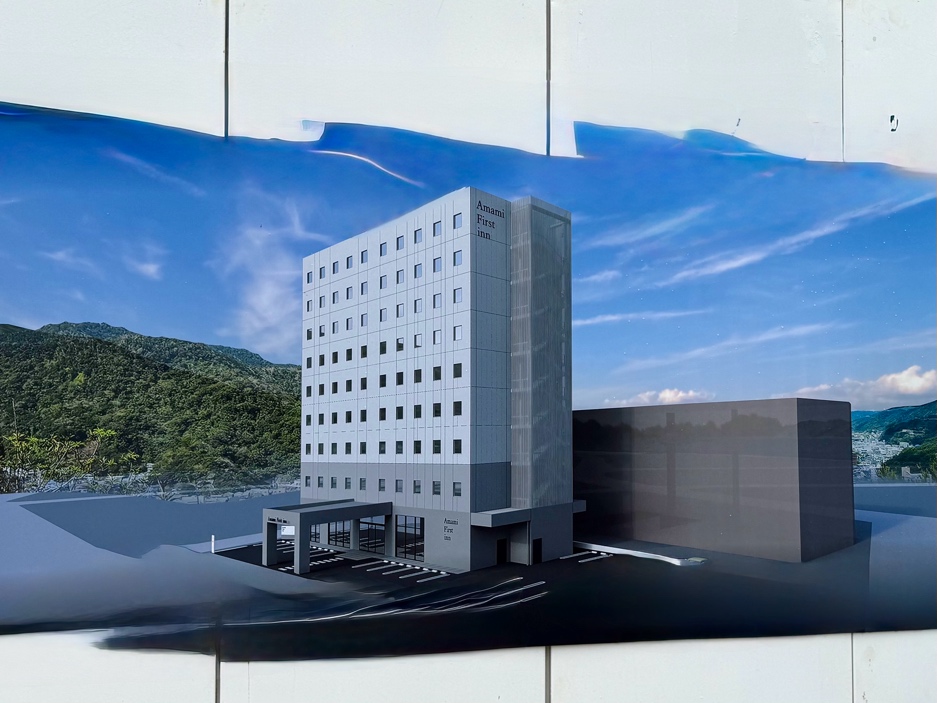
On Amami, the most acute manifestation emerged in the Setta Village hotel controversy. In 2024, plans for a 12-storey high-rise hotel near a National Park catalyzed intense community opposition. A Change.org petition (https://c.org/5d2mzK77J7) has garnered over 45,000 signatures. Key grievances centered on legal loopholes whereby the site had been removed from National Park designation to facilitate UNESCO registration, creating "lawless zones" where development became legally permissible before new protections were established. As one petition signer stated: "It's not about stopping the hotel, but about ensuring rules are in place to respect those who live here."
Residents feared the hotel's water demand would strain supplies on an island experiencing periodic droughts. Additional anxieties included marine pollution, traffic safety risks, and desecration of sacred sites, particularly the nearby Amamikko Shrine. The controversy revealed generational divides. While some younger residents argued large-scale development could revitalize the depopulating island, elders prioritized preservation of the island's "natural soul" (shizen no tamashii) over economic growth.
The controversy exemplifies "UNESCO-cide," wherein heritage designation paradoxically facilitates the destruction of values it purports to protect (Scarbrough, 2021). This pattern reflects what Hampton and Jeyacheya (2015) document in island tourism contexts: power asymmetries whereby external capital leverages UNESCO designation's market value while externalizing costs onto local communities. The modest immediate tourism impact may prove fortuitous, providing a window for establishing proactive visitor management before overwhelming growth occurs. Stakeholders' fears of "Okinawa-ization" reference cases where UNESCO designation triggered poorly managed tourism growth degrading protected values (Buckley, 2012). Yet the question remains: what has UNESCO designation actually meant for tourism flows on the ground?
6.2 Tourism Realities and the "Muted UNESCO Effect"
“UNESCO has strong branding power. When something is called a World Heritage site, people overseas immediately think, ‘I want to go there.’” (Nankainichinichi reporter)
Despite UNESCO's symbolic power, perceptions of island agents and quantitative indicators suggested relatively modest immediate impacts, contrasting with expectations of dramatic tourism surges. When I surveyed professional guides, their responses revealed divided perspectives. Regarding visitor numbers, almost half reported "slight increase" since 2021, while 27.8% observed "no noticeable change." Many attributed increases to post-pandemic recovery and Low-Cost Carrier airline expansion rather than UNESCO designation. One guide put it bluntly: "The cheap flights from Tokyo. People were going to come anyway."
Concerning tourist demographics, 44.4% noted "slight change" toward more eco-conscious visitors, yet 38.9% saw "no noticeable change," suggesting marginal transformation. Most tellingly, several guides reported that many tourists remained unaware of the UNESCO designation upon arrival, indicating significant gaps between achieving World Heritage status and effective market communication.
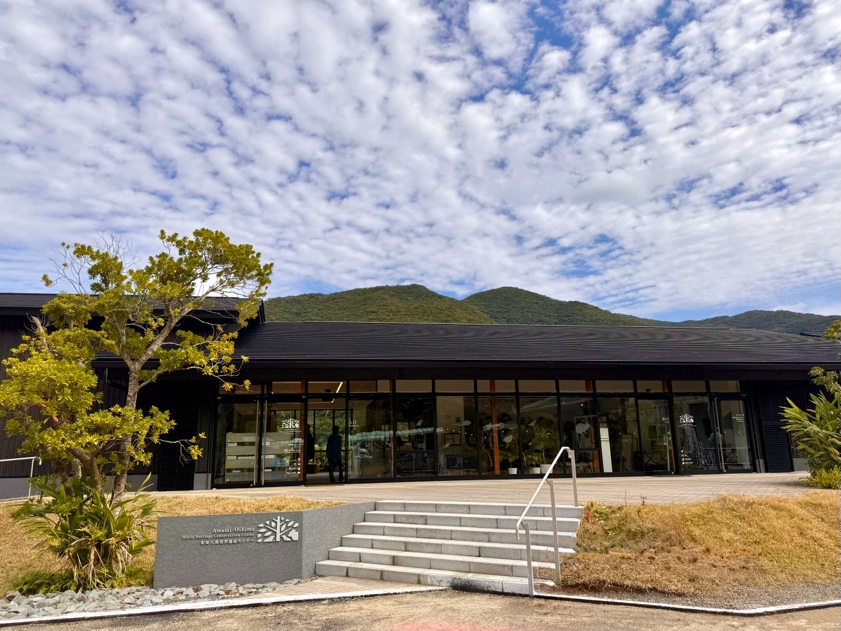
Government officials confirmed that while visitor numbers approached pre-pandemic levels (approximately 490,000 in 2024 compared to 580,000 in 2019), growth could not be definitively attributed to UNESCO recognition versus broader travel recovery patterns. At the UNESCO Visitor Center, staff reported serving approximately 400,000 annual visitors post-pandemic, with peak seasons straining capacity. The center operates with 2-3 staff members, offers limited foreign-language interpretation, and struggles to balance serving tourists versus educating local residents.
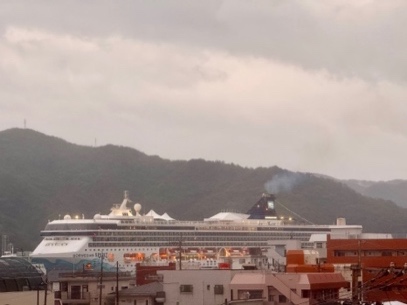
The most visible tourism impact came from cruise ship arrivals at Naze Port. As local media reported, cruise ship calls at Naze Port have rebounded to pre-pandemic levels. After a record 20 visits in FY2019, the port saw 19 in FY2023, including 13 foreign-flagged vessels. Since Amami Ōshima was designated a World Natural Heritage site, Naze Port has gained attention as an increasingly attractive port of call in Japan (Nankainichichi, 2024).
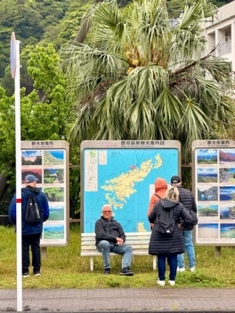
Watching cruise passengers stream off the Norwegian Spirit one Sunday morning, I saw the pattern immediately: hundreds of people funneled into a few blocks, overwhelming the small port area within minutes. Passengers wandered aimlessly with no information about the island, no knowledge of local culture, and naive assumptions they could grab taxis. The taxis available couldn't serve all passengers. Most visitors concentrated in the shopping arcade swarming with hundreds of other aimless cruisers. Field observations revealed that cruise tourism generates highly concentrated visitor activity posing logistical and strategic challenges. Sharp surges exceed local transport capacity, producing port congestion and restricting passengers' ability to disperse. This concentrates cruise tourism in port-centered "tourism bubbles" rather than supporting broader circulation.
Economic impacts appeared mixed. Despite large passenger numbers, spending remained modest, concentrated in low-value goods. The labor required to operate port stalls appeared disproportionate to financial returns. Observations revealed semi-standardized marketplaces with approximately ten stalls selling similar products, efficient for managing arrivals but limiting diversification.
Different vessel types produced distinct demographics and behaviors, suggesting policy responses should be tailored to specific cruise segments. Attempts to create cultural vibrancy through island music successfully attracted crowds but did not translate into higher vendor sales. Longer docking periods did not automatically yield greater benefit; some passengers treated Amami as a place to purchase everyday necessities rather than participate in guided excursions. The latter were mostly dominated by outside operators who bring in their guides, paid less than local guides would charge, and doing block bookings of available bus on the island, pushing out local operators.
Additionally, many cruise passengers' demographic profile, particularly older passengers with mobility limitations, structurally constrained cruise tourism's capacity to support physically demanding ecotourism activities, creating mismatches between cruise passenger demand and the conservation-oriented tourism model associated with UNESCO sites. This pattern reflects what Hampton and Jeyacheya (2015) document: external operators capturing benefits while communities bear costs.
The cruise model delivered mass visitors who consumed little locally and gained minimal understanding of Amami's UNESCO heritage values, the antithesis of sustainable tourism local stakeholders envisioned. These realities stood in stark contrast to the tourism vision local actors were articulating.
6.3 Envisioning and Enacting the "Amami Model"
The more I talked with people across Amami—conservationists, local authority officials and community activists—the more I heard echoes of the same vision. What emerged was something people were starting to call the "Amami Model." "We don't want millions of visitors," the DenPaku architect said in an interview. "We want the right visitors, people who will take time, who want to understand." As Tsuneda put it: "We have to protect it thoroughly; make it inconvenient, and show the real thing."
The model prioritizes high-value, low-impact tourism, emphasizing conscientious visitors willing to pay premium prices for authentic experiences while maintaining strict environmental protections. Stakeholders advocated selective accessibility, deliberately retaining elements that are "hard-to-understand" or "troublesome" to deter mass tourism while rewarding genuinely engaged visitors.
This vision represents what David Abram (1996) calls resistance to reducing the "animate landscape" to consumable spectacle. When stakeholders advocate for "inconvenient but authentic" tourism, they insist that Amami not be flattened into user-friendly experience. The forest that requires certified guides, the species appearing only to patient observers, the cultural practices demanding temporal commitment, these represent the island's animate agency. The place sets terms; visitors must adapt.
Community-led regulation forms another cornerstone. Local villages implement autonomous rules—such as Kuninao Village's noise curfews, speed limits, and camping restrictions—broadcast through community radio to educate visitors and preserve resident quality of life. This grassroots governance reflects what Ostrom (2009) identifies as polycentric governance systems.
Cultural integrity represents a particularly significant concern. Stakeholders resist commodification of traditions, especially professionalizing Amami shimauta from casual communal expression to staged entertainment. Amami FM staff emphasized this:
“We don’t want professional singers, shimauta is about life, not performance. Tourists should experience it as we do: together, not as spectators. Amami shimauta is not a style where performers and listeners are separated. People sing together and dance together, the inside and outside are not divided. Rather than saying ‘everyone is welcome,’ I would prefer visitors who truly want to come to Amami, and who will take time to experience the island slowly and in connection with local life.” (Amami FM)
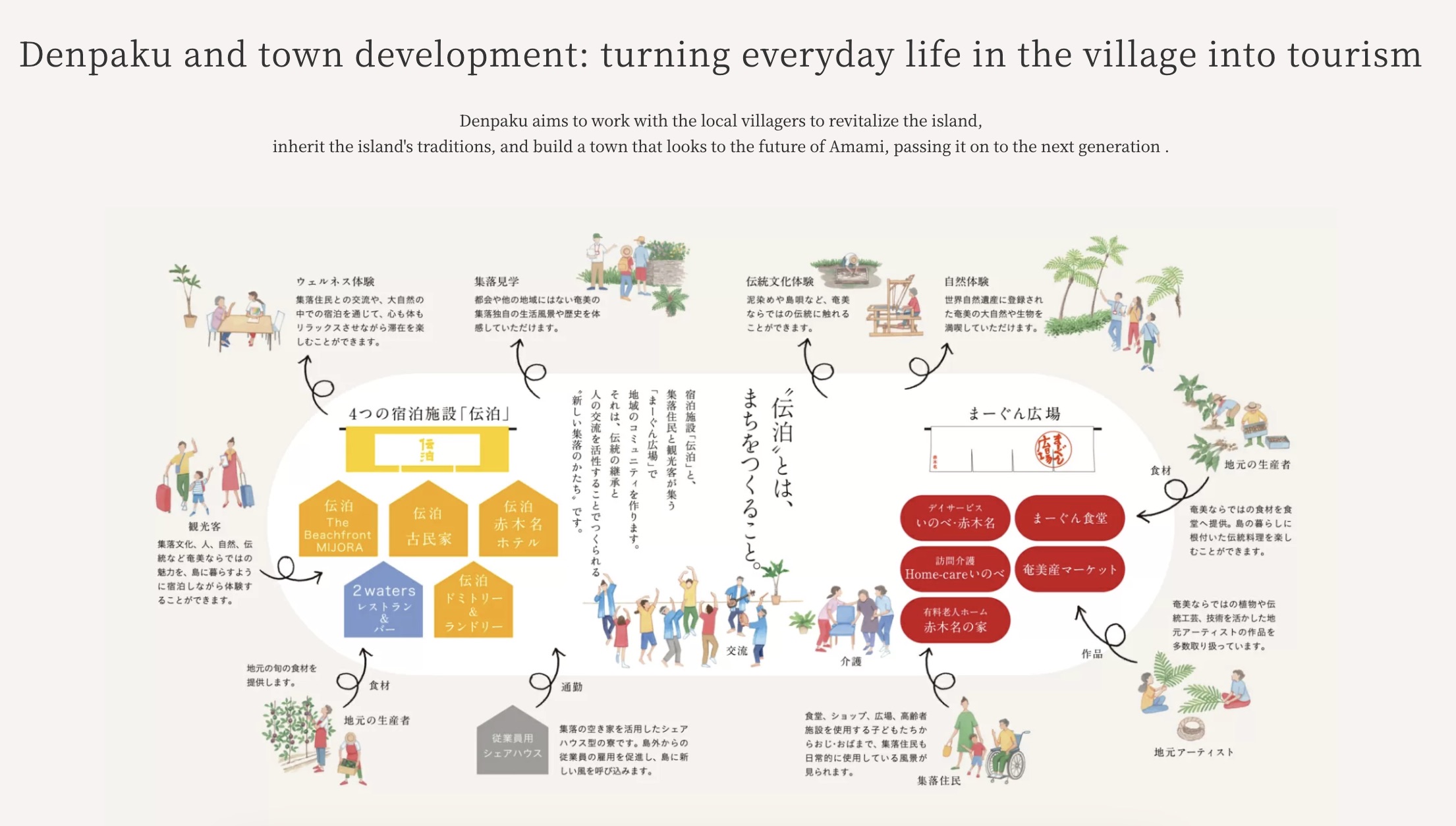
DenPaku's heritage hotel strategy exemplifies these principles through its "70/30 Rule," requiring 70% tradition (materials, local employment, cultural practices) while allowing 30% innovation ensuring economic viability, embracing the maagun philosophy.‡
“Maagun means ‘together’… I wanted to create a place like a community center, where village grandparents, children, students, and tourists can come together and enjoy exchanging with each other. We interpret local culture in our own way: 70% tradition, 30% new.” (Denpaku architect)‡
(source https://den-paku.com/machizukuri)
The ratio derives from linguistic analysis showing adjacent Amami villages share 70% dialect commonality with 30% local variation, serving as a metaphor for balancing continuity with adaptation. Just as language maintains intelligibility while preserving distinctiveness, sustainable tourism must balance honoring existing relationships while adapting to contemporary realities.
Similarly, proposals to market kenmun folklore commercially were rejected in favor of interpretive approaches maintaining spiritual significance. One person noted: "If we turn our legends into cartoon characters for souvenirs, we lose the power of the stories to connect people to the land." This aligns with Cole's (2007) arguments for tourism development "beyond authenticity and commodification," prioritizing community well-being over economic maximization. The 70/30 Rule exemplifies how local actors innovate frameworks balancing tradition with adaptation.
Conservation practitioners emphasized DNA protection as the core UNESCO value, viewing tourism as means to fund conservation rather than end goal. They advocated expanding certified guide requirements, implementing advance booking systems, and establishing environmental taxes funding invasive species control.
However, realizing the Amami Model faces formidable barriers, institutional structures favor large-scale development generating visible economic indicators over diffuse benefits from small-scale ecotourism. Prefectural officials' growth orientation conflicts with municipal preservation priorities, generating governance paralysis. Infrastructure deficits impede quality experience delivery. Most fundamentally, the model's viability depends on whether sufficient market segments exist willing to pay premium prices for "inconvenient" authenticity. The model challenges not merely tourism industry practices but visitor expectations themselves, asking whether enough travelers exist who seek relationship with animate places rather than consumption of scenic commodities.
The Amami Model represents what Richards and Raymond (2000) characterize as "creative tourism" emphasizing co-creation and meaningful engagement over passive consumption. Whether such a model can be realized depends on alignment between institutional incentives, infrastructure investment, and regulatory enforcement. To understand how these visions would actually work in practice, I sought the perspective of those who would implement them: the guides.
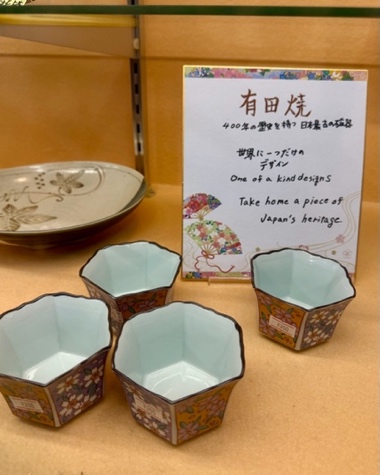
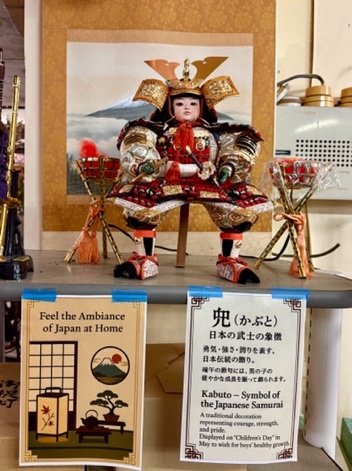
(source: author).
6.4 Tour Guides: Mediating Heritage, Navigating Precarity
Tour guides emerge as critical actors in any sustainable tourism model; they translate conservation values into actual visitor experiences, mediating between the island's animate ecology and visiting strangers. Yet my research revealed a troubling paradox: guides are essential to heritage interpretation but economically vulnerable and institutionally marginalized.
The small survey I conducted of 20 guides showed that 66.7% struggle with inconsistent client numbers, 50% lack marketing support, and 44.4% face intense competition. Despite these pressures, guides consistently prioritized environmental protection over profit maximization. They expressed fears of "Okinawa-ization," overdevelopment and loss of local character mirroring processes where mass tourism has transformed island identity. As one island agent stated: "UNESCO made us visible to the world, but now we must choose: Will Amami become a postcard or stay a living home?"
Abram's (1996) phenomenology helps articulate what guides actually do: they don't merely communicate information but facilitate visitors' entry into sensory participation with landscape. Effective guiding requires teaching tourists to notice—to hear forest silence, read animal traces, feel humidity's meaning, respect the pace at which an animate landscape reveals itself.
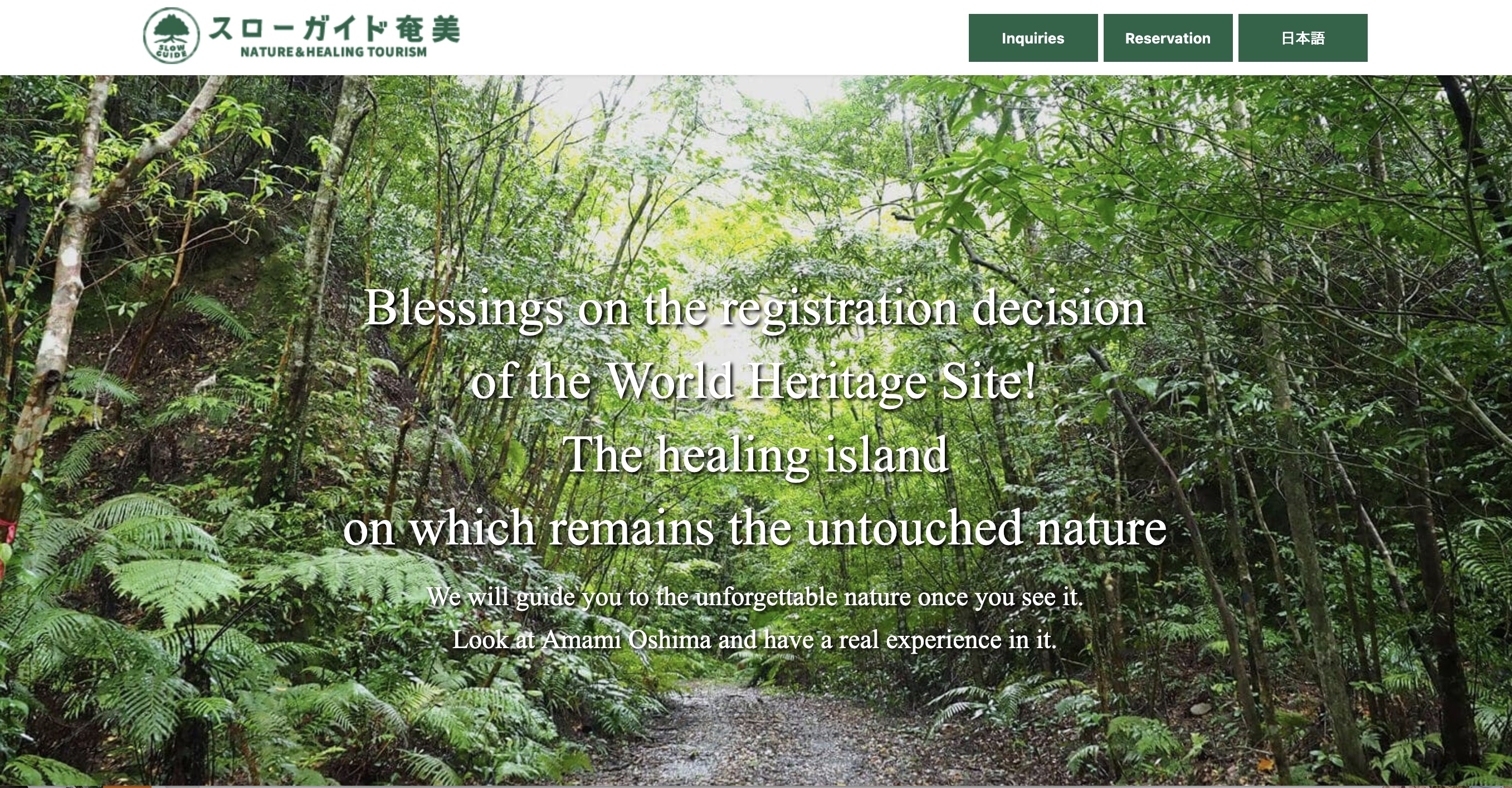
(source https://www.amami-guide.com/en/)
The two-year certification training recognizing ecology, safety, and cultural knowledge begins this work, but it is the guides' ongoing relationship with Amami's nature—their continuing education by the more-than-human world that makes interpretation authentic. When guides speak of fearing "Okinawa-ization," they describe not just overdevelopment but the industrialization of interpretation itself, replacement of skilled guides who know landscapes intimately with scripted tours delivering predictable content.
While guides receive rigorous training in ecology, first aid, and safety management, language barriers limit international visitor access. Most certified guides lack foreign language capacity, yet training programs remain Japanese-centric with minimal multilingual resource development. This creates a paradox: UNESCO designation raises international expectations, but the guide community feels insufficiently structured to meet global tourism demands. Weiler and Black's (2015) framework characterizing guides' evolution from "one-way communicators to choreographers to co-creators" proves applicable to Amami's context. However, their marginalization from policy planning processes limits their influence on governance frameworks.
The certification system created tensions with long-term residents who resent being required to hire guides in traditionally accessible areas:
“When the rule was introduced requiring visitors to go to Kinsakubaru with a certified registered guide, some local residents who had long visited the area said, ‘Why do we have to pay money and go with a guide?’” (Amami Islands Tourism and Product Promotion)
Song's (2017) extensive comparative analysis shows Amami's distinctive approach to guide professionalization. Unlike Yakushima or Ogasawara, where "I-turn" immigrants dominate the guiding sector, Amami's guiding community maintains high local integration, mitigating social friction. Administrative bodies deliberately avoided the "Yakushima model" by prioritizing formal registration through the 2008 formation of the Amami Oshima Ecotour Guide Liaison Council.
This institutional framework enables guides to function as "emotional translators" between UNESCO's global conservation values and islanders' local priorities. Many Amami guides integrate professional activities with traditional island livelihoods, farming, fishing, cultural practices, allowing them to interpret landscape from positions of genuine embodied knowledge. This "insider" status proves crucial for maintaining cultural authenticity.
From a governance perspective, guides function not simply as tourism service providers but as governance infrastructure: they shape whether visitor encounters remain extractive or become relational and conservation-aligned. As boundary-spanning actors, they translate conservation principles into everyday practices, yet their economic precarity reflects broader structural tensions within market-oriented heritage tourism systems (Cash et al., 2003; Duffy, 2013).
While UNESCO discourse recognizes interpretation as core to conservation (UNESCO, 2019), guides remain weakly institutionalized within governance frameworks. Strategic investment in guide training, marketing support, and multilingual capacity development could substantially enhance heritage communication effectiveness. The guide challenges reflect broader governance issues affecting UNESCO designation implementation.
6.5 Governance Gaps and the Struggle for Local Agency
“I heard the World Heritage Center was not created through consultation with local people. The staff were mostly outsiders, and local people were excluded.” (local environmental advocate)
“I want people to understand that we protect nature not just because UNESCO or the government tells us to, but because we want to do it ourselves—not because someone says, ‘You can’t do this’ or ‘You can’t do that.’” (Local environmental activist)
Local agency versus external imposition emerged as a key finding. Multiple governance failures surfaced across data sources, including funding coordination challenges, exclusion of local knowledge, and enforcement deficits. The Amami archipelago receives approximately ¥2.38 billion annually through special development funding, but coordination among multiple governmental levels proves challenging. UNESCO conservation falls under Ministry of the Environment jurisdiction, creating overlapping mandates. While Heritage Centers receive direct MoE funding, municipalities request special development grants for invasive species control, guide training, and infrastructure, generating competing priorities. Okinawa components fall under separate Cabinet Office oversight with distinct funding, limiting regional coordination despite shared UNESCO designation, as one local coordinating agency person mentioned: "Because there is a difference in enthusiasm, Okinawa is not calling for cooperation with Amami, even though we share World Heritage status."
Multiple stakeholders criticized top-down decision-making excluding community expertise. The UNESCO Visitor Center design process reportedly ignored local input, with interpretive content developed by external consultants unfamiliar with Amami's cultural nuances. This pattern reflects what Waterton and Smith (2010) characterize as the 'misrecognition' of community heritage, where official heritage frameworks acknowledge community participation rhetorically while systematically excluding local knowledge from actual decision-making processes. This pattern reflects what Kuutma (2017) identifies as persistent power asymmetries in heritage governance, where central governments make decisions affecting island communities while excluding local knowledge. Research demonstrates that benefits often fail to accrue equitably to local communities despite significant impacts borne by residents (Cole, 2007; Hampton and Jeyacheya, 2015).
The Setta hotel controversy (Section 6.1) exemplifies these governance dynamics. The project asserts a governance logic treating Amami's landscape as passive resource rather than active system with its own integrity. This exemplifies what Self et al. (2010) term the "Galápagos Paradox"—situations where features making destinations attractive are degraded by infrastructure and growth required to support tourism.
Carrying capacity proves crucial but complex. Research on island UNESCO sites demonstrates that effective visitor management requires integrated approaches including entrance restrictions, certified guide requirements, and community-based monitoring (Littlefair, 2004; Buckley, 2012). However, such systems necessitate substantial institutional capacity and political will, resources often scarce in island contexts.
The concept of "psychological overtourism" points to dimensions standard metrics miss:
“It is not so much physical overtourism, but what I would call ‘psychological overtourism’—for example, when tourists camp near public toilets in small villages, local junior high school students feel uncomfortable with strangers camping there at night.” (Amami Islands Tourism and Product Promotion)
This discomfort represents disruption of what Abram (1996) terms "the body's lived space," the pre-reflective sense of how our bodies belong in places through habitual movements and practiced routines. Home is where body and place exist in practiced reciprocity, a relationship tourists violate when they camp near village toilets or photograph traditional architecture without permission.
The tourist gaze transforms what residents experience as intimate, lived geography into scenic backdrop for external consumption. This explains why carrying capacity must incorporate social metrics alongside ecological ones. The question becomes not simply "how many visitors can ecosystems sustain?" but "how many observing strangers can communities absorb before residents feel displaced from their own lived spaces?" When tourists accumulate beyond a threshold, even if numbers remain ecologically manageable, residents experience ontological displacement: their homes become attractions, their daily routines become spectacles. The transformation from place-as-home to place-as-attraction involves ontological violence, the reduction of inhabited landscape to consumable scenery.
Findings suggest overtourism is shaped less by visitor numbers than by social experiences of crowding, control, and meaning (Koens et al., 2018; Milano et al., 2019), challenging fixed carrying-capacity models and supporting adaptive approaches (McCool and Lime, 2001). In Amami, the critical threshold is not only ecological degradation but perceptual transformation: the point at which the island becomes consumable destination rather than inhabited home.
In Amami, stakeholder anxieties suggest the critical threshold is not only ecological degradation but perceptual transformation: the point at which the island becomes consumable destination rather than inhabited home. Without robust participatory governance ensuring local voices shape heritage management, UNESCO designation risks accelerating rather than preventing this transformation. These governance failures extend to cultural preservation, where external market forces threaten intangible heritage dimensions.
6.6 Cultural Preservation: Resisting Commodification
UNESCO's impact on Amami's landscape extends beyond visitor numbers to visible physical and commercial transformation. During my extended fieldwork since 2017, new hotels have risen across Naze, construction crews are working on the new ferry terminal, and the city's shotengai, the covered market street, underwent commercial reconfiguration.
Walking through the arcade during cruise ship arrivals, I observed stalls that once sold goods for local now displaying carefully curated "vintage" items for tourists: old kimonos and tsumugi textiles, retro items, evoking a vanished Amami. Some shops have added English descriptions, signaling their intended audience. These felt more like commercial assemblages designed to satisfy tourist desire for tangible souvenirs. The irony became apparent when I noticed the actual heritage craft shops. The tsumugi stores, selling mud-dyed silks representing months of skilled artisan labor, remained almost empty during cruise arrivals. Passengers walked past or briefly looked around, deterred by prices, but mostly unaware of what the textiles represented. UNESCO designation intended to protect Amami's heritage had inadvertently created a market for its simulacrum—commercial approximations more accessible than living craft itself.
This transformation illustrates a dynamic well documented in tourism studies: the gap between the living texture of the culture and the commercial approximation produced for tourist consumption. Drawing on Cohen’s (1988) influential, if contested, typology, it is useful to distinguish between contrived forms of culture display, such as the curated vintage stalls of the Naze arcade, and what Cohen terms emergent authenticity, where community members adapt their own practises in ways that generate new but generally rooted cultural meaning. The tsumugi craftspeople reimagining traditional patterns for contemporary applications represent the latter, cultural evolution driven by community agency rather than external market demand. What distinguishes these two processes is not aesthetic purity but who controls the terms of cultural representation.
The Amami agents, I spoke to, navigate these distinctions carefully. The resistance to professionalizing shimauta is perhaps the clearest example: rather that a rejection of tourism pe se, it is a refusal to allow communal singing to migrate from participatory practice into ticketed entertainment. What Abram (1996) helps articulate is why this distinction matters beyond the cultural-political. Traditional shimauta is not performance in the theatrical sense but embodied practice, songs that emerged from and returned to agricultural labor, navigational knowledge, and seasonal attunement. To stage it for tourist audiences is not simply to change its context but to sever the reciprocal relationships through which it carries meaning. The "Disneyfication" Amami FM resists isn't just aesthetic sanitization but epistemological violence—the destruction of ways of knowing that require bodily presence and temporal commitment rather than instant consumption.
Multiple informants expressed concern that UNESCO's natural heritage focus inadvertently marginalizes intangible cultural dimensions integral to Amami identity. Two significant island agents spoke to this:
“This is not only about nature, but also about culture that is closely connected to nature. There were images of nature, but there were no people included.” (Yuriko Hamada April 8, 2026)
“I think it is very important for Amami people to take ownership of how their food is represented to the new visitors who are coming because of UNESCO and the idea that this is a unique natural place.” (Local island food historian)
Oshima tsumugi production faces declining demand as elder artisans age without apprentice succession. Yet not all adaptation equals inauthentic commodification. The tsumugi craftspeople exploring contemporary applications, incorporating traditional patterns into bath tiles and coasters, might exemplify what Cohen terms "emergent authenticity."‡ This was testified by the DenPaku owner, "Oshima Tsumugi culture is declining, so we need to find new value in the materials that are lying dormant in these regions." Here, traditional knowledge evolves through creative reinterpretation driven by community innovation rather than external market demands. The distinction between emergent and contrived authenticity matters because it determines who controls cultural representation. When community members adapt their own practices, they maintain agency over cultural meaning. When "vintage" shops sell curated nostalgia, cultural representation becomes commodity detached from lived experience.
UNESCO designation intensifies these tensions by creating market demand for "authentic" experiences while providing insufficient frameworks for communities to control how their culture is represented and consumed. This can trigger "heritagisation" processes whereby living cultures transform into consumable products (Salazar, 2012), reducing complex practices to marketable spectacles and eroding community agency (Scarbrough, 2021; MacDonald and Jolliffe, 2003). While cultural commodification threatens intangible heritage, environmental pressures pose parallel risks to natural values UNESCO ostensibly protects.
6.7 Environmental Pressures and Conservation Challenges
Despite UNESCO's conservation mandate, heritage values face mounting environmental pressures. Overtourism contributes to habitat degradation, while invasive species and road mortality continue threatening endemic wildlife despite ongoing management interventions.
Guides and conservation practitioners reported early warning signs of overtourism at popular sites. Kinsakubaru Forest experiences trail erosion, vegetation trampling, and wildlife disturbance during peak seasons. Santaro Pass (三太郎峠) suffers from crowding and littering. Mangrove kayaking tours concentrate impacts in sensitive estuarine ecosystems.
While mongoose eradication programs have successfully reduced predation pressure on Amami rabbits, feral cats remain problematic. Roadkill of endemic species continues despite wildlife crossing structures, with increased reporting paradoxically resulting from heightened awareness rather than reduced mortality.
“Since the efforts to register Amami as a natural heritage site began, public awareness of conservation has increased. It has also made surveys and research easier to carry out, and many researchers have come to the island. Overall, the biggest benefit has been progress in conservation research and monitoring.” (Local environmental advocate)
“One of the effects of UNESCO is that local rules are being handled more. I think this is a good thing... we have set up local rules for snorkeling points, such as where boats can go, and for sea turtle snorkeling. In that sense, such local rules have emerged in each field due to the effect of natural heritage.” (Local environmental advocate)
Marine conservation emerged as an under-addressed domain. While terrestrial ecosystems receive primary UNESCO attention, coastal development, overfishing, and unregulated marine recreation threaten reef and seagrass ecosystems critical for endemic species. Community-led rules for whale and dolphin observation have been proposed, but implementation remains voluntary without enforcement mechanisms.
Guides emphasized that conservation requires expanded infrastructure:
“I feel that frequent beach cleaning, rangers monitoring the natural world, enforcement of penalties for poaching, implementation of sniffer dogs and other technologies at the airport and ferry ports are needed looking into the future.” (Tour Guide Survey)
Multiple stakeholders identified climate change as an emerging existential threat. Increased typhoon intensity threatens forest integrity and infrastructure. Sea level rise endangers coastal cultural sites and potable water supplies. Changing precipitation patterns may disrupt endemic species' phenology. However, climate adaptation received minimal attention in UNESCO management plans, suggesting gaps between long-term vulnerability assessments and short-term operational priorities. These environmental challenges illustrate how World Heritage sites function as complex socio-ecological systems (Berkes and Folke, 1998) where conservation outcomes depend on interactions among ecological processes, institutional arrangements, and everyday practices.
Understanding these interconnected challenges requires examining World Heritage governance as a broader system mediating relationships between global frameworks and local realities.
6.8 World Heritage as Socio-Ecological Governance System
Taken together, the findings illustrate how World Heritage sites operate as complex socio-ecological systems shaped by interactions among ecological constraints, institutional arrangements, and everyday practices (Berkes and Folke, 1998; Ostrom, 2009). Conservation challenges emerge not as isolated management problems but as outcomes of governance systems mediating relationships between global heritage norms and local realities (Smith, 2006; Harrison, 2013).
The analysis supports critiques highlighting tensions between universalized conservation standards and place-based values (Labadi, 2013; Meskell, 2018). Although UNESCO policy increasingly emphasizes community participation (UNESCO, 2015, 2019), findings indicate persistent gaps, reinforcing participatory governance approaches treating local involvement as constitutive of legitimacy rather than procedural inclusion (Ansell and Gash, 2008; Armitage et al., 2009).
Visitor management emerges as a central arena where World Heritage ideals of protection, access, and Outstanding Universal Value are negotiated. As documented in Section 6.5, overtourism in Amami manifests not primarily through ecological degradation but through perceptual transformation, the point at which the island becomes consumable destination rather than inhabited home.
This risk represents socio-ecological transformation in which UNESCO designation accelerates a shift from reciprocal sensing to one-way viewing. Abram's (1996) phenomenology helps articulate what stakeholders intuitively grasp: heritage recognition can reorganize environmental perception, shifting landscapes from animate others into scenic backdrops. Fears of "Okinawa-ization" point to processes whereby tourists photograph rather than listen and consume "nature" as scenery rather than engage it as active presence. These shifts represent epistemological transformation: from long-term relationship toward rapid consumption through visual capture. This involves a shift from inhabitation to visitation. Places residents experience as lived space become attractions where outsiders assert temporary presence without responsibility. The more-than-human world risks repositioning from participant to backdrop: forests, endemic species, and seasonal patterns become aesthetic resources rather than co-constitutive agents. From a governance perspective, these are outcomes produced through infrastructure and policy decisions. Transportation systems, visitor facilities, and funding mechanisms function as governance instruments shaping access and responsibility (Lascoumes and Le Galès, 2007; Meadowcroft, 2011). UNESCO governance is enacted through roads, signage, and hotel approvals as much as through management plans.
The Setta hotel controversy crystallizes these dynamics, asserting a governance logic treating Amami's landscape as passive resource rather than active system. The controversy highlights how designation generates development pressure while governance structures may lack mechanisms ensuring community agency sets the terms of access.
Findings foreground guides as intermediary actors within heritage governance. While UNESCO discourse recognizes interpretation as core to conservation (UNESCO, 2019), guides remain weakly institutionalized. As documented in Section 6.4, their dual role as interpreters and governance infrastructure remains economically and institutionally precarious (Cash et al., 2003; Duffy, 2013).
The Amami Model represents locally articulated resistance to visual-consumable transformation. Its emphasis on selective accessibility and cultural integrity reflects governance vision grounded in ecological and cultural continuity rather than visitor maximization. The serial configuration of Amami, Tokunoshima, Okinawa, and Iriomote components highlights persistent challenges of coordination in multi-level governance (Ostrom, 2010). World Heritage governance is best understood not as static compliance but as ongoing negotiation across scales. Sustainability outcomes depend less on designation itself than on the governance relationships through which heritage is continuously produced and maintained.
7. Conclusion
This ethnographic research of Amami Ōshima’s post-UNESCO designation experience has identified the complexities confronting small island communities navigating global heritage frameworks. While the 2021 inscription elevated international recognition and strengthened conservation mandates, it simultaneously intensified anxieties about overtourism, cultural commodification, and governance failures. The research documents a strong stakeholder consensus around sustainable tourism principles, the “Amami Model,” yet also identifies significant barriers to implementation.
Findings suggest that the "UNESCO effect" on tourism is neither automatic nor uniform. Immediate visitor increases remain modest and appear shaped as much by pandemic recovery and transportation changes as by designation itself. This muted impact provides a critical window for proactive visitor management before potential growth becomes overwhelming. Yet the "double-edged sword" metaphor invoked by island agents captures UNESCO's contradictory potentials: inscription provides powerful conservation leverage while also attracting development interests seeking to monetize heritage branding. The Setta Village controversy demonstrates how governance gaps can enable precisely the degradation UNESCO designation is meant to prevent.
The study further highlights tour guides as essential yet vulnerable heritage interpreters. Their financial instability, limited institutional support, and restricted foreign-language capacity undermine their ability to function as long-term conservation ambassadors. Strategic investment in training, marketing systems, and multilingual infrastructure could significantly strengthen heritage communication.
The island agents’ articulation of the Amami Model reflects sophisticated local knowledge of sustainable tourism pathways. Principles of “high-value, low-impact” tourism, selective accessibility, and Denpaku’s 70/30 Rule demonstrate locally grounded innovation in negotiating global-local pressures. Yet realizing these visions requires governance reforms that empower community agency rather than privileging growth-oriented development paradigms. The findings also underscore that intangible cultural heritage risks marginalization under UNESCO’s nature-focused framing. Shimauta, maagun communal practices, and kenmun spiritual knowledge require protection strategies as robust as those addressing endemic biodiversity.
David Abram's phenomenology of the animate landscape offers a conceptual vocabulary for understanding what is ultimately at stake in Amami Ōshima's post-UNESCO moment. For Abram (1996), landscape is not backdrop but participant, a world of reciprocal perception in which human knowing is always already entangled with the more-than-human. The Amami rabbit navigating the forest at night, the shimauta that emerged from the rhythms of agricultural labor, the kenmun that marks where the sacred begins, these are not cultural resources to be managed but communicative agents shaping how the island knows and is known. UNESCO designation, whatever its conservation intentions, creates structural pressures toward a very different epistemology: one in which Amami becomes legible primarily as spectacle, its animate complexity reduced to a checklist of iconic species and photogenic landscapes. This is not merely aesthetic loss. In Abram's terms, it is a severing of the perceptual reciprocity through which a community remains genuinely oriented in its place.
What the Amami Model implicitly proposes, in its insistence on inconvenience, on certified guides, on shimauta as participation rather than performance, is resistance to this epistemological shift. The forest that requires patience, the cultural practice that demands presence, the tradition that cannot be quickly consumed: these are forms of what Abram (2010) calls "becoming animal," recovering an embodied, sensory attentiveness that industrial tourism systematically trains visitors to bypass. Sustainable tourism in Amami, understood through this lens, is not simply a management problem but a perceptual and ethical project: how to invite visitors into relationship with an animate place rather than offering them a consumable copy of it. Whether governance institutions, funding mechanisms, and market forces can be aligned to support this vision remains the central unresolved question, and the one on which the future of Amami's heritage, in the fullest sense of that word, depends.
Future research should pursue longitudinal analysis of how UNESCO impacts evolve as governance matures, comparative work across the Ryukyu World Heritage components, and visitor experience studies examining motivations and behavioral effects. Climate adaptation planning for island UNESCO sites also demands urgent attention given accelerating environmental change.
UNESCO designation is neither panacea nor catastrophe but a contested terrain where global frameworks intersect with local realities. Amami’s trajectory will depend on whether institutions heed community voices or whether growth imperatives overwhelm preservation commitments. Abram argues that communication is fundamentally reciprocal, sensory participation between bodies and their world. The island communicates, through Lidth’s jay, through tsumugi’s mud-dyed patterns, through seasonal rhythms, through kenmun boundaries of the sacred. When tourism transforms Amami from animate to consumable, it severs these communicative relationships, replacing them with one-directional flows of visual information designed for external consumption.
At the time this article was written, another village in Amami Ōshima, Ashitoku, started a change.org petition protesting against new high rise hotel developments, pointing a pattern in community resistance:
“Being registered as a World Natural Heritage site is a great source of pride for us. However, at the same time, areas outside the designated zone remain insufficiently protected and are being exposed to waves of development under the name of “tourism.”
If things continue as they are, Amami’s nature—recognized by the world—will be steadily reshaped by outside capital, and irreplaceable landscapes will be lost one after another.” (https://c.org/cfdpN5K56x)
UNESCO designation is not a solution or a problem, it is a question forced on Amami's residents: What kind of place do you want to be? The answer depends on whether governance institutions heed community voices articulating sustainable tourism visions, or whether growth imperatives overwhelm preservation commitments. The choice, as the Amamians I spoke to kept telling me, belongs to Amami.
Acknowledgments
The author gratefully acknowledges the Japan Foundation for supporting this research through a 2025 Research Fellowship hosted by the Hokkaido University Center for Advanced Tourism Studies. Appreciation is also extended to the Kagoshima University Center for Island Studies’ Amami Station for its continuous support throughout the project. Sincere thanks are due to the residents and community members of Amami Oshima who generously shared their time, knowledge, and perspectives. Special appreciation is extended to Dr. Meng Qu for his hosting in Hokkaido and for sharing the interview at Den Paku in Amami; Professor Sueo Kuwahara and John Manolito Cantu for facilitating communication and fostering cultural understanding.
Ethics Statement and Note
This research received ethics approval from the Unitec Institute of Technology Research Ethics Committee (No. 2025-1001).
This is the revised version of the article, incorporating corrections made in July 21, 2026.
Endnotes
References
- Abram, D. 1996. The spell of the sensuous: Perception and language in a more-than-human world. New York: Pantheon Books.
- Abram, D. 2010. Becoming animal: An earthly cosmology. New York: Pantheon Books.
- Ansell, C., and Gash, A. 2008. Collaborative governance in theory and practice. Journal of Public Administration Research and Theory. 18(4): 543–571. 10.1093/jopart/mum032
- Armitage, D., Plummer, R., Berkes, F., Arthur, R. I., Charles, A. T., Davidson-Hunt, I. J., and McConney, P. 2009. Adaptive co-management for social–ecological complexity. Frontiers in Ecology and the Environment. 7(2): 95–102. 10.1890/070089
- Askew, M. 2010. The magic list of global status: UNESCO, World Heritage and the agendas of states. In S. Labadi & C. Long (Eds.), Heritage and Globalisation. Routledge pp. 19-44.
- Berkes, F., and Folke, C. 1998. Linking social and ecological systems: Management practices and social mechanisms for building resilience. Cambridge: Cambridge University Press.
- Buckley, R. 2012. Sustainable tourism: Research and reality. Annals of Tourism Research. 39(2): 528-546. https://doi.org/10.1016/j.annals.2012.02.003
- Cash, D. W., Clark, W. C., Alcock, F., Dickson, N. M., Eckley, N., Guston, D. H., and Mitchell, R. B. 2003. Knowledge systems for sustainable development. Proceedings of the National Academy of Sciences. 100(14): 8086–8091. https://doi.org/10.1073/pnas.1231332100
- Christy, A.S. 1993. The making of imperial subjects in Okinawa. Positions: Asia Critique. 1(3): 607-639. https://doi.org/10.1215/10679847-1-3-607
- Cohen, E. 1988. Authenticity and commoditization in tourism. Annals of Tourism Research. 15(3): 371-386 https://doi.org/10.1016/0160-7383(88)90028-X
- Cole, S. 2007. Beyond authenticity and commodification. Annals of Tourism Research. 34(4): 943-960. https://doi.org/10.1016/j.annals.2007.05.004
- Duffy, R. (2013) ‘The international political economy of tourism and the neoliberalisation of nature: Challenges posed by selling close interactions with animals’, Review of International Political Economy. 20(3): 605–626.
- Fernández-Palacios, J.M., Kreft, H., Irl, S.D.H., Norder, S., Ah-Peng, C., Borges, P.A.V., Burns, K.C., de Nascimento, L., Meyer, J.-Y., Montes, E., and Drake, D.R. 2021. Scientists' warning: The outstanding biodiversity of islands is in peril. Global Ecology and Conservation. 31: e01847. https://doi.org/10.1016/j.gecco.2021.e01847
- Foster, M.D. 2011. The UNESCO effect: Confidence, defamiliarization, and a new element in the discourse on a Japanese island. Journal of Folklore Research. 48(1): 63-107. https://doi.org/10.2979/jfolkrese.48.1.63
- Hamada, F. (2026, January 26). Futoshi Hamada [Interview]. Horizon. https://amami-horizon.com/en/people/interview/futoshihamada
- Hamada, Y. (2026, April 8). Yuriko Hamada [Interview]. Horizon. https://amami-horizon.com/en/people/interview/yurikohamada
- Gillan, M. 2012. Songs from the Edge of Japan: Music-making in Yaeyama and Okinawa. Farnham: Ashgate Publishing.
- Hampton, M.P. and Jeyacheya, J. 2015. Power, ownership and tourism in small islands: Evidence from Indonesia. World Development. 70: 481-495. https://doi.org/10.1016/j.worlddev.2014.12.007
- Harrison, R. 2013. Heritage: Critical approaches. London: Routledge.
- Hearn, G. and Foth, M. 2007. Communicative ecologies: Editorial preface. Electronic Journal of Communication. 17(1-2). http://www.cios.org/EJCPUBLIC/017/1/01711.HTML
- Heinrich, P., Miyara, S., and Shimoji, M. (eds.). 2015. Handbook of the Ryukyuan Languages: History, Structure, and Use. Berlin: De Gruyter Mouton. https://doi.org/10.1515/9781614511151
- Jimura, T. 2011. The impact of world heritage site designation on local communities: A case study of Ogimachi, Shirakawa-mura, Japan. Tourism Management. 32(2): 288-296. https://doi.org/10.1016/j.tourman.2010.02.005
- IUCN (International Union for Conservation of Nature). 2021. World Heritage nomination – IUCN technical evaluation: Amami-Oshima Island, Tokunoshima Island, northern part of Okinawa Island and Iriomote Island (Japan) (WHC/21/44.COM/INF.8B2). IUCN World Heritage Evaluations. https://whc.unesco.org/en/list/1574/documents/
- Kagoshima Prefecture. 2019. Amami Gunto National Park Management Plan. https://www.env.go.jp/en/nature/nps/park/amami/
- Kagoshima Prefecture. 2020. Amami Ōshima Tourism Statistics Annual Report 2019. Kagoshima: Kagoshima Prefecture Department of Commerce, Industry and Tourism. [in Japanese]
- Koens, K., Postma, A., and Papp, B. 2018. Is overtourism overused? Understanding the impact of tourism in a city context. Sustainability. 10(12) https://doi.org/10.3390/su10124384
- Kuutma, K. 2017. Between arbitration and engineering: Concepts and contingencies in the shaping of heritage regimes. In: Adell, N., Bendix, R.F., Bortolotto, C., and Tauschek, M. (eds.) Between Imagined Communities and Communities of Practice: Participation, Territory and the Making of Heritage. Göttingen: Universitätsverlag Göttingen, pp. 47-64. https://doi.org/10.4000/books.gup.367
- Labadi, S. 2013. UNESCO, cultural heritage, and outstanding universal value. Lanham: AltaMira Press.
- Lascoumes, P., and Le Galès, P. 2007. Understanding public policy through its instruments. Governance. 20(1): 1–21. 10.1111/j.1468-0491.2007.00342.x
- Littlefair, C.J. 2004. The Effectiveness of Interpretation in Reducing the Impacts of Visitors in National Parks. PhD dissertation, Griffith University, Brisbane, Australia.
- MacDonald, R. and Jolliffe, L. 2003. Cultural rural tourism: Evidence from Canada. Annals of Tourism Research. 30(2): 307-322. https://doi.org/10.1016/S0160-7383(02)00061-0
- Matanle, P., & Rausch, A. S. (Eds.). (2011). Japan’s shrinking regions in the 21st century: Contemporary responses to depopulation and socioeconomic decline. Amherst, NY: Cambria Press.
- McCool, S. F., and Lime, D. W. 2001. Tourism carrying capacity: Tempting fantasy or useful reality? Journal of Sustainable Tourism. 9(5): 372–388. 10.1080/09669580108667409
- McGuire, M. 2013. What's at stake in designating Japan's sacred mountains as UNESCO World Heritage Sites? Shugendō practices in the Kii Peninsula. Japanese Journal of Religious Studies. 40(2): 323-354. https://doi.org/10.18874/jjrs.40.2.2013.323-354
- Meadowcroft, J. 2011. Engaging with the politics of sustainability transitions. Environmental Innovation and Societal Transitions. 1(1): 70–75. https://doi.org/10.1016/j.eist.2011.02.003
- Meskell, L. 2018. A future in ruins: UNESCO, World Heritage, and the dream of peace. Oxford: Oxford University Press.
- Milano, C., Novelli, M., and Cheer, J. M. 2019. Overtourism: Excesses, discontents and measures in travel and tourism. Wallingford: CABI.
- Ministry of the Environment, Japan. 2021. Amami-Oshima Island, Tokunoshima Island, the Northern Part of Okinawa Island, and Iriomote Island: Natural World Heritage. https://kyushu.env.go.jp/okinawa/amami-okinawa/en/index.html
- Ministry of the Environment, Japan. 2020. Nomination document: Amami-Oshima Island, Tokunoshima Island, northern part of Okinawa Island, and Iriomote Island for inscription on the World Heritage List.
- Nankainichichi. April 3, 2024. 19 cruise ship calls; recovery to pre-pandemic levels. Increase in first-time foreign-flagged vessels. Naze Port, FY2023. https://www.nankainn.com/news/peconomy/%E3%82%AF%E3%83%AB%E3%83%BC%E3%82%BA%E8%88%B9%E5%AF%84%E6%B8%AF%EF%BC%91%EF%BC%99%E5%9B%9E%E3%80%80%E3%82%B3%E3%83%AD%E3%83%8A%E7%A6%8D%E5%89%8D%E3%81%BE%E3%81%A7%E5%9B%9E%E5%BE%A9%E3%80%80%E5%88%9D
- National Census, Amami Oshima Sougou Senryaku Suishin Honbu March, 2020. https://www.city.amami.lg.jp/kikaku/documents/jinkoubijyon.pdf
- Ostrom, E. 2009. A general framework for analyzing sustainability of social–ecological systems. Science. 325(5939): 419–422. 10.1126/science.1172133
- Ostrom, E. 2010. Polycentric systems for coping with collective action and global environmental change. Global Environmental Change. 20(4): 550–557. https://doi.org/10.1016/j.gloenvcha.2010.07.004
- Ota, H. 1998. Geographic patterns of endemism and speciation in amphibians and reptiles of the Ryukyu Archipelago, Japan, with special reference to their paleogeographical implications. Researches on Population Ecology. 40(2): 189-204. https://doi.org/10.1007/BF02763404
- Papoutsaki, E. 30 March 2025. Sustainable tourism in small islands. https://www.epapoutsaki.com/single-post/sustainable-tourism-in-small-islands
- Papoutsaki, E. and Kuwahara, S. 2025. “Shodansho — a place for laughter and chatting: a women led community response to aging and depopulated small island communities in Japan. South Pacific Studies Journal. 45 (1-2): 27-50. http://cpi.kagoshima-u.ac.jp/publications/southpacificstudies/sps/sps45-12/SouthPacificStudies45-12-pp27-50.pdf
- Papoutsaki, E. and Kuwahara, S. 2024. Mapping Island Information Ecosystems: the role of the ‘Bōsai Musen’ emergency and disaster broadcasting system in the everyday life of Amami islands. South Pacific Studies Journal. 44 (1-2):9-32. http://cpi.kagoshima-u.ac.jp/publications/southpacificstudies/sps/sps44-12/SouthPacificStudies44-12-pp9-32.pdf
- Papoutsaki, E. and Kuwahara, S. 2021. Akina: An Ecocultural Portrait of an Island Community Through the Photographic Lens of Futoshi Hamada. OJIS: Okinawan Journal of Island Studies. 2:11-64. https://riis.skr.u-ryukyu.ac.jp/publication/ojis/okinawan-journal-of-island-studies-ojis-volume-2/
- Papoutsaki, E. and Kuwahara, S. 2018. Mapping small islands communicative ecologies: a case study from Amami Islands. South Pacific Studies Journal. 39(1): 25-49. http://cpi.kagoshima-u.ac.jp/publications/southpacificstudies/sps/sps39-1/SouthPacificStudies39-1-pp25-49.pdf
- Richards, G. and Raymond, C. 2000. Creative tourism. ATLAS News. 23: 16-20. DOI: 10.17605/OSF.IO/YWEG7
- Salazar, N.B. 2010. Envisioning Eden: Mobilizing Imaginaries in Tourism and Beyond. New York: Berghahn Books.
- Salazar, N.B. 2012. Community-based cultural tourism: Issues, threats and opportunities. Journal of Sustainable Tourism. 20(1): 9-22. https://doi.org/10.1080/09669582.2011.596279
- Scarbrough, E. 2021. Are archaeological parks the new amusement parks? UNESCO World Heritage status and tourism. In: Wilkens, S. (ed.) Tourism and Archaeology-Sustainable Heritage Management. Cham: Springer, pp. 227-244. https://doi.org/10.1007/978-3-030-61052-4_13
- Self, R.M., Self, D.R., and Bell-Haynes, J. 2010. Marketing tourism in the Galapagos Islands: Ecotourism or greenwashing? International Business & Economics Research Journal. 9(6): 111-125. https://doi.org/10.19030/iber.v9i6.590
- Smith, L. 2006. Uses of heritage. London: Routledge.
- Song, D.-J. 2017. Ecotourism and World Natural Heritage in the islands of Japan: With a focus on the case of the Amami Islands (Unpublished master’s thesis). Kagoshima University, Graduate School of Humanities and Social Science, Japan.
- Su, M.M. and Wall, G. 2014. Community participation in tourism at a World Heritage Site: Mutianyu Great Wall, Beijing, China. International Journal of Tourism Research. 16(2): 146-156. https://doi.org/10.1002/jtr.1909
- Tacchi, J. 2006. Studying Communicative Ecologies: An Ethnographic Approach to Information and Communication Technologies (ICTs). In Proceedings 56th Annual Conference of the International Communication Association, Dresden, Germany. http://eprints.qut.edu.au/archive/00004400
- Timothy, D.J. 2018. Making sense of heritage tourism: A review of the literature. Tourism Management Perspectives. 25: 177-180 https://www.sciencedirect.com/science/article/abs/pii/S2211973617301320?via%3Dihub
- Ui, J. (ed.) 1992. Industrial Pollution in Japan. Tokyo: United Nations University Press.
- UNESCO World Heritage Centre. 2021. Amami-Oshima Island, Tokunoshima Island, Northern Part of Okinawa Island, and Iriomote Island. Paris: UNESCO. https://whc.unesco.org/en/list/1574/
- UNESCO. 2015. Policy document for the integration of a sustainable development perspective into the processes of the World Heritage Convention. Paris: UNESCO.
- UNESCO. 2019. Operational Guidelines for the Implementation of the World Heritage Convention. Paris: UNESCO World Heritage Centre.
- Watari, Y., Nishijima, S., Fukasawa, M., Yamada, F., Abe, S., and Miyashita, T. (2013). Evaluating the "recovery level" of endangered species without prior information before alien invasion. Ecology and Evolution. 3(13): 4711-4721. https://doi.org/10.1002/ece3.863
- Waterton, E., and Smith, L. 2010. The recognition and misrecognition of community heritage. International Journal of Heritage Studies. 16(1-2): 4-15. https://doi.org/10.1080/13527250903441671
- Weiler, B. and Black, R. 2015. The changing face of the tour guide: One-way communicator to choreographer to co-creator of the tourist experience. Tourism Recreation Research. 40(3): 364-378. https://doi.org/10.1080/02508281.2015.1083742